BoredomBusted — Find Your Next Favorite Thing To Do
Discover hobbies, activities, places, and ideas that spark joy. Whether you're looking for something creative, active, social, or relaxing, BoredomBusted helps you find your next favorite thing to do.
Browse our hobby guides, things-to-do collections, and place ideas to never be bored again.
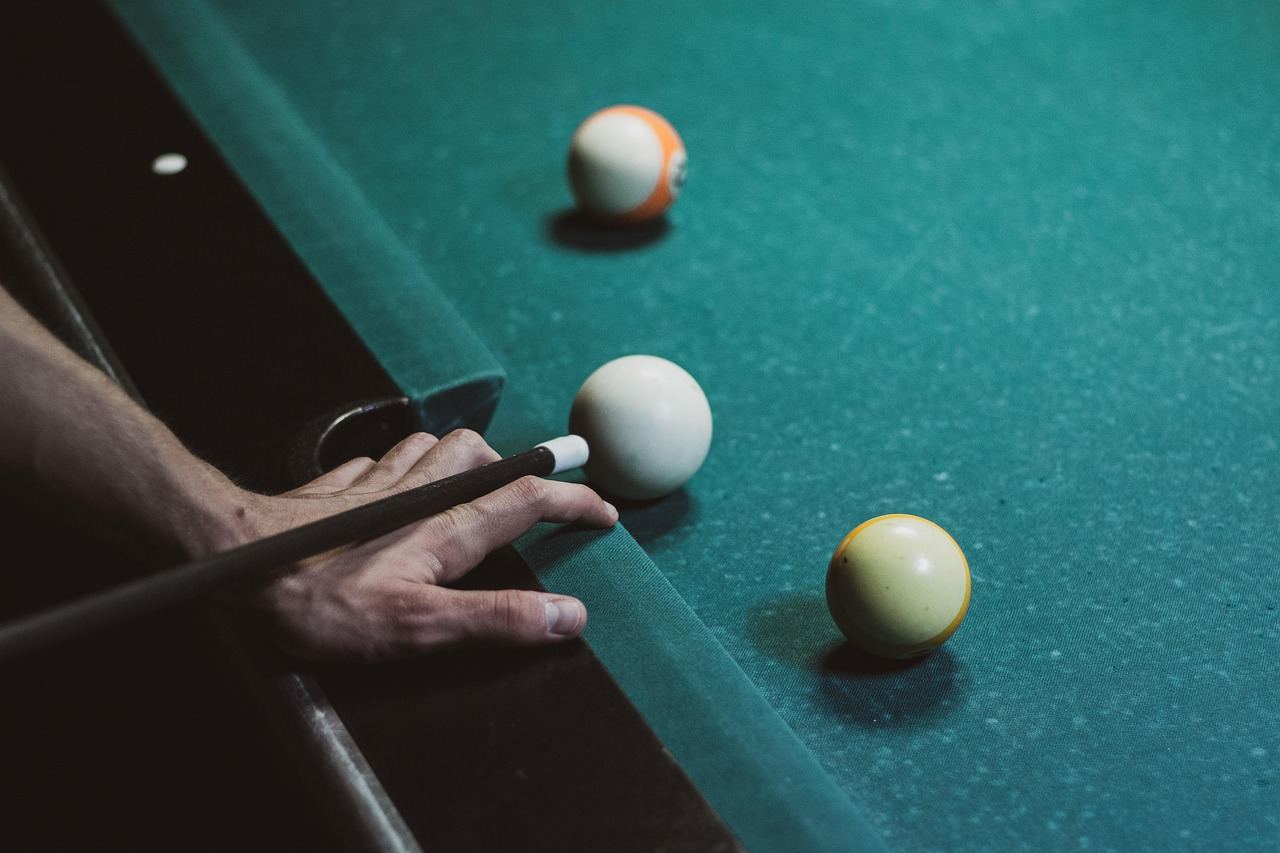
Carom billiards isn't just pool without pockets—it's a mental game of path architecture and advanced geometry where every shot tests your foresight and precision.
Getting started with carom billiards as a beginner offers a unique challenge, as the primary aim is to maneuver your cue ball to contact both object balls in a single shot.
No pockets means no hiding – every point requires geometry, spin, and deliberate control.
Unlike pool, you're not sinking anything; you're engineering collisions.
In Carom Billiards, players strike a cue ball on a pocketless table to execute caroms, which involve hitting both an opponent's cue ball and a red object ball in one stroke. This requires precise control of the cue stick to apply techniques like draw, follow, and stun while mentally calculating angles, spin, and positioning for subsequent shots. Players engage in structured drills and repeat spec…
Carom Billiards alleviates boredom through skill feedback loops, where each successful shot provides immediate sensory confirmation, fostering a sense of accomplishment as players refine their precision and strategy. The challenge of chaining shots into complex setups creates a flow state, demanding full focus and engagement, while the variety of techniques and shots sustains novelty and creative…
You think carom billiards is just pool without pockets. Easier, maybe. Or a strange European variant that doesn't really matter. That assumption is wrong, and it's costing you a genuinely deep hobby.
Pool teaches you to sink balls, but carom demands complete control of the cue ball's final position. No pockets to bail you out. Each shot is an architectural challenge, requiring foresight three moves deep. The complexity of rebound geometry here is unseen in pool, but for the determined, mastering it is a real achievement.
Picture a three-cushion player. They're calculating spin, speed, and angle.
Three steps ahead. Real-time. All in about ten seconds, standing at the table.
This is what makes carom challenging and engrossing. If you're ready to explore a game that demands every ounce of your strategic mind, you're in the right place.
Playing carom billiards feels like geometry in action on a table that's actively working against you.
There are no pockets, just an open battlefield of three balls. The frustration is in missing shots that looked obvious moments before.
You arrive expecting to rely on your pocket billiards background. Confidence turns to humility as you struggle to control the cue ball. Your instincts from pool work against you, and mastering the skill feels elusive.
The heated table is a shocker. The warmer slate speeds up the cloth, throwing off your sense of force from the start. Each miss is strikingly clear—there are no pockets, no lucky rolls here.
This is why those who persevere excel. With nowhere to hide your mistakes, genuine improvement is inevitable. Next, we'll explore the mistakes that slow progress and how to avoid them.
When to start: Early morning
Duration: 1 hour
Cost to try: $0
Success criteria: If you can set up the three balls and pocket 3 caroms in a row using at least one cushion rebound, do session 2.
Many new players are obsessed with hitting object balls, forgetting that the cue ball's final position is crucial. Carom billiards success hinges on planning where the cue ball stops.
Pause after each shot and trace the cue ball's path. Consider if it sets up your next carom, not just if it scores now.
A short bridge feels stable, but it ruins your stroke's flow. Without space for the pendulum motion, carom shots lose their accuracy.
Keep at least 20–25cm between your bridge hand and the cue ball. This distance gives your arm freedom to swing through contact.
Side spin seems useful because cushions react immediately. But it's more of a crutch than an asset when you haven't nailed down center ball shots.
Spend a month focusing on reliable center cue ball contact. Once you're accurate, treat spin as an intentional strategy instead of a cover-up.
Beginners whack the cue hard to ensure reach, but hard shots often kill angle precision. Carom billiards demands careful control of angles, not brute force.
Choose a speed that makes the cue ball settle near your target zone. Avoid scattering it wildly around the table.
Playing by instinct works only until it doesn't. Carom requires more precision; guesswork fails fast.
Master the basic diamond system for three-cushion paths. Number the cushions, track the entry point, and consult reference charts until you feel the geometry intuitively.
Carom billiards takes place on pocketless tables, which sets it apart from typical pool hall setups. Seek out places like billiard clubs, social clubs, or dedicated cue sports venues that advertise three-cushion or straight rail tables.
Before heading to a billiard room, call ahead. Confirm whether they have carom or three-cushion tables. This saves time and ensures a productive visit.
When you arrive, introduce yourself by saying, "I'm new to carom and looking to learn." Most experienced players in carom rooms will offer tips or invite you to join a game. It shows you're eager and genuine.
Score points by making your cue ball contact both object balls with one shot, no pockets required. Ideal for beginners focused on learning the fundamentals. Your only need is a standard pocketless carom table.
Your cue ball needs to touch at least three cushions before or after hitting the second object ball. Serious carom players recognize this as the go-to format. Great for those seeking a real long-term challenge beyond straight rail.
The table's grid zones limit the number of points you can score without moving a ball out. Skip this until you're comfortable with three-cushion. It's more niche and often seen at tournament levels.
Knock down small pins placed at the table's center for bonus points. Offers a dynamic twist, perfect if traditional carom feels too abstract. Popular in Italy and South America, but harder to find elsewhere.
Perform 76 predefined trick shots, each scored by difficulty level. Perfect for those already obsessed, seeking structured creativity. Witnessing it live features the table's potential.
Snooker lives in the same world — different mechanics, similar appeal.
If this resonates, Dominoes explores a similar direction.
Miniature Terrain Building is a sibling pursuit and often surfaces the same kind of curiosity.
Beginners often obsess over shot power and cue ball speed. They miss the real skill that makes or breaks the shot.
Think about it: optimizing the engine and ignoring the steering. That's the beginner's mistake.
Reading contact angles is the critical skill. Predict where the cue ball will go after hitting the object ball. Do this before you take the shot.
In carom, with no pockets to rely on, each shot depends on visualizing the entire sequence: the second, third, and every contact point that follows.
Mastering this lets you play sequences, not just shots. Move beyond guessing.
Misses are angle errors, not stroke mistakes. Many players don't make this distinction, hindering their progress.
This approach recalibrates your perception quicker than any drill. Next, understand how professional players incorporate this skill frictionlessly into their game.
Eight sessions over 30 days. That's the test for carom billiards.
Initial confusion is guaranteed. Carom billiards has no pockets to aid you. The first sessions feel disorienting. Eight sessions help your brain start reading the game's complex geometry.
You keep replaying shots in your head on the way home. This isn't about winning. It's about angles consuming your thoughts. When that happens, you've got the hook that keeps carom players coming back.
You feel nothing after sessions, like just hitting balls without meaning. Extend by four more sessions only if you have no cue sports background. If pool is your thing and carom still feels dull, trust that it's not a fit. Don't push it.
You're watching the clock and not the game. That's not a flaw. Carom is slow and cerebral. If it makes you feel confined instead of focused, it'll always feel like a chore. Accept it and try something else.
You're on YouTube at 11pm, tracing ball paths in three-cushion tournament clips. That's not casual curiosity. That fascination with angles is what grips dedicated players.
Carom Billiards is a deeper commitment than most boredom cures — for lighter options, check things to do when bored.
To hit carom shots accurately, focus on your aim and the angle of your cue. Use a bridge hand for stability and a consistent stroke. Practice hitting the cue ball with different amounts of spin to understand how it reacts against the other balls on the table.
The best strategy is to shoot in a way that maximizes the chance of hitting both object balls in one stroke. Look for position play to set up your next shot. Always aim to create opportunities rather than just focusing on the current shot.
To practice effectively at home, set up drills focusing on carom shots and follow-through. Use a tight setup to simulate game conditions. Record your sessions to track progress and identify areas for improvement. Consistency and repetition are key.
Common mistakes include improper stance, poor cueing technique, and lack of focus on the shot's angle. Many players fail to consider the position of the cue ball for the next shot. Pay attention to these aspects to improve your game significantly.
Improving your mental game involves maintaining focus and managing pressure. Practice visualization techniques by imagining successful shots and outcomes. Develop a pre-shot routine to create consistency and help you stay calm under pressure during matches.