BoredomBusted — Find Your Next Favorite Thing To Do
Discover hobbies, activities, places, and ideas that spark joy. Whether you're looking for something creative, active, social, or relaxing, BoredomBusted helps you find your next favorite thing to do.
Browse our hobby guides, things-to-do collections, and place ideas to never be bored again.
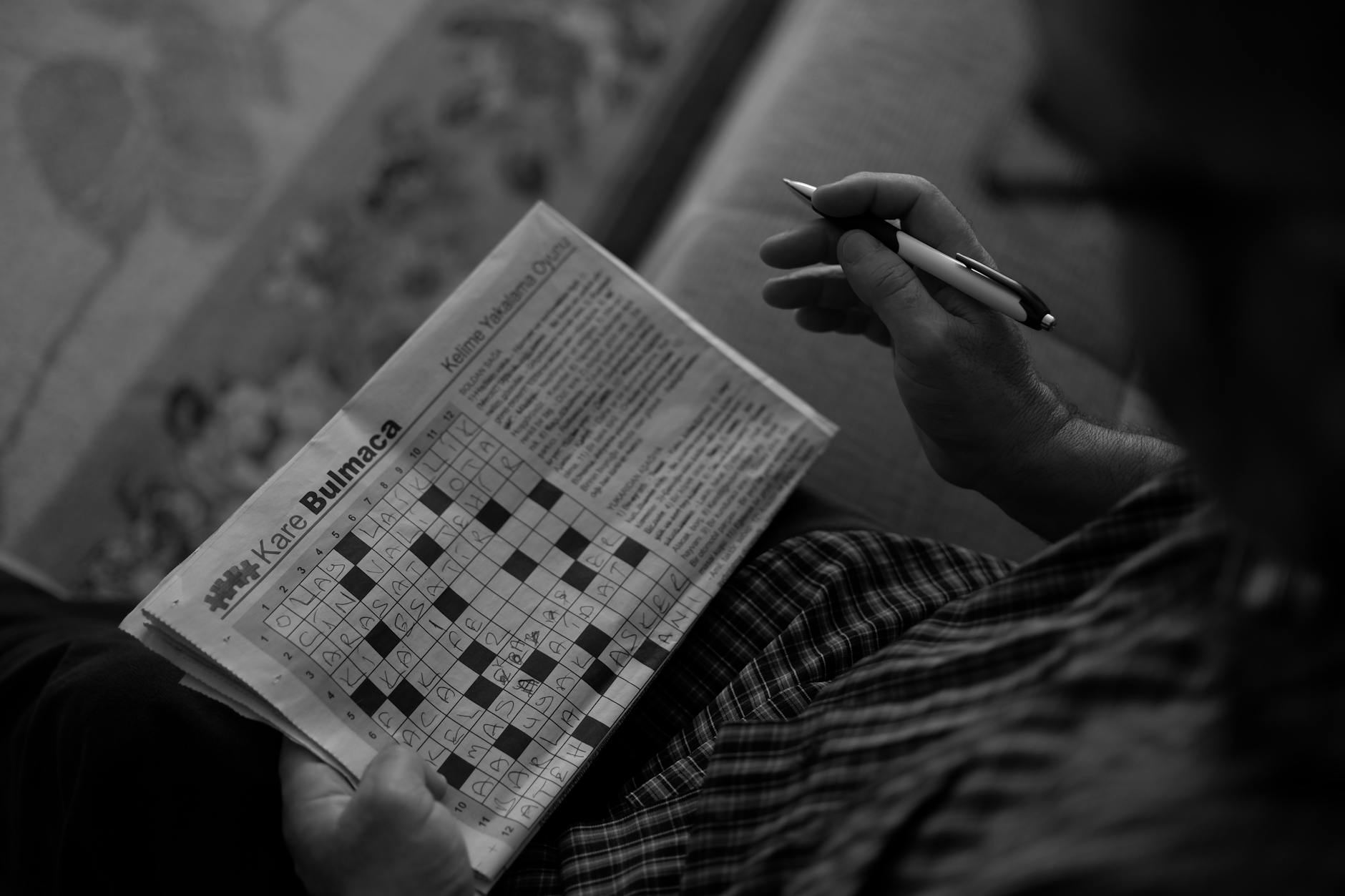
Cryptic crosswords aren't about elite brains; they're logic puzzles where knowing the rules transforms confusion into solvable patterns, like 'Nero' anagramming to 'Rome.'
Getting started with cryptic crosswords as a beginner can be an engaging challenge that transforms every clue into a clever word game. Each clue hides both a definition and a wordplay trick like an anagram or reversal.
These puzzles go beyond simple vocabulary retrieval and challenge you to decode misleading sentences. To solve them, you must satisfy two separate rules at once.
In cryptic crosswords, you engage in solving grid-based puzzles by decoding clues that involve a combination of straightforward definitions and cryptic wordplay, such as anagrams or hidden meanings, while physically writing or typing answers into intersecting squares over short, focused sessions.
Cryptic crosswords induce a flow state by requiring intense concentration to decipher complex clues, providing immediate skill feedback as you fill in letters and experience a sense of accomplishment through each solved intersection, while the novelty of varied wordplay prevents routine staleness.
You think cryptic crosswords are for retired professors in cardigans. You assume this hobby needs a certain brain type. You just don't have it, so you scroll past.
Cryptic clues aren't quizzes; they're logic puzzles. The moment you spot the disguise, solving them turns almost mechanical.
Clues have two parts: a definition and a wordplay instruction. It's not a sentence to read but a code to break.
Look at this example. "Confused Nero fiddled around capital city (4)" seems like nonsense.
But "confused" signals an anagram, "Nero" gives you letters, and "capital city" is the definition. Shuffle N-E-R-O, and it's ROME. No trivia, just learnable pattern recognition.
The next step is figuring out which patterns matter most, so a full puzzle no longer feels like gibberish.
Solving a cryptic crossword feels like deciphering a secret code. You watch the experts pause, smirk, and write answers with confidence. You're left mystified, feeling like an outsider to their language.
That gap between observer and solver is real. You don't bridge it in just one session.
At first, the clues look like nonsense, with deliberately broken grammar mocking your attempts. You're stuck, frustrated, staring at an unfinished grid. Then it clicks — broken grammar is the puzzle. Anagram signals start to pop out, and you solve one clue, then another. Suddenly, clues start to sound different.
In the first week, expect to solve almost nothing. Clues may feel cruel, defeating you over and over. By the second week, anagram indicators become familiar — words like mixed or broken signal hidden opportunities. In week three, you'll solve a few clues per puzzle, but each victory feels incredibly rewarding.
Week four is a breakthrough. Most puzzles remain unfinished, yet empty spaces bother you less. You begin to understand what the clue is trying to do, even when the solution escapes you.
Feeling stuck and closing the grid is part of the process. It's the moment right before your mind adapts to the game's logic. Cryptic clues offer two paths to the same answer: a definition and wordplay. Your task is to find these paths and confirm they meet at the same solution.
Always begin a clue by identifying the definition. It's almost always the first or last word. Next, we'll explore common mistakes that keep solvers spinning their wheels unnecessarily.
When to start: Morning
Duration: 1 hour
Cost to try: $0
Success criteria: If you finished with at least 3 clues solved, do session 2.
Cryptic clues are meant to mislead. The sentence might sound sensible but is just a distraction. Focus on identifying the wordplay type first. The clue's actual definition is usually at the beginning or end.
Spotting a plausible definition and jumping to conclusions is common. But every cryptic clue has two paths to the answer. Make sure both the definition and the wordplay align. If they don\u0027t, you haven\u0027t found the right solution.
Start by familiarizing yourself with all nine types of clues. This sets the stage for recognizing instructions instead of riddles. A cheat sheet will help you quickly understand:
Missing the anagram signal is easy when you're new. Words hinting at scrambling such as "disordered" or "jumbled" are vital.
Jot down new anagram indicators you discover. Recognizing common ones will become second nature.
Quick crosswords rely on knowledge. Cryptics don't; they depend on puzzling structure out.
Follow this order consistently to get results.
Cryptic crosswords thrive as a solo pastime, typically solved at coffee shops, libraries, or at your own kitchen table. But you're not alone out there.
Search Facebook Groups with your city and "cryptic crossword" to find local solvers. English-speaking countries often have active groups.
Meetup.com is excellent for spotting "crossword" or "word game" events. Even if cryptic-specific events are rare, most puzzle nights welcome enthusiasts.
Find national setters in your area for more connections. In the UK, the Crossword Centre at crosswordcentre.com offers a forum with regional contacts. For the US and Australia, look into the American Crossword Puzzle Tournament and Crux for Australian cryptics.
r/crypticcrosswords on Reddit is the go-to online community. Members are active and frequently share local groups and Discord invites.
Cryptic crossword culture is decentralized and thrives in newspaper circulations and puzzle forums. Don't hesitate to join in and learn; you'll typically find a warm welcome for asking questions about the intricate "grammar" of these puzzles.
This is the one most guides mean when they say "cryptic crossword" – structured clues with a clear definition half and a wordplay half.
Best for beginners, full stop – the rules are consistent enough that you can actually learn them.
American cryptics are slightly more forgiving – clue boundaries are looser, and constructors lean toward surface readings that make more logical sense.
The tradeoff is less elegance once you've developed a taste for the British style. Best for total newcomers who found British puzzles too intimidating.
No black squares – thick bars divide the grid instead – and entries often overlap in ways that change the solve entirely.
These puzzles frequently have a hidden theme you're expected to find and act on before you can finish. Best for solvers who've finished a standard cryptic and immediately thought it wasn't challenging enough.
Some cryptics hide a secondary puzzle inside – a quotation emerging from circled letters, answers that must be entered in a non-obvious form, or a wordplay twist that applies grid-wide.
These aren't a separate category so much as a difficulty layer added on top. Best for solvers who want the cryptic format to feel more like an escape room.
A looser North American variant where clue types mix more freely and fair-play conventions are less rigidly enforced.
Rewarding if you find British cryptics too rule-bound, frustrating if you like knowing exactly what the contract is.
The lack of strict conventions is a feature or a flaw depending entirely on how your brain works.
Dressage is a sibling pursuit and often surfaces the same kind of curiosity.
Nonograms lives in the same world — different mechanics, similar appeal.
Another variant that pulls from the same roots is Crossword Puzzles.
Beginners often spend months memorizing clue types. They still can't crack a grid. The real breakthrough is spotting the definition.
Every cryptic clue has two parts: wordplay and a straight definition. The definition is always at the start or end. What matters is training your eye to separate the definition from the wordplay. Without this, you're stuck trying to solve a tangled mess.
Once you can separate the definition and wordplay, every technique you know becomes effective. Without this clarity, you're handicapped – misapplying anagram rules or treating the whole clue as a single riddle.
Solvers who seem "naturally good" just find the seam between parts faster.
Test your skills by separating clues and practicing with old crossword archives. Ready to refine your approach?
Thirty days of cryptic crosswords, twelve sessions. That's the test. Three sessions per week are enough to build up pattern recognition without burning out. Cryptic crosswords only click once you recognize common clue types. Fewer sessions mean you'll keep starting from scratch.
If you're finishing your coffee and immediately reaching for the puzzle, that's more than just a routine. It's the hobby speaking to you. Start a clue journal, track the wordplay types that click, and move to a daily setter.
You complete the sessions but aren't excited to continue. You might not have cracked your first full clue without help yet. That breakthrough can change everything, so consider trying a different publication for a couple more weeks before letting it go.
If you feel dread before each session, not just momentary frustration, cryptic crosswords may not be your thing. It's for those intrigued by the puzzle, not just the idea of solving. Trust your instincts on this.
If you're reading a headline and wondering if it works as a double meaning, or seeing the word "reportedly" and thinking it's a homophone indicator, cryptic crosswords live in your head between sessions. That's the logic taking root.
Cryptic crosswords frustrate people who need visible, measurable progress quickly. The feedback isn't linear and might take weeks to reveal any real progress. They also demand chunks of focused time, which doesn't align with schedules allowing just fractured five-minute windows. For those already stretched thin across cognitively demanding activities, this hobby may just add to the load instead of alleviating it. It's not meant for decompression.
Still looking for something to do? Browse things to do when bored for more ideas.
Cryptic clues contain wordplay elements like anagrams, hidden words, double meanings, and puns that must be decoded—the surface meaning of the clue often misleads you. Each clue is essentially a riddle where you have to find both the answer and understand the logic behind it, making them significantly more challenging than straightforward definitions.
A typical cryptic crossword can take 30 minutes to 2 hours depending on difficulty and your experience level. Beginners may take longer as they learn to recognize different clue types, while experienced solvers often complete them faster once they spot the wordplay patterns.
A solid general knowledge base and strong vocabulary help, but the key skill is learning to recognize wordplay patterns like anagrams, homophones, and hidden words. Most people improve significantly with practice and don't need specialized expertise beyond enjoying word games and logic puzzles.
Start with beginner-friendly publications or online platforms that offer tutorials on common clue types (anagrams, reversals, containers, etc.). Solve puzzles with answer keys nearby and study why each clue works—this builds your pattern recognition skills faster than random attempts.
Many free cryptic crosswords are available online through newspapers, puzzle websites, and apps, though premium subscriptions offer curated collections and varying difficulty levels. Physical puzzle books are typically inexpensive (£5–15), making this an affordable hobby overall.
Yes, cryptic crosswords are generally more difficult because you must decipher the wordplay before finding the answer. However, difficulty is subjective—some people find the creative challenge more enjoyable, while others prefer the straightforward nature of regular crosswords.