BoredomBusted — Find Your Next Favorite Thing To Do
Discover hobbies, activities, places, and ideas that spark joy. Whether you're looking for something creative, active, social, or relaxing, BoredomBusted helps you find your next favorite thing to do.
Browse our hobby guides, things-to-do collections, and place ideas to never be bored again.
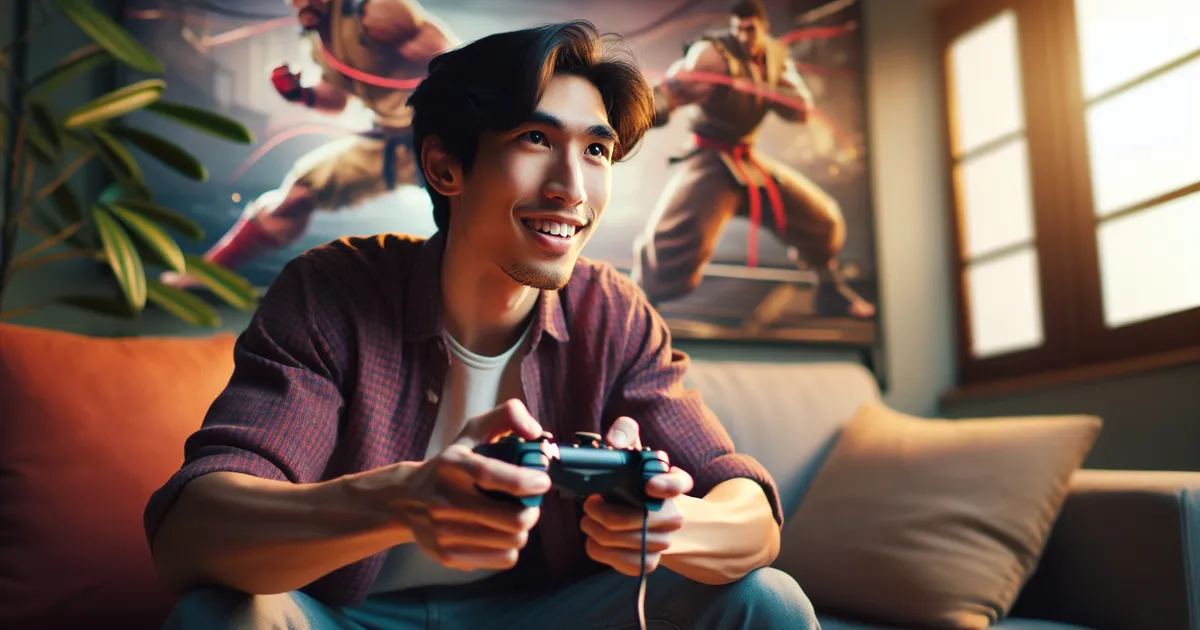
Winning in fighting games isn't about fast hands—it's about predicting your opponent's moves, a skill that can be trained at any age.
Getting started with competitive fighting game competition as a beginner requires understanding the fundamentals of character selection and basic controls, using precise inputs to deplete the opponent's health before time runs out.
Unlike team-based esports, every loss is entirely yours – no teammates to blame, no rotation to hide in.
The skill gap is visible, immediate, and deeply personal.
In Fighting Game Competition, players engage in focused practice sessions that include executing precise controller motions to master combos, analyzing match replays for mistakes, and simulating tournament conditions against various opponents to improve adaptability and strategy.
Fighting Game Competition combats boredom by creating immediate skill feedback loops through match outcomes and combo execution, fostering a sense of accomplishment and inducing flow states due to the high-stakes, immersive nature of real-time decision-making.
You think fighting games are all about reflexes. You imagine the winners have faster hands, an inborn talent you simply can't match.
That assumption stops most players from reaching deeper levels of the game.
Speed isn't your enemy – flawed reads are.
Top players aren't just fast; they're making predictions based on patterns you might not notice. Skills like neutral game and spacing develop like chess strategies, not reflexes. The essential gap is decision-making, which anyone can improve at any age.
Consider Daigo Umehara, a legendary name in fighting games. As he aged, he spoke about slowing down mentally to better read his opponents. His win rate stayed strong. The reality is, the reads improved because this was the true skill, not just executing moves swiftly.
Recognizing what skills are critical changes how you practice, and practice is where many beginners succeed or waste those crucial first months. Ready to focus on the right skills?
The first time you sit down with a fighting game, it feels chaotic. Like stepping into a storm where one wrong move means instant defeat. The gap between watching and playing is massive here. You might feel helpless as your character takes hits from every direction.
Expect confusion as you try to find your footing. At first, you'll be mashing buttons with little understanding. Winning and losing both feel random. Progress is minimal, and online players seem impossible to keep up with.
Before you dive deep into your first session, focus on learning one thing: your character's punish options. Knowing what move to use when blocking an opponent's attack is crucial. Being unaware of this is like giving away free points to anyone who knows it.
Midway through, frustration peaks. Progress feels nonexistent, and patterns remain blurry. Yet, fighting games don't progress linearly. Suddenly, during a match, something you practiced will just click. You'll execute a move without hesitation, and that's the moment it starts to make sense.
When to start: Morning
Duration: 1 hour
Cost to try: $10
Success criteria: If you finished without losing track of your combos while practicing, do session 2.
Flashy combos grab attention, but new players miss the vital part. Movement and spacing win matches, not just combos.
Concentrate on movement and spacing first. Devote your first 20 lab sessions to walking, dashing, and learning to punish with a single standing move.
Everyone wants the cool character with the giant sword. But these characters often require mastering complex skills you aren't ready for.
Choose a fundamentals-based character first. Play for about 60 hours to build skills, then swap.
When beaten by the same trick repeatedly, beginners cry foul. It seems unfair because you lack the understanding to counter it.
Head to training mode and practice against the setup 50 times. Timing becomes second nature through repetition.
After a loss, quitting seems like protecting your mood. But you're skipping the best chance to learn about your weaknesses.
Commit to finishing each set up to three games. Lessons lie in adaptations made during the second match.
Playing cautiously turns into a trap in actual tournaments. Pressure reveals the cracks in overly conservative playstyles.
Experiment with risky strategies in casual games. Failing there teaches priceless lessons without risking your rank.
Fighting game competitions usually take place in gaming cafes, esports venues, and local game stores. These spots have setups ready for multiple stations.
Weekly or monthly tournaments often happen at community centers and college lounges. Entry fees are kept low or non-existent in these locations.
The FGC is decentralized, with each game and city driving its own scene.
Companies like Capcom, Bandai Namco, and Arc System Works host official circuits for seasoned players. But locals are your starting point.
Approach someone and say, "I'm new – which setup is good for learning, and is anyone free to run sets?" You'll be guided to a setup for beginners and find someone who is willing to help between rounds.
Casual meetups let you learn by doing. Ranked players gather at game stores without formal matches. Experienced players will help you improve if you ask for tips. These events are free, but you need your own controller.
Online play hides your mistakes. Every major fighter has built-in rankings, but online lag covers up poor timing. It's great for practice volume, not so much for skill refinement.
With a $5–10 entry fee and 20–60 players, local weeklies offer a real testing ground. Losing in person accelerates your learning faster than online wins.
Major tournaments like CEO and EVO are for when you're serious. These events are not cheap, and competition is fierce. Knowing this level exists gives purpose to your practice.
Platform fighters like Smash focus on strategy over precision. They have unique movement systems and a supportive community. A different approach but with the same competitive excitement.
Strategy Gaming is a sibling pursuit and often surfaces the same kind of curiosity.
If this resonates, Mobile Gaming explores a similar direction.
If you want a related angle, MMORPG Gaming is the natural next stop.
Console Gaming is a sibling pursuit and often surfaces the same kind of curiosity.
Most beginners grind matchups and memorize combos – then wonder why they keep losing to players with half their execution. They're building a library when they should be building a read.
The skill is punish conversion on whiffed moves – specifically, training your brain to recognize the recovery frames of your opponent's missed attacks and respond with your highest-damage option every single time, not just sometimes.
It's not about raw speed.It's about deciding your response in advance, before the whiff happens.
Punishing mistakes changes the game. Opponents stop spamming moves recklessly because you're not just reacting — you're dictating their actions. If all you do is win the neutrals, you'll still lose rounds. Missing those opportunities leaves damage on the table every 20 seconds. Once you start punishing, their habits work against them, and the real mental battle begins.
Next, learn specific practice drills to refine this skill.
Commit to 12 sessions over 30 days. About three sessions each week hits a sweet spot.
Fighting games have a steep early curve, and this schedule keeps muscle memory intact without resets.
If you find yourself wanting just one more match, you've been pulled in. That's more than restlessness; that's engagement with the loop.
Pick one character to master, and enter a local or online bracket.
Feeling indifferent suggests enjoyment of the game itself, but perhaps not the competitive side.
Casual play is valid. You don't need the stress of ranked mode or brackets.
If you felt dread sitting down to play, losing isn't the issue.
Fighting games require personal, frequent failure, which can be more draining than motivating for some.
If you're watching tournament VODs or match replays at odd hours for the fun of it, that's the real pull.
This interest separates those who keep playing from those who stop early.
If your internet connection can't handle latency, online competition won't give you a fair experience. An unstable connection can ruin the practice benefits entirely.
Irregular practice hurts skill stability
more in this hobby than most others.
If precise, fast-twitch execution frustrates you as a concept, every match may feel more like a fight than a challenge.
If nothing here clicks, our guide to what to do when bored covers shorter, lower-commitment options.
If nothing here clicks, our guide to what to do when bored covers shorter, lower-commitment options.
Street Fighter 6 and Tekken 8 are excellent entry points due to their strong tutorials and welcoming communities for new players. Start with a game that interests you visually or has characters you like—enjoyment matters more than picking the 'easiest' option. Most modern fighting games have beginner-friendly modes that teach fundamentals without overwhelming complexity.
You can learn basic combos and win casual matches within 20–40 hours of focused practice. Becoming competitive at local tournaments typically takes 3–6 months of consistent training, while reaching higher competitive levels requires 1–2+ years of dedicated play. Progression depends heavily on practice quality and how much you compete against skilled opponents.
No—a standard game controller works fine for competition, and many pros use controllers successfully. Quality arcade sticks range from $150–$300 if you prefer that style, but they're optional, not essential. Start with whatever controller you're comfortable with and upgrade only if you feel it's limiting your gameplay.
It's roughly 50/50—fast reflexes help you execute combos and react to opponents, but strategy and game knowledge determine wins at higher levels. Understanding frame data, matchups, and mind games often matters more than raw reaction time. Both skills reinforce each other, so neither can be neglected.
Most tournaments use single or double elimination brackets where you play 1v1 matches against other competitors in your skill bracket. Entry fees typically range from $10–$25 per game, and events are usually held at arcades, esports venues, or community centers. You can start with casual brackets designed for newer players to gain experience without high-level pressure.
The community is generally welcoming and eager to help newcomers—most players remember struggling themselves and enjoy teaching. Online and local groups have dedicated beginner sessions, Discord servers, and mentorship programs to help you improve. Expect some banter and competitive tension, but the shared passion for the genre creates a strong sense of belonging.