BoredomBusted — Find Your Next Favorite Thing To Do
Discover hobbies, activities, places, and ideas that spark joy. Whether you're looking for something creative, active, social, or relaxing, BoredomBusted helps you find your next favorite thing to do.
Browse our hobby guides, things-to-do collections, and place ideas to never be bored again.
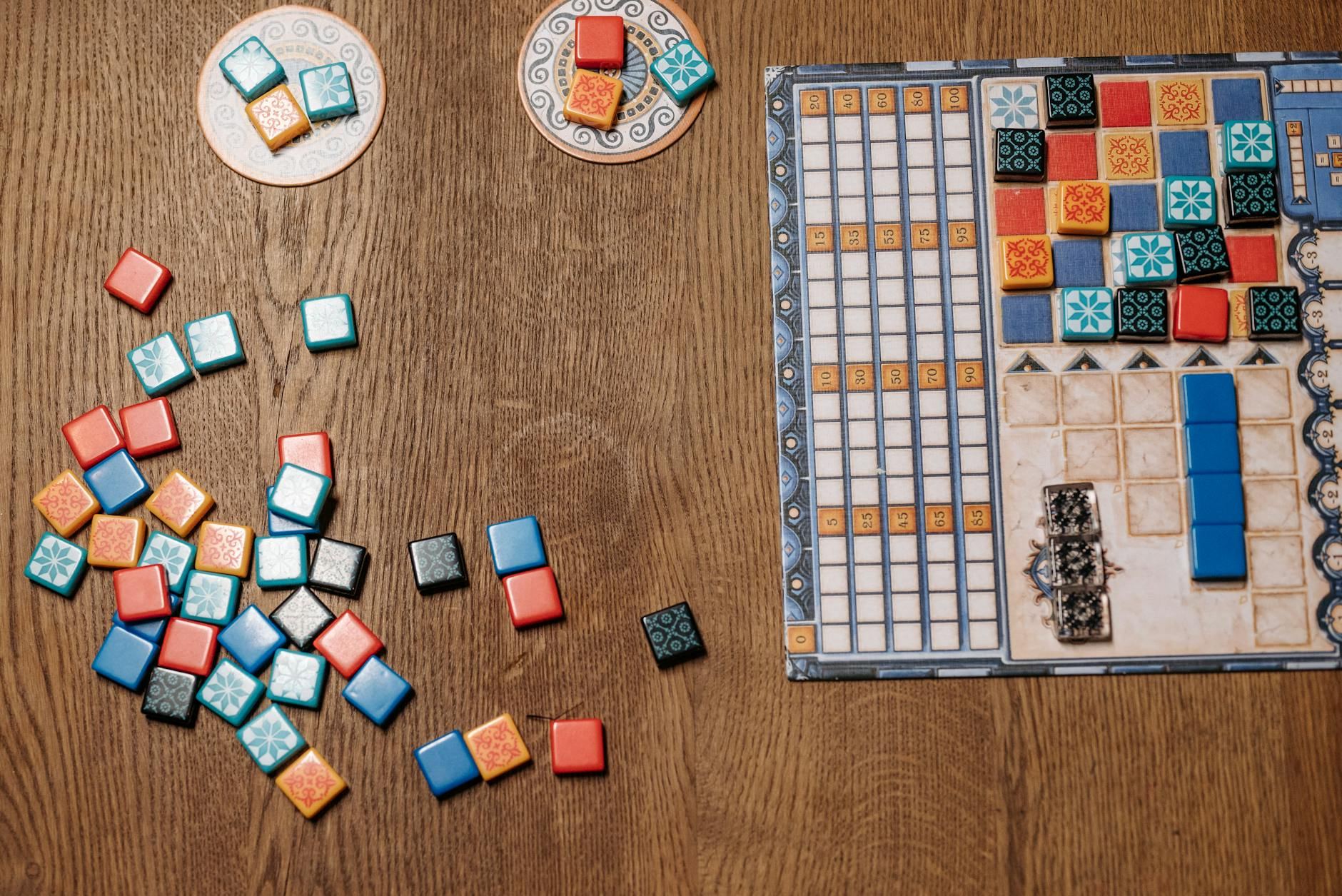
Board gaming isn’t just a fun pastime — it's a direct antidote to boredom that builds social bonds and enhances mental engagement.
Getting started with modern board gaming as a beginner opens up a world of face-to-face interaction and strategic fun around the table. These aren't the games gathering dust in your parents' closet. The design has evolved into something that rewards real strategic thinking — reading opponents, managing limited resources, making decisions that actually matter.
A typical session runs one to three hours and involves cards, dice, and game pieces — but the physical side is almost secondary. The mental layer is where it gets interesting: you're constantly optimizing, adapting, and outmaneuvering while the person across from you tries to do the same thing.
That combination — social presence plus a problem that actually pushes back — is why this hobby hits differently than most. You finish a session feeling like you used your brain, not like you wasted time. That's a harder thing to find than it sounds.
In modern board gaming, players gather with friends or family to engage in strategic games that involve physical actions like shuffling cards, rolling dice, and moving game pieces, while mentally strategizing, analyzing opponents' moves, and optimizing resources over sessions lasting 1-3 hours.
This hobby fosters social intimacy through face-to-face interaction, induces flow states via skill feedback in gameplay, and provides a sense of accomplishment from resource management, all of which combat feelings of boredom and mental stagnation.
You picture board gaming and you picture a table full of people. Coordinating schedules, waiting for the right night, hoping everyone actually shows up. The assumption is that the hobby only works as a group activity — and without the group, there's no point.
Take someone like Marcus — a hobbyist who bought Wingspan for game nights that kept getting cancelled. Instead of shelving it, he started playing the solo automa mode on weekday evenings. Within a week, he was optimizing bird combos, tracking engine efficiency, and genuinely looking forward to the 45-minute session after dinner. The game didn't get smaller without other people — his relationship with it got deeper.
No group. No night that works for everyone. No problem.
The social layer is a feature, not the foundation. Modern board games are built around decision-making, resource optimization, and strategic feedback loops — and those mechanics produce flow states whether one person is at the table or six. The face-to-face interaction is genuinely great when it happens, but it was never the only thing running.
That reframe changes how you approach buying and playing. And it changes which games you should actually start with.
Your first session will probably feel like being handed a foreign language textbook and asked to hold a conversation. Cards fan out awkwardly in your grip. Someone explains the resource track and you nod, but nothing sticks until turn three. The tactile stuff — shuffling, placing tokens, rolling dice — clicks faster than the rules do. Your hands are busy while your brain is still two steps behind the group.
The thing most beginners don't expect is the rulebook problem. Modern board games don't come with a ten-minute setup — some teach themselves over 45 minutes before anyone takes a turn. Most experienced players skip the manual entirely and run a "learn as you play" first game with mistakes allowed. If nobody in your group has done that yet, look up a 10-minute YouTube rules breakdown before you open the box.
The first full game you finish — even if you lose badly — lands differently than you'd think. There's a specific satisfaction in watching a plan almost work. That near-miss is actually the hook: you can already see what you'd do differently next time. That mental itch is what keeps people coming back for session two, three, and eventually a second shelf of games.
Expect the first few sessions to run long and feel chaotic. A game rated at 60 minutes will take your group 90 on the first play, no question. That overhead shrinks fast — by your third play of the same game, turns feel automatic. Before you get there, though, there are a handful of mistakes almost every new player makes that quietly slow the whole table down.
When to start: Morning
Duration: 1.5 hours
Cost to try: $0
Success criteria: If you complete one full tutorial game and can explain the setup, turn order, and win condition, do session 2.
Most beginners walk into a game store and grab the box with the best art or the biggest reputation. Then it sits on a shelf after one confusing session. Start with a gateway game — something with a 30-minute playtime and a single core mechanic — before spending $60 on a sprawling resource-management epic.
Ticket to Ride, Carcassonne, or Azul are good entry points. Each one teaches a fundamental skill without overwhelming you. Once you finish a session and immediately want to play again, you'll know which direction to go deeper.
Rulebooks are reference documents, not tutorials. Reading one cold almost guarantees confusion and second-guessing at the table. Watch a 10-minute "how to play" video first, then use the rulebook to resolve disputes mid-game.
That sequence — video overview, then play, then rulebook — is how experienced gamers learn every new title. The first session will still have mistakes. That's fine. Most games reward a second playthrough anyway.
Getting thrown into a heavy game with experienced players who just want to win is one of the fastest ways to lose interest in the hobby. The problem isn't the game — it's the table. Your first few sessions should be with other beginners, or with one patient player who's genuinely willing to teach.
Local game stores often run "learn to play" nights specifically for this reason. It's a low-pressure way to try games without feeling like you're slowing everyone down.
New players often freeze trying to make the perfect decision with no frame of reference for what good play looks like. This kills pacing and drains the fun out of the table. For your first two plays of any game, just make a decision and move — even if it's wrong.
The feedback loop of modern board games is designed to teach you through play. A bad move now gives you the information you need to make a good move next round. You can't shortcut that by thinking longer before you've built up any instincts.
Modern board games have real strategic depth. Losing your first three sessions at a game like Wingspan or Dominion doesn't mean you don't like it — it means you haven't seen enough of the system yet. The shift from "what are the rules" to "what's my strategy" usually happens around session three or four, not session one.
Give a game at least three full plays before deciding it's not a fit. That's when the flow state kicks in — when the rules become invisible and the actual decision-making takes over.
Start with r/boardgames on Reddit — it has over 4 million members and answers almost every question you can think of. For finding people near you specifically, BoardGameGeek.com has a Guild and Group search tool that filters by city or region.
Walk into your nearest local game store (LGS) and ask about open game nights — most run weekly sessions where strangers show up, pick a game off the shelf, and play for free. Meetup.com also lists board game groups in most mid-size and large cities, searchable by zip code.
Board Game Arena is a browser-based platform with hundreds of licensed games and active matchmaking — no download required. It's the easiest way to try a game before you buy it and meet people who already know the rules.
Tabletop Simulator on Steam is a second option if you want more variety, though it has a steeper learning curve. For organized competitive play, the World Boardgaming Championships and regional cons like BGG.CON host events you can register for as a solo attendee.
Party-weight and gateway games are built for mixed groups. Think Ticket to Ride, Codenames, or Catan. Rules take minutes to learn, and nobody needs prior experience.
These are the best entry point if your goal is connection over competition. Everyone stays engaged because the rules never get in the way of the fun.
Strategy-heavy eurogames put resource management and long-term planning at the center. Games like Wingspan, Agricola, or Terraforming Mars reward patience and careful decision-making.
This style suits people who want to feel genuinely clever when a plan comes together. Sessions run longer, but the mental payoff matches the investment.
Cooperative games put everyone on the same team. Pandemic, Arkham Horror, and Spirit Island are classics. The group wins or loses together, which removes competitive friction entirely.
This format is ideal for households where someone hates losing but still wants to be challenged. The enemy is the game, not each other.
Narrative and campaign games unfold over multiple sessions. Gloomhaven, Betrayal Legacy, and Sleeping Gods build persistent worlds where your choices carry forward.
These games work best for a stable group that meets regularly and wants something to look forward to each week. The story is the hook that keeps everyone coming back.
Filler and mid-weight games hit a sweet spot between depth and speed. Azul, Cascadia, and Hive play in 30-60 minutes without sacrificing interesting decisions.
This is the right category for busy schedules where a 3-hour commitment just isn't realistic. You still get the strategic satisfaction — just compressed.
Solo board gaming is a real and growing category. Games like Mage Knight, Friday, and Under Falling Skies are designed specifically for one player. No compromises, no waiting.
Solo gaming fits anyone who wants the mental engagement of a board game but lives alone or keeps an unpredictable schedule. The hobby doesn't require a group to be worth it.
If this resonates, Mechanical Puzzles explores a similar direction.
The skill that separates improving players from permanent beginners is reading the game state instead of executing your plan. Most new players lock onto a strategy at the start and ride it to the end. That rigidity is why they plateau.
Every modern board game gives you information as it unfolds — what opponents are building, which resources are drying up, which paths are getting blocked. Beginners treat that information as background noise. They're too focused on their own next move to notice it.
Better players treat the game state like a live map. They update their read of the table constantly. When the map shifts, their plan shifts with it. Flexibility isn't indecision — it's the actual skill.
You notice an opponent is two moves from closing off a route you needed. You pivot. You take a slightly worse resource now to block a runaway leader later. You abandon a strategy that looked good on turn two because the board no longer supports it. None of that is instinct — it's a trained habit of looking outward, not just inward.
The good news: every session gives you reps. The next section breaks down how to pick games that actually build this habit rather than ones that reward memorizing a single optimal path.
Commit to 4 sessions over the next month — roughly once a week — before deciding if modern board gaming is your thing. That's enough time to get past the rulebook friction and into actual play.
You're hooked. The sign is replaying decisions in your head hours later — wondering what would've happened if you'd blocked that route or held the card one more turn.
Move from casual gateway games like Ticket to Ride toward mid-weight strategy titles — Wingspan, Everdell, or Viticulture are good next steps. Start building a small personal collection around the mechanisms that grabbed you most.
That's a signal worth reading carefully. Enjoying the company more than the game itself doesn't mean board gaming is wrong for you — it means you haven't found the right game yet.
Try a completely different mechanism before you close the door. If you played something resource-heavy, try a deduction or negotiation game like Coup or Sushi Go. The genre is wide enough that genre fatigue at week four usually just means genre mismatch.
Not restless-excited — genuinely wanting to be somewhere else. If the 90-minute runtime felt like a cost rather than the point, the strategic sit-and-think format probably isn't your mode of play.
Look toward hobbies that move faster or put your hands to work — tabletop RPGs for social storytelling, or something physical like disc golf if sitting at a table for two hours sounds like a sentence rather than a Saturday.
If you opened BoardGameGeek at midnight to look up what game to buy next, that's not curiosity — that's the hobby already owning a piece of your brain. Don't second-guess that impulse.
When you don't want to commit, things to do when bored is a better starting point.
Most modern board games range from 30 minutes to 2 hours, depending on complexity and player count. Lighter games like Ticket to Ride finish in 45 minutes, while deeper strategy games like Terraforming Mars can take 2–3 hours. Check the box for estimated playtime before buying.
Many modern board games support 2–6 players, making them flexible for different group sizes. Some games shine with exactly 2 players, while others are designed for larger groups of 4+. Solo variants and competitive modes mean you can enjoy games with just one other person or a full table.
Modern board games feature innovative mechanics, thematic depth, and balanced gameplay that classic games often lack. They typically have clearer rule sets, better component quality, and engaging storytelling that makes each game unique. Games like Catan and Carcassonne revolutionized the hobby with fresh strategies beyond roll-and-move.
Quality modern board games range from $20–$50 for entry-level options, with premium games costing $60+. Start with accessible games like Splendor or Azul ($20–$30) to learn mechanics before investing in complex strategy games. Many board game cafés let you try games before buying, so you can test before committing.
Not at all—modern games are designed with accessibility in mind, with most including clear rulebooks and intuitive mechanics. Gateway games like Ticket to Ride or Catan teach you the basics in 10–15 minutes. As you play more, you can naturally progress to heavier, more complex strategy games.
Yes, many modern board games offer solo modes that let you play against the game itself or your own score. Games like Mage Knight, Gloomhaven, and Spirit Island were designed with solo play in mind. Solo variants expand your gaming options, especially on days when a group isn't available.