BoredomBusted — Find Your Next Favorite Thing To Do
Discover hobbies, activities, places, and ideas that spark joy. Whether you're looking for something creative, active, social, or relaxing, BoredomBusted helps you find your next favorite thing to do.
Browse our hobby guides, things-to-do collections, and place ideas to never be bored again.
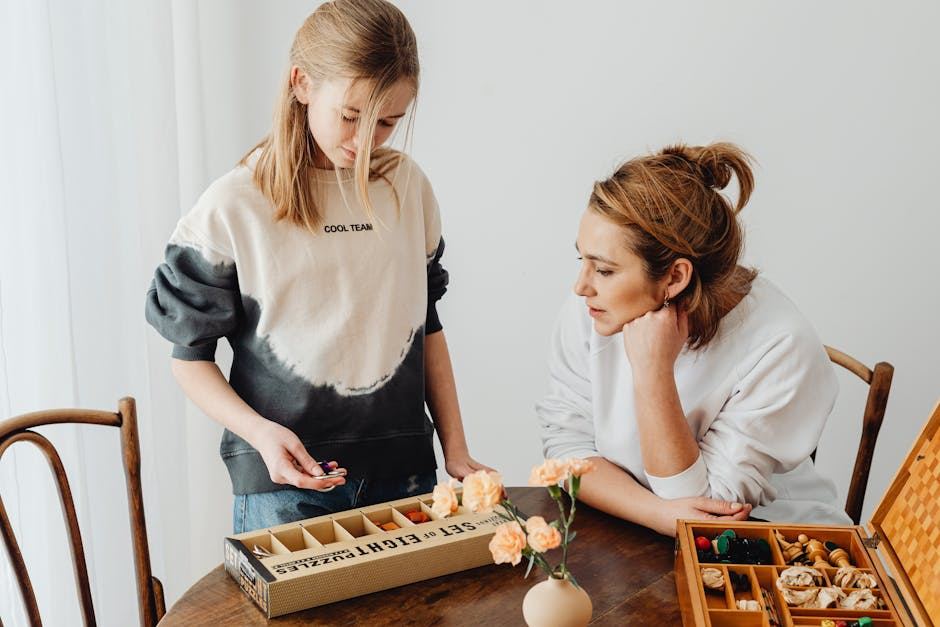
Puzzle boxes aren't just puzzles — they're flow-inducing challenges that gradually scale with your skills, leading to an unexpected boost in resilience and confidence.
Getting started with puzzle boxes as a beginner involves unraveling intricate designs that challenge your problem-solving skills. Puzzle boxes are physical objects designed to open only when you figure out the right sequence of hidden steps – sliding panels, rotating rings, false bottoms, mechanisms you have to discover through touch and logic.
Unlike jigsaw puzzles or escape rooms, the puzzle and the object are the same thing: solving it is the box.
Puzzle boxes are intricately designed wooden or mechanical challenges that require hands-on manipulation to unlock hidden compartments by executing a sequence of precise moves, such as slides, rotations, and tilts. Practitioners engage in a tactile exploration of the box’s exterior to identify irregularities, using fine motor skills and logical reasoning to deduce the unlocking mechanism through …
Puzzle boxes induce a flow state by presenting escalating challenges that align with your skill level, keeping you immersed as you engage in hypothesis testing and iterative problem-solving. The immediate feedback from successfully moving a panel fosters resilience and mastery, while the eventual 'aha!' moment of unlocking delivers a profound sense of accomplishment and boosts confidence.
You think puzzle boxes are elaborate gift wrap. A clever container someone bought at a gift shop, designed to frustrate you for ninety seconds before you figure out the sliding panel and move on.
That assumption is wrong – and it's why most people never experience what the hobby actually is.
The "Secret Box" by Karakuri Creation Group has over 66 steps to open. First-timers can spend a whole hour on it. But what happens next is fascinating.
Veterans say the second solve feels completely different. One is stumbling through; the other is reading a sentence you finally understand.
Moving from random poking to systematic thinking is the real journey. Let's see how this changes your perspective.
You imagine calm precision as you approach a puzzle box. In reality, your hands are sweaty, and nothing moves. You check again if it's glued shut. It's not glued shut.
Expect elegant logic. A test of patience. Before it clicks, there's just the sound of effort. You might even wonder if you've broken something.
Boxes intentionally mislead you into thinking you're stuck. Missing the obvious is part of the design. You're meant to discover hidden mechanics, like panels that require lateral pressure instead of pushing or pulling. Give each edge a thorough feeling before dismissing it as merely decorative. Many skip what releases the box because it doesn't look like a mechanism at all.
When to start: Early morning
Duration: 1-2 hours
Cost to try: $20
Success criteria: If you finished without fully unlocking the puzzle box, do session 2.
Everyone loves a challenge, but high difficulty puzzles like a Level 5 from Hanayama need serious skill. Without pattern recognition, it'll gather dust.
Start with a Level 2 or 3. Solve completely, take apart, and try again from memory before moving to harder puzzles.
Beginners think more force solves everything. Puzzle boxes won't have it. Their parts fit snugly by design, and brute force risks damage.
Stop at resistance. Release and retry the last step, adjusting your touch slightly.
The joy of solving puzzles is the rush at the end. Beginners often abandon ship right before breaking through by seeking online help.
Decide on no hints until you've investigated. Explore each moving surface and note their actions.
Interruptions derail more than focus. Some puzzles reset if you stop half way, leading to perceived difficulty spikes.
Choose a clear, uncluttered space. Work in one go and take a picture of the initial state to track resets.
Weight shifts signal internal components like ball bearings, but they're easy to miss when you're busy inspecting panels.
Take your time with tilting. Slowly rotate the box in every direction, as tiny movements can reveal hidden mechanisms.
Puzzle boxes are usually a solo try, perfect for quiet spots like your desk or a cozy corner. However, escape room venues, puzzle cafés, and maker spaces occasionally host puzzle box nights or display collections you can explore.
Searching Facebook Groups is a great start. Look for 'puzzle box collectors [your city]' or 'mechanical puzzle enthusiasts [your region]' to find where serious hobbyists organize meetups.
Another option is Meetup.com. Use terms like 'puzzle collectors' or 'mechanical puzzles' and filter by your metro area to sort by recent activity.
The International Puzzle Party (IPP) member directory at puzzleworld.org is a valuable resource. Members often host local exchanges, making it a global hub for serious collectors.
Reach out on the Puzzle Collectors mailing list and forums at puzzleworld.org. Regional threads offer a good way to connect locally—post your location and receive a response in days.
Admit that you're new to the hobby when attending meetups. This honesty often gets you hands-on time with others' collections, clarifying what level suits you.
Japanese puzzle boxes, known as Himitsu-Bako, feature a series of sliding panels. Some need just 2 moves, others 66, to open a hidden compartment.
Beginners love the low move-count versions for their simplicity. High move-count boxes present a real challenge.
Prices start at $20 for the basic designs and can exceed $200 for intricate Hakone creations.
Sequential discovery puzzles take it up a notch, hiding tools within the box that you use to solve further.
They feel like bite-sized escape rooms, each stage unlocking the next.
Mechanical brain teasers like trick locks and boxes offer puzzles where assumptions are misleading.
Lateral thinkers thrive here, enjoying the challenge of figuring out what the real rules are.
Escape-room-style puzzle boxes, often part of subscription kits from companies like The Enigma Box, arrive with themed narratives and clues.
Perfect for a one-time experience, solving these doesn't build a collection but provides a satisfying escape.
Each box costs $25–$45, making budgeting essential to avoid surprise expenses.
Design and build your own puzzle boxes with wood or 3D printing for a unique challenge.
Creators enjoy the construction process, finding satisfaction in bringing a puzzle to life.
You'll invest time more than money unless getting specialized tools like laser cutters.
For something adjacent, see Cryptography.
For something adjacent, see History Study.
Research Reading is a sibling pursuit and often surfaces the same kind of curiosity.
Most beginners obsess over trying every mechanism they find. The real bottleneck isn't exposure. It's that they never learn to read a box before they touch it.
Mechanical intuition through deliberate stillness is the key. Before touching anything, look at a puzzle box for 60 seconds. Form a hypothesis about what mechanism is inside based on seams, weight distribution, and surface asymmetry.
Experienced solvers don't find the trick faster by moving quicker. They find it faster because they've already narrowed it down to two possibilities before their hands get involved.
Develop this skill and you stop triggering false mechanisms accidentally. You'll know exactly what worked.
Without this ability, solving becomes guesswork, and each box feels like starting from scratch. Each solved box teaches you something new and builds your understanding.
Each box solved is a learning experience. Next, we'll dive into techniques to hone this intuitive skill.
Aim for 6 puzzle box sessions over a month, about one every five days. This schedule helps overcome initial frustration without overwhelming you.
After six sessions, you might find yourself eagerly awaiting the next one. You catch yourself dreaming about mechanisms or pondering a solution on your commute. That's your brain fully engaged, saying this hobby connects with your inner problem-solver. Next, consider budgeting for more intricate puzzles to keep the excitement alive.
If six sessions left you feeling neutral, without thoughts drifting back to the boxes, that's telling. Often, this indicates a preference for the idea rather than the reality of solving puzzles. Trying more sessions rarely shifts this indifference—it usually reflects your genuine disinterest.
Finding each session wearisome signals something. The slow, silent nature of puzzle boxes may feel more frustrating than rewarding. Some hobbies thrive on rapid feedback or social elements, and that's valid too—this isn't for everyone.
You're browsing YouTube for puzzle box reveals or scanning Reddit for box-building methods—this is more than fascination. That quiet curiosity means it's more than just a passing interest.
Still looking for something to do? Browse things to do when bored for more ideas.
Solving times vary dramatically depending on the box's complexity, ranging from 10 minutes for beginner designs to several hours for advanced mechanisms. Most entry-level puzzle boxes can be solved in 30 minutes to an hour with patience and logical thinking.
Puzzle boxes come in clear difficulty tiers, with beginner boxes typically featuring 2–5 steps and straightforward mechanical moves. Manufacturers often label these with star ratings or difficulty scales to help you pick an appropriate starting point.
Entry-level puzzle boxes typically range from $15–$40, while mid-range handcrafted boxes cost $40–$100. Premium artisan boxes with intricate designs can exceed $200, but most hobbyists start with affordable options to learn mechanics before investing in luxury pieces.
Yes, it's possible to get stuck, especially on complex boxes with hidden mechanisms or sequence-dependent moves. Most quality puzzle boxes include instruction guides or hint cards if you need them, and many sellers provide support if you're truly stumped.
Puzzle boxes are usually crafted from wood (most common), metal, or a combination of both materials. High-quality boxes use sustainable hardwoods and precision engineering to ensure smooth operation and durability over repeated use.
No special tools or prior experience are required—puzzle boxes are designed to be solved using only your hands and logical thinking. The challenge is figuring out the correct sequence of moves and hidden mechanisms rather than requiring technical expertise.