BoredomBusted — Find Your Next Favorite Thing To Do
Discover hobbies, activities, places, and ideas that spark joy. Whether you're looking for something creative, active, social, or relaxing, BoredomBusted helps you find your next favorite thing to do.
Browse our hobby guides, things-to-do collections, and place ideas to never be bored again.
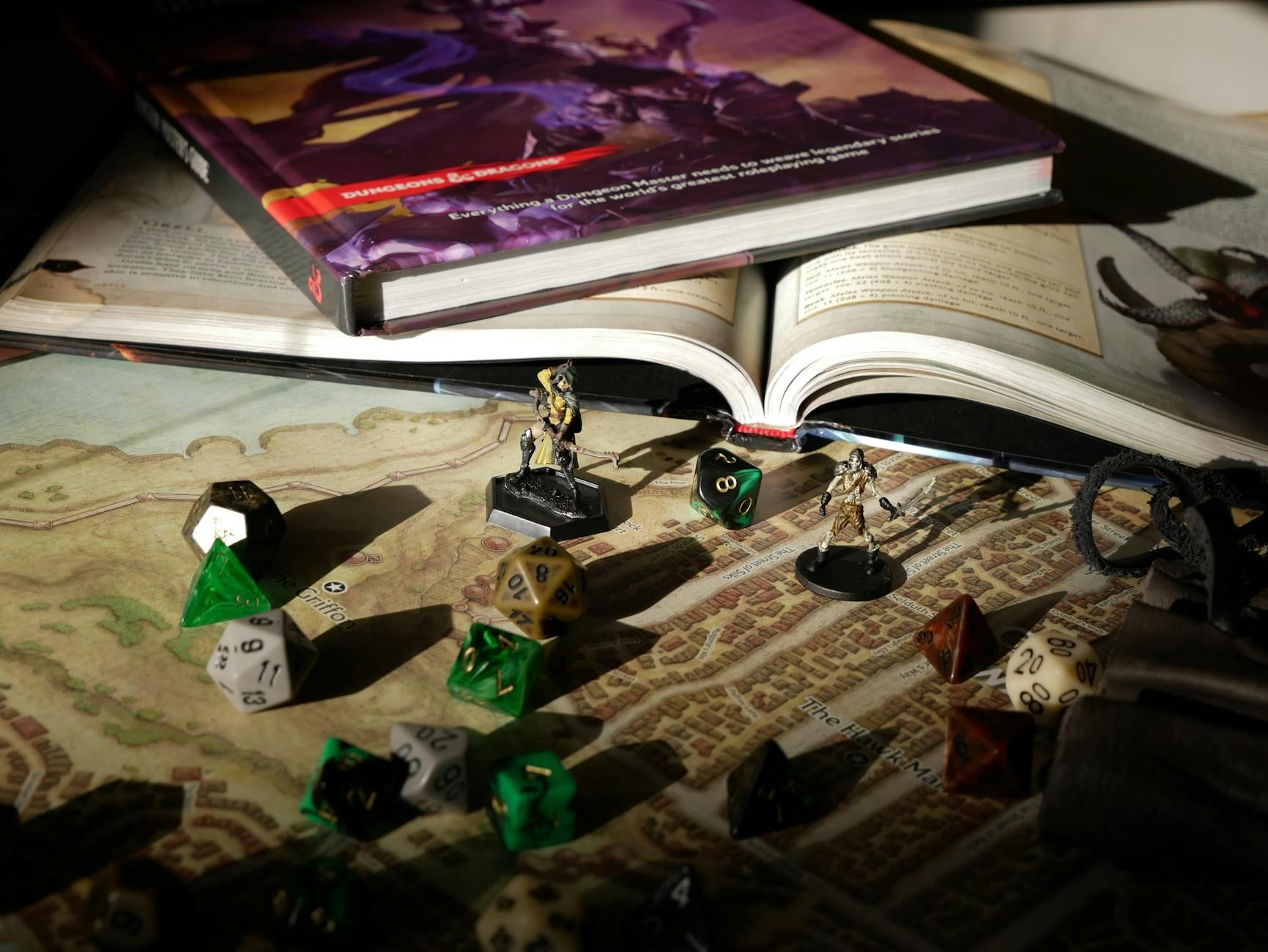
RPGs aren’t just for fantasy fans — they span genres like sci-fi and horror, and you learn the rules as you play, not before.
Getting started with role-playing games as a beginner opens the door to collaborative storytelling and endless imagination. RPGs often involve players assuming the roles of characters in a fictional setting, guided by a game master. With a mix of creativity, strategy, and teamwork, participants embark on quests, solve puzzles, and engage in battles, all while developing their characters’ stories.
Players become characters in fictional settings. Imagination, strategy, and social interaction blend together. A Game Master guides the narrative, making the world come alive.
In role-playing games (RPGs), players engage in structured conversation and improvisational acting, collaboratively crafting a story through decision-making and problem-solving, often using a simple rule system to resolve uncertainties. Each session involves creating characters, following a scenario set by the Game Master (GM), and tracking narrative consequences while rolling dice to determine o…
RPGs create a flow state by balancing challenge and skill through clear objectives and immediate feedback, keeping players deeply engaged in a shared imaginative task. This structured experience fosters social belonging, as players collaborate and rely on each other, while also allowing for creative expression and a sense of achievement through character development and narrative progress.
You think role-playing games are just for nerds at dimly lit tables.
John Boyega, Vin Diesel, and other actors embrace RPGs regularly. They see them as a fun escape and a platform for storytelling beyond the screen.
Artists and corporate teams, too. RPGs bring unexpected people together.
The hobby now fits anyone who loves a story and a challenge. It's where problem-solving meets pure imagination.
Next, let's uncover what makes RPGs uniquely engaging.
Your first session will feel like being handed a script in a language you almost speak. The GM describes a tavern, a forest, a collapsed bridge — and everyone at the table looks at you expectantly. You open your mouth. The gap between what you imagined saying and what actually comes out is wider than you expect. It's not stage fright exactly. It's the specific discomfort of making decisions for a character you barely know yet.
The dice don't care how good your idea was. You'll roll to pick a lock, fail spectacularly, and watch the story pivot because of it. That's not a bug — that's the whole point. But in the moment, especially early on, it feels like the rules are fighting you. Most beginners are surprised to find that the rulebook is the least important thing in the room. The GM and the other players are constantly improvising around it.
The thing nobody warns you about is the silence. Someone asks what your character does, and your brain goes blank. The table waits. It lasts maybe five seconds, but it feels like a full minute. Experienced players aren't judging that pause — they've all lived inside it. The table has its own rhythm, and it takes two or three sessions before you start to feel it rather than fight it.
By the end of your first real session, something small will click. A decision you made will ripple into the story. Another player will react to your character like they're real. That moment of narrative consequence — where your choice actually mattered — is what keeps people coming back for years. Before you get there consistently, though, there are a few beginner mistakes that slow almost everyone down.
When to start: 10:00 AM
Duration: 1.5 hours
Cost to try: $0
Success criteria: If you complete a practice scene with a finished character sheet and make 3 distinct in-character choices during play, do session 2.
New players read rulebooks cover to cover before touching a dice. It feels responsible. But RPG rules only make sense once you've seen them in action at the table.
Start playing after learning one core mechanic: describe your action, roll when the outcome is uncertain, accept the result. Everything else fills in naturally as you go.
Beginners fixate on what their character sheet technically allows. If it isn't listed, they assume they can't do it. This kills creativity fast.
The sheet tracks your character — it doesn't define their limits. The GM can rule on anything you attempt. Describe what you want to do and let the table figure out the dice together.
RPGs aren't competitive. But players coming from board games or video games often optimize for the best outcome every single turn. That mindset drains the fun from everyone at the table.
Interesting failures move a story forward more than perfect successes. When something goes wrong for your character, lean into it. That's where the best moments actually come from.
It's tempting to build the most powerful or mechanically interesting character available. Then sessions start and you have nothing to say about who that person actually is.
For your first character, borrow a personality you already know — a fictional hero, a real person you admire, even yourself in a strange situation. Familiarity makes roleplay far less intimidating.
Some newcomers try solo RPGs or solo campaigns because group scheduling feels hard. But RPGs generate energy through other people reacting to your choices. Remove that, and the feedback loop breaks.
Find one other person before you find a full group. A two-player game with one GM is enough to feel the real pull of the hobby. Communities like r/lfg exist specifically to connect people fast.
Elder Scrolls Online (ESO): The official forums are buzzing. Dive into sections on combat, character mechanics, LFG, and role-play communities. People are welcoming and friendly.
Final Fantasy XIV (FF14): Their community forums and Discord servers are vast. Perfect for role-play enthusiasts and known for having one of the best multiplayer environments around.
Guild Wars 2 (GW2): Stay engaged with active forums and community channels.
Be upfront about your level: Say you're new to "[game name], looking for a welcoming guild/group."
Ask for guidance: Try, "What's the best way to get started?" or "Any tips for new players?"
Express genuine interest: Mention your excitement to learn about specific game aspects.
Show respect: Say, "Thanks for having me! Happy to learn from experienced players."
Clarify your goals: Whether you're into casual play, role-play, or raiding, let them know.
Positive vibes and low toxicity are common. Join for active forums, vibrant Discords, and welcoming atmospheres.
Role-play is embraced, especially in FF14, ESO, and GW2.
Essential Reddit communities include r/elderscrollsonline, r/ffxiv, and r/Guildwars2.
Evolves from AD&D in the 1970s. Engage in challenge-based gameplay where you grow with each encounter. Rules are the neutral force ensuring fairness and balance.
Embrace the power of the GM with Old-School Renaissance. This style emerged in the late 2000s with less focus on mechanical fairness. Prioritizes in-world choices and GM authority.
Narrative-driven games put story first. Emphasizing character drama and collaborative plot over strict rules. Inspired by Nordic LARP, they reshape tabletop experiences.
Simulation games focus on realistic interactions. The rules are there to make every move count, keeping the game world's consistency intact.
Explore the 90's Standard Hybrid, blending Theatre and Simulation. Popularized by White Wolf, it uses a noteworthy system of Attributes, Skills, with resolution mechanics.
If you want a related angle, Rummy is the natural next stop.
Some of the same instincts show up in Reversi — worth a look if this clicked.
Another variant that pulls from the same roots is Mechanical Puzzles.
The skill that separates players who thrive from players who stall is learning to make decisive choices with incomplete information.
Most new players freeze waiting for the "right" move. They want more details, more certainty, more rules to consult. But the GM can only work with what you give them. The story only moves when someone commits to an action and lives with the consequence.
Here's where it clicks. A bad decision in an RPG isn't a failure — it's a plot point. The dice resolve uncertainty. The narrative absorbs whatever happens next. Players who improve fast stop optimizing and start reacting. They treat every session as a series of interesting problems, not a test to pass.
That mindset is also what makes RPGs genuinely absorbing rather than stressful. Once you trust the system to handle outcomes, the game opens up. The next step is finding the right version of that system for how you actually want to play.
Run four sessions over about a month — once a week works fine. That's enough time to make a character, stumble through a scenario, and feel what the rhythm actually is.
You glance up and two hours have gone by without noticing. That flow state is the signal — this hobby has you. Start thinking about which variant fits your style from the list above, and look for a consistent group you can commit to weekly.
Indifference after four sessions usually points to a mismatch in style, not the hobby itself. The group and the ruleset matter more than most beginners realize. Try a different variant — if you ran a crunchy tactical game, switch to a narrative-first one, or vice versa — before writing it off.
Sitting through sessions felt like an obligation rather than a choice. That resistance means the collaborative, conversational format isn't where your energy goes. Single-player video game RPGs scratch a similar creative itch without the group dynamic — worth exploring instead.
You find yourself sketching your character's backstory between sessions — unprompted, just because you wanted to. That kind of uninvited thinking means the story has moved in and made itself at home.
Role-Playing Games is a deeper commitment than most boredom cures — for lighter options, check things to do when bored.
Not entirely; beginners can learn the rules as they play. A basic understanding helps.
Absolutely! Platforms like Roll20 and Discord allow for online RPG sessions.
Check online communities or use platforms like Meetup to connect with other players.
Many RPGs have family-friendly versions, making them great for kids and adults alike.
Sessions can range from 2 to 6 hours, depending on the group's preferences.