BoredomBusted — Find Your Next Favorite Thing To Do
Discover hobbies, activities, places, and ideas that spark joy. Whether you're looking for something creative, active, social, or relaxing, BoredomBusted helps you find your next favorite thing to do.
Browse our hobby guides, things-to-do collections, and place ideas to never be bored again.
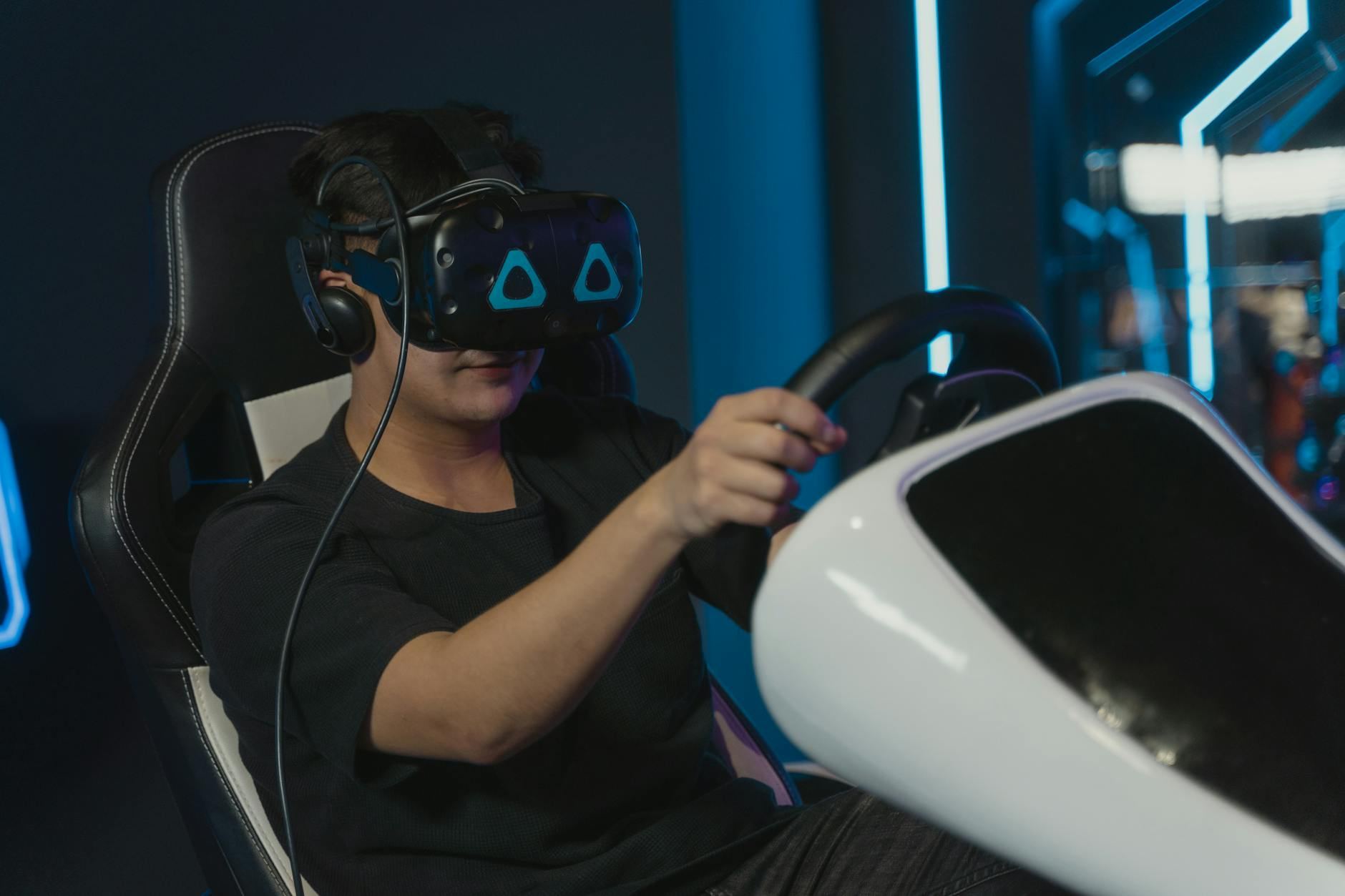
Simulation gaming isn’t just for escapism; it's a rigorous mental workout that trains you in decision-making and systems management under pressure.
Getting started with simulation gaming as a beginner allows you to immerse yourself in detailed, rules-based models of various real-world scenarios. A city, an aircraft, a farm, a football club — your decisions produce realistic consequences over time.
Unlike action games, nothing here rewards reflexes.
This hobby rewards people who want to understand why things work — and then make them work better through deliberate, strategic decisions.
In simulation gaming, players engage in managing resources, navigating complex scenarios, and making strategic decisions in digital or tabletop environments. They input commands using controllers or keyboards, monitor metrics like time and energy, and adapt to the dynamic feedback of the simulation, which reflects the consequences of their choices. This involves both physical actions, like clicki…
Simulation gaming fosters a flow state by matching challenges to player skills, creating continuous engagement through real-time feedback on decisions. Players experience a sense of accomplishment as they navigate complex systems, with randomized events ensuring novelty and preventing stagnation. This mechanic keeps players invested in their unique experiences and encourages iterative learning th…
You think simulation gaming is just escapism for people pretending to be pilots or farmers. It sounds like a niche pastime, doesn't it? But there's a lot more to it.
Imagine spending hours on a virtual city's transit system. One player did, only to see she'd independently arrived at a design used in real-life – the hub-and-spoke model. She wasn't guided by a textbook. Just the game's relentless logic.
It's not about pretend worlds or careers. It's about training your brain to see patterns and solve complex puzzles.
Next, consider which type of sim suits you – because choosing between a farming simulator and a military logistics sim isn't a simple decision.
Flying a commercial airliner through a storm looks like a flow state. But sitting down to try it feels like you're given a manual in a foreign language with the plane already moving.
Getting started is often more overwhelming than you expect.
You're buried under menus and settings, guessing aircraft weights, and accidentally taxiing into a fuel truck. It's not peaceful or methodical at first; it's chaos. The chaos is a feature, not a flaw.
At first, everything feels wrong: the controls don't make sense, and tutorials skip basics assuming you understand terms like slew mode. This learning curve catches many off guard.
Consider disabling crash damage and failure systems at the start. It's about removing noise while you learn where the controls are hiding. Specificity replaces confusion, and that's when it becomes engaging. Keep going, because next, we dig into common pitfalls to avoid.
When to start: Morning
Duration: 1.5 hours
Cost to try: $25 for a game purchase or expansion
Success criteria: If you complete the tutorial and make 3 meaningful decisions that each visibly change the game state, do session 2.
Newcomers often mistake realism settings for depth, thinking both are equivalent. But immersing in complexity without understanding basics isn't immersive—it's just frustrating.
Begin with the lowest difficulty that still introduces meaningful consequences. Add complexity gradually as you master each system.
Ignoring the tutorial to watch a YouTube recap leads to endless confusion. You waste hours hunting for something like the fuel flow switch.
Engage actively with tutorials using your own controls. Building muscle memory this way makes a huge difference.
Sims lure you with promises of full fleets and massive mods, causing beginners to splurge right away. But this can overwhelm you.
Stick to the base game until completing a full campaign. Only then decide if you need more.
Experience with actual cars or planes causes battles with the simulation's alternate logic. Your instincts clash with in-game mechanics.
Treat the sim as a separate set of rules initially. Integrate your real-world skills later on.
The loud modding community makes starting with mods tempting. Yet, diving too early creates chaos when issues arise.
Limit yourself to one quality-of-life mod after 10 hours. This helps you identify whether problems stem from you, the game, or the mod.
Simulation gaming is almost entirely home-based. Your setup, your schedule, your rules.
However, some dedicated gaming cafes and LAN centers host sim nights. Hobby shops may also run meetups for racing or flight sims using high-end rigs.
Approach an event or online forum with this: "I'm brand new – what sim and what settings should I actually start with?"
That question gets you a real answer instead of a spec sheet – communities love helping those who ask.
Flight sim offers a deep dive into aviation with full cockpit procedures and real-world weather. It's a commitment with hardware costs to match.
Best for those fascinated by aviation, not seeking fast action.
A basic HOTAS starts at $80–$150; full cockpits can reach thousands.
Racing sims offer skill transfer similar to real driving. No assists, real physics, and consequences for errors.
Ideal for those focused on driving mechanics, not just speed.
Wheel and pedals are a must for serious play; entry options start at $150.
City building games like Cities: Skylines let you manage rather than react. Build logical systems and watch unexpected chaos unfold.
Great for SimCity fans or puzzle lovers.
Base game with a few mods suffices; no special gear needed.
Elite Dangerous for exploration; Kerbal Space Program for learning orbital mechanics. KSP teaches real physics subtly.
Perfect for those drawn to systems and scale without a tutorial.
Standard PC setup is all that's required.
DCS World and Arma are akin to training tools, not just games. These require serious time and dedication to master.
Aimed at those with a military background or deep interest in tactical detail.
DCS modules cost $40–$80, and expenses can add up quickly.
Some of the same instincts show up in MMORPG Gaming — worth a look if this clicked.
Another variant that pulls from the same roots is Sandbox Gaming.
Another variant that pulls from the same roots is PC Gaming.
Readers who enjoy this often gravitate toward Strategy Gaming next.
If you want a related angle, Speedrunning is the natural next stop.
Many beginners waste weeks on settings like resolution and controller bindings. They focus on individual details but miss the game-changing skill of understanding the system.
The crucial skill is seeing why things happen, not just what happened. Imagine the insight gained from knowing your descent rate is 200 feet per minute too fast, letting you adjust variables next time instead of simply crashing.
Develop this skill, and every failed attempt becomes data, not frustration. You stop repeating mistakes because you see why they happened. Without understanding the system, 80 hours in a sim leaves you guessing. You're reacting instead of seeing the system.
Commit to 8 sessions over 30 days. Roughly two per week lets you experience a complete simulation loop while keeping your schedule manageable.
If you're constantly drawn back, logging in before you know it, that's the hobby taking hold. It means the loop is engaging you naturally. Consider honing your skills by choosing one simulation and diving deeper into its nuances.
If the sessions leave you indifferent, it indicates a lack of compelling challenge. Rather than dragging it out, explore hobbies that offer immediate rewards, like strategy games or tabletop wargaming, which provide satisfying complexity without a steep time investment.
If you're counting down the minutes, face that reaction squarely. It's not about learning patience; it's recognition that the slow pace isn't your style. Redirect your energy toward activities that feel invigorating rather than obligatory.
The one sign you shouldn't ignore: diving into aviation videos at midnight or obsessing over aircraft specs before playing. That interest and curiosity signal a natural fit, often more than the sessions themselves.
If nothing here clicks, our guide to what to do when bored covers shorter, lower-commitment options.
If nothing here clicks, our guide to what to do when bored covers shorter, lower-commitment options.
You can begin with just a computer or console and a basic controller, though many enthusiasts invest in specialized equipment like flight sticks, racing wheels, or VR headsets for a more immersive experience. Most popular simulation games run on standard hardware, so expensive gear isn't required to get started.
Basic gameplay can be grasped in 1–2 hours, but mastering complex systems and decision-making typically takes 10–20+ hours depending on the game's depth. Games like city builders or flight sims have a gentler learning curve than complex strategy simulations.
Most simulation games offer tutorial modes and difficulty settings specifically designed for newcomers, making them accessible regardless of experience. The learning curve is gradual, allowing you to build skills at your own pace before tackling advanced scenarios.
Prices range from free-to-play titles and $20–$40 indie simulations to premium games at $50–$70, with some specialized sims costing more. Many platforms offer subscription services that provide access to large libraries of simulation games.
Simulation gaming sharpens critical thinking, strategic planning, resource management, and problem-solving by requiring you to navigate complex systems and anticipate consequences. These skills transfer to real-world decision-making in areas like project management, finance, and logistics.
Most simulation games are designed for single-player experiences where you work at your own pace against the game's systems. Many also offer optional multiplayer or cooperative modes if you want to compete or collaborate with other players.