BoredomBusted — Find Your Next Favorite Thing To Do
Discover hobbies, activities, places, and ideas that spark joy. Whether you're looking for something creative, active, social, or relaxing, BoredomBusted helps you find your next favorite thing to do.
Browse our hobby guides, things-to-do collections, and place ideas to never be bored again.
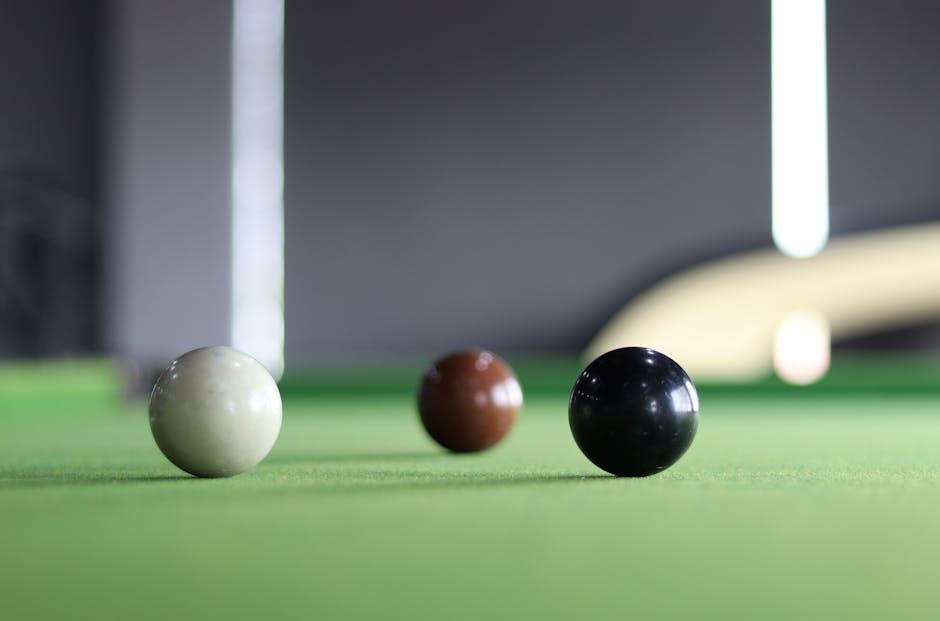
Snooker isn't just a quiet game for retirees; it's a high-stakes mental endurance challenge where precision and concentration can redefine your strategy entirely.
Getting started with snooker as a beginner can be an enjoyable challenge, as it involves mastering precision and strategy on a 12-foot table with 22 balls – 15 reds, 6 colors, and the cue ball.
Players alternate potting a red then a color to build a score, up to a maximum 147 break.
What separates it from pool isn't just the table size – it's the precision required.
Snooker punishes imprecision at distances pool never demands.
In snooker, players engage in repetitive shot execution, including cueing drills for precision, potting exercises from various positions, and practicing positional play to control the cue ball. Advanced routines involve multi-shot sequences and defensive safety shots, all aimed at improving skill through focused practice. Players set specific targets to track their progress, refining their techni…
Snooker combats boredom by providing immediate skill feedback and a clear progression pathway; practitioners experience visible results from their shots, which fosters a sense of accomplishment. The structured yet varied practice routines keep engagement high, while the challenge of mastering cue ball control encourages sustained motivation and development.
You think snooker is something retired men watch on a Sunday afternoon with the curtains half-drawn. Slow, quiet, a bit dull — basically golf but indoors. That assumption is costing you one of the most genuinely absorbing hobbies you could pick up.
Snooker is a geometry and physics problem that resets every single shot. The angles, the pace, the spin all interact in ways that take years to fully read.
It's a mental endurance sport disguised as a parlour game. Losing concentration for thirty seconds can hand the entire frame to your opponent — and professional frames run for hours.
The silence is the pressure, not the absence of it. Every missed shot is audible, visible, and completely yours to own.
Ronnie O'Sullivan once made a 147 — the maximum break, every ball potted in sequence — in 5 minutes and 20 seconds. The crowd barely breathed.
Five minutes.
Every ball.
That's not a passive sport — it's calculated aggression executed under total silence, and O'Sullivan made it look inevitable.
You're already wondering if you could even hold the cue correctly. That's exactly where the next section starts.
Stepping into the snooker hall is like entering a new world. The table stretches out in front of you, more expansive than it seemed on TV. The cue feels awkward in your grip, and the balls move unpredictably, betraying your intentions.
The first session feels brutal. Shots veer off course, and your bridge hand betrays you. You swing and miss, struggling to make contact, let alone potting a ball.
By the second week, the joy of potting a ball intentionally hits unexpectedly hard. It feels like a win, even if it took 45 minutes to land.
Snooker isn't about spatial reasoning. It's about precision. Millimetres matter, and every crooked cue action gets punished. This attention to fine detail is new territory.
Don't aim at the pocket first. Instead, aim through the cue ball to a specific point on the object ball. Beginners shoot directly for the pocket, making everything drift wide. Proper aiming changes your game.
The next part digs into the mistakes that keep new players frustrated.
When to start: Morning
Duration: 1 hour
Cost to try: $0
Success criteria: If you can pot 5 reds into a corner pocket and leave the cue ball within a chalk circle beside the blue spot, do session 2.
The table feels foreign, so you tighten your hold on the cue. It seems like the safest move.
Loosen your grip and let the cue swing like a pendulum, not like you're throwing a punch.
You're thrilled when the ball sinks into the pocket. But you've parked the cue ball in a spot that kills your next shot.
Pick a target position for the cue ball before you shoot, then plan your shot strength and angle from there.
Proximity feels more precise, but you're sacrificing your cue's natural rhythm.
Place your bridge hand with about 25–30cm between it and the cue ball for smooth acceleration.
Your gaze fixes on the ball you want to sink, not the exact spot your cue ball should hit.
Practice identifying the contact point first, and align your stance with that target.
You peek to see the pocket capture the ball. That motion disrupts your alignment at the point of impact.
Keep your chin on or near the cue. Wait until you hear the pocket before looking up.
Snooker is mostly played indoors. Snooker clubs, along with pool and billiards halls, are your go-to spots. Some leisure centers and working men's clubs have tables, but the vibe and community are at dedicated clubs.
Walk in and introduce yourself by saying: "I'm a complete beginner – do you hire tables by the hour and is there anyone who can show me the basics?"
This often leads to a discounted first session, a house cue recommendation, and maybe even a free quick lesson from a regular.
Regulars at snooker clubs are incredibly helpful to newcomers. They're usually eager to share tips and tricks.
This version swaps the standard 15 reds for just 6, cutting game time to 20–30 minutes. It's the go-to for fast TV coverage and suits smaller venues. Ideal if you want competitive play without dedicating an entire evening. No extra cost, since table and equipment remain the same.
Played on a smaller pool table with snooker rules lightly applied. You get strategic thinking without needing a full 12-foot table. Beginners often start here due to accessible tables and cheaper rates. Great if you can't afford or find time on a regulation table.
This format adds two extra colored balls, pink and purple, pushing breaks higher and offering new challenges. It's a professional experiment, not widely played, making finding a set-up tricky. Best for experienced players exploring strategic variety, but not relevant until you're comfortable with standard snooker.
Removes all reds, keeping just the six colors. Frames last under 10 minutes. Excellent for beginners practicing potting and positional play without a full frame's complexity. It's a quick format for warm-ups with no new gear needed.
In this multi-player format, each player has a set number of lives, losing one for every missed shot. It's perfect for social settings where six can play on one table all at once. Keeps everyone involved and takes snooker from spectator sport to group activity quickly, with no gear changes needed.
Another variant that pulls from the same roots is Carom Billiards.
If the texture of this appeals to you, Dominoes is built on similar bones.
Miniature Terrain Building lives in the same world — different mechanics, similar appeal.
Most beginners focus solely on potting balls.
That's why they stay stuck at the same level.
The crucial shift comes from understanding
cue ball position.
Position play isn't just about where the cue ball ends up.
It's about anticipating each shot's effect on the white's path.
Knowing your exact target on the object ball and the pace needed to land the cue ball in the best spot for your next move.
It's not about power or spin tricks.
When your position is precise, the table opens up.
Balls that seemed awkward become straightforward.
Without it, you're stuck improvising instead of planning a break.
Snooker masquerades as a potting game.
In reality, planning shines through cue ball positioning.
Commit to 8 sessions over 30 days. Play roughly twice a week to get comfortable and see if this hobby sticks.
Replaying shots in your head on the drive home means something clicked. Your brain is engaged, trying to solve a puzzle it likes. If that's you, book a membership, find a practice partner, and start exploring the full table.
If you're indifferent, you're okay to play, but it's not a priority. This often signals that solo practice isn't your style. Try joining a local league for a change of pace before making any decisions.
Feeling like you didn't want to be there is telling. If the silence felt oppressive and the slow pace felt like wasting time, acknowledge it. Some hobbies just don't land with everyone, and that's alright.
The sign you're onto something: you're watching a snooker match and focusing on cue technique instead of the score. That shift in what you notice is a clear marker of interest. Most dedicated snooker players describe having this moment.
Certain barriers mean snooker might not be the right fit. If the nearest club forces a significant drive, or you have back or shoulder issues, these factors complicate things. The cue action can strain your body every single shot, so prepare before jumping in. If slow progress is demotivating, this game might test your patience, as it demands weeks to master new skills.
For ideas that take five minutes instead of five weeks, see things to do when you're bored.
Most beginners can learn the fundamentals of snooker—grip, stance, and basic shot-making—within 4–6 weeks of regular practice. However, developing consistency and understanding strategy typically takes several months of dedicated play to build confidence at the table.
Snooker uses 21 colored balls plus a white cue ball on a larger table (12 x 6 feet), while pool uses 16 balls on a smaller table (9 x 4.5 feet). Snooker requires hitting red balls first in alternating turns with colored balls, making it more strategic and precise than pool.
You can start playing snooker by joining a local club for $10–$30 per hour table rental, with membership fees typically ranging from $50–$200 per month. Home setup costs vary widely—a quality snooker cue runs $100–$300, while a full table can cost $3,000–$10,000+.
Snooker is generally considered more difficult than pool because it demands greater precision, longer shots, and strategic thinking about ball positioning for future turns. The smaller pockets and larger table also make consistency and angle calculation more challenging.
You'll need a snooker cue, a set of 22 balls (21 colored balls and a white cue ball), a triangle rack, chalk, and a snooker table. Most clubs provide these, so beginners can start playing without purchasing anything upfront.
Snooker is very accessible casually—many people play for leisure and social enjoyment at local clubs without ever competing seriously. While there are professional tournaments and competitive leagues, recreational play focuses on fun, skill development, and friendly competition.