BoredomBusted — Find Your Next Favorite Thing To Do
Discover hobbies, activities, places, and ideas that spark joy. Whether you're looking for something creative, active, social, or relaxing, BoredomBusted helps you find your next favorite thing to do.
Browse our hobby guides, things-to-do collections, and place ideas to never be bored again.
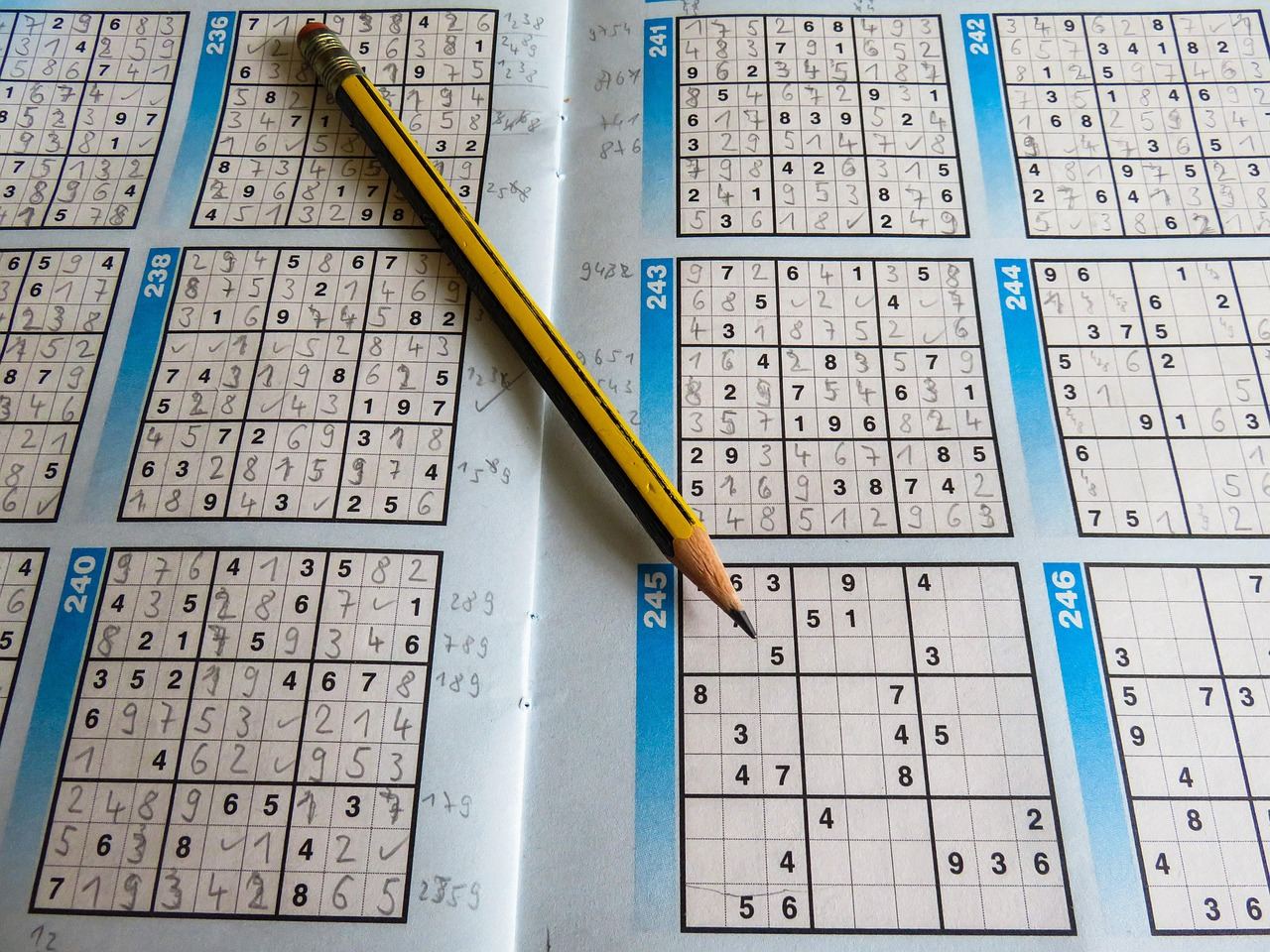
Sudoku isn't just about filling in numbers — it's about mastering the art of constraint elimination, where missing a 'naked triple' can derail your progress.
Getting started with Sudoku as a beginner involves understanding the basic rules and strategies for filling in a 9×9 grid divided into nine 3×3 boxes.
You fill every row, column, and box with the digits 1–9 — no repeats.
Unlike crosswords, it requires zero vocabulary or trivia — just logic, pattern recognition, and the willingness to think one step ahead.
In Sudoku, you fill a 9x9 grid with digits 1-9, ensuring each row, column, and 3x3 box contains each digit exactly once, using techniques like elimination and candidate notation to track possibilities and methodically solve puzzles.
Sudoku induces a flow state through deep concentration on logical steps, fostering mindfulness that reduces stress, while immediate feedback from solving puzzles creates a sense of accomplishment and enhances cognitive skills like pattern recognition and memory.
You think Sudoku is a number puzzle. But that's like thinking chess is about knights and pawns.It's the wrong frame, and it's why interest fades quickly.
Sudoku relies on eliminating possibilities rather than calculation.Constraint elimination is the game. You narrow down choices until only one fits.
The challenge is in the logic and the patterns you spot under pressure. Techniques like spotting hidden pairs or locked candidates become second nature.These aren't subtle; they're techniques you're supposed to see.
Consider a 'naked triple.' Three cells in a row have the same three potential numbers, and nowhere else in that row can you put those numbers. Missing this isn't a mistake in technique; it's because nobody told you to look.
So now you're pondering which difficulty to tackle. The real question hinges on logic steps you want to navigate. It's not as simple as starting with 'easy.'
Sitting down to solve Sudoku feels like deciphering a foreign language. It's a mental puzzle where nothing clicks initially. This feeling doesn't last forever — usually about two weeks is the learning curve.
Early puzzles are slow going. Easy puzzles take ages, and getting things right feels like a fluke. This is frustrating but also typical. The frustration starts to melt into understanding as you learn.
It's not about Sudoku becoming easier. Your brain starts viewing the grid as a dynamic system, not just random boxes. This shift isn't obvious; it sneaks up on you as patterns start to make sense.
Be firm with yourself: don't guess. Don't place numbers unless you're sure. This habit is what separates the confident solver from the cautious guesser and prevents most errors.
Mistakes will still happen, and that's where we'll focus next. Understanding these slip-ups is essential for progress.
When to start: Early morning
Duration: 1 hour
Cost to try: $0
Success criteria: If you fill at least 40 cells and finish with no row, column, or 3×3 box repeats, do session 2.
Getting stuck leads many to guess numbers, thinking it's progress. But each wrong guess can derail the entire puzzle.
Stop guessing and switch to a different perspective. Check a different row, column, or box for fresh insights without making errors.
Row and column scanning is common, but many forget the power of 3×3 boxes. They are just as crucial for eliminating possibilities.
Focus on one number and trace it through the boxes first. This often fills multiple cells before needing row or column checks.
Beginners hesitate to jot down candidate numbers, viewing it as taking a shortcut. This choice leads to getting stuck on anything beyond easy puzzles.
Use pencil marks as a standard technique. Populate each empty cell with potential numbers before committing to one.
Instead of retracing steps, beginners often press on when they hit a snag, hoping the issue resolves on its own.
When faced with duplicates, backtrack immediately. Erase to the last uncertain placement, not the first visible mistake.
Diving into difficult puzzles can be tempting, but they demand strategies that don't show up in easy ones. Jumping ahead often leads to impasse.
Stick with easy puzzles for at least a week. You're honing elimination techniques that are crucial for tackling harder grids.
Sudoku is almost entirely a solo pursuit. Libraries, coffee shops, and community centers are where you'll find people playing — usually with a book or a phone, no group required. Competitions do exist, but they're clustered around dedicated puzzle conventions and the occasional math or logic club meetup, which means you have to go looking — the community won't show up around you naturally.
When you find a group, introduce yourself as someone comfortable with standard puzzles but new to timed or competitive play. That framing tells organizers exactly where to slot you — and usually gets you a guide for the first round instead of a cold start.
No given numbers – instead, caged groups of cells must sum to a target value. It's harder than it looks, because you're doing arithmetic and logic at the same time.
Best for solvers who find standard Sudoku too easy after a few weeks.
A 6×6 grid with numbers 1–6. Same rules, smaller puzzle – solves in 5–10 minutes instead of 30.
This is the one to start with if standard Sudoku feels immediately overwhelming.
Five overlapping 9×9 grids that share corner boxes. The grids constrain each other, so solving one helps crack the others.
Best for people who want a single puzzle that lasts an actual afternoon.
Standard grid, but both main diagonals must also contain 1–9 without repeats. That one extra rule changes more than you'd expect.
Best for intermediate solvers looking for a sharper challenge without learning a totally new format.
The standard 3×3 box regions are replaced with irregular, jigsaw-shaped zones. The logic shifts completely – box patterns you've memorized stop working.
Best for experienced solvers who want to genuinely reset their approach.
If you want a related angle, Nonograms is the natural next stop.
Morning Pages is a sibling pursuit and often surfaces the same kind of curiosity.
Most beginners stare at empty cells, trying to fill them in. The real game isn't about finding answers – it's about eliminating possibilities.
The skill is candidate tracking: actively maintaining a mental (or written) list of which numbers cannot go in each cell, rather than guessing which number can. You're not hunting for the right digit. You're systematically ruling out the wrong ones until only one survives.
Without candidate tracking, solving puzzles feels like magic. Some patterns pop out, but you get stuck and can't explain your process.
With candidate tracking, each cell becomes a manageable puzzle of what can't go there. Those hard puzzles? They stop feeling like luck.
You also stop making the classic backtrack error – filling in a number that felt right but breaks three rows later.
Twenty sessions over 30 days. That's the number – roughly every other day, with a few doubles built in for the weekends when you actually have time.
It's enough to move past the awkward phase where every puzzle feels like guesswork. It's not so many that you've sunk real time into something that isn't working.
If you want to come back – you're probably chasing a specific puzzle type or difficulty level, not just "more Sudoku." That's the signal. It means the logic system has started to feel like a language you're learning, not a test you're failing. Move to timed solving or start working the harder NYT grids.
If you're indifferent – don't extend. Indifference at session 20 almost always means the reward loop isn't landing for you, and another 10 sessions won't change the wiring. The puzzle isn't broken. The fit is.
If you actively didn't want to be there – that's data, not failure. Sudoku requires sitting with discomfort and incomplete information for stretches of time. Some people find that genuinely unpleasant, not just challenging. Read that honestly and move on.
You're on a train, bored, and you open the puzzle app without thinking about it. Not because you planned to. Just because it was there.
That low-friction pull – doing it before you've decided to do it – is the clearest signal that the habit has taken hold. It's specific to Sudoku because the sessions are short enough to be genuinely grabbable, not a commitment you have to psych yourself up for.
If sustained focus in silence genuinely agitates you – not bores you, agitates you – this hobby will feel like punishment.
Sudoku has no social layer, no movement, no noise. That's the whole product.
If you need visible creative output to feel like time was well spent, logic puzzles will leave you cold.
There's nothing to show, nothing to make, nothing to share that means anything outside the solving experience itself.
If your vision makes small printed grids difficult and screens cause you headaches, the format itself becomes the obstacle – and that friction compounds fast.
If you're still in after reading all that, the resources section below has exactly where to start – no app rabbit holes, no paid subscriptions required on day one.
A typical Sudoku puzzle takes 10–30 minutes for beginners, while experienced solvers can finish one in 5–15 minutes. Harder difficulty levels may require 30 minutes to an hour or more. The time depends on your skill level and the puzzle's difficulty rating.
No special skills required — you only need basic number recognition and logical thinking. Sudoku uses numbers 1–9, but they're just symbols; no actual math or calculations are involved. Anyone can learn the rules in just a few minutes.
Easy puzzles have more numbers already filled in, allowing you to solve them through simple logic and pattern recognition. Hard puzzles have fewer clues and require advanced techniques like chains and subsets, demanding deeper deductive reasoning.
Yes, every properly designed Sudoku puzzle has exactly one unique solution. This is what makes Sudoku a logic puzzle rather than a guessing game — the answer can be deduced step by step.
Both work great. Digital apps offer unlimited puzzles, hints, and automatic error checking, while paper versions are portable and don't require batteries. Many people enjoy paper puzzles for a more tactile, focused experience.
Sudoku is completely free or very affordable. Most apps and websites offer puzzles at no cost, while printed puzzle books cost $5–15. You don't need any equipment except a pen or pencil to get started.