BoredomBusted — Find Your Next Favorite Thing To Do
Discover hobbies, activities, places, and ideas that spark joy. Whether you're looking for something creative, active, social, or relaxing, BoredomBusted helps you find your next favorite thing to do.
Browse our hobby guides, things-to-do collections, and place ideas to never be bored again.
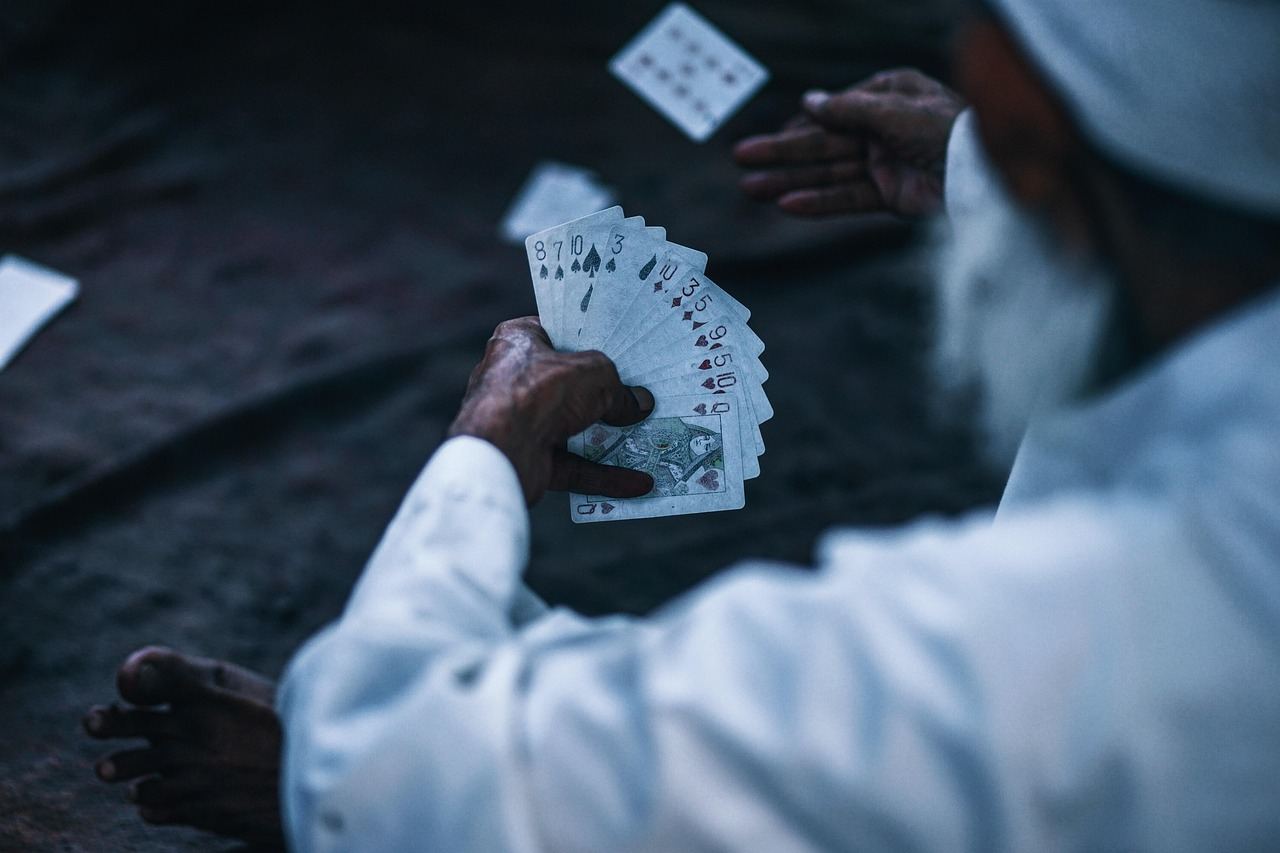
Traditional card games aren't just filler for dull moments; they're complex systems that sharpen your strategic thinking and social insights far beyond casual play.
Getting started with traditional card games as a beginner involves understanding the basic rules and strategies that govern play with a standard 52-card deck (sometimes with jokers) to play structured games governed by fixed rules.
Each game runs on a specific logic – trick-taking, matching, bluffing, or shedding cards – that players learn once and carry forever.
Unlike board games, there's no setup, no pieces to lose, and the same deck plays hundreds of different games.
In traditional card games like Poker and Bridge, players engage in strategic decision-making, calculating odds, and reading opponents' behaviors while managing their own hands of cards. This involves skillful play, including bluffing, strategic betting, and leveraging knowledge of game rules, all while interacting socially with others at the table.
Card games create a flow state through their combination of skill and chance, where players experience engagement and focus as they navigate complex decisions. This dynamic fosters social belonging and provides immediate feedback on skill improvement, driving both competition and connection among players.
You think card games are something you pull out at Christmas when the Wi-Fi goes down. A backup plan. Filler for people who don't have anything better going on.
That assumption is costing you one of the most genuinely skill-rich hobbies you can pick up for under $10.
A serious Cribbage player doesn't just count points – they're tracking which cards their opponent has already seen, estimating what's still live in the deck, and using that to decide whether to play aggressively or bait a mistake.
Not luck. Not instinct. Active, practiced thinking that gets sharper every time you sit down at the table.
The next section covers which game to start with and how fast the depth actually shows up.
Watching someone run a Rummy hand smoothly or snap down a perfect Cribbage count looks almost effortless. Then you sit down with the cards and realize you've been reading the map, not driving the car. The gap is real – and it's mostly about holding rules in your head while also reading the moment.
The first few sessions have a predictable shape. Rules feel like a wall. Wrong plays you didn't know were wrong. Everyone else seems to know something you don't. You lose hands you were sure you'd won.
That friction is temporary – but it doesn't dissolve on its own. It shifts when the rules stop demanding your attention and your attention turns to the other player. You stop losing blindly. Losing with a clear reason why is a completely different feeling than losing confused – and it's where real progress starts.
Week one, you're spending more mental energy on legal moves than on strategy – that's normal and expected. Week two, you start remembering what folded or got discarded, and it feels like a new sense switching on. By week three, you catch yourself making a play and immediately seeing the better one you missed. That's not failure – noticing the better move a beat late means you're starting to see the board. Week four, the rules stop being a checklist and the game underneath the game starts to show itself.
In most trick-taking and rummy-style games, your discard pile is information you're handing your opponent for free. New players throw cards without thinking about what they're revealing. Watch what goes to the pile as closely as what stays in your hand.
Slow. Frustrating. Weirdly compelling anyway. The game doesn't get easier – you stop fighting the structure and start using it. Those are completely different experiences, and the next section covers the mistakes that keep people stuck on the wrong side of that line.
When to start: Morning
Duration: 1 hour
Cost to try: $0
Success criteria: If you finished playing the game without any arguments over rules, schedule session 2.
New players read every rule because they're afraid of doing something wrong mid-game. Card games only make sense once you've felt the pressure of an actual hand.
Pick up a beginner-friendly game like Rummy or Go Fish, play three rounds with the basic rules only, then layer in the advanced stuff.
Most beginners treat each hand in isolation. The cards you fold teach you as much as the cards you play.
Before committing chips or points, ask one question: what is the strongest player at this table likely holding right now? That single habit forces you out of your own hand and into the full picture.
Poker strategy guides, Bridge tutorials, and Rummy tips all bleed together online. Beginners apply advice meant for one variant to a completely different ruleset.
Before watching any tutorial, confirm the exact variant name and search that specific term — Texas Hold'em vs. Five-Card Draw, Gin Rummy vs. Canasta. Generic advice is often worse than no advice at all.
Most beginners focus entirely on their own hand and treat the discard pile as background noise. That pile is a live feed of what your opponents need — and most players at your table aren't reading it.
Watch the last three discards actively. A card your opponent keeps passing on is almost certainly one they don't want — which tells you exactly how safe it is to hold or release.
Beginners link a losing streak directly to skill and walk away. Variance is the whole point — short sessions don't give you enough hands to see through the noise.
Commit to a fixed number of rounds before you sit down, not a fixed outcome. That way you're learning from a real sample instead of a bad ten minutes.
Card games happen in kitchens and kitchens only – until they don't. Game cafes, community centers, and libraries all run regular card nights, and dedicated card clubs meet in back rooms of places you'd never think to check.
Walk in and say: "I know the basics but I've never played in a group – what do you recommend for a first timer?"
That one sentence usually gets you a patient partner, a simpler variant to start on, and someone who will explain every rule you're about to break before you break it.
Rummy replaces trick-taking with set-building – you're matching cards by rank or run, not chasing a lead.
It's the easiest mental shift for anyone coming from *Go Fish* or basic card games. Gin Rummy tightens the rules and adds a scoring layer that rewards patience over luck.
Bridge is where traditional card games get serious – four players, two partnerships, bidding rounds, and a scoring system that takes weeks to feel natural.
This is the ceiling of the hobby, not the entry point.
Budget time, not money – a good Bridge book runs $15 and covers you completely.
Cribbage uses a physical peg board to track score, which sounds fussy until you realize it's actually faster than writing tallies.
It rewards card counting instincts – if you've ever automatically tracked what's been played, you'll take to this faster than most.
Best for two players who want something with real strategic depth.
Spades is a trick-taking game with bidding built in – you predict how many tricks you'll win before the hand starts.
It's more forgiving than Bridge and easier to learn in an afternoon.
Best for four players who want something competitive without a rulebook that needs its own index.
One player, one deck, no one to impress.
*Klondike* is the default "kill 20 minutes" variant – and it's genuinely harder than most people realize, with a win rate around 80% when played perfectly (most people aren't anywhere close).
Free, obvious, and still worth understanding properly before you dismiss it.
Cooperative Board Gaming lives in the same world — different mechanics, similar appeal.
Dominoes is a sibling pursuit and often surfaces the same kind of curiosity.
If this resonates, Trivia Nights explores a similar direction.
Most beginners obsess over memorizing rules or learning every card's value – that's not what separates a decent player from someone who actually wins.
The real plateau is playing your hand in isolation, never reading what your opponents are doing. The one skill is reading discards and draw patterns to reconstruct what's in other hands.
In games like Rummy, Gin, or Canasta, every card someone picks up or passes over is a confession – they're telling you exactly what suit or sequence they're building, and most beginners are too focused on their own cards to hear it.
Once you track what others are chasing, you stop feeding them the exact cards they need – and you start holding "useless" cards strategically because they're blocking someone else's win.
Without this skill, you'll make technically correct moves for your hand that are functionally suicidal for the game.
Eight sessions over 30 days — roughly two per week, spaced enough that you're reflecting between plays rather than just grinding through them back to back.
That number matters because one session tells you almost nothing about whether card games fit you. Eight sessions means you've played with different people, hit a losing streak, and sat with the slow-burn satisfaction — or absence of it — that only repetition reveals.
If you keep replaying hands in your head between sessions — wondering what a different bid or bluff would have done — that's not just enjoying the game. That's the hobby. The next move is to find a regular group and start reading strategy before you touch anything else.
If the sessions were fun but you don't feel pulled back, the social side working doesn't mean the game itself was the right format. Try one significantly different game before walking away — if Poker left you cold, Rummy or Bridge plays a completely different mental game.
If you were watching the clock, that's clean data. Card games reward people who enjoy navigating uncertainty and reading other players. If that premise bored you in practice, no amount of skill growth changes the foundation.
You've been mentally replaying a hand hours later — or explaining a rule to someone who didn't ask. That low-level obsession with decision trees is the actual engine behind every serious card player, and if it's already happening after a few sessions, the hobby fits the way your brain works.
No consistent group — and no real desire to find one. Solo card games exist, but the depth of most traditional formats lives entirely in human opponents. If your schedule or location makes regular play structurally impossible, you'll hit a ceiling fast and stay there.
Needing visible progress to stay motivated is a real mismatch here. Card game skill is invisible for the first few months — you'll lose to people who seem to be doing nothing special, and the improvements won't feel like improvements yet.
If the slow pacing actively irritated you during sessions — not bored, but genuinely frustrated — that friction doesn't disappear with experience. Impatience with the pace of play is a structural mismatch, not a skill problem.
Poker is a game of individual strategy and betting where players compete to win chips or money based on hand strength and bluffing ability. Bridge is a partnership-based game focused on bidding and trick-taking, requiring communication with your partner and strategic planning throughout the game.
Most traditional card games like poker or bridge last 30 minutes to 2 hours depending on the number of players and stakes involved. Casual home games are typically shorter, while tournaments or more competitive matches can extend longer.
No—you can play traditional card games casually with friends for free using just a standard deck of cards. Money is only involved if you choose to play for stakes or ante, which is entirely optional and up to your group's preference.
Both games are relatively easy to learn the basics within a few hours, but mastering strategy and psychology takes months or years. Starting with friendly, low-pressure games with patient players is the best way to build confidence and skill gradually.
You need a standard deck of playing cards and at least one other person to play with. Most traditional card games don't require any special equipment—just a table, friends, and willingness to learn the rules.
While luck plays a role in card distribution, traditional games like poker and bridge heavily reward skill, strategy, and psychological insight. Players who understand probability, position, bidding conventions, and opponent behavior consistently outperform casual players over time.