BoredomBusted — Find Your Next Favorite Thing To Do
Discover hobbies, activities, places, and ideas that spark joy. Whether you're looking for something creative, active, social, or relaxing, BoredomBusted helps you find your next favorite thing to do.
Browse our hobby guides, things-to-do collections, and place ideas to never be bored again.
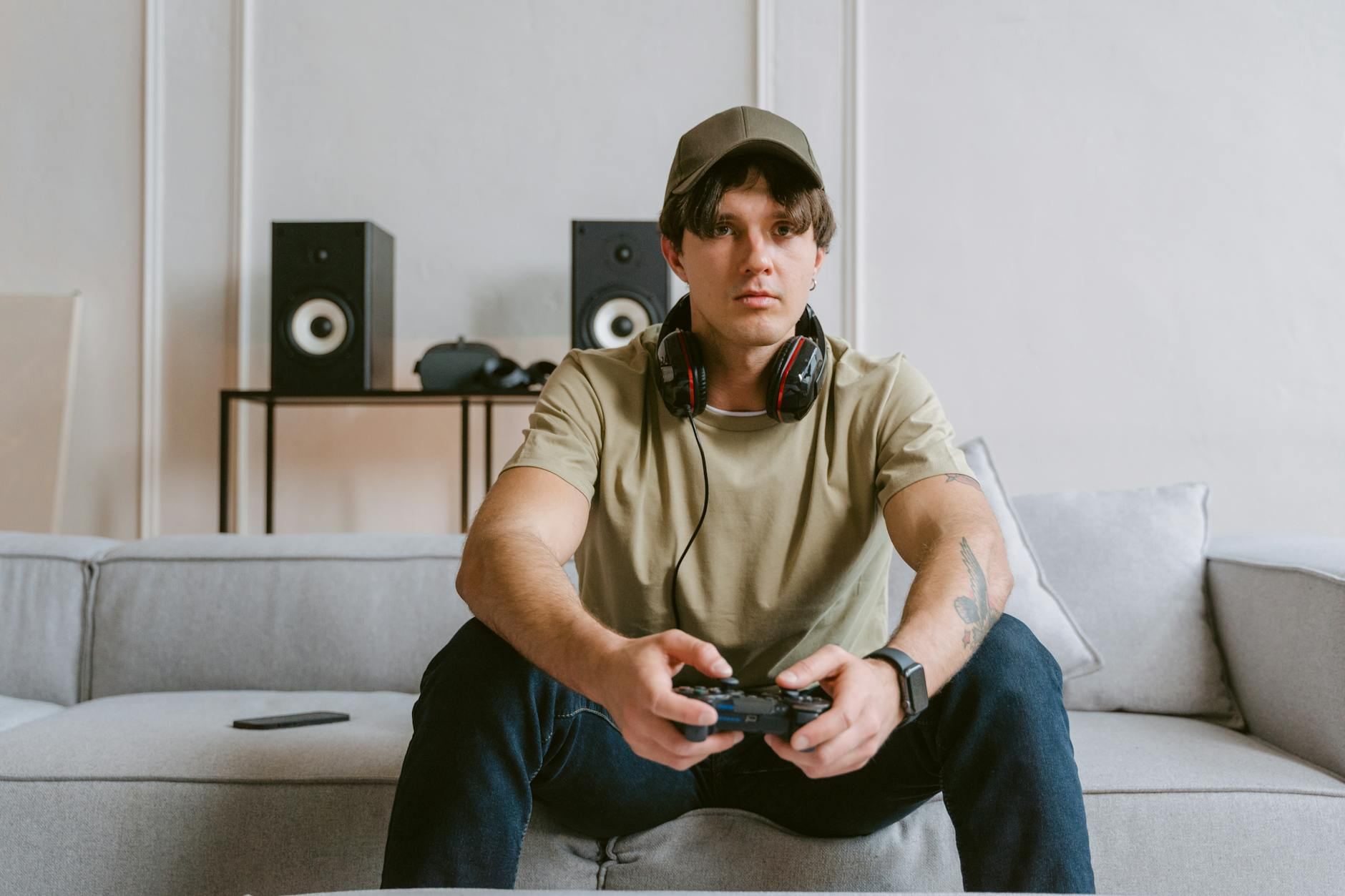
Gaming isn't just escapism—it's a high-pressure test of split-second decision-making and community-building that often leads to real-life friendships.
Getting started with video gaming as a beginner involves understanding the basics of gameplay mechanics and finding genres that resonate with your interests. Video gaming is interactive entertainment where you control what happens on screen — through reflexes, strategy, story choices, or all three.
Unlike passive media, the outcome responds to you.
Unlike sports, the barrier to entry is a couch and a controller.
That's the whole pitch.
In video gaming, you manipulate characters or elements on-screen using controllers or keyboards, engaging in physical actions like button presses and joystick movements while navigating various virtual environments, completing levels, solving puzzles, or competing against others in strategic turn-based games.
Video gaming induces a flow state through escalating challenges that match your skill level, providing immediate feedback and a sense of accomplishment as you master games, while also fostering social belonging in multiplayer settings that keep you engaged and connected.
You think gaming is how people waste time. Sit on a couch, tune out, accomplish nothing – the adult equivalent of eating cereal for dinner.
That assumption is wrong in a specific way that's worth naming.
A 2019 Oxford study found that people who played games like *Plants vs. Zombies* reported higher wellbeing than those who didn't – and the key variable wasn't which game, it was whether they played because they wanted to, not because they felt they had to.
That distinction – intrinsic motivation versus compulsion – is actually what separates a good experience from a bad one in almost every hobby.
You're already thinking about which games count as "real" gaming and which don't.
That's exactly what the next section is for.
Watching someone play looks effortless. The controller seems intuitive until it's in your hands and you're spinning the camera into a wall for the fourth time. That gap between spectator and player is real — and the first few sessions live entirely inside it.
Week one, you'll die to enemies the game clearly designed as a warm-up. Week two, button layouts start becoming muscle memory — you'll stop looking down at the controller mid-fight. Week three, something clicks: a fight, a mechanic, a single moment where you finally understand why people do this. By week four, you'll still lose, but you'll know exactly why — and that's the actual turning point.
Quit moment. Real quit moment. The game didn't get harder — you just got aware enough to notice your mistakes, which is the first proof you're actually learning.
Before session one, change the camera sensitivity. Default is tuned for people who've already adapted — dropping it 30–40% buys you the reaction time to actually learn, instead of fighting the controls and the game simultaneously. The next section covers the mistakes that keep people stuck past that point longer than they need to be.
When to start: Morning
Duration: 1 hour
Cost to try: $0
Success criteria: If you can finish a 30-minute story or objective mission and note one control you used well and one you need to practice, do session 2.
Controllers ship with sensitivity and button layouts tuned for nobody in particular — they're a statistical average, not a recommendation.
Spend 20 minutes in the settings menu before your first real session and bump controller sensitivity down by 30%. Most beginners over-correct and miss shots because the cursor moves faster than their hands can think.
Online lobbies are full of people who've logged hundreds of hours. Getting destroyed in your first ten matches trains your brain to associate the game with failure.
Finish the tutorial and at least two hours of single-player or bot matches first. Muscle memory for the controls needs to exist before competition can teach you anything.
New players lock onto the center of the screen because that's where the action is. The minimap feels like extra homework.
Force a habit: glance at the minimap every 8–10 seconds by setting a mental timer until it becomes automatic.
Watching someone else play a 40-hour RPG looks nothing like sitting down with one yourself. The same goes for sweaty competitive shooters.
Pick your first game based on session length that fits your actual life. If you have 30 minutes a night, a quick-match sports game beats an open-world epic.
Frustration is the fastest way to bake bad habits into muscle memory. Panicked inputs become your default under pressure.
When you lose three matches in a row, close the game and watch one YouTube breakdown of a player at your skill level before coming back.
Video gaming happens wherever you have a screen — your bedroom, a friend's couch, or a dedicated gaming lounge. Competitive players eventually migrate to convention centers and esports venues for tournaments, but most real practice happens at home.
Once you've found a community, knowing how to introduce yourself matters. The Esports Trade Association (ESTA) is the closest thing to a national governing body for the competitive scene — not a membership org for casual players, but a useful reference for how the ecosystem is structured and who runs what.
When you join a new group, lead with: "I'm still learning [specific game] — which role or mode would you put a newer player in first?" That question signals you're coachable, and experienced players consistently respond by teaching rather than farming kills.
You play alone, through a narrative with a beginning and end. No competition, no external pressure.
This is the best entry point for most beginners. You can stop, restart, and explore without anyone else's schedule mattering.
You're playing against or alongside real people, in real time. The social and competitive element is the whole point.
You'll hit harder difficulty spikes faster here than anywhere else. The community can be genuinely rough — go in with that expectation, not as a surprise.
Runs on your phone, usually free or cheap, built around short sessions. No console, no setup, no commitment.
The trade-off is real: most mobile games are designed to keep you opening the app, not to reward you for playing well.
Older consoles, older titles — think SNES, PlayStation 1, early 2000s PC games. The libraries are deep and the prices are low.
Starting here cuts out the noise of modern gaming's complexity — and the games are often genuinely excellent.
You wear a headset and your body becomes the controller. It's physically engaging in a way no other format matches.
Hardware starts around $300 and climbs quickly. Only worth the cost if you genuinely want something that gets you off the couch.
Another variant that pulls from the same roots is Canasta.
Some of the same instincts show up in Traditional Card Games — worth a look if this clicked.
Readers who enjoy this often gravitate toward Trivia Nights next.
Most beginners obsess over reaction time — grinding faster inputs, blaming lag, buying better gear.
The real ceiling isn't how fast your hands move. It's how fast your brain reads what's about to happen.
The skill is reading game state — scanning the screen to understand what's true right now and what's coming next, before it arrives.
Not reacting to what happened. Predicting what will.
Stop being surprised and you stop dying to situations you'd normally call "cheap." Those deaths aren't bad luck — your brain was still processing the last thing when the next thing hit.
Better hardware won't fix a brain that's always one beat behind.
After each death, ask what the screen was telling you three seconds before it happened.
Narrow repetition accelerates this faster than random variety. Pick one recurring situation — a specific enemy, map chokepoint, or fight type — and run it the same way ten times in a row.
Once this clicks, the next question is where in your specific game these reads matter most — and that depends heavily on the format you're playing.
Commit to 12 sessions over 30 days — roughly three per week. That's enough to get past the learning curve of a single game without burning out on novelty before anything clicks.
If you keep thinking about the game when you're not playing it — replaying a decision, planning your next build, wondering how the story ends — that's not distraction, that's the hobby working on you. Follow that thread. Try a longer game, a harder difficulty, or a genre that pushes the same feeling further.
If you finished the sessions and felt nothing either way, that's usually a genre mismatch, not a hobby mismatch. Puzzle games bore some people into a coma — the same people lose three hours to a strategy title without noticing. Extend by eight more sessions, but switch genres entirely before you write it off.
You dreaded sitting down.
Every session felt like a chore you were getting through.
That's real data. Gaming rewards people who get absorbed in systems or stories — if neither pulled you at any point across 12 sessions, the honest read is that this hobby doesn't suit how you want to spend your attention.
You're not playing much, but you're watching streams, YouTube playthroughs, and speedrun videos — and it doesn't feel like a waste of time. That low-level pull toward the world of a game, even secondhand, is a stronger signal than most people give it credit for. The interest is real. You just haven't found the right entry point yet.
If you have chronic wrist, hand, or shoulder issues, extended controller or keyboard use will make it worse — and this isn't something you push through. Some adaptations exist, but the baseline format is physically demanding in ways people underestimate.
If your schedule only gives you fragmented 5-minute windows, most games aren't built for that. Many rewarding titles require 20–40 minutes of uninterrupted attention just to reach a meaningful moment. Mobile gaming exists, but it's a genuinely different experience.
If unstructured time already feels difficult to justify, gaming will feel like a problem before it feels like a hobby. That's a real compatibility issue between this hobby and how you're wired right now — not a character flaw.
If none of those friction points apply, the practical next step is figuring out what to buy, download, or borrow first — without spending money on the wrong setup.
Looking for something lighter? Our boredom-busters guide is built for exactly that.
Startup costs vary widely: you can begin with free-to-play games on a basic PC or console ($200–$500), or invest $1,000+ for high-end hardware. Many games offer no upfront cost, though some popular titles range from $20–$70. Your budget determines your platform and game selection, but entry barriers are lower than ever.
Start with a gaming device: a budget gaming PC, PlayStation, Xbox, or Nintendo Switch. Add a controller or keyboard/mouse depending on your platform. You don't need expensive peripherals initially—focus on a stable internet connection and a comfortable seating setup. As you progress, you can upgrade to specialized equipment like mechanical keyboards or gaming monitors.
Basic competency takes 20–40 hours depending on game complexity and genre. Competitive skill development requires 100+ hours of focused practice over weeks or months. Casual gamers never need to reach high skill levels—progression is self-paced. Single-player story games reward engagement over mechanical skill, making them accessible to all levels.
Modern gaming heavily emphasizes community through multiplayer modes, voice chat, guilds, and streaming platforms. You'll meet players worldwide and form genuine friendships through shared goals and teamwork. Solo gaming is also valid—many prefer story-driven experiences—but social opportunities are abundant for those who seek them.
Casual gaming prioritizes fun and relaxation at your own pace—no performance pressure. Competitive gaming involves ranked matches, skill-based matchmaking, and tournaments with real stakes. Most gamers blend both styles, playing casually most of the time but diving into competitive modes occasionally. Your preference determines which games and communities suit you best.
You can enjoy gaming with as little as 5–10 hours weekly, or dedicate 40+ hours if you're passionate. Most hobbyists play 15–25 hours per week to progress meaningfully while balancing other commitments. Unlike competitive pursuits, gaming fits your schedule—pause anytime and resume later without consequences.