BoredomBusted — Find Your Next Favorite Thing To Do
Discover hobbies, activities, places, and ideas that spark joy. Whether you're looking for something creative, active, social, or relaxing, BoredomBusted helps you find your next favorite thing to do.
Browse our hobby guides, things-to-do collections, and place ideas to never be bored again.
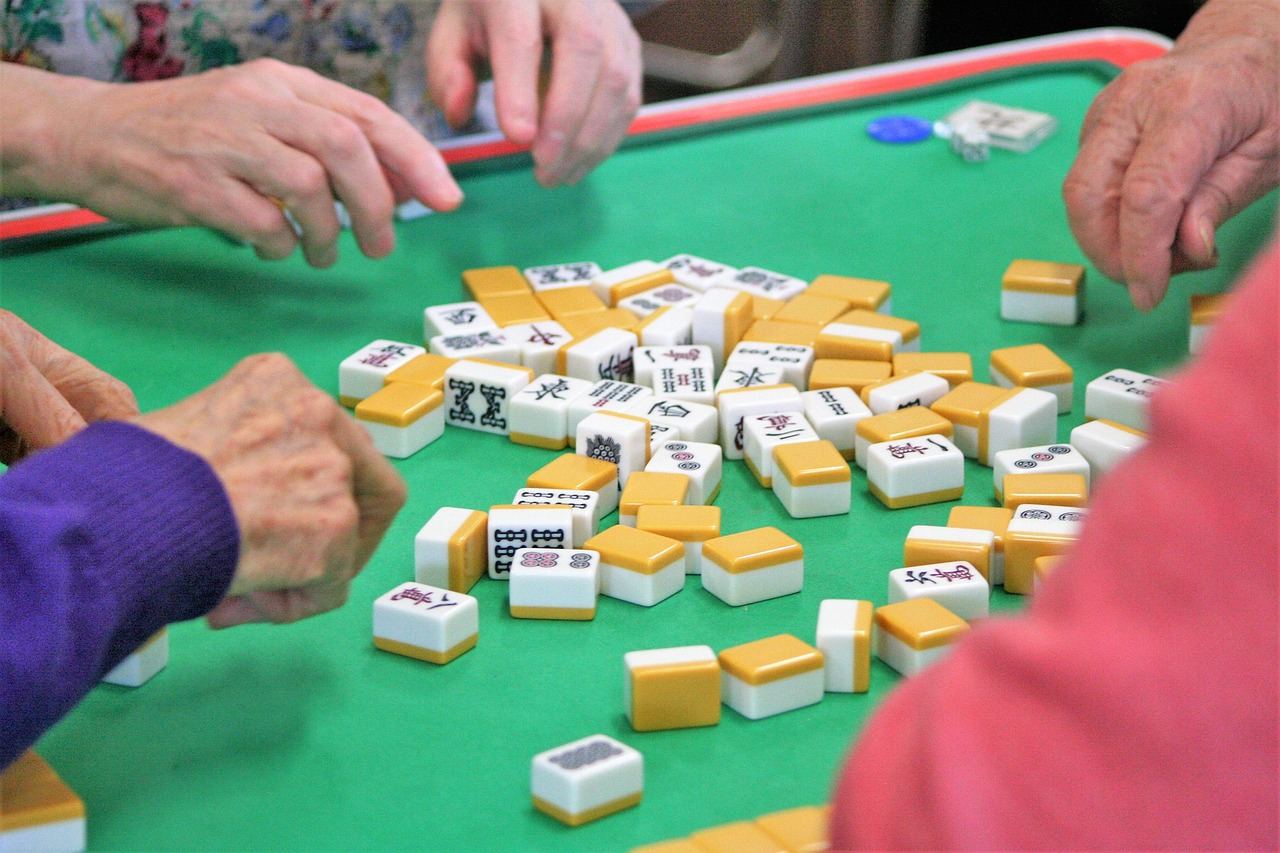
Mahjong isn't just about tiles; it's a fast-paced game of social strategy where each discard reveals your hidden intentions to opponents.
Getting started with Mahjong as a beginner involves learning the basic rules and tile combinations that will enhance your gameplay experience. Each drawing and discarding tiles to complete a winning hand before the others do.
Unlike card games, every move is visible to the table – what you discard is information, and your opponents will use it.
In Mahjong, you physically draw 13 tiles from a bag, sort them by suits and numbers, and simulate hand-building using the National Mah Jongg League card. During solo practice, you analyze potential hands, perform mock Charlestons by passing tiles back into the bag, and refine your strategies across multiple iterations to gain confidence for group play.
Mahjong provides immediate skill feedback through its pattern-matching challenges, fostering a sense of accomplishment as you refine hands and improve strategy during solo practice. This engagement creates a flow state, where sorting and passing tiles continuously adjusts difficulty and maintains immersion, while also preparing you for social play by building confidence.
You think Mahjong is the old tile-matching game your mom played in 2003. Maybe it feels like something you'd see at a senior center. Slow-paced and quaint.
That's not Mahjong. It's mislabeled nostalgia, not the real game.
Mahjong is all about the live read. You're balancing your hand while blocking everyone else at the table.
The social layer makes every move count. One careless tile exposes your strategy.
Regional rulesets like Cantonese, Riichi, and American change the experience entirely.
A friend, shifting from poker to Riichi Mahjong, said it felt similar. He wasn't shuffling tiles aimlessly.He was sizing up opponents.
The mechanics come quickly. But really understanding the read and the anticipation is a different story.
Playing Mahjong can feel disorienting, as if you're suddenly thinking with someone else's brain. You know the patterns are there, but they vanish as soon as it's your turn.
Tiles appear chaotic, and the rules defy logic. Everyone else seems fast, handling 13 incomprehensible pieces with ease.
Soon, those noises become names. Sequences click into place even if you're not fast yet. Reading the table starts to happen naturally, albeit slowly.
In the first week, expect to accidentally hand victory to someone else. You won't realize your mistake until everyone reacts.
By the second week, the suits—bamboo, characters, circles—begin to differentiate themselves. The visual blur starts to clear.
The third week brings the habit of noticing others' discards. Without realizing it, you're playing defensively.
In the fourth week, there's a hand where everything makes sense mid-game. Not necessarily a win, but you know exactly what you're aiming for.
The early stages are slow and can feel frustratingly pointless. Then, one intentional discard feels right. You understand your decision, a moment where the game truly begins.
Many players quit just before this moment, missing the true start of the game. Keep in mind: winning occurs through a self-draw or a crucial discard. Your task is to mask your needs while gleaming others' goals. Master this, and conquering the game feels within reach. Next, let's explore the common mistakes that trip you up.
When to start: Morning
Duration: 1 hour
Cost to try: $0
Success criteria: If you finished without fully understanding all the rules, do session 2.
Beginners often treat the yaku list like a checklist. You don't need all 47 to start playing effectively.
Focus on just three yaku to begin with. Pick Tanyao, Pinfu, and Riichi until you get the hang of it.
An open hand means Riichi is off limits. Beginners frequently overlook this, wasting turns and opportunities.
Always check your discard pile before deciding. If you've made any calls, adapt to a yaku that works with an open hand, like Tanyao or Toitoi.
You're attached to a hand that looked promising on Turn 2. But those crucial tiles are now visible in opponents' discards.
If three of your winning tiles are already discarded, it's time to fold. Rebuild around the tiles still available.
White Dragon (Haku) might catch the eye, but don't overlook seat and round winds. They score the same way.
Check every honor tile for matches with your seat wind or the current round wind. They're free yakuhai if you snag two more.
Focusing solely on building your own hand leaves you exposed. You might miss when someone else is making a strategic move.
If an opponent seems poised for Riichi, change tactics. Discard tiles that have already appeared in other players' discard piles for safer plays.
Mahjong thrives in diverse venues. Look for games at local board game cafés, Asian cultural centers, and senior recreation centers. These venues often host regular sessions and welcome newcomers.
Walk into a group gathering and say: "I know the basics but I've never played in a group – can someone walk me through a hand?"
This approach ensures you're guided by a patient player and not just thrown into the deep end.
Most people learn 'Mahjong' without realizing there are several games hiding under that name – each with their own style and rules.
Riichi Mahjong offers strict hand rules and unique betting mechanics. It's a well-documented version for English speakers with a large online community.
Ideal for beginners. With free apps like Mahjong Soul, you can play without spending a dime.
Cantonese Mahjong is lively and quick, with multiple ways to win. Less penalty for aggressive play.
Great for players seeking a less rigid game but expect to need a physical set due to limited digital versions.
American Mahjong shifts from the original with an annual card of valid hands. This creates a distinct gameplay.
Not ideal if you plan to try other variants, as it sets unique habits. Expect to pay about $10 yearly for the card.
Sichuan Mahjong strips down to a speed-focused two-player game. Great for competitive pairs.
Hard to find digitally, especially outside Chinese app stores.
Taiwanese Mahjong offers more complex scoring and longer play. It's for players who have a solid grasp of other variants.
Hold off until you're comfortable with simpler games.
If you want a related angle, Risk is the natural next stop.
Deck Building Games lives in the same world — different mechanics, similar appeal.
Readers who enjoy this often gravitate toward Scrabble next.
Most beginners focus on memorizing tile names and trying to complete hands that happen by chance.
The real plateau is reading your hand too late. If you only react to what you've drawn, you'll never shape a winning strategy.
Hand direction is what separates improving players from stagnant ones. The key is to examine your first 13 tiles and commit to a winning structure within the first two draws.
Don't wait and see. Don't keep your options open.Decide early, discard with purpose, stop hedging.
When you commit early, every discard is intentional. It's about shaping your hand, not just shedding tiles. Without this approach, you're always just short of completing two hands instead of finishing one. This commitment allows speed, discard reads, and defensive play to thrive – they all depend on a solid foundation.
Start practicing hand direction by declaring your hand type from the beginning – sequences, triplets, or mixed – and stick to it, regardless of temptation.
Mahjong rewards the patient player. Give it 8 sessions over 30 days, about twice a week. Fewer sessions won't show if you truly like it.
You keep replaying hands in your mind. This isn't just curiosity—it's your brain engaging with the game. When your brain wants the puzzle, it's time to connect with a regular group or ranked app. Turn this curiosity into practice.
Eight games in and you're indifferent? You might be playing too casually. Try a session with someone who can narrate your mistakes. If that doesn't spark more interest, it's probably not just a phase. Moving on is okay.
If the time dragged and had you clock-watching, reflect on that. Social aspects can be nice, but if tile logic feels like tedious homework, consider it data. Mahjong may not be the right fit if you dread getting to the table.
The sign you shouldn't ignore is noticing tile sets on screen or wondering about rules. That curious itch is your connection to the game.
Mahjong isn't ideal if you can't find players. If online play frustrates rather than satisfies, it may not be for you. The game requires consistent access to players, or it's not the full experience.
Avoid if your schedule can't handle 60–90 minute games regularly. Mahjong demands uninterrupted time to build skills. If your time is limited or unpredictable, progress will be slow.
Steer clear if memorizing rules feels draining with no payoff. Early on, you'll juggle many rules. If this drains rather than challenges you, listen to that instinct.
When you're ready to compare options, the hobbies list lays out every direction we cover.
Not ready to pick a hobby yet? The boredom busters page has smaller things to try first.
A single game of Mahjong typically lasts between 15–30 minutes, depending on the players' experience level and the specific variant being played. Complete Mahjong sessions with multiple rounds can take 1–2 hours. Beginners may play slower initially, but speed increases as you become familiar with the tiles and patterns.
Mahjong has straightforward core rules that most people can grasp in one session, but mastering strategy takes practice. The main challenge for beginners is memorizing tile combinations and understanding hand-building patterns. However, casual play is very accessible—you don't need advanced strategy to enjoy the game.
A standard Mahjong set contains 144 tiles divided into suited tiles (bamboo, characters, dots), honor tiles (winds and dragons), and flower/season tiles. You'll also need a table, tile racks, and chips for scoring. Complete Mahjong sets are widely available online and in game shops, typically costing $20–$100 depending on quality.
Traditional Mahjong is designed for exactly four players, each representing a different wind direction. However, three-player and online variants exist for smaller groups. Four players is the sweet spot for the standard game and gives everyone equal opportunities to win.
Chinese Mahjong is the original, with simpler rules and fewer scoring patterns. Japanese Mahjong (Riichi) adds more complex hand scoring and strategic depth. American Mahjong uses a different tile distribution and requires a card guide for hands and scoring. Each variant appeals to different play styles and regions.
Yes, Mahjong is widely available on mobile apps, web platforms, and multiplayer sites where you can play against AI or other players. Online versions let you learn the rules, practice at your own pace, and compete globally. This is an excellent way to start before investing in a physical set.