BoredomBusted — Find Your Next Favorite Thing To Do
Discover hobbies, activities, places, and ideas that spark joy. Whether you're looking for something creative, active, social, or relaxing, BoredomBusted helps you find your next favorite thing to do.
Browse our hobby guides, things-to-do collections, and place ideas to never be bored again.
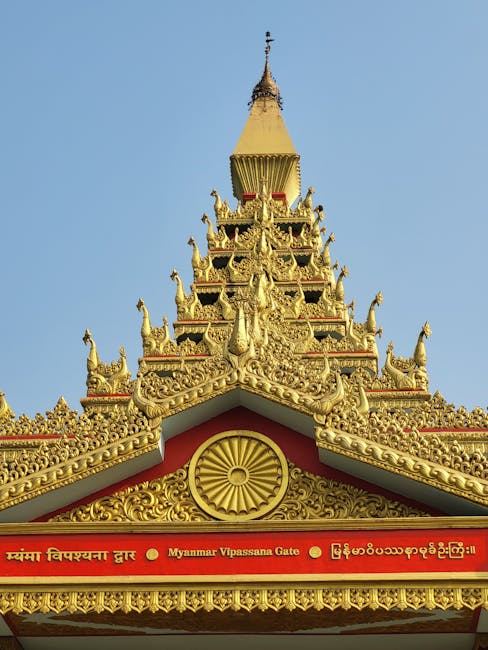
Vipassana isn’t about relaxation; it’s grueling mental training that reshapes your relationship with discomfort over time—insight often creeps in, unseen.
Learning Vipassana as a beginner offers a profound way to observe physical sensations and truly perceive reality without bias. to see reality as it actually is – not as you'd prefer it to be.
You sit, you notice, you don't react.
What separates it from mindfulness apps or casual meditation is the depth of the commitment – traditionally 10 days of silence, no phone, no eye contact, no escape.
In Vipassana, you sit quietly for 15-60 minutes, focusing on your breath and then performing a body scan, systematically observing sensations from head to feet without reacting, and concluding with relaxation and goodwill towards all beings.
Vipassana fosters present-moment absorption by encouraging sustained attention on bodily sensations, which reduces mind-wandering and cultivates a refined awareness that transforms boredom into a transient sensation to be observed.
You think Vipassana is about relaxing your mind. Maybe clearing it. Sitting quietly until the noise stops and you feel peaceful.
That's not what it is – and walking in with that expectation is why people leave day three thinking they're doing it wrong.
A friend described day six like this: nothing dramatic happened, no breakthrough, no tears. She just noticed she'd stopped arguing with her own thoughts.
By the time she got back to work, her manager said she seemed different. She didn't have an explanation that made sense out loud.
The technique is stranger and more practical than the brochure suggests – and understanding what you're actually committing to changes whether ten days of silence sounds impossible or exactly right.
Watching someone describe Vipassana looks like peace. Sitting down to actually do it looks like a negotiation with your own restlessness.
That gap is where most people quit before they've really started.
After:
Quit now.
Come back tomorrow.
Notice you came back.
It's not discipline – it's that the practice keeps being interesting in ways you didn't predict, and that's what actually builds the habit.
One thing worth knowing before session one: Vipassana is body-based, not thought-based. You're not watching your mind – you're scanning physical sensation, systematically, head to toe.
If you sit down trying to clear your head, you'll feel like you're failing the entire time, because that's not the instruction.
When to start: Early morning
Duration: 1 hour
Cost to try: $0
Success criteria: if you finished without significant distractions, do session 2.
The mind reaches for control because control feels like doing something right. But Vipassana is not asking you to manage the breath — it is asking you to witness it. The moment you start deepening or slowing your inhale, you have left the practice.
Pick one fixed point — the nostrils or the upper lip — and notice only what happens there. Don't follow the breath in and out. Stay at the gate and observe what passes.
Most beginners arrive with a "note it and move on" habit baked in from apps like Headspace or Calm. That approach works for general mindfulness. In Vipassana, labeling a sensation and leaving it is exactly the wrong move — you are supposed to stay with it.
When a sensation arises, resist the urge to name it and shift attention. Notice its texture, its temperature, whether it pulses or stays flat. The investigation is the practice — the label just ends it early.
New practitioners grit their way through physical discomfort waiting for it to pass. But Vipassana is specifically designed around pain — not despite it. The aching knee is not a disruption of the practice. It is the practice.
Bring the same equanimous attention to that aching spot as you would to a neutral sensation on your forearm. Notice it clearly, without adding a layer of frustration on top. That non-reactive observation — applied directly to discomfort — is what the technique is training.
Racing thoughts the whole session. Barely a single clean breath. You walk away convinced the sit was wasted. But the mechanism of Vipassana is not quietness — it is the act of returning attention, again and again, regardless of what is happening.
A session where you returned your attention fifty times built more than a session where you floated in calm for twenty minutes. Consistency of return is the entire training — stillness is a side effect, not the goal.
Most beginners retreat to the breath when mental noise spikes and just wait for things to settle. The body scan feels like too much structure for a chaotic moment. That instinct is backwards — a loud mind is precisely when systematic scanning is most useful.
Move attention deliberately from the crown down to the feet, one zone at a time. The structural task gives scattered attention something concrete to do. You are not waiting for the mind to calm down — you are giving it a job until it does.
Vipassana is practiced at dedicated retreat centers and Buddhist temples. Yoga studios occasionally host sitting groups between longer retreats.
Vipassana has no single national governing body — the tradition is deliberately decentralized. That means groups operate under different lineages with different search terms, so running all four searches above is worth your time.
When you arrive, introduce yourself as someone who has done guided meditation but hasn't sat with a Vipassana group before. That one sentence gets you a seat near the teacher and a check-in after the sit — instead of just being handed a cushion.
Not all Vipassana is the same sitting in silence for ten days. Here's what actually differs.
This is the one most people mean when they say Vipassana. Body-scanning technique, strict schedule, ten days of silence – and it's free, funded by donations from past students.
Best for absolute beginners who want structure and zero cost to get started.
Instead of sweeping the body, you mentally label every sensation and thought as it arises – "rising," "falling," "itching," "thinking." It keeps restless minds anchored better than pure body-scanning does.
Best for people who find silent observation too vague and want something to actively do.
The direct predecessor to Goenka – same body-scan roots, but taught in smaller, less standardized settings by various teachers. The experience varies significantly depending on who's running it, which is both a risk and an advantage.
Best for practitioners who've done a Goenka retreat and want to explore the same lineage with more flexibility.
Teachers like Sharon Salzberg and Joseph Goldstein adapted traditional Vipassana for Western students – shorter retreats, more teacher access, breath-focused rather than full-body scanning.
Best for people who want genuine depth without signing up for ten days on the first attempt.
Retreats typically cost $100–$600 on a sliding scale, unlike the dana-only Goenka model.
Some teachers blend Vipassana's observational framework with Zen's "don't-know mind" approach. The lines get blurry fast, and that's either liberating or confusing depending on where you are in your practice.
Best for experienced meditators, not a starting point.
For something adjacent, see Zen Meditation.
If the texture of this appeals to you, Mindfulness Meditation is built on similar bones.
Most beginners spend their first months trying to stop thoughts – quieting the mind like it's a noise problem to solve. That's the wrong lever entirely.
The real skill is equanimous observation – the ability to notice a sensation, label it mentally, and let it dissolve without pushing it away or chasing it. Not passive. Not detached. You're training the gap between noticing and reacting to stay open just a little longer each time.
Without it, you're just sitting in a room with your thoughts, occasionally annoyed. With it, the sensation of anxiety becomes an object you can study instead of a state you're drowning in – and that difference is the entire practice.
Beginners who skip this spend years accumulating sit-hours with nothing transferring to daily life. The carryover only happens when observation itself becomes the trained response.
Ten sessions over 30 days — one hour each, sitting in silence, following your breath and body sensations without trying to fix anything you notice. Space them across the month so you're reflecting between sits, not just grinding through them.
Ten sessions strips away the novelty factor. It won't make you good at this, but it's exactly enough to know whether this practice has any grip on you.
If you want to come back, it probably won't feel like enthusiasm — it'll feel quieter than that. You'll notice you sat with a hard feeling instead of reaching for your phone, or you were less reactive in an argument and caught it afterward. That's the signal. Build a consistent daily sit and look seriously at a 10-day retreat.
If you're indifferent, check one thing before you write it off. Were you sitting in a noisy room, skipping days, or mentally multitasking through every session? Inconsistency fakes indifference. Give it one more honest streak — conditions controlled, no skipped sits — before you decide.
If you actively didn't want to be there, that's a clean answer. Some people find silence confrontational; some find the body-scan approach tedious in a way that never resolves. That's not a character flaw — it just means Vipassana specifically isn't your format, and other entry points into contemplative practice exist that aren't this one.
You keep noticing — unprompted — that you're reacting before you've thought. In traffic. Mid-conversation. Reading something online that makes you tense before you've finished the sentence. That low-level awareness that your autopilot is running the show is Vipassana's exact problem statement. If it's bothering you, this practice was built for it.
If you're in active mental health crisis, the extended silence and inward focus of a 10-day retreat can intensify things rather than settle them. Most retreat centers will tell you this themselves, and they mean it.
If your life structurally can't absorb a 10-day block, the deepest layer of this practice is nearly inaccessible without retreat. Daily sits help, but Vipassana at its core asks for real discontinuity from your normal life at least once.
If you need external feedback to stay motivated, Vipassana gives you almost none — no teacher checking your form, no measurable progress markers, no community debrief after class. It's a solo sport with a long lag between effort and result, and that gap genuinely doesn't work for everyone.
Want broader ideas first? Our list of hobbies gives you the lay of the land.
Not ready to pick a hobby yet? The boredom busters page has smaller things to try first.
Most Vipassana retreats last 10 days, though some centers offer shorter 3-day introductory courses and longer 20 to 30-day programs for experienced practitioners. During this time, you maintain silence and follow a structured daily schedule of meditation sessions, usually starting before dawn and ending in the evening.
Vipassana focuses on observing bodily sensations and mental processes with equanimity to gain deep insight into the nature of suffering, while regular meditation often emphasizes relaxation or concentration. Vipassana is more intensive and investigative, requiring you to systematically scan your body and observe patterns without judgment.
No experience is required—most 10-day courses are designed for beginners and teach the technique from the ground up. However, you must be committed to following the schedule and rules, including maintaining complete silence for the duration of the retreat.
Most Vipassana centers operate on a donation basis, meaning the retreat itself is free, though centers accept voluntary contributions to support operations and teacher training. If you choose to donate, it typically ranges from $50–$300 depending on your means and the center's needs.
You will have no verbal communication with other participants or teachers for most of the retreat, though brief check-ins with instructors are available. The silence extends to writing, reading, and using phones—this isolation is designed to deepen introspection and minimize external distractions from your inner work.
Yes, Vipassana can be mentally and physically challenging—sitting still for 10–12 hours daily of meditation is demanding, and many people experience discomfort, frustration, or emotional release. However, instructors are trained to guide you through these difficulties, and the retreat is structured to gradually build your capacity.