BoredomBusted — Find Your Next Favorite Thing To Do
Discover hobbies, activities, places, and ideas that spark joy. Whether you're looking for something creative, active, social, or relaxing, BoredomBusted helps you find your next favorite thing to do.
Browse our hobby guides, things-to-do collections, and place ideas to never be bored again.
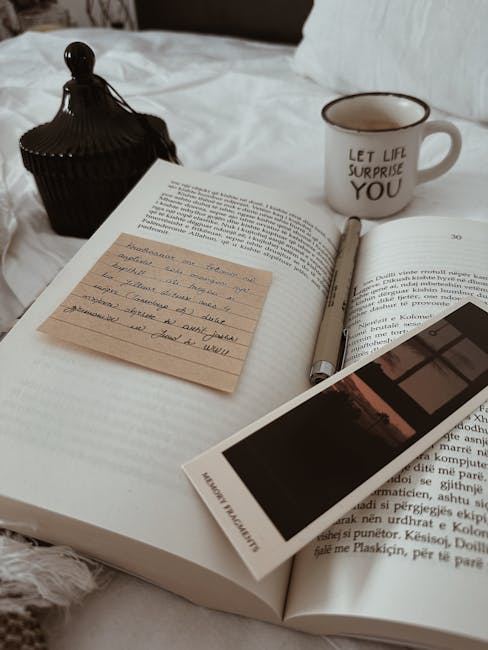
Nonfiction isn't just dry facts; it's the fusion of storytelling and real-life experiences, reshaping your perspective on everyday life.
Learning nonfiction reading as a beginner involves selecting true stories, science, history, biography, or ideas purely for curiosity, not obligation.
You pick a book, you read it, you actually learn something that stays with you.
Unlike fiction, the payoff isn't escapism – it's a permanent upgrade to how you understand the world.
In nonfiction reading, you select and engage with books or texts on real-world topics, often focusing on concise volumes that allow for quick immersion, actively absorbing information while making personal connections and reflecting on key takeaways.
This hobby satisfies curiosity and fosters a flow state through self-directed exploration, providing a sense of accomplishment from completing short, impactful reads that promote mental engagement and build confidence in personal knowledge.
You think nonfiction is for when you have to read something. Reports, textbooks, or that boring email from your boss. Fiction entertains, nonfiction informs—so the thinking goes.
That's the wrong frame.
Nonfiction isn't about facts; it's about perspective.
Robert Sapolsky, with three decades of baboon study and human biology, crafted *Behave* like a gripping mystery. It tackles human nature head-on.
People close the book with a changed outlook on their own emotions. Nonfiction has that power, turning concepts into personal revolutions.
Now you're wondering where to begin – that's what we'll tackle next.
Observing someone effortlessly extract ideas from a dense book can be misleading. It looks so simple until you attempt it yourself. You find yourself stuck on the same paragraph, wondering if you're missing something essential.
At first, it feels like a chore. Words just slide by as your mind wanders. There's a nagging doubt about whether you're "a reader." After a few minutes, the book is shut. But gradually, something shifts.
Initial efforts are slow. You lose focus, wondering if nonfiction is a lost cause. But the struggle isn't with the content — it's with the adjustment to a new way of absorbing information.
Soon, you finish a chapter and catch yourself thinking about it later. Maybe you even recommend the book in conversation. The difficulty lies not in your ability, but in fighting through unfamiliar territory. It's the passage that alters your perspective which turns reading into pleasure.
Short chapters are crucial for beginners. Longer ones become traps with no clear stopping points, leaving you stuck in the middle. This is where motivation fizzles, and days without reading turn into weeks.
The next section will explore mistakes that keep momentum from building.
When to start: Morning
Duration: 1 hour
Cost to try: $0
Success criteria: If you finish with a one-page note that names the book’s main idea, 3 key facts, and 2 questions, do session 2.
Novels train you to read every word in order. This habit doesn't work for nonfiction, which isn't structured linearly.
With nonfiction, start by skipping the introduction. Jump to the conclusion, then plan your reading using the table of contents.
Marking sentences that sound smart often turns pages into a sea of yellow, losing all focus.
Instead, jot down one sentence in the margin on what the passage means personally, not just what it says.
Sunk cost stops you from quitting books that lost their value by chapter three.
Grant yourself permission to stop if it stops delivering. Nonfiction often front-loads its best ideas.
Citing authors can convince you their work is final when it's just one perspective.
Read one-star Goodreads reviews for strong critiques that can refine your understanding quickly.
Writing notes every few paragraphs interrupts flow and disrupts comprehension.
Finish a chapter, close the book, and then reflect. Write down what you recall without peeking. This shows what truly stuck.
You can dive into nonfiction reading anywhere you won't be disturbed. Your couch, a public library, a coffee shop, or a quiet corner of a bookstore all work.
Libraries are gold mines for nonfiction readers. Free access to books, no sales pressure, and librarians who know their stuff can help you discover your next read.
Nonfiction reading doesn't have a governing body, which means you can explore freely.
When joining a group, introducing yourself as new to nonfiction opens doors. Say you're a fiction reader expanding your horizons – you'll get recommendations tailored to your interests, not based on assumptions.
Narrative nonfiction infuses real events and people with story structure and momentum. Start here if traditional nonfiction feels like a chore.
These books dive deep into one topic, like salt or a historic battle. Perfect for those who love to obsess over details and want a full understanding.
Essay collections offer shorter pieces that can be read in any order. Great for anyone who prefers finishing quickly over long commitments.
Audiobooks offer the same content listened through your commute or workout. Especially effective for narrative nonfiction where a skilled narrator enhances the experience. Audible, Libby, and Spotify have extensive catalogs, often accessible for free through library apps.
Academic sources like textbooks and journals connect you with raw material without an editorial filter. Ideal for those who find mainstream books too simplistic. Prepare for a slower but rewarding reading experience.
For something adjacent, see Poetry Reading.
A close neighbor worth considering: Literary Reading.
For something adjacent, see Research Reading.
Most beginners track success by the number of pages read.That's not the real measure of understanding.
Real progress comes from argument mapping—identifying the claim a chapter makes, its supporting evidence, and the logical gap between the two.
Without argument mapping, you just skim through information, barely retaining it.Mastering this skill turns reading into an active investigation of ideas. You'll retain more, question the text, and apply what you learn effectively.
Thick books become manageable and engaging. And weak books show their flaws by the second chapter, saving you time.
Commit to 8 sessions over 30 days—aim for two a week with breaks in between. That spacing allows ideas to settle and shows if they're resonating with you beyond just the reading moments.
If you're eager to start again as soon as you finish, it's more than discipline—it's interest igniting. When something you read changes how you think about something else, that's the transfer effect. Begin a short list and be deliberate about your next picks.
If you're just going through the motions and retain some information without feeling excited, the books might not have been right for you. Test this by switching genres entirely—try narrative nonfiction instead of self-help or history instead of business.
If you constantly check the time left on each book, think about whether it's the format or the book itself. If every session feels like a chore, it's valid data. Reading long-form text might not suit how your brain likes to process ideas, and that's okay.
If watching a documentary, listening to a podcast, or chatting leaves you craving more depth, that's your nonfiction reading signal. It means you're already searching for what books offer.
If nonfiction reading feels like too much to commit to right now, browse what to do when you're bored for lower-stakes ideas.
Start with topics that genuinely interest you—memoir, history, or science books—rather than forcing yourself through dense academic texts. Popular entry points include narrative nonfiction (like biographies or true crime) since they read like stories while still being factual. Choose books with strong reviews to ensure quality writing that keeps you engaged.
Most nonfiction books take 4–8 weeks to finish if you read 15–30 minutes daily, though it varies by length and complexity. Narrative nonfiction moves faster than dense technical writing. Even 20 minutes a day adds up to finishing 2–3 books per month.
No—nonfiction reading is about comprehension and enjoyment, not speed. You can pause to reflect, re-read sections, or take notes without pressure. Many readers find nonfiction actually easier than fiction because you're learning something concrete rather than tracking complex plots.
You only need access to books—through libraries (free), e-readers, or audiobooks. A notebook for jotting down ideas or key takeaways is optional but helpful. No special equipment or membership is required to begin.
Nonfiction exposes you to evidence, arguments, and different perspectives that train you to evaluate claims and think independently. As you read, you naturally question assumptions, compare ideas across books, and form informed opinions based on facts.
Absolutely—many fiction readers discover they love narrative nonfiction, memoirs, and true stories that have the pacing and character development of novels. Try genres that blur the lines, like historical narrative or biography, to bridge your interests.