BoredomBusted — Find Your Next Favorite Thing To Do
Discover hobbies, activities, places, and ideas that spark joy. Whether you're looking for something creative, active, social, or relaxing, BoredomBusted helps you find your next favorite thing to do.
Browse our hobby guides, things-to-do collections, and place ideas to never be bored again.
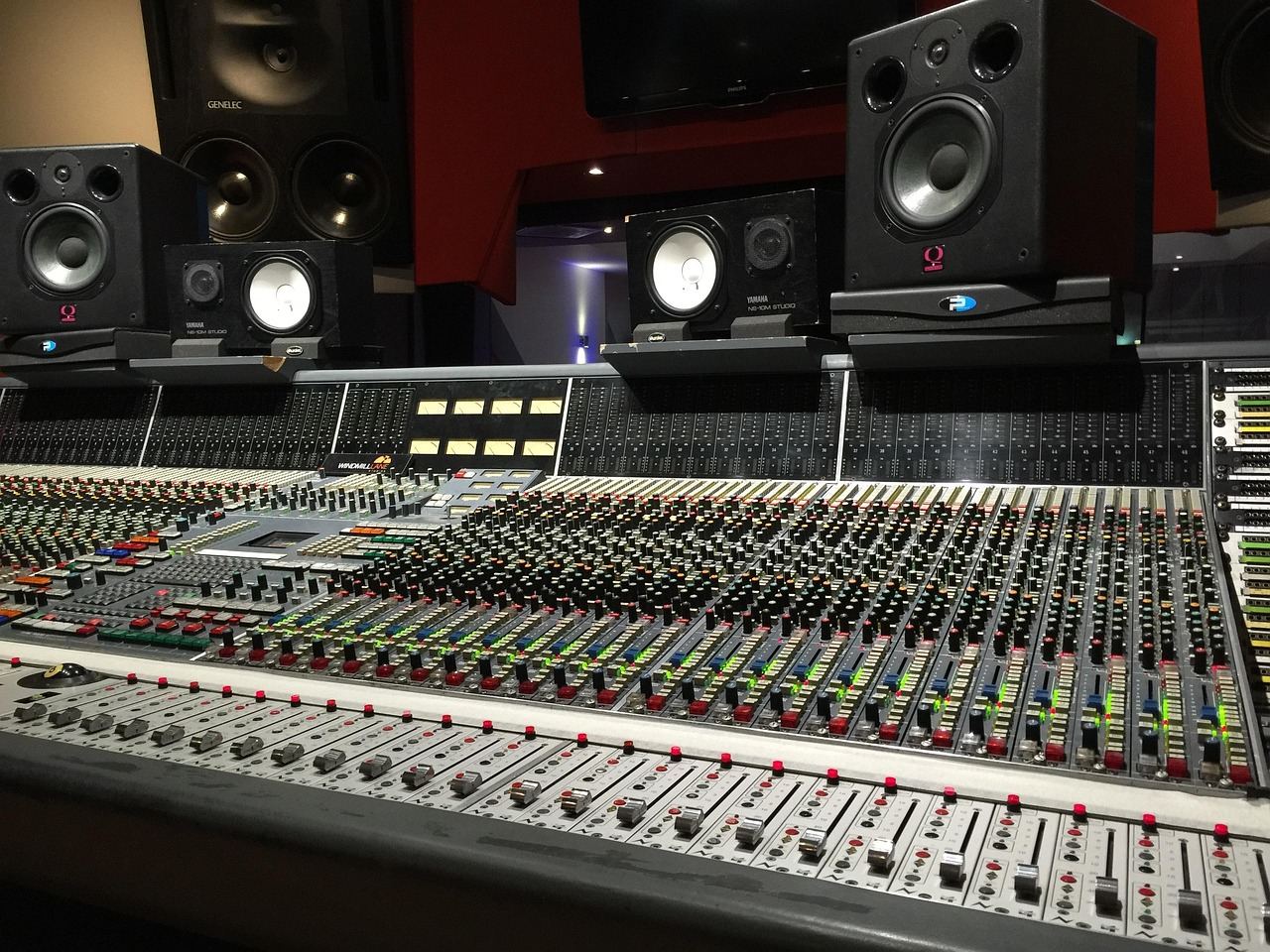
Audio engineering starts in your bedroom, where training your ears to detect flaws is more crucial than expensive gear or big studios.
Learning audio engineering as a beginner involves understanding how to transform raw recordings into polished sound that hits differently than anything unprocessed. Microphones, mixing boards, and software are the tools — but the ear doing the work is what matters.
It's both technical and creative at once. Where music production focuses on composition and podcasting on conversation, audio engineering treats sound itself as the raw material — something to be shaped, not just captured.
In audio engineering, you record sounds using microphones and everyday objects, manipulate them in digital audio workstations (DAWs), and assemble immersive soundscapes or effects for personal projects like music tracks or sound for videos.
Audio engineering fosters flow state through immersive sound manipulation, where precise adjustments and creative layering provide immediate auditory feedback, satisfying a creative drive and yielding a sense of accomplishment with tangible outputs.
You picture a giant soundboard in a studio or a sound technician nobody notices at concerts. Audio engineering feels like a professional trade — something you go to school for, not something you pick up on a Tuesday night.
That assumption is filtering out a skill that starts in bedrooms and scales into music production, podcasting, film, games, and live sound — all built on the same foundation.
The core of audio engineering is training your ears — detecting frequency clashes, timing drift, a vocal buried under a guitar. The massive soundboard is now software, and a used laptop with $30 headphones is enough to start learning it.
Consider the songwriter who recorded her debut EP using a smartphone mic and GarageBand. It took her six months to understand why everything sounded muddy — she had never considered low-end buildup.
Same mic. Same room. Completely different result.
She didn't upgrade her gear — she upgraded what she was listening for, and the recordings changed entirely.
That gap between hearing sound and understanding it is the whole skill — and the next section is about how to start closing it.
Mixing isn't like watching a professional create magic. It feels more like trying to fly a plane without much prep. The gap between observer and doer is wider than it seems at first.
Starting out, every knob seems crucial. Reference tracks sound polished. You hear what's off, and you feel ready to fix it all.
Later, every knob blends into the next. That polished reference track shows your errors. Spending 40 minutes on a snare becomes routine. Doubt creeps in as you question your own hearing.
It sounds rough. Almost like a reason to quit. But it's not. This struggle is just your ears adjusting faster than your instincts. Every admired engineer battled this exact phase.
Keep your mix volumes low, around 70–75 dB. High volumes tire your ears quickly, leading to poor decisions and mixes that won't translate elsewhere.
Tired ears don't just make things sound louder — they actively lie to you about balance, and chasing that distortion can cost hours of work. The mistakes that keep people stuck in this phase longer than necessary are worth knowing before they happen to you.
When to start: Morning
Duration: 1.5 hours
Cost to try: $0
Success criteria: If you import one sample track, balance its volume, add one effect, and export a playable file, do session 2.
Headphones make details pop, but they mislead on stereo width and bass. What sounds clear on them might fall apart on speakers.
Reference every mix using at least two different playback systems—earbuds, a laptop speaker, or a car stereo—before considering it finished.
The first instinct is to tweak EQ when something sounds off. But moving the mic or source can often solve problems that EQ can't.
Before touching plugins, reposition the mic and record a short test. Hear if the issue vanishes on its own.
Cranking the volume feels powerful, tricking beginners into recording hot. But loudness can mask clipping, causing irreversible damage.
Aim for peaks around -12 to -18 dBFS. Save the loudness adjustments for mastering.
Soloing a track makes it seem polished, but that perfect kick sound might vanish once the bass returns.
Make the majority of your mix decisions with all tracks playing. Use solo only for isolating issues.
A muddy mix suggests plugging more in might help. Yet, the real issue is often overlap in the 200–400 Hz range.
High-pass filter anything unnecessary. Let the best parts breathe before adding extras.
The fastest entry point is Facebook Groups — search "audio engineers [your city]" or "music production [your city]." These groups post local sessions, gear swaps, and calls for assistants. Meetup.com runs producer gatherings and recording circles in most larger cities too.
For something more structured, the Audio Engineering Society (aes.org) lists local student sections that host walk-in events. Recording Connection affiliates and community colleges with music programs are also worth checking — both run workshops open to beginners.
Tell people upfront that you're new and willing to help. That one line gets you a seat beside someone at the mixing board faster than anything else.
Work with DAWs, samples, and virtual instruments. Build tracks from the ground up. Ideal if you want to make your own music, not just record others.
Mix live audio in real time with no safety net. Perfect for those who love high-pressure events like concerts and live shows — a good mixing console is non-negotiable if you go independent.
Handle podcast or voiceover production. Work with one or two voices and focus on core skills like EQ and compression. You get real results fast without drowning in complexity.
Craft audio for film, TV, or games. Create an entire sonic landscape. Great for those more interested in narrative than performance.
Mastering adds finishing polish to a mix. Save this until you truly grasp mix quality — trained ears take years to develop.
If this resonates, Saxophone explores a similar direction.
Readers who enjoy this often gravitate toward Trombone next.
A close neighbor worth considering: Trumpet.
Most beginners spend months tweaking EQ and compression. They mix based on what they think should sound good, ignoring what they actually hear.
The real wall isn't technique. It's ears.
Critical listening is the one skill that changes your direction. Not passive listening — pull up a professionally mixed track and pick it apart. Focus on the kick drum alone: where it sits in frequency, how much space it takes, when it pushes forward.
Then open your mix and compare directly, back to back, in the same session.
Without a reference, you're guessing. Six hours on a mix can still leave it sounding hollow next to a released track. The gap between your mix and a pro mix becomes specific once you benchmark against one.
Specific problems have solutions. Vague feelings don't.
Load a reference track in your DAW on its own channel, gain-matched to your mix. A-B toggle every 30 seconds.
Focus on one frequency range per session — solo the mids in the reference, then your mix, and note one concrete difference. Keeping the scope narrow is what makes the comparison actionable.
After each mix, write down what the reference had that yours didn't. Focus on frequencies, timing, and space — not feelings.
Once this becomes routine, the next question is where to build this habit — your monitoring setup determines how much you can trust what you're hearing.
Over the course of thirty days, schedule eight sessions. This gives you time to get past gear confusion and actually hear your own creations take shape.
If you keep finding reasons to return to the digital audio workstation even when progress stalls, that's a signal of genuine fit. Start with signal flow and basic mixing theory — you're onto something real.
If you're neutral after each session, you're not ready to quit yet. The output isn't connecting, not the hobby itself. Dedicate another month to finishing a track, even in rough form — finishing changes the experience more than more practice does.
If opening the software feels like a chore and solving technical issues drains you, listen to that feeling. In audio engineering, troubleshooting is part of the joy — if it feels punishing, that's a clean answer, not a phase to push through.
You begin noticing the space around a snare, or why a vocal sits the way it does. Catching reverb tails you never heard before isn't a small thing — it means your perception is being rewired, and serious progress follows that shift.
Still looking for something to do? Browse things to do when bored for more ideas.
You can start with a budget of $300–$800 for a basic home setup including an audio interface, pair of studio monitors or headphones, and a DAW (many free options exist like Audacity or Reaper's trial). As you progress, investments in microphones, preamps, and acoustic treatment can range from modest to several thousand dollars, but most hobbyists begin lean and upgrade gradually.
At minimum, you need a computer, a DAW (Digital Audio Workstation), an audio interface to connect external gear, and a pair of reliable headphones or monitors. A microphone and XLR cables help capture audio, but you can borrow or use built-in options initially while learning fundamentals.
You can grasp fundamental mixing and recording skills in 3–6 months of consistent practice, but developing professional-level ears and mastering advanced techniques typically requires 1–2 years or more. The learning curve is steep at first, then plateaus as you build understanding of frequency, compression, and spatial effects.
The technical side has a moderate learning curve—understanding EQ, compression, and gain staging requires some study—but modern DAWs make the interface accessible. The harder part is training your ears to hear problems and solutions, which comes through repeated listening and experimentation over time.
Yes, thousands of self-taught engineers build successful careers through online courses, YouTube tutorials, and hands-on practice. While formal training accelerates learning and provides networking, passion, consistency, and real-world projects matter far more than credentials in this field.
Mixing involves balancing individual tracks, adding effects, and creating a cohesive stereo image from multiple recordings. Mastering is the final step where a single stereo mix is optimized for loudness, clarity, and translation across all playback systems before distribution.