BoredomBusted — Find Your Next Favorite Thing To Do
Discover hobbies, activities, places, and ideas that spark joy. Whether you're looking for something creative, active, social, or relaxing, BoredomBusted helps you find your next favorite thing to do.
Browse our hobby guides, things-to-do collections, and place ideas to never be bored again.
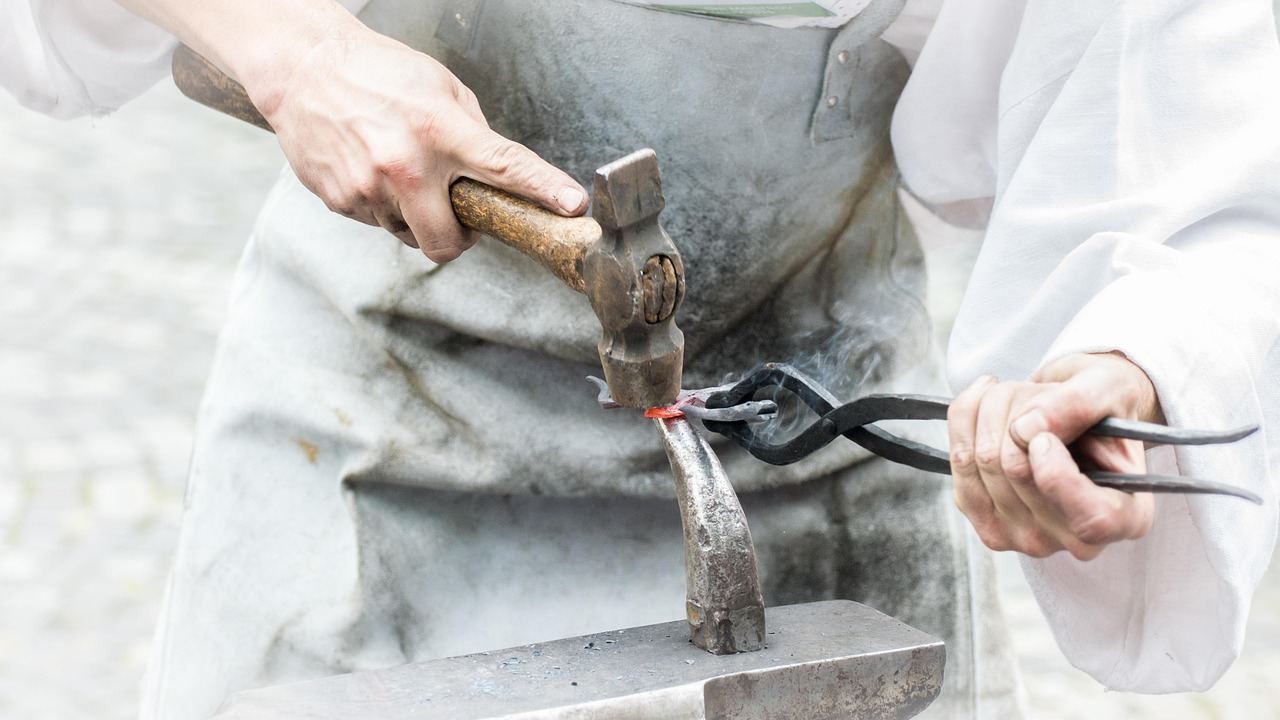
Blacksmithing isn't just for tough guys with beards — it's a finesse-driven craft that reveals how you perceive every physical object around you.
Learning blacksmithing as a beginner can seem daunting, but it ultimately revolves around the fundamental skills of shaping metal with heat and tools. Blacksmithing is the craft of shaping metal – usually steel or iron – using heat, hammer, and anvil.
You heat the metal until it moves, then strike it into shape before it cools.
Unlike woodworking or machining, you're not cutting material away – you're moving it, which means every mistake is also an opportunity to reshape.
In blacksmithing, you heat metal bars to a malleable temperature, then shape them on an anvil using techniques like hammering, twisting, and forge welding, creating functional items like nails, tools, or decorative pieces through precise, repeatable motions.
Blacksmithing provides an immediate feedback loop where each hammer strike creates irreversible changes in metal, fostering a flow state through intense focus and skill refinement, while tangible outputs offer a clear sense of accomplishment and creative expression.
You think blacksmithing is a dying craft — something for Renaissance fairs and history documentaries.
That's the assumption costing you one of the most satisfying hands-on hobbies available.
Metal has memory. Learning to read it changes how you see every physical object you touch. You stop seeing tools and furniture the same way after your first hour at the forge. It's not about strength but timing and technique. The hammer does almost nothing if you're fighting the metal instead of working with it.
A hobbyist welder in Columbus spent two weekends at a local forge co-op. She made a simple bottle opener. It was the first time she'd created something with her hands that felt structural. Not decorative, not fragile. Actually load-bearing and lasting.
The shift from making things to forging them keeps people coming back. The real question isn't whether you'd enjoy it. It's what you actually need to get started without wasting your first month.
The fire's crackle entices you, creating calm in this busy art. But the first round in blacksmithing is anything but serene.
Expect to feel tension in every movement. Mind is alert, arms start to ache, and your foot is suddenly very aware of what's nearby.
Nothing comes out as envisioned at first. Hammer strikes miss their mark, and scale breaks free of the metal in wild arcs. Yet, this is how it begins.
As the weeks roll by, learning becomes tactile. The heat's color code guides you, and tools start obeying your plans more often than not.
Misshapes and mistakes dominate early on, but the first finished project feels like victory. Even a misshaped hook is a triumph.
Yellow-orange steel flows like butter. Red-hot steel, however, resists and exposes flaws in form. During your first month, the temperature's feedback loops you into the craft's subtle demands.
The temptation is to blame the steel, but it's a matter of timing and perception. Wrangling the iron helps narrow the gap between expectation and execution.
When to start: Early morning
Duration: 2 hours
Cost to try: $25
Success criteria: if you finished without burning anything significant, do session 2.
New smiths dive into power tools, convinced they're essential right away. This skips a critical safety step.Buy two pairs of tongs for ½" stock before anything else. Improvised grips are risky with hot metal and hinder real learning.
Many beginners can't help but hammer steel until they're tired, mistiming the heat.Return steel to the forge as soon as it loses its bright orange glow. Fast, hot strikes shape metal better than prolonged cold ones.
Beginners often guess the anvil's height, copying setups from images.Set the anvil face level with your hanging knuckles. A mismatch in height leads to wrist strain with every hammer swing.
Piling on coal doesn't equate to an efficient fire, and it often results in burnt steel edges.Shape a deep fire pot for a focused heat spot. Add coal gradually to the sides instead of on top of the coke.
The temptation to finish a project in one go is strong, yet it's counterproductive for learning.Limit yourself to one focused task per heat. Work on either drawing, shouldering, or bending, until your technique improves.
Start by searching "ABANA affiliate [your state or region]". The Artist Blacksmith's Association of North America keeps a well-maintained list of chapters. Most of the US is covered.
Filter by location directly at www.abana.org/chapters for the most reliable info on active groups.
Check Meetup.com for "blacksmithing" or "forging" in your city. Smaller urban guilds are often listed there, lacking their own dedicated sites.
Look up local makerspaces directly – search "[your city] makerspace." They often list tools like forges in their equipment and class offerings.
Stating "I'm new to blacksmithing" gets you the right guidance from the start. This is how you find intro workshops rather than advanced drop-in sessions where you're expected to know the basics.
Bladesmithing requires precision and skill. It's all about crafting knives, swords, and cutting tools with a focus on steel and edge geometry. Be ready to invest an extra $200–$400 in grinders and finishing equipment.
Looking for usable, finished items? This is for you.
Farriery blends smithing with animal care. This discipline involves shaping and fitting horseshoes directly on the hoof. Ideal for those with a passion for horses or livestock.
Formal certification is common, offering a more structured path.
Ornamental Ironwork focuses more on aesthetics. Craft gates, railings, and decorative pieces prioritizing shaping and visual appeal. Beginners find this path forgiving and potentially profitable early on.
Toolsmithing is about precision. Create chisels, hammers, and other tools that demand technical expertise in steel behavior. Perfect for those who value methodical work and infrastructure building.
Artistic/Sculptural Smithing is unrestricted. Create abstract sculptures or functional art without boundaries. Best suited for those with a visual arts background.
Start elsewhere for foundational skills, then let creativity lead.
If you want a related angle, Tie Dye is the natural next stop.
A close neighbor worth considering: Hands On Skills.
Another variant that pulls from the same roots is DIY Renovation.
Most beginners obsess over hammer technique – grip, swing arc, wrist angle.
The real challenge is not your hammer. It's understanding heat color.
Reading heat color means knowing the exact temperature of your steel by its glow. Recognize lemon-yellow at 2,400°F to move steel smoothly. Not "orange-ish" but the fine line between colors. At 1,400°F, dull cherry-red just bruises the surface, causing work-hardening.
Mastering this skill means each hammer strike hits steel ready to move. Shapes start forming from the first few heats instead of taking fifteen.
Without this insight, you'll reheat constantly, overwork cold steel, and develop bad muscle memory.
Four sessions over 30 days. That's the test.
You won't master anything in four sessions. You'll meet the heat, noise, and physical challenge. You'll also encounter your own patience with each attempt.
You need all four data points. One session alone is just an initial glance.
If you're already planning session five, you're beyond casual interest. Look into getting a beginner's propane forge setup. It's time to dive deeper.
If you're indifferent, you're not fully engaged yet. Extend by two sessions and see if creating something functional changes things. For some, it clicks a bit later.
If you actively didn't want to be there, pay attention to that signal. Reluctance means it's not your thing, and that's okay.
The real sign you're into this: stopping at hardware stores just to handle the tools, or watching forge videos late at night. If that's happening, you're drawn to the craft.
If blacksmithing feels like too much to commit to right now, browse what to do when you're bored for lower-stakes ideas.
Basic startup costs typically range from $500–$2,000 for essential tools and equipment like a forge, anvil, and safety gear. Many beginners start at community blacksmithing studios or makerspaces, which offer access to equipment for $50–$150 per month, making it more affordable than investing in a full home setup.
Most people can learn fundamental techniques like bending, forming, and finishing metal within 4–8 weeks of regular practice. Becoming proficient at creating functional pieces typically takes 3–6 months of consistent training, while mastering advanced techniques can take years of dedicated work.
Beginners typically start with simple projects like nails, hooks, bottle openers, and basic decorative items to practice fundamental techniques. As skills improve, you can progress to larger pieces like knife blades, door hinges, plant stakes, and personalized home décor items.
Blacksmithing involves inherent risks including burns, eye strain from heat and sparks, and potential injuries from heavy tools and equipment. With proper safety gear (heat-resistant clothing, eye protection, gloves) and following established safety protocols, the risks are manageable for most people of average physical ability.
A functional home blacksmithing setup can work in as little as 100–200 square feet with proper ventilation. However, a more comfortable workspace with room for materials storage and multiple projects typically requires 400+ square feet; many beginners opt for community studios to avoid these space constraints.
While swinging a hammer repeatedly requires stamina and core strength, blacksmithing isn't solely about brute force—leverage and proper technique matter more than raw strength. Most people of average fitness can learn and enjoy blacksmithing, and many activities can be adapted or assisted with tools to reduce physical strain.