BoredomBusted — Find Your Next Favorite Thing To Do
Discover hobbies, activities, places, and ideas that spark joy. Whether you're looking for something creative, active, social, or relaxing, BoredomBusted helps you find your next favorite thing to do.
Browse our hobby guides, things-to-do collections, and place ideas to never be bored again.
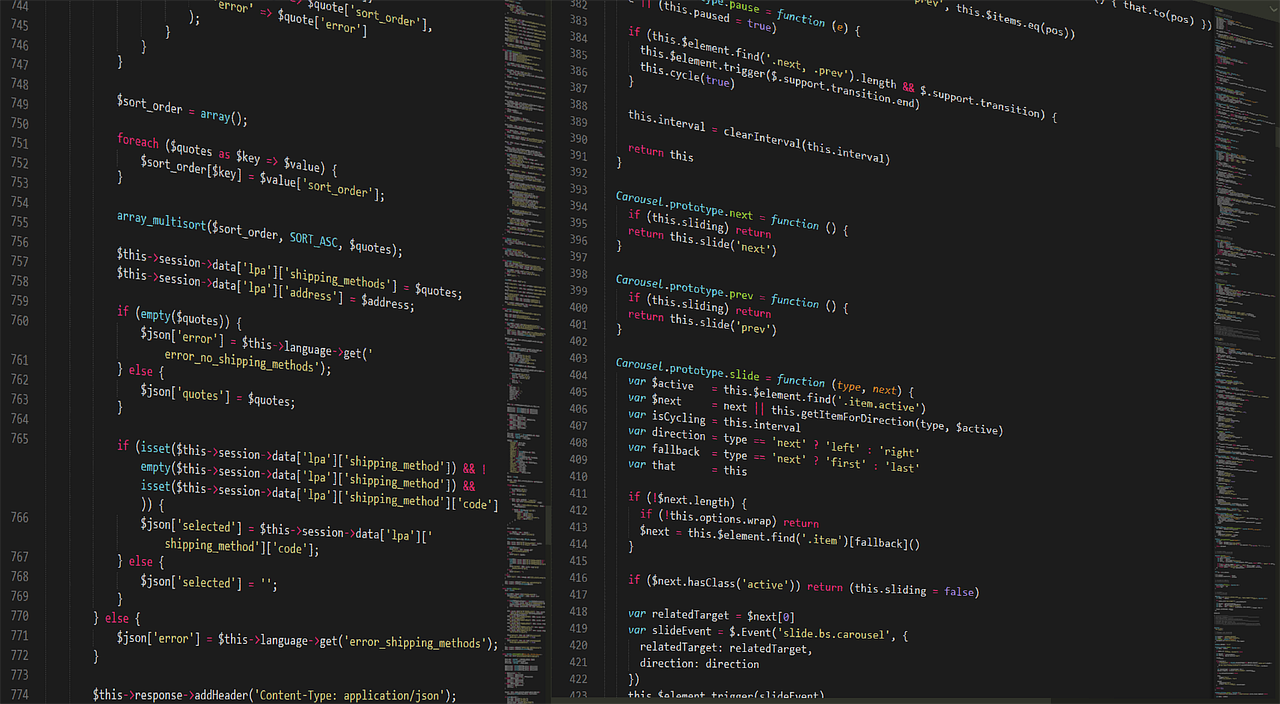
Blockchain development isn't just about cryptocurrency; it's about creating trust through decentralized systems that can transform industries like land registry and voting.
Getting started with blockchain development as a beginner involves understanding the fundamentals of coding for decentralized networks. This means no single company owns or controls the data.
Verification happens through a distributed chain of records, not via a central server.
Once your code is deployed, it's often permanent and public. That's why blockchain development feels more intense than regular app work.
In blockchain development, you engage in coding decentralized applications (dApps), create and deploy smart contracts, experiment with blockchain protocols, and participate in hackathons, focusing on solving real-world problems through cryptography and data integrity.
This hobby fosters a state of flow by challenging you to solve complex problems while providing immediate feedback through coding success, thus satisfying a creative drive and enhancing your sense of accomplishment as you see your projects come to fruition.
You think blockchain development means writing code that moves cryptocurrency around. Maybe some smart contracts. Probably a lot of hype and a GitHub repo nobody uses.
The real intrigue lies in how blockchain solves trust problems. Two parties agreeing on a state of the world without a middleman? That question touches supply chains, voting, and medical records, not just finance.
Building isn't about the chain itself. It's designing the logic on top—what's recorded, what's changeable, and who controls what. The cryptography isn't magic either. It's math you can grasp, and knowing even a bit transforms your view on data integrity everywhere, not just in Web3.
A tangible example? A team in Georgia used blockchain for a land registry system. No tokens were involved. A public, auditable ledger now keeps property records tamper-proof. Governments and citizens both benefit from this new transparency.
That's the shape of the real work.
Next up is the experience of writing your first smart contract and how to avoid stalling before anything runs.
Watching a senior dev deploy a smart contract looks like magic — clean terminal output, a live contract address, real money moving on-chain in seconds.
Your first session will not look like that. It will look like a broken Node.js version fighting with Hardhat while you wonder if you even installed anything correctly.
Before starting, blockchain seems technical but manageable. Tutorials make it linear. The docs appear organized. A weekend feels like enough time.
Then reality hits: three environments get installed, two of them fail, and one tutorial assumes you already know Solidity. Your contract compiles but performs nothing expected.
Over the first couple of weeks, you'll mostly configure your local environment rather than write Solidity. Deploying your first contract to a testnet feels mystifying, and you won't fully grasp what happened.
By the third week, you might break something, search Stack Overflow repeatedly, and struggle to find the error in the ABI. Then, a puzzle piece like gas fees or state persistence will click, making past weeks suddenly coherent.
It's a journey that's confusing, slow, and sometimes feels pointless. This isn't about being bad — your mental model is still forming, which is the core of the learning process.
Before session one, know this: testnet faucets can dry up, throttle, and go offline often. Bookmark several before you need gas, not when deploying.
When to start: Morning
Duration: 1.5 hours
Cost to try: $30
Success criteria: If you finished without technical errors blocking your progress, do session 2.
Many beginners jump into Solidity like it's any other programming language. Then they're confused when things go haywire between testnet and mainnet.
Start with one consensus mechanism like Proof of Work. Track a transaction from start to finish before writing code.
Gas fees seem theoretical until you're down $40 from testing a faulty function live.
Use Hardhat's local network for development. Stage on the Sepolia testnet before risking mainnet deployment.
Smart contracts act like apps, leading beginners to bundle excessive logic inside. The outcome? Huge gas fees from inefficient tasks like sorting lists.
Transfer heavy computation to your frontend or backend. Keep contracts focusing on state changes to save gas.
Mistakes that enabled the infamous DAO hack in 2016 still occur. Many write external calls first, forgetting the sequence matters.
Adopt the checks-effects-interactions pattern. Always update your state before calling external addresses.
Unit tests might spot logic errors, but they miss bigger threats like economic attacks or oracle vulnerabilities.
Run static analysis with Slither, and manually consult the SWC Registry for known vulnerabilities before launching.
Blockchain development can happen anywhere – your couch, a coffee shop, or a makerspace with reliable Wi-Fi.
Look into local coworking spaces for tech or web3 nights. These events are becoming more common and offer great networking opportunities.
Asking, "I can write basic code but what should I build first?" skips the lengthy introductions and gets you straight to a starter project.
The Ethereum Foundation funds core development and influences developer standards across the ecosystem.
This is the most beginner-friendly entry point – you're writing self-executing code on existing chains like Ethereum, not building infrastructure from scratch.
Balance between coding skills and fast results. Solidity is free to learn; you'll spend small amounts of testnet ETH for practice deployments.
You're building financial tools – lending platforms, exchanges, yield systems – on top of existing blockchains.
Best for developers with a finance background, ready to tackle high-stakes projects. Audit tools and security testing add real cost; skipping them can be disastrous.
Narrower than it sounds. You're writing minting contracts, royalty logic, and token standards like ERC-721 or ERC-1155.
Best for developers with creative industry connections or those targeting the gaming and digital art space.
You're building the base chain itself – consensus mechanisms, networking, node architecture.
Not a beginner path. It requires systems programming experience. Rust or Go is essentially required; expect a steep, lonely climb.
Combines privacy, scalability, and advanced math. You're building solutions with zero-knowledge proof technology.
Best for developers with a strong computer science or cryptography background. It's the most challenging variant but is hiring the fastest right now.
If the texture of this appeals to you, App Development is built on similar bones.
Competitive Coding is a sibling pursuit and often surfaces the same kind of curiosity.
Another variant that pulls from the same roots is Foreign Language Learning.
Mastering Solidity syntax isn't the key to improvement.
The real skill is understanding state changes in the EVM, from when they're committed to when they revert. It's about grasping how calls between contracts can lead to half-executed logic and potential financial loss.
Seeing contracts as state machines transforms your coding. You go from writing code that appears correct to ensuring it functions under real-world conditions. With this knowledge, you avoid reentrancy bugs and broken contract interactions.
Every significant DeFi exploit traces back to ignoring state transitions. Model these first and you'll write safer, more reliable contracts.
Commit to 8 sessions over 30 days. Try for two each week, no cramming.
Stick with it for the full month. That's enough exposure to know if blockchain building is for you.
You find yourself arriving early to every session, eager to begin. Systematic logic problems like consensus mechanisms now take over your lunch hour. You're not just excited; you're intellectually hungry. Move on to deploying a simple smart contract on a testnet and explore breaking it.
Every session felt neutral. You're neither drawn to it nor avoiding it. This could mean the process hasn't resonated yet. Extend for a bit longer but change things up. Switch from Ethereum to Solana, or shift from tutorials to building from scratch. Sometimes indifference is just a context issue.
If you dreaded showing up each session, it's not for you. It's not about the difficulty; it just feels irrelevant. Blockchain rewards those who genuinely engage with the complex problems it addresses. If this doesn't feel vital, it might be time to bow out.
The one sign you shouldn't ignore is when a news headline about a security breach catches your attention and your mind instantly jumps to how a smart contract could fix it. That shows your brain is already wired for this work.
For a wider menu of options, see our list of hobbies.
When you don't want to commit, things to do when bored is a better starting point.
While not strictly required, foundational programming knowledge in languages like JavaScript, Python, or Solidity significantly accelerates your learning curve. If you're new to coding, consider starting with basic programming fundamentals before diving into blockchain-specific concepts.
Most developers with existing programming experience can grasp core blockchain concepts in 3–6 months, but becoming proficient at building production-ready smart contracts typically requires 6–12 months of consistent practice. The timeline varies based on your background, learning pace, and project complexity.
You'll need a code editor (VS Code), a blockchain network to test on (like Ethereum testnet), development tools like Remix or Hardhat, and familiarity with a smart contract language like Solidity. Most resources and tools are free, though you may spend small amounts on testnet gas fees.
Blockchain development adds complexity around cryptographic security, decentralized consensus, and immutable transactions, making it moderately harder than typical web development. However, with structured learning and hands-on projects, developers with solid fundamentals can master it effectively.
Yes, you can focus purely on the technical architecture and smart contract development, though understanding basic crypto economics helps you design better decentralized systems. Many developers specialize in the engineering side while learning economics concepts gradually through projects.
Popular beginner-friendly platforms include Ethereum (with Solidity), Polygon, and platforms like CryptoZombies, Ethereum.org tutorials, and Udemy courses for structured learning. Most of these offer free tiers with community support and free testnet access to experiment safely.