BoredomBusted — Find Your Next Favorite Thing To Do
Discover hobbies, activities, places, and ideas that spark joy. Whether you're looking for something creative, active, social, or relaxing, BoredomBusted helps you find your next favorite thing to do.
Browse our hobby guides, things-to-do collections, and place ideas to never be bored again.
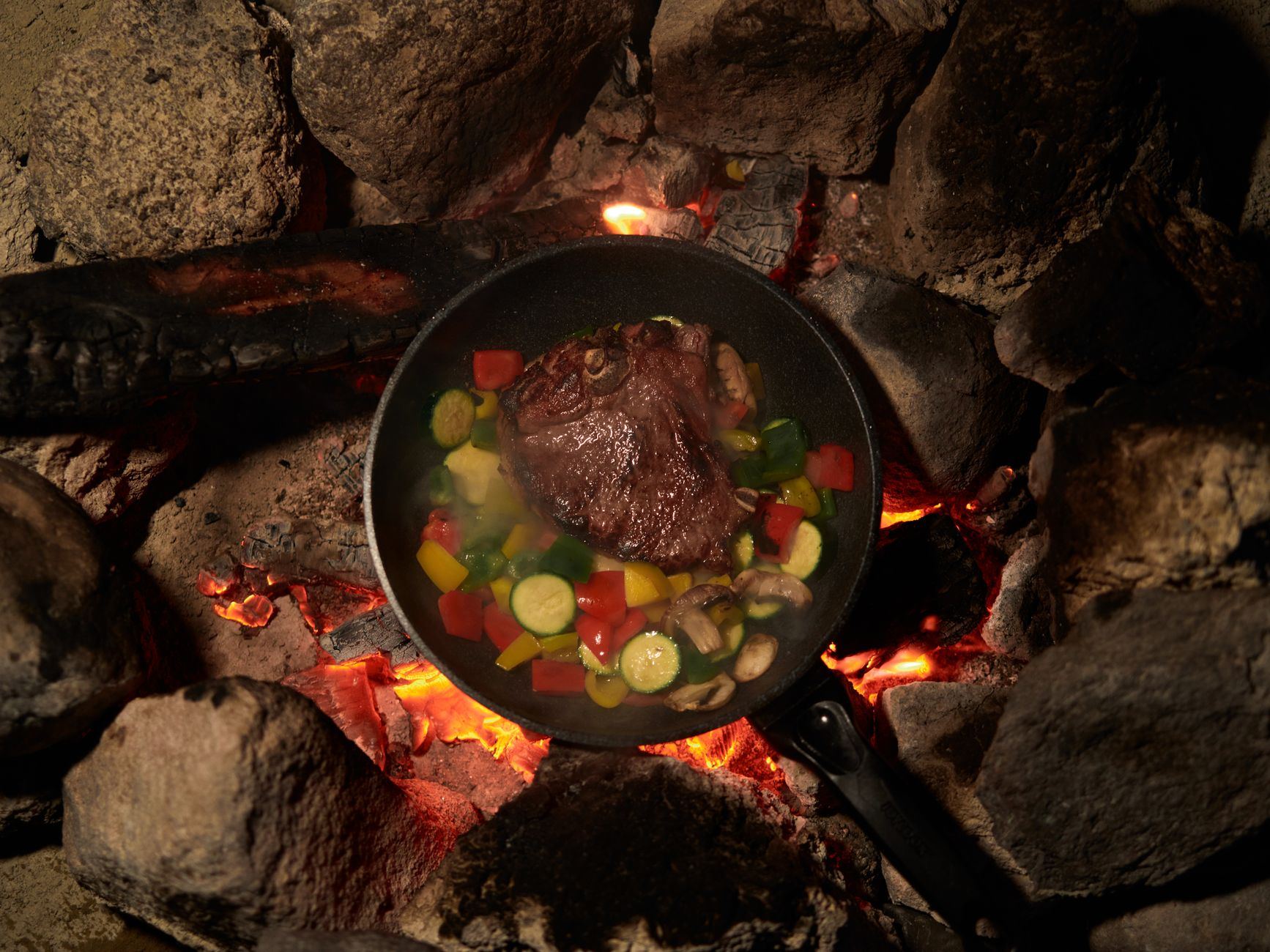
Outdoor cooking is a heat-control skill, not a camping chore: cook over coals instead of flames and food stops coming out burnt outside and raw inside.
Outdoor cooking means making real meals over a campfire, a bed of coals, or a portable stove, away from your kitchen. The hobby is the process, not the camping trip. You build the heat, read it, and time a whole meal around it.
A session starts an hour before you eat. You light a chimney of charcoal or build a small fire, let it burn down to coals, then cook in cast iron, foil, or a pot on a camp stove. Most of the work is waiting for the right heat.
Four methods cover almost everything: an open fire with a grate, a Dutch oven with coals on the lid, a cast iron skillet over a fire ring, and a two-burner camp stove. You can practice any of them in a backyard, a park fire pit, or a campsite. It sits apart from backyard barbecuing, which is about one fixed grill and low-and-slow meat.
Outdoor cooking is making meals over campfire coals, in a Dutch oven, or on a camp stove. A session means lighting a fire or stove, managing heat by hand, and timing food so everything finishes together, then putting the fire fully out. It is a different craft from backyard barbecuing, with more variety in fuel, pans, and places.
Cooking over fire keeps your hands busy and your eyes on something that changes every minute. Heat shifts, wind pushes smoke, and food needs timing. There is no screen to check, and the result is a meal you can eat. Boredom has little room when dinner depends on what you do next.
Most people file outdoor cooking under camping chores. You have to eat, so you burn a hot dog on a stick.
Fire strips away everything your kitchen does for you. There is no dial, no preheat light, and no thermostat. Heat is something you build, read, and move around.
A single Dutch oven roasts, bakes, braises, and fries. Cooks turn out bread, cobbler, and whole chickens with nothing but charcoal on the lid. Nobody pulls that off by accident.
A grill gives you vents, a lid, and one familiar setup. Outdoor cooking changes the setup every time. The fuel, the wind, and the pan all shift, so you cannot run a recipe on autopilot.
A fire is a live hazard, and you are often far from running water and a refrigerator. Fire control, food safety, and cleanup all become part of the skill.
That is the serious part. It is also why the person who runs the fire at a campsite gets quiet respect.
Session one is mostly fire management, and the food comes second. Expect to light the fire, lose the fire, and relight it.
Your first coals will be too hot or not ready yet. Flames blacken the outside of food while the inside stays raw. Most first meals come out slightly burnt, slightly underdone, or both.
Around the second or third cook, you start reading the coals. The glowing orange-gray bed is gentler than the flames you were cooking over, and food begins finishing when you expect it to.
Cleanup surprises people. Ash, grease, and cast iron take real time, and the fire is not done until it is cold to the touch.
Cook in a clear spot away from tents, branches, and dry grass, with water and a shovel within reach. Check for fire restrictions before you light anything, because bans are common in dry months.
Never use charcoal or a gas stove inside a tent, car, or garage. Carbon monoxide builds up silently and it kills.
When to start: A calm, dry afternoon with no fire restrictions, about three hours before dinner
Duration: 2 to 3 hours including cleanup
Cost to try: Charcoal and groceries; a chimney starter is about $25
Success criteria: If you cooked food through without burning it and the coals were cold to the touch at the end, do session 2.
Tall flames look like cooking. They scorch food and leave the middle raw.
Wait until the wood has burned down to glowing coals with a light gray ash. That usually takes 30 to 45 minutes. Patience is the first technique.
Trying a new method on a trip with hungry people ends in cold sandwiches and bad moods. Wind, dusk, and an unfamiliar pan make everything harder.
Do a dry run at home first. A backyard rehearsal costs a bag of charcoal and saves the whole weekend.
Never add lighter fluid or any accelerant to a fire that is already lit. Never leave a fire unattended, even for a quick trip to the car.
To put it out, drown it with water, stir the ashes, and feel for heat with the back of your hand. If it is too hot to touch, it is too hot to leave. Follow local fire bans and Leave No Trace rules on campfire impact.
Raw chicken, ground meat, and eggs spoil fast without refrigeration. Keep the cooler cold, keep raw meat separate, and do not leave food out for more than two hours.
Cook poultry to 165°F and ground beef to 160°F, and check with an instant-read thermometer. Color alone will not tell you.
Soaking cast iron or leaving it wet invites rust and strips the seasoning. Dutch ovens ruined by one wet night are a camp classic.
Scrape it clean while still warm, rinse with hot water, dry it over the coals, and wipe on a thin layer of oil.
Outdoor cooking is social by default. Everybody wants to stand near the fire, and everyone wants a bite.
The easiest door is a cooking class or club that already uses fire. Scouting America troops and 4-H programs run outdoor cooking all the time and often welcome adult volunteers. REI Outdoor School offers camp cooking and stove classes at many stores.
The International Dutch Oven Society hosts cook-offs and gatherings, especially in the western U.S. State fairs and rendezvous events often run Dutch oven contests.
Reddit's r/camping and r/castiron are active and friendly to beginners. Search Meetup for camping, cast iron, and outdoor cooking groups in your area.
State park ranger programs and campground events sometimes include campfire cooking demos. KOA campgrounds and similar family campgrounds often host cookout nights.
A potluck cook where everyone brings one ingredient is the fastest way to build a regular crew. Pick a park with fire pits or a friend's backyard. Rotate who runs the coals.
The same fire can go several ways. Pick the style that fits what you want.
A two-burner propane stove works like a small kitchen range. You get steady heat, simple cleanup, and no fire permit worry. It is the easiest place to start and the standard setup for car camping.
Cook on a grate or in cast iron over a managed coal bed. You learn heat control faster here than anywhere else. Expect smoke in your hair.
Coals above and below turn one pot into an oven. Think cobbler, bread, chili, and roast chicken. This is where the hobby deepens.
A canister stove boils water fast, and meals are built for weight. Great for backpacking trips, less great for ambitious menus.
Vegetables, sausage, and potatoes sealed in foil and set on coals. It is forgiving and good for kids. Use heavy-duty foil and open packets away from your face, since steam burns.
Beginners chase better recipes. The people who get good learn one thing first: how to control heat by controlling coals.
Fire has no dial, so your dials are the amount of coals, how close the food sits, and how much airflow you allow. Flame is for lighting. Coals are for cooking.
Rake your coals into a hot side, a medium side, and an empty side. Now you can sear on one side, simmer on another, and rest food on the third. Moving food, not adjusting the fire, is how you control the cook.
Put an oven thermometer inside your Dutch oven or on the grate and watch what your coals really produce. For a 12-inch Dutch oven, about 24 briquettes gives roughly 350°F: 16 on the lid and 8 underneath. Use it as a starting point, then adjust for wind and cold.
Cook the same simple food three times: quesadillas, pancakes, or sliced potatoes in a skillet. Do one batch per zone and note what burns and what stalls. Two evenings of this teaches more than ten recipes.
Commit to four sessions in 30 days. One a week is enough, and at least one should use real coals or a Dutch oven, not just a stove.
Treat the fire like homework. Write down what you cooked, how long the coals lasted, and what went wrong.
If you keep thinking about the next meal while you clean up, this is your hobby. Plan an overnight trip and try a Dutch oven bake.
If you liked the food but not the fire, switch to camp stove cooking or backyard grilling. You can still enjoy outdoor meals without managing coals.
If setup and cleanup felt like a chore every time, this probably is not for you. Use the gear for camping trips and move on.
If you catch yourself rushing the fire-out step because you are tired or it is dark, stop and slow down. Cold ashes are not optional. Sloppy fire habits are the one thing worth quitting over.
Barbecuing usually means a fixed grill or smoker, often with low-and-slow meat. Outdoor cooking covers campfires, Dutch ovens, cast iron, and camp stoves, and the setup changes every time. You also manage fuel, wind, and fire safety yourself, so it feels more like a craft than a recipe.
At minimum, a cast iron or heavy skillet, a safe place for a fire, water and a shovel, heat-resistant gloves, and an instant-read thermometer. A charcoal chimney starter makes coals easier. You can borrow most of this for your first session, and a grill works as a practice fire pit.
You control it with coals and distance, not flames. Rake coals into a hot zone, a medium zone, and an empty zone, then move the pan between them. Adding or removing coals under a Dutch oven changes the heat too. An oven thermometer shows what your setup is really doing.
A common rule for a 12-inch Dutch oven at around 350°F is about 24 briquettes: 16 on the lid and 8 underneath. For a 10-inch, use fewer, and add a few in wind or cold. Treat it as a starting point and check the temperature with a thermometer.
Drown it with water, stir the ashes and embers, and add more water until the hiss stops. Then feel the area with the back of your hand. If it is too hot to touch, it is too hot to leave. Never bury a hot fire, because coals can smolder underground.
It depends on your town, county, and the current fire danger. Many places ban open fires, while allowing charcoal grills and gas stoves. Check local fire department rules and any burn bans first. Parks and campgrounds usually allow fires only in designated rings or grills.