BoredomBusted — Find Your Next Favorite Thing To Do
Discover hobbies, activities, places, and ideas that spark joy. Whether you're looking for something creative, active, social, or relaxing, BoredomBusted helps you find your next favorite thing to do.
Browse our hobby guides, things-to-do collections, and place ideas to never be bored again.
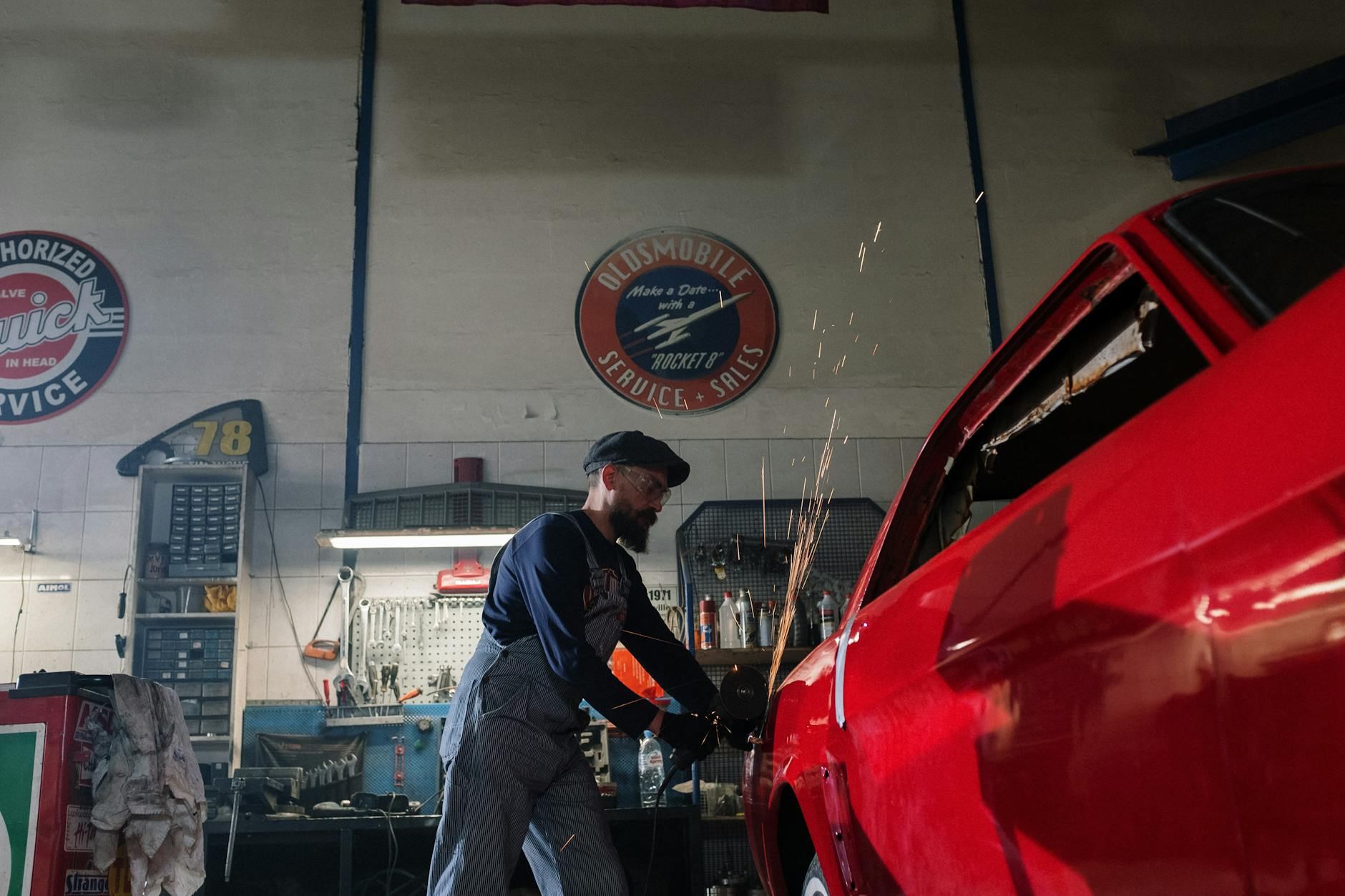
Vehicle restoration isn't just about cars—it's a test of perseverance and project management where learning steps come before mechanical skills.
Getting started with vehicle restoration as a beginner can seem daunting, but it's a rewarding journey of bringing neglected cars, trucks, or motorcycles back to their former glory through mechanical repair, bodywork, and refinishing.
Unlike casual car maintenance, restoration means returning a vehicle to a specific historical or factory state, which requires research, sourcing period-correct parts, and often years of iterative work across multiple disciplines.
In vehicle restoration, hobbyists engage in hands-on mechanical and cosmetic work, methodically disassembling, repairing, and reassembling classic cars, addressing critical systems like brakes and engines, restoring interiors, and completing bodywork to transform a non-running vehicle into a drivable classic.
Vehicle restoration fosters a flow state through immersive tasks with clear goals and immediate feedback, while skill feedback loops keep motivation alive as hobbyists experience tangible progress, culminating in a deep sense of accomplishment from reviving automotive heritage.
You think this hobby is about cars. It's not – it's about being the kind of person who finishes something hard.
The assumption is that vehicle restoration means mechanical skill, a big garage, and money you don't have. Most people disqualify themselves before they look up a single part number.
Take a 1972 Ford F-100 sitting in someone's field. The new owner didn't know engines. He spent the first six months doing nothing but cleaning, researching, and sourcing parts – zero mechanical work.
By the time a wrench came out, he understood the truck well enough that the mechanical part was almost anticlimactic.
You're already wondering what a project like that actually costs to start. That's the next question worth answering.
The first session rarely looks like the videos. You're in the driveway, wire brush in hand, and the car hasn't moved since 2019. The gap between watching someone restore a car and actually touching one is bigger than any YouTube channel will tell you.
Three hours to remove four bolts is a normal first session. The previous owner's "minor work" turns out to be someone else's unfinished panic. You'll order parts, two will be wrong, and you'll learn what a core charge is the hard way.
One thing that catches almost everyone off guard: penetrating oil needs 20–30 minutes minimum to work — often overnight — and skipping that step is where most beginners strip their first fastener. Spray the bolts you plan to touch at the start of the session, then go do something else. That one habit saves you more time than any tool upgrade.
Around week three, something will actually come apart cleanly — and it'll feel disproportionately good. Then the next thing won't budge, and you'll hit the moment where you're stalled, stuck on a bolt, researching something you didn't expect to research today. That moment is where most restorations either end or get finished — and the only difference is whether you treat it as a stopping point or a detour. The next section covers the mistakes that turn detours into dead ends.
When to start: Early morning
Duration: 2 hours
Cost to try: $20
Success criteria: if you finished without needing professional help, do session 2.
Rust on the body looks dramatic but it's fixable – rust that's eaten through the floor, frame rails, or rockers can cost more to repair than the car is worth.
Walk under the car with a flashlight and a screwdriver before you hand over a single dollar; if the metal flexes or flakes, walk away.
The excitement of demolition is real, and beginners tear into a vehicle before confirming replacement parts actually exist for it.
A wire wheel feels like progress, but the micro-scratches it leaves give rust a perfect place to restart underneath your primer.
Switch to 80-grit sandpaper or a DA sander for final bare-metal prep on any surface that's getting paint.
It seems harmless until a bare wire touches a panel and you're chasing an electrical gremlin through a half-disassembled dash for three weekends.
Label every connector with masking tape and a marker before disconnecting anything, and don't reconnect power until the wiring diagram says the circuit is complete.
The color in your head – and even on the body panel – has faded, oxidized, or shifted over decades.
Find the manufacturer's paint code on the door jamb sticker, then order a test panel spray-out from your paint supplier before committing to a full mix.
Most restoration work happens in a home garage or rented bay space – a concrete floor, decent lighting, and enough room to walk around the vehicle is the baseline.
Some restorers rent time at shared workshop spaces, which come with lifts, compressors, and tools you won't need to own for years.
Tell them exactly what you have, what condition it's in, and that you're starting out – specificity gets you better help than vague enthusiasm every time.
Clubs field beginners constantly, and naming your exact project usually pulls someone out of the crowd who's already restored the same model.
This is what most people picture – returning an older vehicle to factory condition, or better. The research phase alone can take months, because accuracy to the original spec actually matters here.
Best for people who love history as much as mechanics.
Budget expectations shift fast; sourcing period-correct parts gets expensive.
You're not chasing originality – you're chasing character. Mismatched parts, raw metal, intentionally unfinished aesthetics.
This is the most forgiving variant for beginners because imperfection is basically the point.
Costs stay lower since you're not hunting down rare original components.
Smaller scale, lower parts cost, and you can do most of it on a workbench. The tradeoff is that electrical gremlins on old bikes can consume more hours than the mechanical work.
Best for people with limited garage space who still want a real project.
This blends restoration with modification – getting a truck or Jeep capable of terrain it was never meant to handle. You're not restoring to original; you're building toward a purpose, which changes how every decision gets made.
Best for people who want to actually use the finished vehicle, not just display it.
The goal is profit, not passion – buy neglected vehicles cheap, restore them efficiently, sell. It demands faster decision-making and tighter cost discipline than hobby restoration.
Best for people who already have mechanical skills and want to test whether this can pay for itself.
For something adjacent, see 3D Printing.
Some of the same instincts show up in Glassblowing — worth a look if this clicked.
Most beginners obsess over tools – better welder, better grinder, better spray gun. The tool isn't the bottleneck. Reading metal is.
The skill is called metal diagnosis: looking at a panel and knowing, before you touch it, whether it's stretched, shrunk, fatigued, or just bent. It's the difference between working with what the metal wants to do and fighting it the entire way through a project.
When you can read a panel accurately, your repair sequence changes – you stop creating new problems while fixing the original one. Without it, you'll hammer a low spot flat, watch two new highs appear beside it, and spend four hours chasing damage you made yourself.
Grinders and body filler become last resorts instead of first instincts.
Six sessions over 30 days. One per week, with a couple of doubles thrown in — enough to move through teardown, assessment, sourcing, and repair without the early enthusiasm doing all the heavy lifting.
If you're already thinking about the next session before the current one ends, that's not excitement — that's the signal. The slow, unglamorous stretches (penetrating oil soaks, wrong part, reorder, wait) didn't break you. Start identifying a real project vehicle and treat the sourcing process as part of the work.
If you finished all six sessions but never felt pulled back between them, the physical reality probably didn't match the version you had in your head. Try one more focused session on something specific — a carburetor rebuild, a brake job — before you decide. Sometimes it's the task, not the hobby.
If you dreaded showing up and still dreaded it after six sessions, that's a clean answer. Restoration work has almost no fast rewards — if the slow grind felt like punishment rather than process, it will always feel that way.
The sign that it's working: you're stopping to look at project vehicles in parking lots — not to buy, just to look. You notice rust patterns or a trim piece and actually wonder what it would take to fix it. That low-level diagnostic curiosity is the real prerequisite, and most people either have it or they don't.
No stable workspace is a structural dealbreaker. You can't restore a vehicle in a shared parking lot, and most apartments, HOAs, and rentals will shut you down fast. If you don't have a garage or aren't willing to rent one, the logistics will end this before the learning curve does.
Chronic hand, wrist, or back injuries change the equation significantly. Restoration demands hours in awkward positions — under dashboards, over engine bays, on a creeper. Some adaptations exist, but this isn't a hobby you can do at a table.
If an open-ended timeline genuinely stresses you out, reconsider before you spend anything. Parts get discontinued. Shops backorder for months. A "six-month project" regularly becomes two years — and the people who thrive here made peace with that before they started.
If nothing here clicks, our guide to what to do when bored covers shorter, lower-commitment options.
Restoration costs range from $20,000 to $100,000+ depending on the vehicle's condition, rarity, and your desired level of authenticity. A basic restoration might focus on mechanical work and paintwork, while a full frame-off restoration with original parts will be significantly more expensive. Budget for unexpected repairs once you start disassembly.
You don't need prior experience, but you should be willing to learn through manuals, online communities, and possibly hands-on mentorship. Start with simpler projects like cosmetic work or common repairs before attempting engine rebuilds. Many restorers begin as complete novices and build skills gradually.
A basic restoration takes 1–2 years working part-time, while a comprehensive frame-off restoration can take 3–5+ years depending on parts availability and complexity. The timeline heavily depends on your available time, budget, and whether you're sourcing rare components. Patience is essential since rushing leads to quality issues.
Essential tools include a basic socket set, wrenches, screwdrivers, jack stands, and a workbench. As you progress, you'll likely invest in specialized equipment like an impact wrench, diagnostic tools, and potentially welding gear depending on your project scope. Many tools can be acquired gradually as specific needs arise.
A dedicated garage or workshop is ideal since you'll need dry, organized space to work safely and avoid weather damage to your vehicle and parts. Minimum requirements include adequate lighting, ventilation for fumes, and space to work underneath the car. Street or driveway restoration is possible but slower and more challenging.
Look for vehicles with solid frames and interesting history—avoid cars with extensive rust or missing major components if you're a beginner. Check online marketplaces, local auctions, and enthusiast forums for deals, and always inspect the vehicle in person before buying. Starting with a popular model ensures easier parts sourcing and community support.