BoredomBusted — Find Your Next Favorite Thing To Do
Discover hobbies, activities, places, and ideas that spark joy. Whether you're looking for something creative, active, social, or relaxing, BoredomBusted helps you find your next favorite thing to do.
Browse our hobby guides, things-to-do collections, and place ideas to never be bored again.
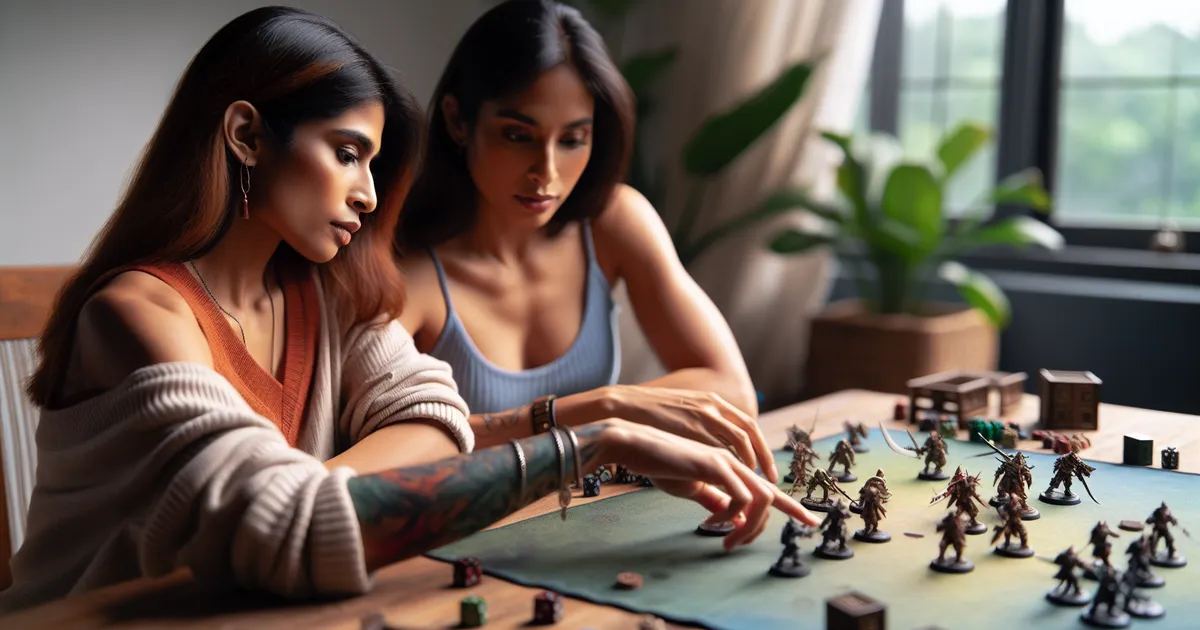
Tabletop skirmish gaming isn't about endless painting or rules disputes — it's a fast track to a vibrant community and weekend battles with just a starter box.
Getting started with tabletop skirmish gaming as a beginner involves taking control of a small warband of miniatures and competing in tactical battles on a detailed terrain setup. Tabletop skirmish gaming puts two or more players in control of a small warband – usually 5 to 20 miniatures – competing on a terrain-covered table using dice, tape measures, and rulebooks to resolve combat.
Unlike board games, the rules are applied to physical space, not a fixed grid.
And unlike full-scale wargames, the small model count means a single session fits in an evening.
In tabletop skirmish gaming, players engage in tactical battles using miniature figures, setting up modular terrain on a tabletop to create unique battlefields. They organize their miniatures into squads, take turns executing actions by rolling dice to resolve movements and attacks, and adapt strategies based on enemy positions and random dice outcomes, often playing solo to simulate opponents an…
This hobby combats boredom by creating immediate skill feedback loops through tactical decisions, fostering a flow state as players navigate challenges. The sense of accomplishment from completing skirmishes and evolving warbands enhances satisfaction, while customizable scenarios allow for creative expression, making each session uniquely engaging.
You think this is the hobby where people argue over rules in a basement and spend $400 painting tiny soldiers before they're allowed to play. That's the image. It's wrong.
A guy named Marcus started Warcry with six unpainted models and a borrowed rulebook. Three months later he had a fully painted warband, two regular opponents, and a Tuesday night he actually looked forward to.
He didn't plan any of that. He just played the first game.
The social layer here is the part nobody mentions in the box description – and it's the reason most people stay. That's next.
Watching a skirmish game on YouTube looks fluid. Two players moving minis, calling rules from memory, laughing when something explodes spectacularly. Your first session will not look like that.
Before: Excited. Rules half-read. Minis possibly still unpainted. Tape measure already lost.
After: Rules actually make sense. Losses feel instructive. Tape measure still lost, but now you know where to buy a spare.
One thing that will genuinely help before session one: measure ranges before you commit to moving, not after.
In skirmish games, activating a model and then discovering your attack falls a half-inch short doesn't just waste a turn – it hands the initiative to your opponent in a game where momentum is almost everything.
Clunky. Slow. Rules argument with yourself.
That's weeks one and two, and almost everyone hits it.
It's not a sign you picked the wrong hobby – it's the game teaching you to think in three-dimensional space with incomplete information, which takes a minute to load.
When to start: Morning
Duration: 1.5 hours
Cost to try: $20
Success criteria: If you finished without extensive rules confusion, do session 2.
The models look great in photos, and the starter bundle feels like commitment – but you'll often hate the playstyle once you actually push them around a table.
Pick up a two-player starter set or borrow a friend's faction for your first three games before spending a cent on your own warband.
New players assume "I can see it, my model can see it" – but skirmish games use model-eye-level LOS, which completely changes how cover works.
Crouch to table level before your first game and physically check whether your fighter's eyes clear the terrain – it rewires your positioning instincts immediately.
Open tables feel easier to manage, but sparse terrain punishes every faction equally and removes the tactical layer the game is actually built around.
Aim for 25–35% table coverage with terrain – that's enough to create decision points without turning movement into a maze.
It feels aggressive and right – but burning your best activation early telegraphs your entire turn and lets your opponent react with full information.
Hold your high-priority model until you've activated one or two cheaper fighters to bait out your opponent's responses first.
Beginners chase kills because kills feel like winning, but most skirmish scenarios score objectives, not bodies – and you can table someone and still lose on points.
Read the victory conditions before deployment, not after turn two, and ask yourself which models are actually scoring rather than just fighting.
Tabletop skirmish gaming happens mostly in game stores and hobby shops — the kind with tables in the back and terrain stacked in the corner. Some players run games at community centers or dedicated gaming clubs, especially for larger events.
Each game system runs its own organized play rather than feeding into one governing body. Games Workshop's Warhammer Age of Sigmar and 40K run the largest structured networks in the US and UK — so your entry point depends on which system your local store supports.
Most stores with a gaming table run demo nights — just ask staff if they have beginner sessions. That one question usually gets you a free rulebook walkthrough, loaner models, and an hour of someone's time at no cost.
Narrative campaign skirmish is where your warband carries wounds, gains experience, and changes between games. The story you build matters as much as the fight itself.
This format suits players who get bored when nothing is at stake. Games like Mordheim and Frostgrave have dedicated rulebooks built around this format — no extra gear required beyond the book and a warband.
Mass battle lite sits between skirmish and full wargaming — slightly larger unit counts, more terrain-driven objectives, without the 80-model commitment of traditional army games.
One Page Rules starter sets cost under $30 and cut most of the barrier to entry — a realistic next step if skirmish has clicked but you're hungry for more moving parts.
Solo and cooperative skirmish runs on AI decks or randomized enemy behavior charts. No opponent. No scheduling. Just you, the table, and a rulebook that fights back.
Irregular schedules make this format practical, but it also works as a low-pressure way to learn rules before sitting across from another player. If you're still unsure which skirmish variant to try first, start here.
Sci-fi skirmish runs the same core mechanics as fantasy skirmish — the aesthetic just shifts to alien worlds, power armor, and interstellar conflict. Star Wars Legion and Infinity are the biggest names.
Pick your aesthetic first, rules second — but know that Infinity carries a steeper rules curve than almost anything else in skirmish gaming. Factor that in before you buy the miniatures.
Competitive tournament skirmish runs on tightly balanced rulesets, points systems, and matched play. Skill decides the winner — not storytelling, not luck of the campaign draw.
The tactical ceiling is high, and the community is serious. Roster optimization becomes a second hobby in itself — competitive players cycle builds constantly, so budget creep is real and worth expecting upfront.
If you want a related angle, Miniature Terrain Building is the natural next stop.
Miniature Games lives in the same world — different mechanics, similar appeal.
If this resonates, Narrative RPGs explores a similar direction.
Most beginners spend their first months obsessing over list-building – chasing the perfect warband composition before they understand why any unit is actually on the table. The list isn't the problem. **Reading the board is.**
The skill is threat prioritization – the ability to scan the table at the start of each activation and correctly rank which enemy models need to die first, which need to be contested, and which can be ignored this round. Not "what can I kill?" but "what happens to me if I don't kill that one right now?"
Once you can read priority order, every decision in the game gets faster and sharper – movement, ability sequencing, even deployment starts to make sense. Without it, you win fights and still lose rounds, because you're winning the wrong fights.
Four sessions in 30 days. One per week, spaced enough apart that you're reflecting between them rather than just grinding through them.
If you're replaying decisions between sessions — regretting a flank you didn't take, reading warband-building forums at midnight — the tactical layer has hooked you, and that's the part that doesn't fade. Buy a second warband and start tracking your games.
If you finished all four sessions and felt nothing particular — not frustrated, not energized — that's usually a genre-fit problem, not a hobby-fit problem. Skirmish gaming rewards obsession over patience, and casual engagement starves it. Try one session with a different ruleset or opponent before you write it off.
If the painting felt like homework and the wins didn't land, that's not a learning curve. Some people love the idea of this hobby far more than the actual hour-to-hour experience of it — and that's a clean answer, not a failure.
You're browsing warband rosters for a game you don't own yet — not to buy it, just to understand how the factions fit together. That background fascination with systems and tactical possibility is exactly what this hobby feeds for decades.
You don't have a reliable opponent or local community access. Solo play exists, but skirmish gaming is fundamentally built around another human across the table — without that, the core loop breaks.
Fine motor limitations make miniature assembly or painting painful or impossible. Pre-painted options exist, but they're limited — this hobby's entry experience is deeply tied to building your warband physically.
Your schedule runs in unpredictable sprints with no reliable 2–3 hour windows. Sessions can't be paused and resumed easily — if those blocks of time aren't realistic, the hobby will stall before it starts.
You'll need a starter set (typically $30–$60), which includes miniatures, basic rules, dice, and a measuring tape. From there, you can expand with additional miniature units, terrain pieces, and hobby supplies like paint and brushes. Many games offer affordable starter boxes designed specifically for new players, so you don't need to invest heavily upfront.
Most skirmish games last between 30 minutes to 2 hours, depending on army size and player experience. Smaller starter battles can wrap up in 30–45 minutes, while larger, more complex matches may stretch toward 2 hours. As you become familiar with rules, games tend to move faster.
No—many players start with unpainted miniatures and enjoy the game immediately. However, painting is a rewarding hobby that many enthusiasts pursue alongside gaming. Your miniatures work just fine unpainted, and you can learn to paint at your own pace with tutorials and community support.
Most skirmish games have straightforward rules that beginners can learn in one session, though mastering advanced tactics takes longer. Starter sets are designed with accessibility in mind, and the hobby community is generally welcoming and helpful to new players. Don't let complexity concerns hold you back—you'll be playing competently within your first game or two.
A standard dining table (3–4 feet across) is sufficient for most skirmish games, though larger tables offer more terrain variety. You can play on even smaller surfaces by adjusting the battle map size. A dedicated gaming space is nice but not necessary—many players rotate between home, gaming stores, and community centers.
Local hobby shops, gaming cafes, and community gaming clubs host regular events and casual play nights where you can meet other players. Online communities and Discord servers also connect players for advice, rule clarification, and finding nearby gaming groups. Many established games have locator tools on their websites to help you find tournaments and meetups in your area.