BoredomBusted — Find Your Next Favorite Thing To Do
Discover hobbies, activities, places, and ideas that spark joy. Whether you're looking for something creative, active, social, or relaxing, BoredomBusted helps you find your next favorite thing to do.
Browse our hobby guides, things-to-do collections, and place ideas to never be bored again.
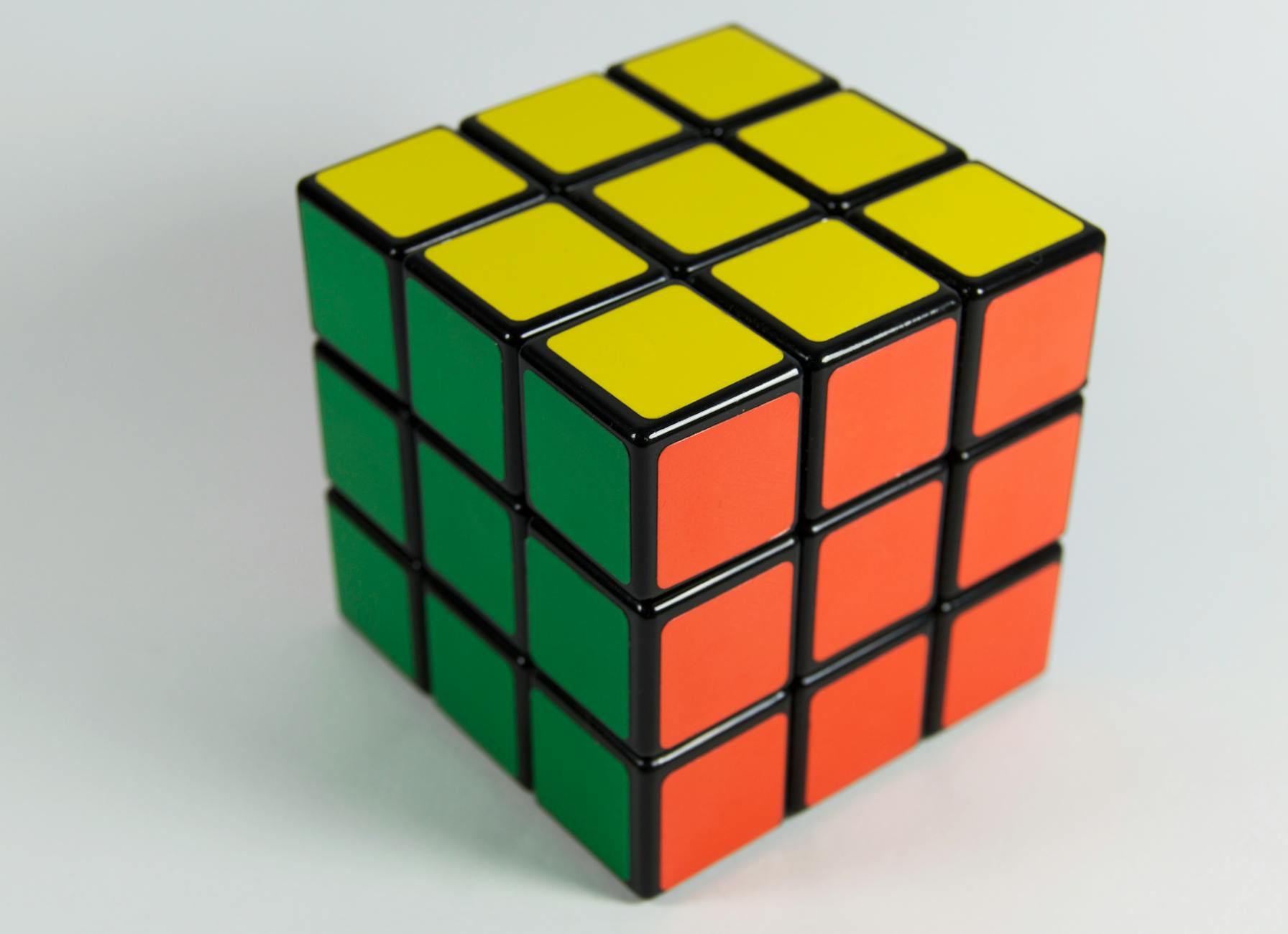
Solving twisty puzzles isn't just memorization; it's about mastering spatial reasoning and pattern recognition — the algorithms are just the tip of the iceberg.
Learning twisty puzzles as a beginner opens up a fun challenge that involves rotating layers to create and solve intricate patterns.
Each move shifts pieces according to fixed geometry, not luck.
Unlike jigsaw or logic puzzles, the challenge is physical manipulation and algorithm memory, not deduction alone.
In twisty puzzles, you repeatedly rotate pieces to align colors on multiple faces, requiring precise finger movements and mental calculations to solve. This engages spatial reasoning and pattern recognition as you memorize sequences of moves to achieve a solved state, often progressing from simpler 3x3 cubes to more complex variants like 5x5 and beyond.
Twisty puzzles provide repeated challenges with novelty, maintaining engagement through familiar mechanics and unique outcomes, while offering incremental skill feedback that satisfies a sense of accomplishment as you progress in difficulty. The community aspect fosters social belonging, connecting you with others who share the same passion.
You think this is a memory game. Learn the algorithm, repeat the moves, solved. That's the assumption – and it's what keeps most people from ever finding out what's actually here.
A competitive speedcuber doesn't just know more algorithms than you. They've internalized the cube's structure so deeply they can recognize a state and plan four moves ahead simultaneously – the same way a chess player reads a board.
That's not a memory skill.
That's pattern recognition.
That's spatial intuition built through repetition – and it's a skill that transfers to every other puzzle in the hobby, including the one you should actually start with.
Watching someone solve a Rubik's cube on YouTube looks like controlled magic. Then you pick one up and immediately make it worse. That gap – between watching and doing – is where every beginner lives for the first couple of weeks.
Your first session is mostly undoing damage you created two moves ago. You'll turn randomly, convince yourself you're close, and then watch the white face you spent ten minutes on disappear. The surprise isn't that it's hard — it's that random turning actively makes it worse, and that realization is the first real lesson.
Week one, you scramble it further trying to fix it. Week two, you memorize your first algorithm and it feels like cheating — because it kind of is, and that's fine. By week three, the first two layers start clicking without notes, and muscle memory is doing something your brain wasn't. Week four, you solve it in front of someone and feel nothing, because now the ceiling is speed, not completion.
Don't try to solve the whole thing. Just learn the white cross first. The people who stick with it aren't more patient — they stopped trying to solve one big puzzle and started solving three smaller ones stacked on top of each other.
Before you touch a scrambled cube, know this: the layer-by-layer method — specifically the CFOP beginner's version — is the only starting framework that doesn't collapse on itself. Intuitive solving works on a 2x2. On a 3x3, it stalls at the last layer every single time without exception. The next section covers the specific mistakes that keep beginners stuck at that wall longer than necessary.
When to start: Early morning
Duration: 1 hour
Cost to try: $10
Success criteria: If you finished without completely solving the cube, do session 2.
It feels faster to copy moves from a YouTube video than to understand why they work – so that's what most beginners do.
Fix: Before you memorize any algorithm, physically watch what it does to one piece, then reverse it and watch again – understanding the logic cuts your memorization time in half.
The hardware looks like the problem, so beginners upgrade before they've earned an opinion on what "better" even means.
Fix: Solve a stock Rubik's brand cube to completion at least five times before touching a GAN or MoYu – your technique matters more than your magnets right now.
Beginners assume the goal is always to restore the cube from scratch, missing that most solves share 80% of the same move patterns.
Fix: After each solve, study the scrambled state for 30 seconds before touching it – that pause is where pattern recognition actually develops.
The two middle-layer edge algorithms look short, so beginners memorize them instead of understanding the setup moves behind them.
Fix: Practice inserting middle-layer edges without any algorithm first, using only U-layer rotations – once you feel it, the algorithm becomes a shortcut, not a crutch.
One successful 3x3 solve feels like graduation. It isn't.
Fix: Hit 10 consistent solves without looking anything up before moving to a larger cube – parity errors on a 4x4 will break you if you don't own your 3x3 fundamentals yet.
Twisty puzzles are almost entirely a solo hobby – your bedroom, your kitchen table, a coffee shop corner.
That said, competitive solving happens at dedicated events, occasionally hosted at community centers or university venues.
Tell whoever's running the table that you just learned your first solve and want to see how people practice.
That gets you someone handing you their cube collection, walking you through finger tricks, and skipping the awkward standing-around phase entirely – experienced cubers genuinely want to show off what's possible.
The 2x2 has no edge pieces — just corners. That cuts the complexity dramatically compared to the standard 3x3.
It solves faster, teaches the same core logic, and costs under $10 almost everywhere. The clearest starting point if you've never solved a cube before.
The 4x4 — often called the Revenge Cube — is the natural next step. It's not a different hobby.
The catch is parity errors — situations that simply can't occur on a 3x3 and require their own fixes. Built for solvers who already have the basics down, not for skipping ahead.
The Megaminx is a 12-sided dodecahedron with 50 moveable pieces. It looks terrifying on a shelf.
In practice, anyone who can solve a 3x3 can transfer most of that knowledge directly — the twisting logic is the same. A decent one runs $15–25.
The Pyraminx is pyramid-shaped, four-sided, and genuinely easier than the 3x3. Most people crack it within a day or two.
It's a satisfying side puzzle rather than a main event. Good for kids, or for anyone who wants a confidence boost before tackling something bigger.
The Skewb rotates around corners instead of faces. That makes it feel completely foreign even if you know the 3x3 cold — the logic relearn is real.
It's a short solve once you know it, and worth picking up when you want variety without committing to a 50-piece beast.
A close neighbor worth considering: Risk.
A close neighbor worth considering: Whist.
If the texture of this appeals to you, Kakuro is built on similar bones.
Most beginners obsess over memorizing more algorithms – longer lists, harder cases, more patterns.
That's not the bottleneck. The bottleneck is not seeing the puzzle.
The one skill is chunk recognition – the ability to look at a scrambled puzzle and instantly read groups of pieces as units, not individuals. Instead of seeing 20 separate stickers, you see "that corner-edge pair is already joined" or "that whole layer just needs one trigger."
Your brain stops cataloguing and starts reading.
Without it, you execute algorithms blindly – you finish a move sequence and then re-scan from scratch every single time.
That re-scan is where your solving time actually lives. With chunk recognition, you're already planning move 3 while executing move 1.
Every algorithm you already know gets faster – not because your fingers sped up, but because you're feeding them better information.
Compression happens here.
Commit to 8 sessions over 30 days – roughly twice a week. That's enough time to get past the "this is just scrambled and hopeless" phase and actually feel what solving in progress feels like.
If you keep picking the cube up between sessions – fiddling with it while watching TV, mentally running an algorithm in the shower – that's not habit formation. That's the hobby. That restlessness between sessions is the signal to go deeper, not wider – a second puzzle and a timer will tell you more than any tutorial.
If you finished the sessions but felt nothing either way, you were probably solving by rote – following steps without understanding why they work. Extend by two weeks, but this time pick one algorithm and understand it instead of memorizing it.
The click people describe comes from understanding, not repetition. That's worth one more honest attempt before moving on.
If you actively dreaded sitting down with it – not boredom, dread – that distinction matters. Some people find the logic satisfying in theory but genuinely frustrating in practice, and no amount of persistence rewires that. This hobby rewards patience with opacity specifically – if opacity just makes you angry, that's a clean answer.
You've never owned a cube, but you pick one up every time you see it – a friend's coffee table, a waiting room, a store display. That low-grade compulsion to touch and rotate it is more predictive than any quiz – it means your hands already want to know how it works.
Fine motor issues or joint pain in the fingers and wrists are a real barrier. Speed solving is the obvious problem, but even casual solving involves sustained repetitive hand movement that will aggravate existing conditions.
If your schedule is genuinely fragmented into under-5-minute windows, the hobby stalls. Early-stage solving requires enough uninterrupted focus to hold a sequence in working memory, and constant interruption resets that.
If you need visible, external progress to stay motivated, this will grind you down. Improvement here is internal and incremental. The cube looks exactly the same whether you're a beginner or sub-30 seconds.
Most beginners can solve a Rubik's cube in 2–5 minutes after learning the layer-by-layer method, which typically requires a few hours of practice. With consistent practice over a few weeks, you can reduce your time to under a minute.
Popular variants include 2x2, 4x4, and 5x5 cubes, as well as non-cubic puzzles like Pyraminx (tetrahedron), Megaminx (dodecahedron), and Skewb. Each offers different difficulty levels and solving mechanics.
A good beginner cube costs $5–$15, while high-performance speedcubes range from $15–$50. Premium cubes with advanced mechanisms can exceed $50, but entry-level puzzles are affordable and sufficient for learning.
Not practically—solving requires learning specific sequences of moves called algorithms. However, you only need to memorize 5–10 key algorithms to solve most standard cubes using beginner methods.
Quality cubes are durable and designed for frequent use, but excessive force or poor handling can cause corner twists, popping, or wear. Proper technique and occasional maintenance keep puzzles in good condition for years.
Twisty puzzles improve spatial reasoning, pattern recognition, hand-eye coordination, and memory. They also enhance focus and problem-solving abilities while providing a meditative, rewarding experience.