BoredomBusted — Find Your Next Favorite Thing To Do
Discover hobbies, activities, places, and ideas that spark joy. Whether you're looking for something creative, active, social, or relaxing, BoredomBusted helps you find your next favorite thing to do.
Browse our hobby guides, things-to-do collections, and place ideas to never be bored again.
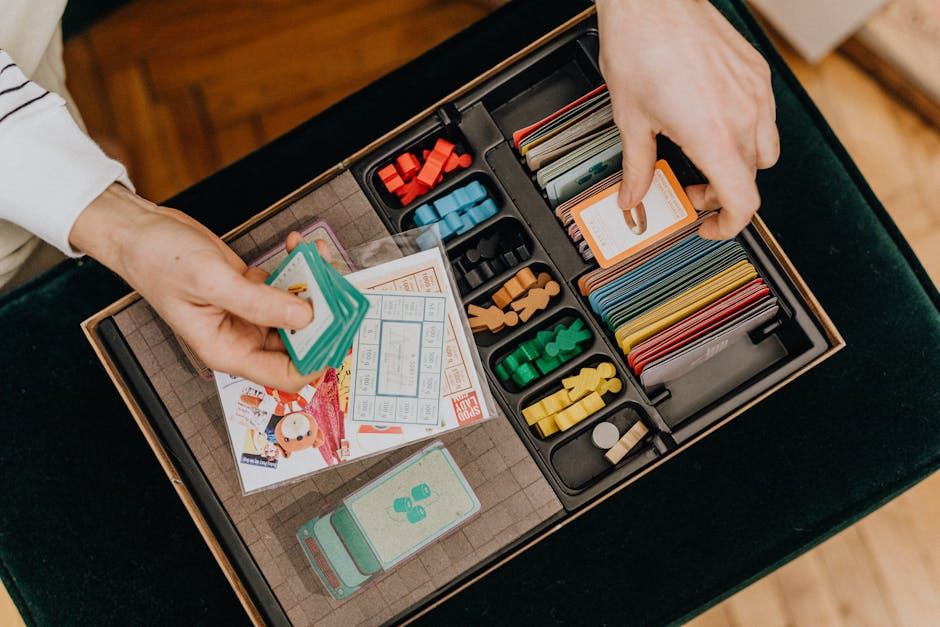
Most people hear "card game" and picture a shared deck everyone draws from. Dominion isn't that. Every player builds their own deck from scratch during the game itself — and the deck you end with is the engine you designed.
Dominion invented the deck-building genre in 2008 and it's still the clearest example of how the format works. If you've never played it, this is the right place to start.
The box looks approachable. Five hundred cards, simple icons, a two-page ruleset. But Dominion runs on three interlocking systems that take real time to internalize.
Economy — generating enough Treasure to buy what you need. Your starting deck is weak on purpose. Getting to reliable 5-coin turns is a real milestone.
Deck density — keeping your deck small and functional. Every Victory card you buy is a dead card until the final count. Buying Provinces too early clogs your draws and stalls your engine.
Timing — knowing when to stop building and start winning. Players who pivot to Victory cards too late get overtaken. Players who pivot too early lose momentum. Reading that window is the whole game.
A first game with the recommended starter Kingdom cards runs about 30 minutes. Here's how a typical session breaks down.
Setup (5 minutes): Lay out the Treasure, Victory, and Curse piles. Choose 10 Kingdom card stacks — the base game tells you exactly which 10 for a first game. Each player takes the same starting deck of 7 Coppers and 3 Estates, shuffles, and draws 5.
Early turns (rounds 1–5): You play Action cards (if you have any), then Treasure cards, then buy one card from the supply. Most new players buy Silver and the occasional cheap Kingdom card. The deck cycles fast because it's tiny.
Mid-game (rounds 6–12): Combos start clicking. You draw cards that let you draw more cards, play extra Actions, gain extra buys. This is when Dominion goes from feeling like a card game to feeling like engineering.
Endgame: The game ends when the Province pile runs out or any three supply piles are empty. Count Victory points in hand, deck, and discard. Whoever architected the better deck wins.
New players hoard actions. They see a card that gives +2 Actions and another that gives +1 Card and they try to chain everything into one giant turn. That instinct is wrong — and understanding why is what makes you actually dangerous.
The real insight in Dominion is that deck size is a liability, not an asset. Every card you add dilutes the cards you already have. A 12-card deck that reliably hits 5 coins beats a 25-card deck that hits 5 coins half the time.
This is why Trash cards — cards like Chapel that let you permanently remove cards from your deck — are among the most powerful in the game. Destroying your own cards on purpose feels counterintuitive. But a 10-card deck cycling through twice as fast as your opponent's 20-card deck is an engine, not a weakness.
The players who win consistently are the ones who treat their deck like a budget. Every addition is a deliberate trade-off, not a bonus.
Dominion is one of the most cost-controlled hobbies in card gaming. You don't draft. You don't open randomized packs. Every card you need is in the box.
The Dominion base game runs about $40–$45 and gives you everything you need to play. Fourteen unique Kingdom card sets, all the Treasure and Victory cards, and a rulebook that actually teaches the game. This is a complete experience on its own.
Once you've played the base game 10+ times, expansions open up dramatically different gameplay. Intrigue and Seaside are the most recommended first expansions at around $35–$45 each. They introduce new mechanics without overwhelming new players.
There are over a dozen expansions. Serious players who want the full card pool can expect to spend $300–$400 collecting everything across several years. Or play Dominion Online for about $4/month and access the entire card pool digitally without the storage problem.
The base game is the right starting point for everyone. The only real question is what comes after.
Dominion base game — obvious, but buy it new if you can. Second-hand copies sometimes have missing cards and Dominion really punishes incomplete supply piles.
Card sleeves — 500 cards get shuffled hundreds of times. Standard-size sleeves (62mm × 89mm) protect the cards and make shuffling smoother. Budget about $15 for a full sleeve job.
Dominion Online free trial — play the base set for free at Dominion Online before committing to expansions. It's the fastest way to add reps and test cards you're thinking about buying.
Any expansion before you've played the base 10+ times. Expansions layer on mechanics. If you don't have the core game internalized, new mechanics just create confusion, not depth.
Alchemy. It's the most controversial expansion in the game's history. Experienced players debate whether Potion-cost cards break the economy. Not the right second purchase.
Fancy custom inserts and organizers. You don't know yet how many expansions you'll want. Buy storage solutions after you know the scale of your collection.
Every game of Dominion uses 10 Kingdom card sets chosen from the available pool. That selection is the game. Two players could use the same base set and never play the same game twice.
The base game includes 14 Kingdom sets and suggests specific combinations for your first few plays. Use them. Random kingdoms are fine once you understand what each card does, but a random draw that includes nothing but expensive terminal Actions is a frustrating slog to learn on.
The deeper question is whether you play with randomized kingdoms or curated ones. Randomized keeps the game genuinely unpredictable and forces adaptation. Curated lets you design experiences — beginner-friendly kingdoms, pure engine games, aggressive attack-heavy games. Most groups use random draw but ban 2–3 cards they find unfun. That's a legitimate house approach and worth knowing before your first game night.
Dominion has a smaller in-person tournament scene than Magic or Pokémon, but local board game groups run Dominion nights regularly. Here's how to filter for ones actually worth attending.
They teach before they play. A good group walks new players through the first 2–3 turns rather than handing them a rulebook and expecting them to catch up.
They mix experience levels deliberately. Putting three experienced players against one beginner isn't a learning environment. Look for groups that pair newer players together or at least explain kingdom choices out loud.
They debrief after games. The best Dominion players talk through what worked after a game ends. "I pivoted to Provinces two turns too late" is the kind of post-game conversation that actually makes you better.
They use Dominion Online for remote play. A community that plays online between in-person meetups is one that's genuinely hooked on the game, not just showing up to socialize.
They own multiple expansions and rotate them. Groups with a wide card pool keep the game fresh. If every session uses the same Kingdom cards, you've found a social club, not a Dominion group.
Find local board game groups through BoardGameGeek's guild locator, Meetup, or your nearest game store's event calendar. You can also browse more hobby options at the full hobbies list if Dominion turns out not to be your thing.
Dominion's online community is small but unusually smart. The game attracts players who like thinking out loud about systems, and the writing that's come out of that community is genuinely useful for improving.
The BoardGameGeek Dominion forums are the most active text community. The subreddit r/dominion is smaller but posts regular strategy threads and kingdom breakdowns. Both are worth bookmarking.
Dominion Online has a built-in matchmaking system and lets you play against strangers at any skill level. The table talk is limited but the volume of games you can get in — especially on a subscription — is unmatched. Most serious players use it to test specific card synergies before they'd commit to buying an expansion.
In-person, your best bet is a local game store with open gaming nights or a board game café. Dominion plays in under an hour, which makes it viable when a gaming group has limited time but wants something with real depth.
Give it 30 games before you decide. That's not as many as it sounds — a full game runs 30–45 minutes and two games in a session is normal.
By game 10, you should understand why deck thinning matters. If the concept still feels abstract, play 2–3 more games using Chapel aggressively and watch what happens to your turn quality.
By game 20, you should be reading the kingdom at setup and forming a rough plan before your first turn. Not a perfect plan — the game will punish that — but a direction.
By game 30, you should feel the difference between a fast game and a slow game and know how to apply pressure when your opponent is building instead of finishing.
Stop if you find the lack of direct interaction frustrating. Dominion is parallel solitaire with occasional attacks. Players who want head-to-head conflict and direct resource denial tend to burn out on it.
Keep going if you catch yourself mentally replaying your turns in the shower the next morning, trying to figure out exactly when you should have pivoted to Provinces.
2-player card games list — if you're usually playing with just one other person, this is where to look next.
Hearthstone guide — if the deck-building concept clicks and you want a digital card game with direct combat, Hearthstone is the most accessible entry point.
Bridge guide — if you want deep strategic card play with a partner and more direct interaction between players.
Gin Rummy guide — a faster, lower-complexity card game for when you want strategy without the setup overhead.
Full hobbies list — if card games in general aren't landing, browse the wider list for something that fits better.
A typical game of Dominion takes 30 minutes for experienced players, but beginners should expect 45 minutes to an hour for their first few games. Game length can vary based on player count and familiarity with the cards, but the average playtime remains relatively short compared to other strategic board games.
You need a base Dominion game set, which includes kingdom card decks, treasure cards, victory cards, and curse cards. Most sets are designed for 2–4 players, though expansions allow for more players and additional card variety. The core game is all you need to get started.
Dominion has straightforward rules that new players can grasp within one game, though strategic depth develops over multiple plays. The learning curve is gentle—you can enjoy a casual game while still discovering new tactics and card combinations as you become more experienced.
Dominion improves strategic thinking, deck-building decisions, resource management, and planning ahead. Players also develop skills in evaluating risk versus reward, adapting to changing card availability, and balancing short-term gains with long-term goals.
A base Dominion game typically costs between $30 and $50, depending on the edition and retailer. Expansions range from $25 to $40 each, but you don't need them to enjoy the game—the base set offers plenty of replayability on its own.
Yes, the base game is designed for 2–4 players, and each player count offers a different strategic experience. With 2 players, competition is more direct; with 3–4 players, the dynamics shift as you adapt to more unpredictable card availability and player interactions.