BoredomBusted — Find Your Next Favorite Thing To Do
Discover hobbies, activities, places, and ideas that spark joy. Whether you're looking for something creative, active, social, or relaxing, BoredomBusted helps you find your next favorite thing to do.
Browse our hobby guides, things-to-do collections, and place ideas to never be bored again.
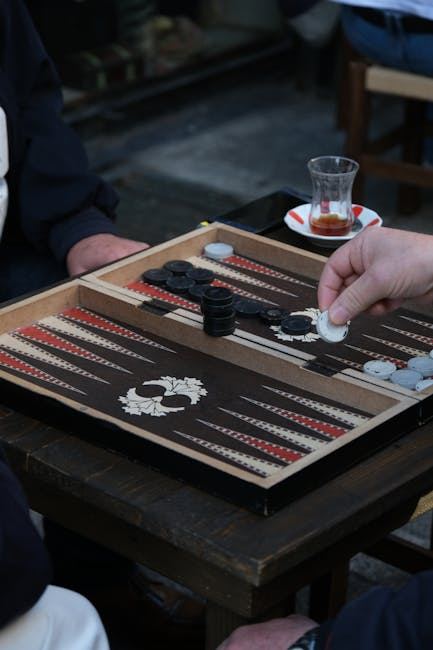
Backgammon isn't just a grandparent's game—it's a complex battlefield of strategy where bad rolls teach you more than you think about probability under pressure.
Getting started with backgammon as a beginner is an engaging way to enjoy a classic two-player game. Move 15 pieces across the board. Roll dice and use tactics to keep opponents from doing the same.
Unlike chess, luck calls the shots. Dice rolls can change everything.
Turning bad rolls into survival strategies is the real skill. That's why players stay hooked for decades.
In backgammon, players engage in strategic gameplay on a board divided into 24 points, using dice to move their pieces while blocking and capturing opponents’ pieces. Practitioners analyze their games in detail, record moves, and engage in deliberate practice with peers, focusing on decision-making and strategic patterns. They also perform targeted drills to refine specific skills and review erro…
Backgammon combats boredom through skill-based feedback loops where players receive immediate performance evaluations against objective standards, fostering cognitive engagement and ongoing challenge. The social aspect of collaborative learning with study partners enhances this experience, transforming solitary practice into shared exploration. Additionally, the progressive complexity of varied p…
You think backgammon is a grandparent game. Something that lives in a dusty cabinet between Scrabble and a deck of cards missing the three of diamonds.
That assumption is costing you one of the sharpest competitive games in existence.
A friend showed you piece movement, but missed the deeper game.
Meanwhile, a serious player counts pips, deciding whether to leave a blot because the risk works in their favor.
That's not luck; that's calculated risk.
It isn't hard to start learning the math, and that's where the thrill begins.
That's exactly what's next.
Backgammon looks simple for about ten minutes. You move checkers, you follow the dice, you think you understand it. Then you lose three games in a row and can't explain why any of them went wrong.
The first sessions are mostly reaction. You move what the dice allow, avoid obvious blunders, and hope the numbers cooperate. The frustrating part is that nothing feels wrong until your opponent suddenly has you trapped with no good moves left. You didn't see it coming because the losing position built up five turns ago, quietly, while you were focused on something else entirely.
Around session three or four, something specific happens: you make a defensive move — stacking a point, refusing an obvious hit — and your opponent pauses. Their hesitation tells you the move mattered. That pause is the first real signal that you're thinking a turn ahead instead of just responding to the dice. It's not mastery. It's the first crack of pattern recognition.
The doubling cube is where a lot of beginners quietly give up, writing the whole game off as luck-dependent. Hitting an opponent's blot feels aggressive and satisfying, but it can hand them a tempo advantage that costs you the game three turns later. The next section covers the specific mistakes that keep new players stuck — and why most of them come down to the same root misread.
When to start: Morning
Duration: 1 hour
Cost to try: $0
Success criteria: if you finished without fully understanding the rules, do session 2.
Sprinting your back checkers toward home feels like progress – it just hands your opponent a free tempo and an open board to attack.
Instead, keep at least one anchor in your opponent's home board until you've built a solid prime of your own.
It's tempting to pile onto a point you already own, but those buried checkers are doing nothing – they can't make new points or escape.
Whenever you have more than three checkers on a single point, look for a spare you can use to build somewhere new.
Beginners play by feel and miss the moment they've fallen behind in the race – by the time it's obvious, it's already too late to switch strategy.
Do a rough pip count every five or six moves so you know whether to play aggressively or defensively before the position forces your hand.
A hit feels like a win, but sending a checker back only helps if your board is strong enough to trap it there.
Before you hit, count how many open points you're leaving – if your opponent has easy re-entry and a clear attack, you've just given them a free shot.
Most beginners hold the doubling cube until their win looks certain, which is exactly when a smart opponent drops and you gain almost nothing.
Double when you have a clear advantage but your opponent still has enough equity to take – that's the moment the cube does real work.
Dedicated backgammon clubs exist in most mid-size cities. They often share space with chess and board game nights at the same social clubs. The USBGF site (usbgf.org) has the most current local listings — search your city there first.
Three other places reliably surface active players:
Once you find a group, how you introduce yourself matters. Tell them you're new to playing seriously — that one line gets you real matches instead of polite mercy games.
Most people learn standard backgammon and stop there. A few variants can genuinely change how you think about the base game.
Nackgammon starts with two checkers each on the opponent's one-point instead of one. That single change clogs the board fast, making safe moves scarce.
It's the right next game once basic strategies feel automatic. Every move carries more weight than in standard backgammon, so sloppy play gets punished immediately.
Hypergammon gives each player only three checkers, starting on the opponent's one, two, and three-points. Games finish in minutes.
Luck dominates strategy here, which makes it a poor fit for anyone trying to sharpen their doubling-cube decisions. Good for a fast session, not for building serious skill.
Acey-Deucey is the version the U.S. military plays. Roll a 1-2 and you get to pick any doubles, then take an extra turn.
It's lighthearted and social. Don't expect it to transfer to competitive backgammon — that's not what it's for.
Plakoto is a Greek variant where you pin opponent checkers instead of hitting them. The game slows down and turns positional — less explosive, more cat-and-mouse.
Players who enjoy controlling space over attacking it tend to prefer it over standard backgammon.
Tapa, popular in Turkey, blocks opponents from re-entering when you hold a checker on the bar. Building strong primes isn't optional here — it's the whole game.
Save this one until primes feel natural in standard play. Sloppy prime work gets exposed fast.
For something adjacent, see Abstract Strategy Games.
The essential skill is pip counting with positional intent. Know your pip count relative to your opponent's at every moment. Use that gap to decide if you should race, attack, or stall.
Know you're down 12 pips? Shift to a blocking game automatically. The math tells you to. Without this skill, decisions are based on vibes. Experienced players exploit unnoticed board states.
The doubling cube transforms when you use it with intent. No more awkward pushes.
Commit to 12 sessions over 30 days — roughly three per week, spaced so you're playing on fresh eyes rather than grinding through it.
If you're replaying moves in your head between sessions — second-guessing positions, mentally recounting pips — that involuntary replay is the hobby, not just enthusiasm for a novelty. Start studying proper opening theory and find a regular opponent, human or digital, before the month is out.
If you finished all 12 sessions without the game crossing your mind in between, that's honest data. Backgammon's hook is the probability tension — if the comeback mechanics and pip arithmetic never pulled your attention, they probably won't.
If you were dreading sessions by the fourth or fifth, the luck element is worth examining. Backgammon's dice aren't a bug — they're load-bearing — and players who find randomness irritating rather than interesting rarely come around on that.
You're sitting at a café, a game is happening nearby, and you've stopped watching the players entirely — you're reading the board. When the checker positions matter more than the people moving them, the interest is real.
Not ready to pick a hobby yet? The boredom busters page has smaller things to try first.
A typical casual game takes 15–30 minutes, while competitive matches can last 45–60 minutes depending on player skill and match format. Most beginners should expect their first games to take closer to 30 minutes as they learn the rules and strategy.
The basic rules are straightforward and can be learned in 10–15 minutes, making it accessible to beginners. However, mastering strategy and probability takes time; most players develop solid tactical skills within a few weeks of regular play.
You need a backgammon board, 30 checkers (15 per player in two colors), two dice, and a doubling cube. Most starter sets cost $15–50 and include everything needed; you can also play online for free using digital platforms.
A basic backgammon set ranges from $15–40 for casual play, while quality wooden boards cost $50–150 or more. Free online versions are available, so you can learn the game without any upfront investment.
Yes, numerous free and paid platforms offer online backgammon with opponents worldwide, real-time play, and tutorials. Online play is convenient for practice and allows you to play anytime without needing a physical board.
Backgammon uniquely combines both strategy and luck through dice rolls, unlike pure strategy games like chess where skill alone determines the outcome. This balance makes every game unpredictable yet rewarding for players who master probability and tactical positioning.