BoredomBusted — Find Your Next Favorite Thing To Do
Discover hobbies, activities, places, and ideas that spark joy. Whether you're looking for something creative, active, social, or relaxing, BoredomBusted helps you find your next favorite thing to do.
Browse our hobby guides, things-to-do collections, and place ideas to never be bored again.
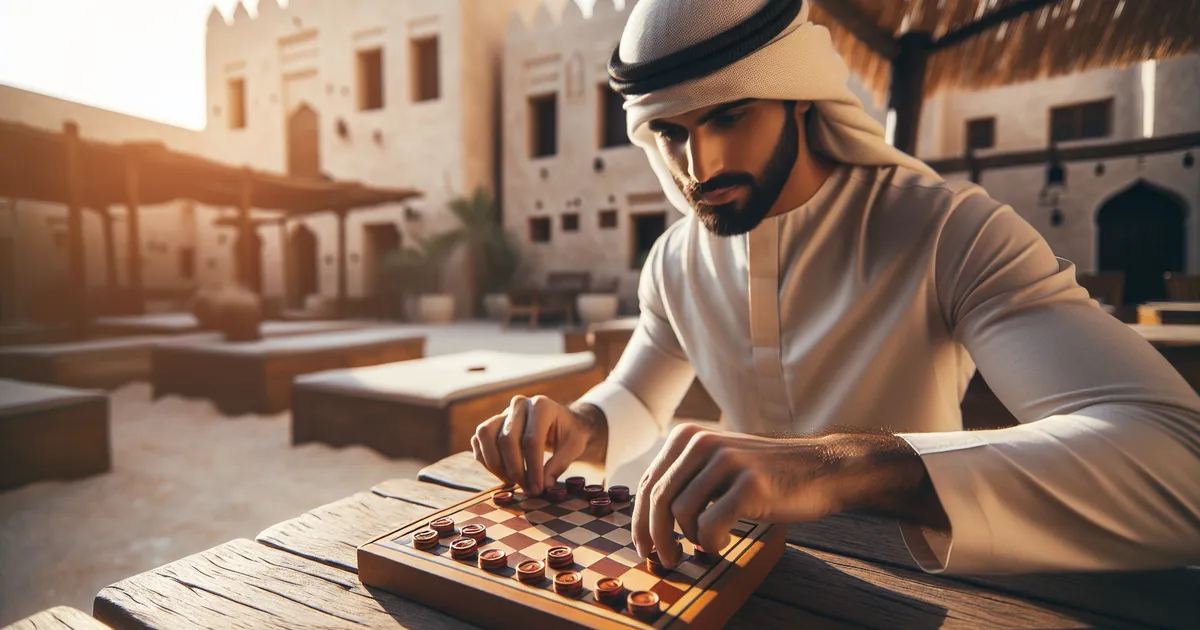
Checkers isn't a simple children's game; its complexity lies in controlling space and forcing opponent mistakes, making it a deep strategic battle.
Learning checkers as a beginner involves grasping the fundamental strategies of advancing your pieces and outmaneuvering your opponent. Checkers is a two-player strategy board game played on an 8×8 grid, where you advance pieces diagonally and capture opponents by jumping over them.
Unlike chess, every piece starts equal – there's no hierarchy to memorize, just positioning and timing.
That simplicity is the point, not a limitation.
In Checkers, players engage by moving pieces diagonally on an 8x8 board, capturing opponent pieces by jumping over them, and employing strategic thinking to control the board. Players analyze positions, set traps, and refine tactics through repeated games or position studies, often competing against AI or others to enhance their skills.
Checkers combats boredom through skill feedback loops that provide immediate outcomes and piece counts, fostering a sense of accomplishment as players track improvements and develop tactical creativity. The game also supports flow states via customizable difficulty that balances challenge and skill, while social elements in multiplayer settings enhance feelings of belonging.
You think checkers is just for when you're missing the chess pieces. Simple rules, no real strategy, a game for kids.
That mindset keeps you from appreciating why experts are so tough to beat.
Picture this: two skilled players face off, hardly moving pieces for 45 minutes. Each waits for the other to slip into an unfavorable position.
It looks uneventful from afar. Inside, it's a delayed strategy unfurling, where a mistake three turns ago is suddenly your disaster.
You can learn the rules in five minutes.
But understanding the strategies behind them takes years.
That gap—between playing and truly mastering—sets up our next adventure.
Your first game of Checkers feels static. You move pieces but get nowhere, puzzled by the simplicity ahead of you.
After making what seems like a solid move, you realize it was a trap. A failed exchange leaves you down three pieces. No idea how it spiraled so quickly.
Initially, you'll notice missing moves but not what's about to happen. Then your own forced jumps appear, but your opponent's remain hidden.
Winning feels like luck, as if your opponent allowed it. But suddenly, the board reveals a pattern of pieces rather than a random set, and that's the true shift in perspective.
Kings aren't the end game — it's about the pieces you hold. Beginners rush to get kings, losing valuable pieces and playing into their opponent's strategy.
Rapid losses aren't due to Checkers' harshness; it's because every trade has a designer. Spotting this is the key to truly playing the game.
When to start: Early morning
Duration: 30 min
Cost to try: $0
Success criteria: If you finish a practice game with all 12 pieces set up correctly, make at least one legal capture, and record one move that controlled the center, do session 2.
After a move, players often stick with the same piece, fearing to switch. This leads to overusing one piece and neglecting others. Activate a new piece every turn to spread your influence and keep your opponent on edge.
The rush to capture often leaves the back row exposed. This pursuit of quick wins sacrifices long-term strategy. Keep at least two pieces in your back row to prevent your opponent from easily crowning their pieces.
Traders often assume a fair swap, not considering how the board looks afterward. Each trade might seem fair numerically, but it's not always strategic. Assess whether a trade improves your board position before proceeding.
Diving into the center might feel commanding at first. But too many pieces there can bottleneck and limit movement. Use a diagonal spread to keep options open and maintain flexibility.
When opponents offer a seemingly free capture, it's instinct to grab it. But such easy captures often lead into traps. Always verify that capturing doesn't place you within easy reach of other enemies.
Checkers can be played almost anywhere with a flat surface—kitchen tables, community centers, and senior centers. Some board game cafés also offer classic sets if you prefer a more social setting.
Start with Meetup.com by searching "checkers club near me." Use the board games filter if you don't find anything specific to checkers.
The American Checker Federation (ACF) has a end-to-end club directory by state on usacheckers.com. This is a solid resource for finding organized groups.
Check Facebook Groups using "draughts club [your city]," as serious players often use the term "draughts."
Your local senior center might host unadvertised checkers groups. Calling them directly is a good way to uncover these hidden gems.
Introduce yourself with: "I know the basics but I've never played competitively."
This simple statement can lead to a real game and helpful feedback, as most players are happy to guide newcomers.
International Draughts is played on a 10×10 board with 20 pieces per side. Kings glide like bishops in chess, covering multiple squares at once. This variant is for players ready to dive into more complex tactics.
A 10×10 board costs $20–$40 and isn't a garage sale find.
Pool Checkers keeps American rules but lets kings move freely. The 8×8 board stays the same. This option is perfect if you crave more dynamic endgames without needing new equipment.
Turkish Draughts shifts the rules by allowing pieces to move orthogonally. This change renders traditional positioning useless. Ideal for players seeking a complete reset rather than a slight change.
Suicide Checkers flips the goal: lose all your pieces first. Captures remain obligatory, so positioning is key. Beginners often outsmart veterans, making this an excellent pick to engage someone who dislikes losing.
Canadian Checkers scales up International Draughts to a 12×12 board with 30 pieces. Unless you're an enthusiast of International Draughts seeking more intensity, this might be overwhelming.
If you want a related angle, Mechanical Puzzles is the natural next stop.
Another variant that pulls from the same roots is Reversi.
If the texture of this appeals to you, Console Gaming is built on similar bones.
Most beginners obsess over not losing pieces. The real game is won by controlling squares, not counting captures.
The one skill: positional square control – specifically, keeping your pieces on the dark squares that dominate the center (squares 14, 15, 18, 19 on a standard board). Every move should ask "does this give me more influence over the center, or does it hand it to them?"
Center control forces opponents' pieces to the edges. Edge pieces are passive, trapped, waiting to be picked off on your terms. Win captures but lose games if your opponent dictates every exchange while you react.
Play five games where you refuse to move a piece unless it lands on or defends squares 14, 15, 18, or 19 – this forces the instinct fast.
After each game, count how many of your pieces ended up on the back two rows (the edges) versus the middle. High edge count means you gave up the center.
Set up this position: your pieces on 15 and 19, opponent on 11 and 16, and practice forcing them toward the corner without capturing. The constraint teaches you what control actually feels like.
Commit to 10 sessions over 30 days at roughly two or three times a week.
Checkers tricks you with its learning curve. The rules take 10 minutes to grasp. The patterns unfold over weeks. Ten sessions push you from "I think I understand" to genuine strategic decisions. That's when you'll see if it truly resonates with you.
When you're eager to return, you're hooked on setting traps. The joy of seeing a plan from three moves ago succeed is the essence here. Dive into forced-capture puzzles and find a regular opponent. Solo play won't push your skills further for long.
Feeling indifferent usually means a mismatch between the social aspect and solo play. Try changing the context before deciding. If you've been playing online, switch to a real board with a friend. Sometimes the environment reshapes the experience.
If you dreaded each session, it's a clear signal. Checkers is about patience and strategy, not fast-paced chatter or physical activity. It's fine if that's not for you. Embrace the clarity you've found and explore activities that better suit your tastes.
Noticing yourself analyzing past moves without frustration is a sign. This mental replay is linked to abstract strategy games like checkers. If you're thinking about the game away from the board, that's a strong indication of genuine interest.
When you're ready to compare options, the hobbies list lays out every direction we cover.
Still looking for something to do? Browse things to do when bored for more ideas.
Most casual checkers games last between 10–30 minutes, though competitive matches can extend to an hour or more depending on player skill level. Beginners often play faster games as they're still learning strategy, while experienced players take longer to evaluate positions and plan ahead.
No, checkers is easy to learn—the basic rules can be understood in 5–10 minutes. However, mastering strategy and tactics takes practice; the simple ruleset hides surprising depth that keeps players engaged for years.
You only need a checkerboard (8×8 grid) and 24 game pieces—12 per player, typically in contrasting colors like red and black. You can use a physical board and pieces, or play online for free on numerous websites and apps.
Yes, numerous free and paid platforms let you play checkers online against real opponents or AI opponents of varying difficulty levels. Popular options include Chess.com's checkers section, Checkers Online, and various mobile apps.
Checkers uses only one type of piece that moves diagonally, while chess has six different piece types with unique moves. Checkers generally has fewer possible positions, making it simpler strategically but still deeply tactical.
Nothing—checkers is completely free to start. You can play online for free or buy a physical board set for $10–$50 depending on quality; premium sets with nice materials cost more but aren't necessary for enjoying the game.