BoredomBusted — Find Your Next Favorite Thing To Do
Discover hobbies, activities, places, and ideas that spark joy. Whether you're looking for something creative, active, social, or relaxing, BoredomBusted helps you find your next favorite thing to do.
Browse our hobby guides, things-to-do collections, and place ideas to never be bored again.
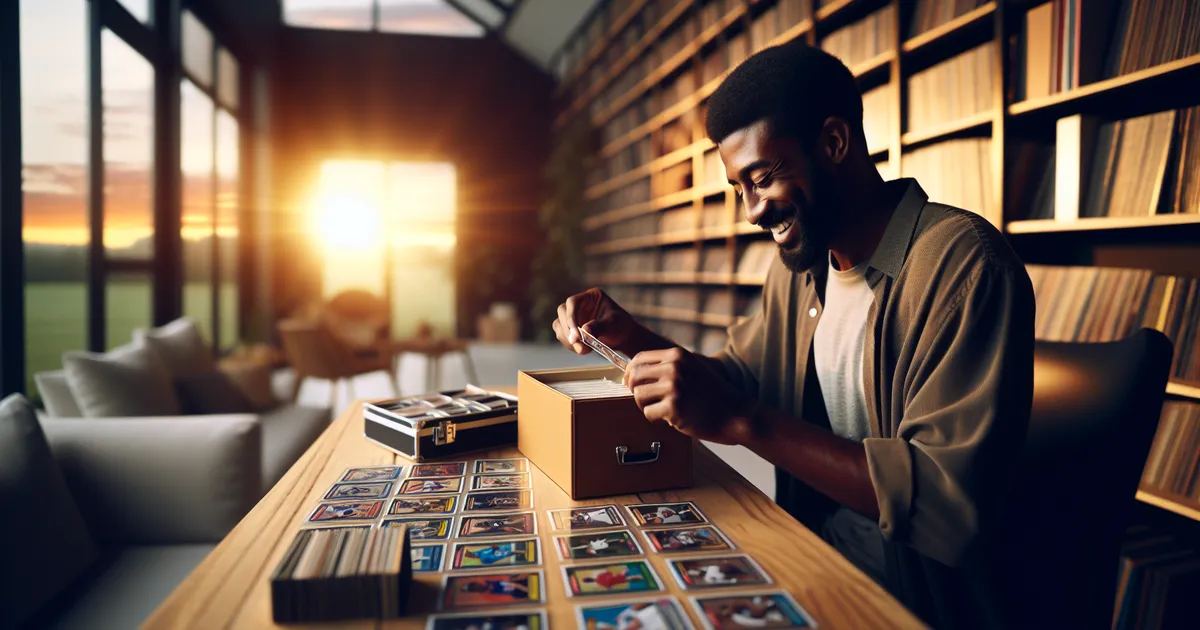
Collecting sports cards isn’t just nostalgia; it’s about mastering the art of valuing players and understanding fractions of a millimeter in grading.
Getting started with sports card collecting as a beginner opens up a world where athletes are captured in tangible pieces of art. Buying, trading, and holding these physical cards means constantly deciding whether to keep them, sell them, or chase rarer versions.
The real value lies in condition, scarcity, and timing, not just your favorite teams or players.
Sports cards have a liquid resale market with real price data, making this a blend of both hobby and portfolio.
In sports card collecting, hobbyists engage in acquiring and organizing cards by player collections or sets, participating in trading, and attending shows to buy or exchange cards. They often set specific goals, such as completing difficult card sets or obtaining autographed cards, while exploring related items like magazines and photographs to enhance their collection.
Sports card collecting fosters a flow state through focused set-building and goal-directed curation, providing ongoing skill feedback and a sense of accomplishment as collectors learn about players and products. The social belonging cultivated through community interactions further enriches the experience, alleviating feelings of isolation and boredom.
You think it's all about nostalgia. Just a dusty shoebox under a bed, maybe a whiff of bubble gum. Definitely not something adults take seriously in 2024.
That assumption is blocking you from a fascinating hobby.
Sports cards are a dynamic market. Prices shift with player injuries, breakout games, and rookie buzz, so being good at it means developing real skill.
The physical cards are just the start. Mastering the hobby involves spotting undervalued players, understanding print runs, and seeing why one card is worth $8 and another $800.
Grading takes it deeper. PSA grading, for instance, reveals the difference between a card selling for three to five times its lesser-graded version. Same year, same set, same player.
It's fractions of a millimeter in centering, or handling with clean hands. That's precision, not nostalgia.
Thinking about what those childhood cards could be worth now? The next part dives into just that, and it's more complex than you'd expect.
Unpacking your first hobby box isn't what you see online. It's not effortless or glamorous. You hold a pack and realize you don't know half the players. You're left wondering if you've got treasure or trash in your hands. That's where the true hobby begins—in that uncertainty.
The jargon wave hits hard in week two. It's overwhelming—like everyone else got the memo you missed. The urge to quit is palpable, but the chaos isn't about knowing less. It's about not having focused in yet.
Week three comes, and things shift. You pick a player or a set, and the hobby becomes less expensive and more engaging. By now, your first week's purchases look like rookie mistakes. But they're part of learning. That first smart buy? A milestone in expertise.
Before starting, know that condition is crucial. Unprotected cards get damaged easily. Grab a pack of penny sleeves and top loaders first.The first card you care about might arrive bent, and you'll wish you had them.
When to start: Morning
Duration: 1 hour
Cost to try: $20
Success criteria: If you open 3 packs, sort every card by sport and player, and sleeve one card you researched with 3 stats written beside it, do session 2.
PSA 9 may sound better than PSA 8, but the price can jump by 300% for a difference invisible to the eye.
Check PSA's population report and recent eBay sales before buying to ensure the price matches the market.
Many collect 14 copies of their favorite player's base card, which rarely hold value.
Focus on print runs first. A numbered parallel of your player at /25 will nearly always beat a holo base version.
Penny sleeves stop fingerprints, not pressure—cards in sleeves still bend if stacked.
Use rigid toploaders or binders with side-loading pages instead of top-loading ones to prevent sliding and creasing.
Wax breaks rarely pay off for individuals. Hobby shops know this too.
Set an entertainment budget for buying packs and treat that cost as part of the fun, like a movie ticket.
New collectors rely on seller photos without questioning angles or lighting.
Request additional images showing all corners and edges in natural light to avoid surprises like a PSA 6 with a premium price.
Local card shops and card shows are gold mines for collectors. Hobby stores, convention centers, and fairgrounds often host these events.
Many collectors trade and deal from home too, but nothing beats the in-person experience.
Googling "local card shop [your city]" is your fastest bet for finding nearby shops. Look for shops with strong reviews and good active hours.
Facebook is excellent for finding trading groups in your region. Try searching "sports cards [your city or state]" to join the conversation.
For events, CardboardConnection.com and Beckett.com offer calendars of upcoming card shows with dates, venues, and costs.
Check YouTube for show recaps using "card show [your state] 2024". This can help you gauge which events attract serious collectors.
Unlike golf with its national body, this hobby organizes through shops, shows, and grading companies like PSA, BGS, and SGC.
In shops, be open about your interests. Mention your sport, player, or era preferences for tailored help.
Focus on rookie cards — the first officially licensed cards of a player. Their value can spike if their career takes off. It's a high-risk, high-reward play requiring you to study prospects closely. Perfect for fans who already watch closely and want financial stakes.
Set collecting involves completing card sets from a specific year or series.
It offers clear goals rather than an endless hunt. Costs vary based on the era. Ideal for those seeking organization and clear progress.
Vintage collecting is about cards from the pre-1980 era. They are fragile and can be expensive. Condition is vital, as damage drastically cuts value. Suited for patient collectors with a good budget and an eye for detail.
Player collecting means gathering every card ever made of your chosen star. It's a deep dive, focusing on one player exclusively. Start relatively cheap; costs rise when seeking rare parallels. Perfect if you appreciate depth over breadth.
Graded card collecting involves submitting cards for third-party grading. PSA and BGS score and seal them, boosting their resale potential. Grading is costly, starting at $20–$50 per card. Skip this until you're experienced, as it's not just about owning the cards.
Most beginners spend months chasing the hottest rookies and trending players — optimizing for hype. The skill that actually separates improving collectors from plateauing ones has nothing to do with knowing who's hot. It's knowing why a card is priced the way it is.
Four variables actually set price: player trend, card population (how many exist), condition grade, and timing within the sports calendar. Not vibes. Not jersey number. Not because someone on Reddit said so.
Not vibes.
Not jersey number.
Not because someone on Reddit said so.
Once you read price as a signal — not a score — you stop buying at the top of hype cycles. You become the person who bought the rookie card the week before it exploded, not the week after.
Pull up any card and filter by Sold Listings. Compare three sales from different months and write down what changed between them and why. Then look up that same card on PSA's population report — if 10,000 copies exist in your target grade, the price ceiling is lower than you think, no matter who the player is.
From there, track one player's card prices for 30 days around a real event — a trade, an injury, a playoff run. Map how price moved before, during, and after the news hit. The next section covers which formats of the hobby make this skill matter most.
Commit to 8 sessions over 30 days. Aim for two each week to move beyond the initial excitement and see if the actual work of this hobby keeps you interested.
Digging into players, deal-hunting, and making sell decisions is the core. If that doesn't sound fun now, take it as valuable info.
If you're already thinking about your next buy before the previous one arrives, that's a telltale sign. You're naturally drawn in. Consider honing your focus on a particular player, team, or era instead of spreading wide.
Bought cards just sitting around? That's telling. Adding more without genuine interest usually doesn't change things. Free up your space.
Feeling stressed every time card prices come up? Acknowledge that reaction. Some love market dynamics, others find them stressful. Repetitions won't shift that feeling.
The true giveaway is fixating on a player's story mid-scroll. That mix of sports history and card collecting resonates deeply, a clear signal you're on the right track.
Looking for something lighter? Our boredom-busters guide is built for exactly that.
You can start with as little as $20–50 by purchasing beginner packs from local shops or online retailers. As you progress, investment varies widely—casual collectors spend $50–200 monthly, while serious collectors may invest significantly more in rare or vintage cards. It's entirely scalable based on your budget and goals.
Graded cards are authenticated and rated for condition by professional services like PSA or Beckett, which increases their value and collectibility. Ungraded cards are raw cards you've purchased directly but haven't had professionally evaluated. Grading comes with a cost ($10–50+ per card) but is worth it for valuable or valuable-potential cards.
Research recent sales on platforms like eBay, PWCC Marketplace, or TCGPlayer to see what similar cards sold for. Look for key indicators: first editions, low print runs, rookie cards, condition grade, and historical significance of the player. Building a price guide habit will quickly teach you which cards hold value.
Not at all—you can enjoy collecting immediately by buying packs and organizing cards by player or team. Learning to evaluate condition, grade, and value takes time, but there's no pressure to become an expert. Many collectors start casually and deepen their knowledge gradually as their interest grows.
You can accumulate 100–500 cards within a few months of casual collecting. Building a focused, valuable collection of specific players or eras typically takes 1–3 years depending on your budget and hunting strategy. There's no finish line—collecting is an ongoing hobby that evolves with your interests.
At minimum, use card sleeves and top loaders for valuable cards, and store them in a cool, dry place away from sunlight. Binder pages with acid-free pockets are great for organizing bulk collections affordably. For high-value cards, consider graded holders and climate-controlled storage to preserve condition and investment value.