BoredomBusted — Find Your Next Favorite Thing To Do
Discover hobbies, activities, places, and ideas that spark joy. Whether you're looking for something creative, active, social, or relaxing, BoredomBusted helps you find your next favorite thing to do.
Browse our hobby guides, things-to-do collections, and place ideas to never be bored again.
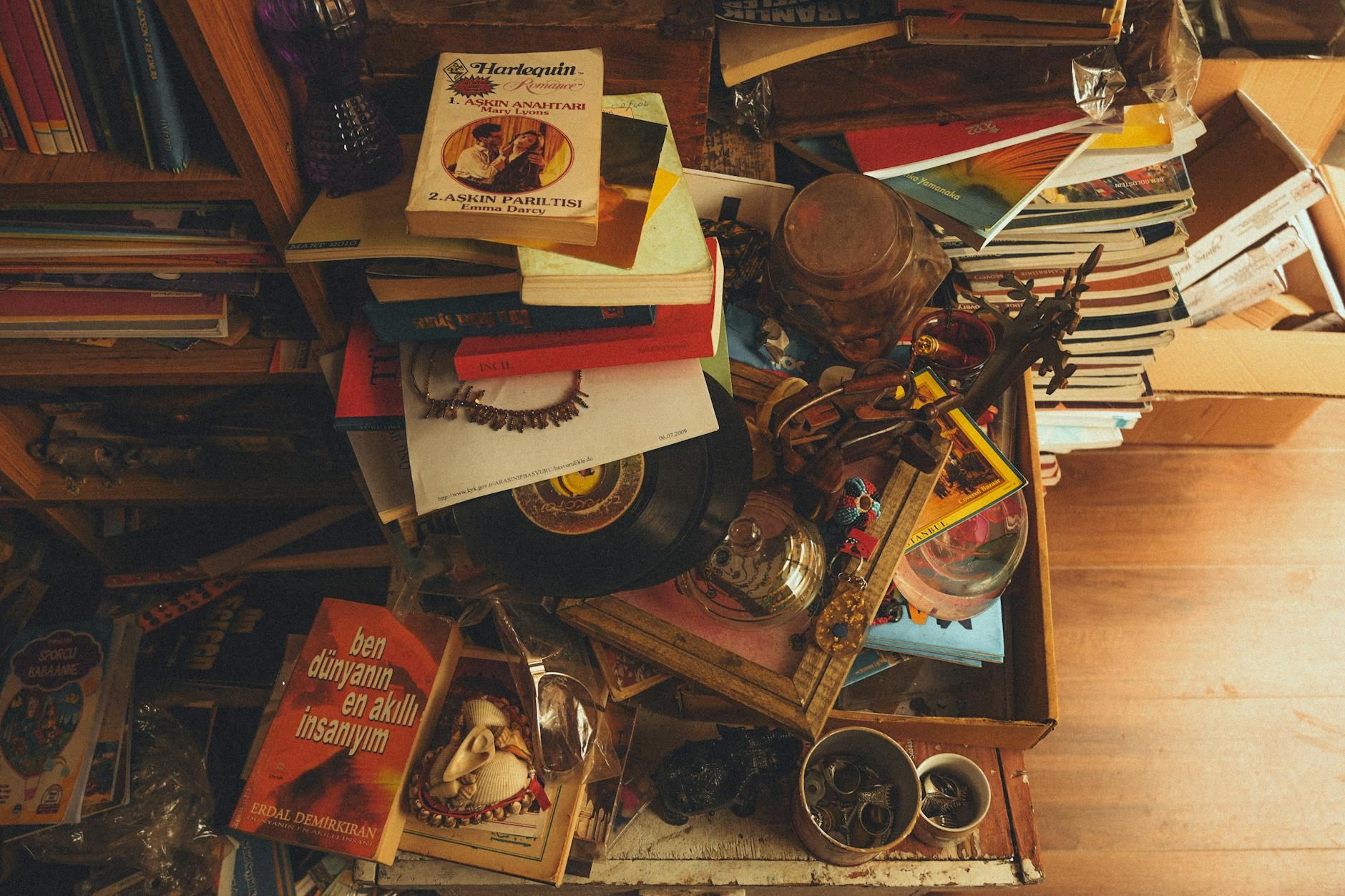
Antique collecting isn't just for the wealthy—many find treasures at flea markets for under $50 and resell them for a profit by specializing in specific categories.
Getting started with antique collecting as a beginner revolves around the thrill of discovering items with rich histories that tell unique stories. The object itself is never the whole point; the history attached to it is.
You spend real time with primary sources, auction records, and maker's marks. A single piece can pull you into Victorian trade routes or Depression-era manufacturing. The research isn't optional background work — it's most of the hobby.
That context is also what separates a $12 thrift-store find from a $1,200 auction lot. Knowing provenance — who made it, where, and when — is the skill that actually builds value in your collection.
Antique collecting involves hands-on searching, evaluating, and acquiring items over 100 years old, such as Victorian tools. Collectors visit antique shops, fairs, and auctions, inspecting items for authenticity by checking for age-consistent wear and maker's marks. At home, they research item histories, restore pieces, and thoughtfully display them, developing a focused collection through docume…
Antique collecting combats boredom through mental stimulation from researching historical narratives and provenance, creating a flow state as collectors improve in authenticity detection and valuation, fostering social belonging through camaraderie at events, and providing a sense of accomplishment through creative expression in restoration and arrangement of pieces.
You assume antique collecting is a rich person's hobby. Estate auction paddles, Christie's catalogues, six-figure ceramics — that's the picture most people have before they ever set foot in a flea market.
That picture is wrong, and collector Scott Hensley is a decent reason why. He built a focused collection of 1940s Bakelite radios over three years spending under $40 per piece — every one sourced from weekend estate sales and a standing search alert on eBay. His most prized piece cost $22. The expensive end of this hobby exists, but it's a separate hobby from the one most beginners actually end up doing.
Under $50.
Found at a folding table.
Resold two years later for $180 after he learned what to look for. Once you narrow your focus to one category — a single era, a single material, a single type of object — you stop competing with deep-pocketed generalists and start winning on knowledge instead of budget.
That knowledge gap is exactly where the next section picks up.
Your first time inside a real antique shop, the sensory load hits before you touch anything. Dust, wood polish, the particular mustiness of old paper and fabric. Objects are stacked in ways that reward slow movement — you lean in, squint, turn something over in your hands, and realize you have no idea what you're holding. Most beginners leave their first few sessions feeling more confused than when they walked in, and that confusion is completely normal. You're not failing to notice things. You're noticing everything, with no filter yet to sort signal from noise.
The part that catches people off guard is how physical the evaluation actually is. You're running your thumb along a seam looking for tool marks. You're tilting a ceramic piece toward the light to check glaze crazing. You're smelling wood to catch the difference between genuine age and a fresh stain. Authenticity detection is a tactile skill, and your hands genuinely don't know what they're feeling for yet. That's not a knowledge problem you can solve by reading — it's pattern recognition that only builds through repetition, piece by piece.
The other frustration nobody warns you about: you will overpay, at least once. You'll buy something that felt right in the moment and later discover it's a reproduction, or worth half what you paid, or from a decade later than the seller implied. That first bad purchase is practically a tuition fee — it's the moment the research habit actually takes hold. Collectors who skip that lesson early tend to stay casual. The ones who sting a little early get serious about maker's marks and provenance fast.
By your third or fourth outing, the noise starts to quiet. You begin to recognize a specific type of object on sight. Your hands get faster. A price tag stops looking arbitrary and starts looking negotiable — or obviously wrong. That narrowing of focus is the shift worth waiting for. The moment you stop browsing everything and start hunting one thing is when the hobby actually begins. And the fastest way to reach that point is to know exactly which beginner mistakes to avoid first.
When to start: Morning
Duration: 1-2 hours
Cost to try: $0-$10
Success criteria: if you finished without purchasing any items, do session 2.
Most beginners walk into their first antique fair and buy whatever catches their eye. That feels like exploration, but it builds a scattered collection that teaches you nothing. Without a defined focus — one era, one object type, one material — you can't build the pattern recognition that makes you competent.
Spend your first month browsing, not buying. Visit shops, fairs, and auction previews. Handle things. Notice what you keep returning to. Pick one category and learn it deeply before you spend a dollar.
A confident pitch from a vendor is not provenance. "This came from an old farmhouse" tells you nothing verifiable. Beginners get swept up in the narrative and skip the physical inspection — which is where the real answer lives.
Train yourself to check the object, not the story. Age-consistent wear, period-appropriate construction methods, and legitimate maker's marks are what authenticate a piece — not the seller's confidence.
This is one of the most expensive mistakes a new collector makes. A well-meaning scrub or a coat of fresh paint can strip patina, erase maker's marks, and cut resale value in half. Original surface condition — even dirty, even worn — is often exactly what a serious buyer is paying for.
Before touching anything, research the conservation standards for that specific category. Some pieces genuinely benefit from careful cleaning. Many don't. When in doubt, do nothing — a dirty original is almost always worth more than a clean reproduction.
Liking something is a fine reason to buy it. But beginners often stop there, which means they never develop an eye for what it's actually worth. Every purchase is a research opportunity — and skipping that research is skipping the skill-building that makes the next purchase smarter.
After every acquisition, spend time on auction archives, collector forums, and reference books for that category. Cross-reference what you paid against recent sold listings — not asking prices. Sold prices are the only prices that tell you what the market actually thinks.
eBay, estate sales, flea markets, antique malls, Facebook Marketplace, auction houses — the sourcing options are genuinely overwhelming. Beginners try all of them simultaneously and end up superficial in every one. Each venue has its own pricing logic, its own seller types, and its own risk profile.
Start with one or two sources and learn them properly. The collector who knows one estate sale circuit or one auction house well will consistently outperform the one who dabbles everywhere.
Start on Reddit. r/Antiques has over 200,000 members posting photos, asking identification questions, and sharing finds. Post a photo of something you can't identify and you'll usually have three informed answers within an hour. For category-specific depth, r/Mid_Century and r/Militariacollectors go much further than the general forum.
Estate sales are the single best venue for beginners — not auction houses. Use EstateSales.net or EstateAuctions.net to find sales happening within a 20-mile radius this weekend. Show up on day two when prices drop and dealers are willing to talk. Those conversations are worth more than any online guide.
Antique malls — permanent multi-dealer buildings, not weekend pop-ups — are also underrated. You can spend two hours handling hundreds of objects with no pressure to buy. Handling objects regularly is how you develop the eye that makes you good at this hobby.
The National Antique & Art Dealers Association of America (NAADAA) and the Antique Dealers Association of America both maintain member directories useful for finding reputable local dealers. For category collectors, organizations like the Antique Wireless Association or the National Depression Glass Association run annual shows and publish journals that go deep on authentication. Search "[your collecting category] collectors association" — almost every niche has one, and membership usually costs under $40 a year.
Antique collecting isn't one hobby — it's several, depending on what draws you in. The version built around estate auction bidding looks nothing like the one built around weekend flea market digs. Figure out which version fits your pace, budget, and curiosity before you spend a dollar.
Era-focused collecting means you pick a slice of time — say, Victorian England or Depression-era America — and build your entire collection around it. Every piece you acquire teaches you something new about that period's manufacturing, trade, or daily life.
This is the variant for people who get genuinely absorbed in research. You're essentially building a tactile archive of a specific moment in history — and the deeper your knowledge of that era, the sharper your eye for fakes and underpriced finds.
Market-focused collecting treats antiques as a knowledge game with a financial upside. You study pricing trends, track what sells at auction, and look for categories where demand is quietly rising. The collecting is real — you own the pieces — but you're always aware of what they're worth.
This suits people who enjoy a clear feedback loop. Every resale either confirms your research or teaches you where your valuation was off — and that corrective sting is half the learning.
Flea market and estate sale hunting is its own rhythm. You show up early, move fast, and rely on pattern recognition built from repetition. The thrill isn't the object at home on the shelf — it's the moment you spot something underpriced that everyone else walked past.
This version keeps the budget lowest and the social element highest. You're competing on speed and instinct, not deep pockets — and regulars at the same circuit of sales become a real community over time.
Restoration-focused collectors specifically seek out pieces with damage, age wear, or missing parts. The acquisition price is lower precisely because the work isn't done yet. Bringing a piece back to honest, functional condition — without over-restoring it — is a craft skill that takes years to develop.
This variant overlaps heavily with woodworking, metalwork, and conservation techniques. The satisfaction comes from the process, not just the finished piece on display — which makes it one of the more hands-on versions of this hobby.
Single-category collecting means you pick one narrow type of object — Bakelite jewelry, Victorian surgical tools, pre-war advertising tins — and become genuinely expert in it. Your competition shrinks dramatically. Most generalist dealers don't know your niche as well as you do after six months of focused study.
Narrow focus turns a limited budget into a real advantage — because you'll spot value and spot fakes before better-funded collectors who spread their attention across dozens of categories ever do.
Some of the same instincts show up in Postcard Collecting — worth a look if this clicked.
Perfume Bottle Collecting is a sibling pursuit and often surfaces the same kind of curiosity.
Readers who enjoy this often gravitate toward Comic Book Collecting next.
The skill that separates improving collectors from stuck ones is reading wear patterns to distinguish genuine age from artificial aging. Everything else — provenance research, price sense, negotiation — builds on top of this one thing.
Artificially aged pieces are everywhere. Dealers call it "distressing" — manufactured scratches, acid-applied patina, fake maker's marks struck with modern dies. A beginner sees an old-looking object. Someone with trained eyes sees the inconsistency: wear on edges that would never take friction, patina that's uniform instead of accumulated, screw threads that post-date the supposed era by fifty years. Real age leaves marks in illogical places — and that's exactly the tell.
You build this skill by handling volume, not by reading about it. Pick up authenticated pieces at reputable dealers and study them before you buy anything at a flea market. Run your thumb along joints. Look at the underside. Check where paint pools in corners. Your hands start registering things your conscious brain hasn't caught up to yet — and that sensory memory is what eventually makes you fast.
Once you can reliably spot honest wear, every other part of collecting gets easier. Pricing makes more sense. Research gets more targeted. And the next section — on where to actually find pieces worth examining — will land differently once you know what you're looking for when you get there.
Give yourself four sessions over about a month — one estate sale or flea market, one dedicated antique shop, one auction (even just browsing online), and one afternoon of research at home. That spread covers enough of the hobby's texture to give you a real read.
You probably already know. The instinct to flip an object and look for a maker's mark is the hobby revealing itself to you. If you got home and found yourself looking up what something was — even something you didn't buy — that's the signal. The next move is to pick one narrow category: a single era, material, or object type. Depth beats breadth immediately, and it's what turns casual browsing into real expertise.
Overwhelm at the start usually means you tried to absorb everything at once — that's a setup problem, not a compatibility problem. Antique collecting without a focus category feels like reading a library without a subject in mind. Before writing it off, spend 30 minutes on one specific type of object you've always been drawn to — Depression glass, old hand tools, vintage maps, anything — and go back with that filter. The hobby changes shape entirely when you're not scanning the whole room.
That's real information. If the physical browsing felt like a chore and the research felt like homework, the history angle isn't doing it for you — and that's the core of this hobby. The same itch for ownership and curation lands differently in record collecting, vintage sneakers, or sports cards — categories where the community and trading dynamics carry more of the weight. Worth pointing yourself in one of those directions instead.
If you caught yourself opening a price guide, a collector forum, or an auction listing after you got home — without planning to — this hobby has already started. That involuntary follow-up is what genuine fit looks like.
Still looking for something to do? Browse things to do when bored for more ideas.
You can start antique collecting with as little as $20–$50 for smaller items like vintage postcards, old coins, or used books at flea markets and estate sales. There's no minimum investment required—the hobby scales from budget-friendly browsing to serious collecting at any price point.
An antique is generally an item that's at least 100 years old, while vintage refers to items between 20–100 years old. The distinction matters for pricing and value—true antiques typically command higher prices due to age and rarity.
Authentication involves examining construction techniques, materials, maker's marks, and wear patterns that match the era. For valuable pieces, consider having items appraised by certified antique dealers or specialists in that particular category.
Estate sales, auctions, flea markets, antique shops, and online platforms like eBay and Etsy are popular hunting grounds. Local antique malls often have multiple vendors in one location, making it easier to compare prices and styles.
Antique collecting is as time-intensive as you want it to be—you can spend an hour browsing a local market or dedicate weekends to estate sale hunting. Most collectors develop their own rhythm, from casual shopping trips to serious research on specific pieces.
Antique collecting can range from inexpensive to very costly depending on what you collect and how seriously you pursue it. Many collectors start with affordable categories like vintage glassware or postcards and gradually invest more as their expertise and passion grow.