BoredomBusted — Find Your Next Favorite Thing To Do
Discover hobbies, activities, places, and ideas that spark joy. Whether you're looking for something creative, active, social, or relaxing, BoredomBusted helps you find your next favorite thing to do.
Browse our hobby guides, things-to-do collections, and place ideas to never be bored again.
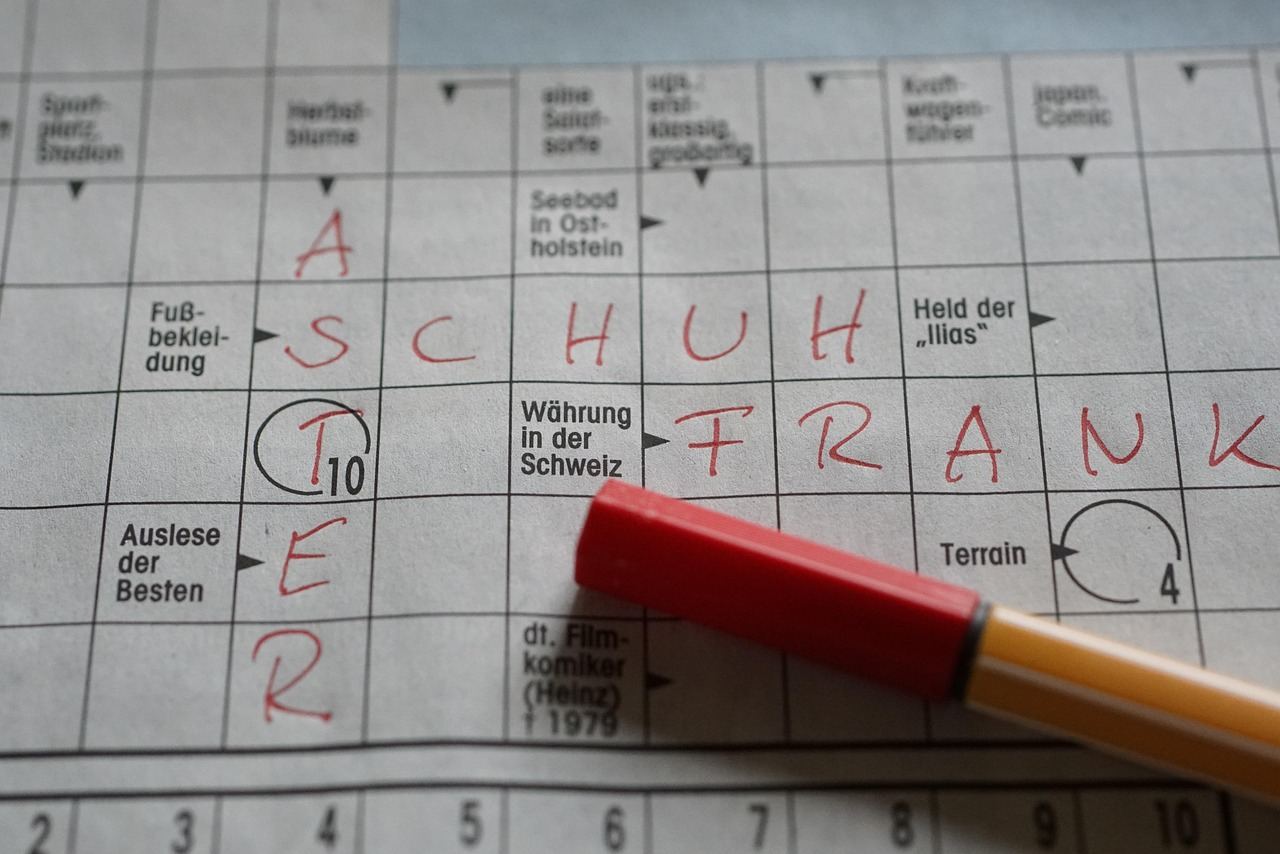
Crossword puzzles aren't just trivia tests; they're intricate mental negotiations where every answer shapes the next, demanding a unique decoding skill.
Getting started with crossword puzzles as a beginner can be an enjoyable way to enhance your vocabulary and problem-solving skills. You fill a grid by solving clues that intersect at shared letters.
Unlike word searches (pure scanning) or trivia games (pure recall), crosswords demand both vocabulary and lateral thinking – the clue rarely means exactly what it says.
In crossword puzzles, you fill in a 15x15 grid with words based on numbered clues for both 'across' and 'down' directions, engaging in a mental process of pattern recognition, word association, and logical deduction while writing letters into squares using a pencil.
Crossword puzzles induce a flow state through moderately difficult cognitive challenges, providing immediate feedback loops and a sense of accomplishment as you complete grids, which enhances engagement and counteracts mind-wandering.
You think crossword puzzles are for retirees with too much newspaper and not enough plans. Maybe you've tried one, hit a wall on 14-Across, and quietly closed the tab. Thinking of crosswords as a passive, low-stakes word quiz is exactly wrong.
Crosswords aren't testing your memory – they're testing your ability to negotiate.
Each answer constrains the others, creating parallel logic threads.
Clues use wordplay like riddles, not straight definitions.
Understanding the constructor's logic is key, beyond vocabulary.
Difficulty is designed, not random; Mondays differ from Saturdays.
Most people quit on Thursdays and assume they're bad at crosswords.
A solver with six months of practice doesn't know more words than you.
They understand that "flower" in a clue might mean river, something that flows, not a rose.
That single mental shift changes how every clue reads.
Approach crosswords as a decoding system rather than a test. Now, it's about figuring out how to start on the right foot.
Starting your first Monday crossword feels nothing like the ease you see on TV. With the grid staring back at you, it can feel like the answers are locked away in your brain and won't come out.
Frustration is the norm at first. The clues don't make sense, and crossing letters seem random. You might suspect you're just bad at this.
Then it changes. You start seeing footholds and logical clues. Crosses confirm your guesses. One finished corner leads to finishing the rest of the puzzle.
Stuck again? That's the mechanism. It's not failure; it's how you learn. Clues repeat patterns, and solving becomes about recognizing these patterns, not just knowing words.
Matching parts of speech is key. A clue that ends in '-ed'? Expect an '-ed' answer. A plural clue? The answer's plural too. Knowing this rule will help more than any word list in your first week.
When to start: Morning
Duration: 1 hour
Cost to try: $0
Success criteria: If you finished without completing the puzzle, do session 2.
NYT puzzles progress in difficulty by day, but many beginners don't realize. They grab a Thursday or Friday grid, then struggle and get discouraged.
Stick with Monday puzzles for your first month. Monday clues are straightforward. Save Friday's cryptic clues for later.
New solvers often fixate on a clue until they're frustrated. This turns each hint into a barrier, halting progress altogether.
If a clue isn't obvious in five seconds, move on. Skip it. Crossing letters will guide you back when the time is right.
Beginners often read clues like "Duck" as straightforward definitions. But it might mean "avoid" or "lower your head." Reading clues this way freezes progress.
Consider alternate meanings or parts of speech before moving on. Many clues are clever misdirections.
Beginners often miss tense or plural signals in clues, like "Runs" needing a plural answer, not a single action like SPRINT.
Circle tense or plurality indicators before answering. Your answer must match the clue's form.
You might feel accomplished finishing with hints, but overlooked squares teach crucial vocabulary. These words appear again and again.
Review any answers you guessed wrong or skipped after completion. Common fills like OREO and ETNA repeat weekly.
Crossword puzzles offer flexibility. You can practice at libraries, coffee shops, or even on your couch late at night.
Mention you're a beginner who can complete Monday NYT puzzles but struggles by Wednesday. This simple statement helps others direct you to the right level.
Cryptics twist the rules by embedding a wordplay puzzle within the definition itself. Your task: separate and solve both elements.
For those ready to rewire their approach
Mini Crosswords provide a quick puzzle fix, usually in a 5×5 grid. The New York Times offers a daily free mini that's perfect for newcomers.
Perfect start for those unsure about commitment
Themeless Crosswords drop themes for a focus on grid quality and clever clues. It's why seasoned solvers consider them a true test of skill.
Ideal for fans of intricate wordplay
Acrostics mix clues with a letter-transfer grid that uncovers a hidden quote. The challenge is more in decoding than word-finding.
Great for those who enjoy literature interaction
Diagramless Crosswords offer a grid where you determine the black squares' placement as you solve, adding an extra layer of difficulty.
More of an occasional challenge than a staple
Another variant that pulls from the same roots is Nonograms.
If the texture of this appeals to you, Jigsaw Puzzles is built on similar bones.
For something adjacent, see Cryptic Crosswords.
Recognizing the type of crossword clue—whether it's straightforward, employs wordplay, contains a theme, or hides a definition—defines how well you'll navigate puzzles.
The key to progressing is seeing clues differently. "Bark" can suggest a dog, a tree, a boat, or shouting. Context and crossing letters decide which.
Understanding the clue register turns wrong answers into learning opportunities. Each misstep shows which direction your thinking missed.
Without this skill, Monday puzzles can become walls you can't climb. You may feel stuck on easier puzzles, mistakenly thinking harder ones are beyond you.
It's not about being well-read. It's about being attuned to suspicious clues.
Fifteen crossword sessions in thirty days. That's a puzzle every two days. Enough to see past the beginner stage without investing a year.
You keep reaching for a puzzle in your downtime. It's not about winning, but the urge to solve. This means you're hooked, so level up to themed or tougher grids as your next challenge.
If the experience left you indifferent, consider switching. Try a different format like a cryptic crossword or a mini puzzle for a week. Sometimes the problem is the style, not the hobby itself.
Dreading each session is a sign. If the frustration of not knowing outweighs any interest, crosswords might not be your thing. That's an answer in itself.
You're mid-conversation, and a word that pops up makes you think "four letters, perfect for a crossword." This instinctive reaction shows you're seeing language through a puzzler's lens.
Still looking for something to do? Browse things to do when bored for more ideas.
Most standard 15x15 crossword puzzles take 15–45 minutes depending on difficulty level and your experience. Beginners might spend closer to an hour, while experienced solvers can finish in 10–20 minutes. Daily crosswords are designed to fit into a quick coffee break, but harder puzzles like Sunday editions can take 1–2 hours.
Crossword puzzles actually help build vocabulary rather than require it beforehand. Starting with easier puzzles lets you learn new words and patterns organically. You'll develop a feel for common crossword conventions (like abbreviations and wordplay) as you solve more puzzles.
Regular crosswords have straightforward clues where the answer matches the definition directly. Cryptic crosswords use wordplay, hidden meanings, and anagrams to disguise clues, making them significantly harder but more puzzle-like. Most beginners start with regular crosswords before advancing to cryptic versions.
Crossword puzzles are nearly free—most newspapers include daily puzzles, and countless free apps and websites offer unlimited puzzles. A crossword puzzle book costs $5–15, and premium subscription apps range from $1–10 monthly for ad-free access and exclusive content.
Yes, crosswords strengthen vocabulary, pattern recognition, lateral thinking, and memory while keeping your mind sharp. Regular solving has been linked to better cognitive function and may help slow age-related mental decline, making it one of the most brain-beneficial hobbies.
You only need a pencil or pen and paper, or you can solve digitally on your phone or computer. Some solvers prefer pencils with erasers for mistakes, and an online dictionary or crossword app helps when you get stuck, but these are optional.