BoredomBusted — Find Your Next Favorite Thing To Do
Discover hobbies, activities, places, and ideas that spark joy. Whether you're looking for something creative, active, social, or relaxing, BoredomBusted helps you find your next favorite thing to do.
Browse our hobby guides, things-to-do collections, and place ideas to never be bored again.
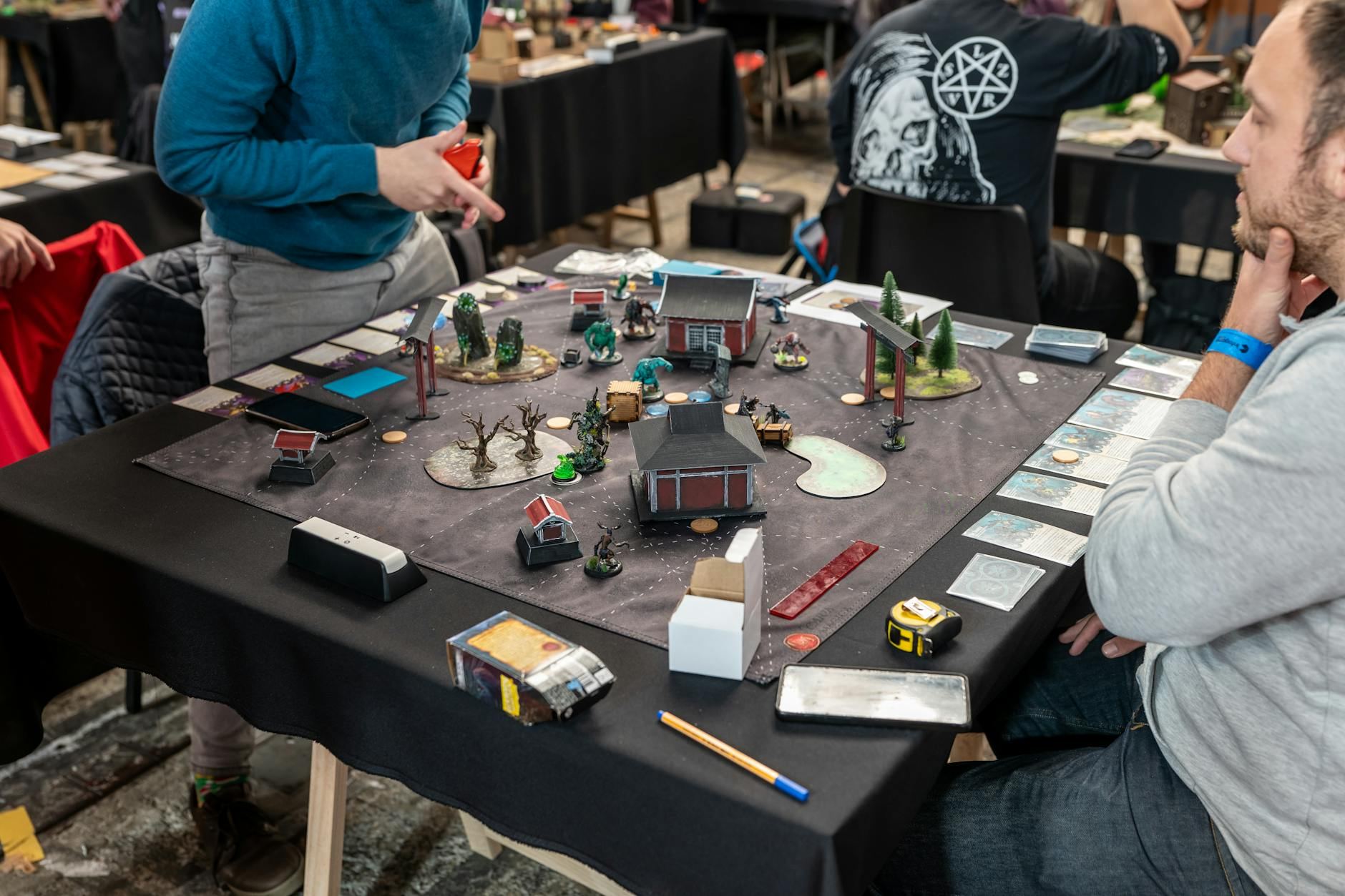
Miniature games aren't just about painting — they're immersive storytelling arenas where strategy and social interaction dominate the experience.
Getting started with miniature games as a beginner offers a unique blend of strategy, creativity, and social interaction.
Build and paint detailed models, craft immersive scenarios, and dive into battles with friends.
Miniature games involve assembling and painting small-scale figurines, creating detailed armies, and engaging in tactical gameplay on modular terrain boards, where players measure distances, roll dice, and make strategic decisions during competitive matches that can last from 1 to 4 hours.
Miniature games combat boredom through continuous skill feedback from tactical gameplay and creative expression in model customization, fostering a flow state during matches and providing a sense of accomplishment through visible progress in painting and collecting.
You probably think miniature games are just about painting tiny figures. True, paint is part of it, but that's only the beginning.
These games are about storytelling and strategy. You're commanding an army, not just creating pretty miniatures.
It's not a solitary task; it's social, too. Whether at a club or home, you're in it for the camaraderie.
You're balancing offense and defense. Managing resources, outsmarting opponents, and feeling the thrill of the battle. Sharp strategy is the key here.
There's more to grasp about this engaging world. Let's take that deeper dive next.
Holding a box of tiny, unpainted figures is an electric experience. The potential is palpable, mixed with the uncertainty of how to transform them for battle.
Your first stab at painting feels awkward, yet each brushstroke brings a thrill as your army slowly comes alive. The rulebook looks daunting, but sense creeps in as you play through—bit by bit, it all starts to click.
Facing an opponent is like sparring in chess, unpredictable and strategic. Navigating the overwhelming moments is the real game—embracing them means stepping into the depth of the challenge.
The next part dives into common errors that prolong frustration, helping you move to the satisfying part faster.
When to start: Morning
Duration: 1 hour
Cost to try: $10
Success criteria: If you finish one 30-minute skirmish with all chosen miniatures assembled, based, and every model returned to its tray, do session 2.
Skipping foundational rules may feel like a shortcut, but it quickly spirals into chaos and confusion. Start by mastering the basics before making your first move. This simple step prevents future headaches and speeds up your learning process.
Many beginners leap into challenging tactics without a solid grounding. This often leads to frustrating setbacks and mistakes. Focus on mastering simple, reliable strategies first. These form the bedrock for advanced techniques later.
Ignoring battlefield layout can destroy your strategy. Beginners often overlook this and miss easy opportunities. Rely on the terrain to your advantage right from the start.
Connections with other players are crucial in miniature gaming. Newbies often shy away, missing out on valuable learning and support. Join community groups to share knowledge and gain insights.
Local hobby shops are your starting point. They regularly host game nights and tournaments — exactly the kind of low-stakes environment where you can watch experienced players and ask questions in real time.
Meetup and local Facebook groups are worth checking, but BoardGameGeek's guild finder is more targeted — search your city and you'll find active groups organized by game type, not just geography. That distinction matters when you want opponents who actually play your game.
For strategy and rules questions, the r/MiniatureWargaming subreddit and BoardGameGeek forums are the reference points. Both have years of threads covering exactly the situation you're running into. Post a question on either and you'll have answers the same day.
Warhammer 40K throws you into a universe where massive armies collide and epic lore unfolds. The pick for those who crave deep narratives and large-scale combat.
Warmachine gives you a world of steampunk aesthetics and quick, tactical skirmishes.Perfect for players who want exciting battles
Infinity highlights detailed miniatures with a focus on modern warfare.Ideal for strategy enthusiasts
If this resonates, Miniature Terrain Building explores a similar direction.
Readers who enjoy this often gravitate toward Tabletop Skirmish Gaming next.
Strategic foresight is the heart of miniature gaming.
Think several moves ahead. Anticipate not just your actions, but your opponent's too.
Strategic foresight requires patience and adaptability. It's about weighing risks and rewards. Refining foresight transforms the game for you.
You'll start making more calculated decisions, executing complex strategies, and outmaneuvering opponents.
Try three painting or gaming sessions over 30 days. Space them out to reflect on each experience instead of just reacting.
If you find yourself looking forward to each session and imagining new stories and strategies, that's the hobby taking hold. Now is the time to add quality brushes or new paints to your arsenal.
If it feels like a chore, you might just need to simplify. Try a one-hour painting session with a single miniature to see if reducing detail boosts your enjoyment.
Actively not wanting to continue is a clear signal. Don't force it with an activity that doesn't match your patience for precision. Time to explore something else.
The tell you're hooked: when you catch yourself browsing miniature forums at midnight.
When you don't want to commit, things to do when bored is a better starting point.
When you don't want to commit, things to do when bored is a better starting point.
Miniature games involve moving detailed painted figures across tabletop battlefields to simulate tactical combat or strategic scenarios. Players use dice rolls, rulebooks, and terrain to determine outcomes, combining hobby craftsmanship with competitive or cooperative gameplay. Popular examples include Warhammer 40K, Age of Sigmar, and Necromunda.
Entry costs typically range from $50–$150 for a beginner starter set that includes rules, dice, and basic miniatures. Total investment grows with painting supplies ($30–$100), terrain, and additional models, though many communities offer loaner armies for newcomers. Starting small and expanding gradually is the most budget-friendly approach.
No—unpainted or simply painted miniatures are fully playable and common in casual gaming communities. Many players view painting as a separate creative hobby that enhances enjoyment, but competitive play focuses on rules and strategy, not paint quality. You can learn painting techniques gradually or focus purely on gameplay if you prefer.
Most games last 1–2.5 hours depending on army size, experience level, and specific ruleset. Smaller skirmish games can finish in 30–60 minutes, while larger campaign battles may extend to 3+ hours. Tournament formats typically enforce time limits to keep matches moving.
Basic gameplay rules can be grasped in one session, but mastering strategy and army tactics takes weeks of regular play. Most games include simplified starter rules alongside complex competitive rulesets, allowing new players to ease in gradually. Joining a local gaming community accelerates learning through hands-on teaching.
Local game shops, hobby stores, and tabletop clubs host regular gaming nights and tournaments welcoming all skill levels. Online communities and Discord servers connect remote players, while official convention events offer casual and competitive play. Many cities have active Warhammer, Pathfinder, or D&D Miniatures communities with scheduled meetups.