BoredomBusted — Find Your Next Favorite Thing To Do
Discover hobbies, activities, places, and ideas that spark joy. Whether you're looking for something creative, active, social, or relaxing, BoredomBusted helps you find your next favorite thing to do.
Browse our hobby guides, things-to-do collections, and place ideas to never be bored again.
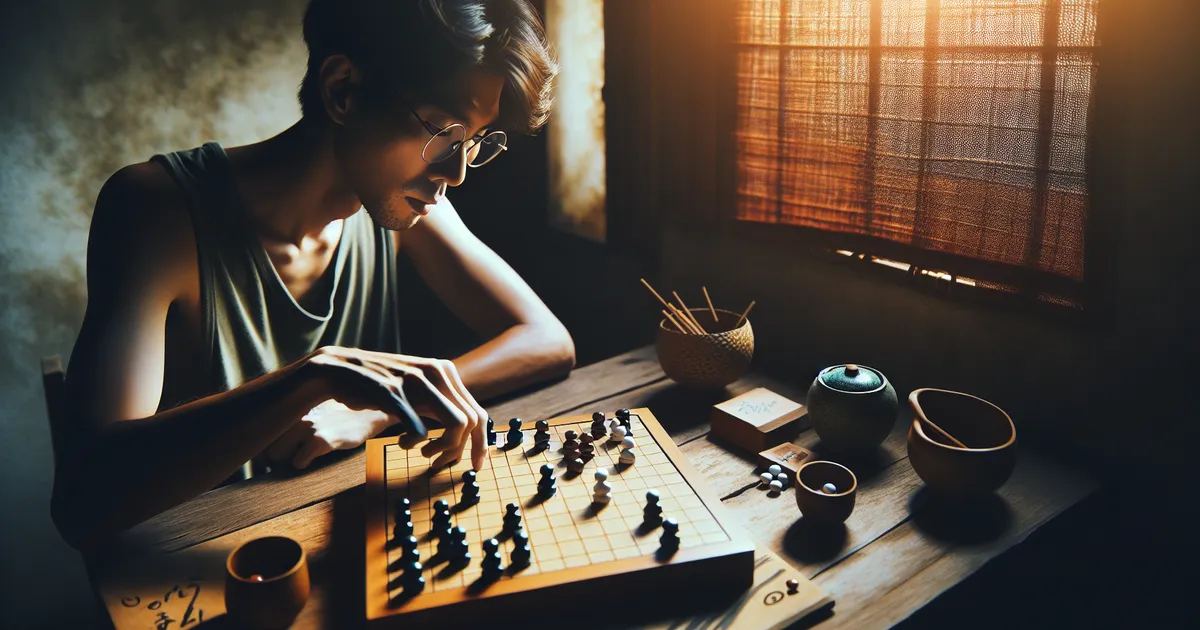
Shogi’s drop mechanics mean every loss teaches you something new—it's a game where mistakes become stepping stones to mastery.
Learning shogi as a beginner involves understanding the unique strategy of capturing and redeploying your opponent's pieces, a concept that sets it apart from other chess variants.
That single mechanic makes every captured piece a live threat, keeping the pressure constant from move one to checkmate.
In Shogi, players engage in solo puzzle-solving (tsume shogi) or compete in games, moving pieces on a 9x9 board, capturing opponent pieces to then drop them back onto the board, strategizing against an opponent's moves while visualizing multiple turns ahead to achieve checkmate.
Shogi fosters dynamic skill feedback loops through its drop mechanics, maintaining engagement with immediate feedback from each move, enabling flow states as players tackle complex puzzles and enjoy a sense of accomplishment with visible skill improvements over time.
You think Shogi is just a Japanese version of chess. A little twist on a familiar game. That assumption will make you completely underestimate what you're about to face.
Unlike other board games, captured pieces in Shogi don't leave the game. You can use them against your opponent. There's no possibility of a draw either.
A new player often watches as their defense collapses unexpectedly. It's not a piece already in play that does it. It's a bishop captured 20 moves ago that suddenly appears in their back rank. It feels like getting pick-pocketed during a fistfight.
The chaos is intentional. Managing it is where Shogi evolves from novelty to genuine skill.
But do you need experience to dive in? Let's find out.
Playing Shogi feels like entering a world where chess mumbles in a language you've never heard. It looks familiar, yet nothing quite fits.
Unexpected chaos is part of the experience. Pieces face the wrong way, and you accidentally promote or drop them in awkward positions. Losing in eleven moves feels baffling at first.
As weeks pass, you begin recognizing pieces more than strategizing. That's just part of learning. Slow and awkward shifts to moments of clarity happen suddenly.
Understanding the Lance changes everything. It can only move forward, causing beginners to accidentally trap it. This lesson is hard but crucial.
You'll hit a point where nothing connects. The board seems chaotic; so do your moves. That's not a setback but a signal near breakthroughs.
When to start: Morning
Duration: 1 hour
Cost to try: $20
Success criteria: If you finished without fully understanding all the rules, do session 2.
Many beginners see promotion as just an extra benefit instead of a key strategy. This often leaves their pieces stuck and ineffective.
Plan your routes toward promotion early. Ensure your pieces are always moving towards potential upgrades.
New players love the drop rule, leading them to place captured pieces immediately without a strategic plan.
Keep at least one pawn in reserve. A well-placed pawn drop can turn the game in your favor more effectively than a flashy move.
Skipping castling seems like a time-saver, but it leaves your king exposed. Strong players exploit this weakness ruthlessly.
Dedicate your first few moves to building a castle. Secure your king with a Mino or Yagura formation before launching attacks.
Relying on familiar chess strategies like pinning can cause blunders in Shogi. The game's recapture dynamic changes everything.
Focus on mastering Shogi-specific strategies. Techniques like the 'hanging piece' sacrifice and edge pawn breaks are more effective here.
Some players split their focus with attacks on multiple fronts, only to lose momentum on all sides.
Commit to a single direction. Shogi rewards a focused, dominant attack over scattered efforts.
Most shogi games happen in dedicated clubs, Japanese cultural centers, or university game rooms. These aren't places you'll just happen upon casually.
If you're new, start with board game cafes or Japanese community centers. You'll meet opponents and get hands-on time with a real board quickly.
Always introduce yourself as a beginner. Saying, "I know the basic moves but haven't played a real game," gets you a handicap setup and a welcome instead of a swift exit.
Played on a 5x5 board with five pieces per side, Minishogi strips the game down to its tactical core. Games finish quickly, and the drop rule still applies — keeping the strategic DNA intact. Perfect for beginners who want to understand Shogi without memorizing a full 40-piece setup.
Want to push Shogi to its limits? Chu-Shogi expands to a 12x12 board with 46 pieces per side, featuring a lion that moves twice per turn. Not just a bigger board — it's a new game entirely. Ideal for those who've mastered standard Shogi and want something longer and more complex.
In Kyoto Shogi, every piece changes identity each turn — what was a pawn becomes a tokin, and back again. The board never stabilizes, which keeps every game disorienting. Suitable for experienced players who enjoy a chaotic twist.
Sho-Shogi is the historical predecessor to modern Shogi, with no drop rule — meaning captures stay captured. Great for appreciating Shogi's evolution by highlighting how significant the drop rule is.
Sandanshogi places three players on a hexagonal board with shifting alliances and chaotic endgames. Perfect when you have three players who want a game that feels nothing like standard Shogi. Just don't expect strategies to transfer over.
If you want a related angle, Xiangqi is the natural next stop.
Logic Puzzles is a sibling pursuit and often surfaces the same kind of curiosity.
If you want a related angle, Mechanical Puzzles is the natural next stop.
Most beginners spend months memorizing joseki sequences from YouTube videos, without grasping their purpose.
True mastery comes from reading piece relationships—not just positions.
Hand reading through piece mobility means instantly identifying which pieces control which squares. It's about whose pieces have potential, and whose have none.
Not "I have more pieces," but "My pieces support each other while yours don't."
Mastering this skill means you don't have to memorize openings. You can sense when your position is slipping, catching it before it collapses. Counting potential, not just pieces, changes everything. In Shogi, the drop rule heightens this. A captured piece isn't gone—it's a lurking threat. Without mobility reading, you miss these dangers.
Skip whether Shogi sounds fun in theory. The real test is if you crave it when the initial thrill fades and you're evaluating moves late at night.
Eight sessions in 30 days. Two per week strikes a balance—enough to grasp the basics, but not so frequent it feels overwhelming.
Witness the shift from learning rules to truly engaging with the game. The first three sessions are just a warm-up. Actual challenges start appearing by the fourth session.
You're hooked if you're mentally replaying moves while doing other tasks. It's a sign your mind thrives on Shogi's spatial challenge. Seek out tougher opponents to test your growth.
If you're indifferent, it indicates something's missing. You completed the sessions, but it hasn't grabbed you. Going beyond eight sessions usually won't change this. Consider the disinterest as genuine feedback.
Feeling relief rather than excitement by session four suggests strategy games might not be your style. It's okay — some people need physical interaction in their hobbies. This isn't about patience; it's about preference.
Pausing a Shogi video to predict the next move shows real engagement. If you're analyzing play like this, your brain's already playing. Trust that intuition — you're naturally drawn to Shogi's depths.
Not ready to pick a hobby yet? The boredom busters page has smaller things to try first.
The main differences are the board size (9×9 vs 8×8), piece movements, and most importantly, captured pieces can be reintroduced into the game by the player who captured them. This "drop" mechanic fundamentally changes strategy and makes Shogi significantly more complex than Western chess.
Casual games between beginners typically last 30–60 minutes, while competitive matches can extend 2–5 hours depending on skill level and time controls. Blitz and rapid formats are available for shorter play sessions.
Yes, Shogi has a steeper learning curve due to more piece types, the complexity of the drop mechanic, and deeper positional strategy. Most beginners need 2–4 weeks of consistent study to grasp the fundamentals, compared to a few days for chess.
A Shogi board (9×9 grid), 40 wooden or plastic pieces with kanji characters, and a surface to play on. Sets range from $15–$100+ depending on quality, and digital apps like Shogi.com and Lichess are free alternatives to learn online.
Yes, several free and paid platforms offer online play, including Shogi.com, Lichess, and PlayOK. These sites have tutorials, bot opponents for practice, and competitive ranking systems for all skill levels.
Reaching intermediate level (able to play confidently against moderate opponents) typically requires 100–200 hours of study and practice over 3–6 months. Serious players invest significantly more time, but casual enjoyment is possible with just a few hours of learning.