BoredomBusted — Find Your Next Favorite Thing To Do
Discover hobbies, activities, places, and ideas that spark joy. Whether you're looking for something creative, active, social, or relaxing, BoredomBusted helps you find your next favorite thing to do.
Browse our hobby guides, things-to-do collections, and place ideas to never be bored again.
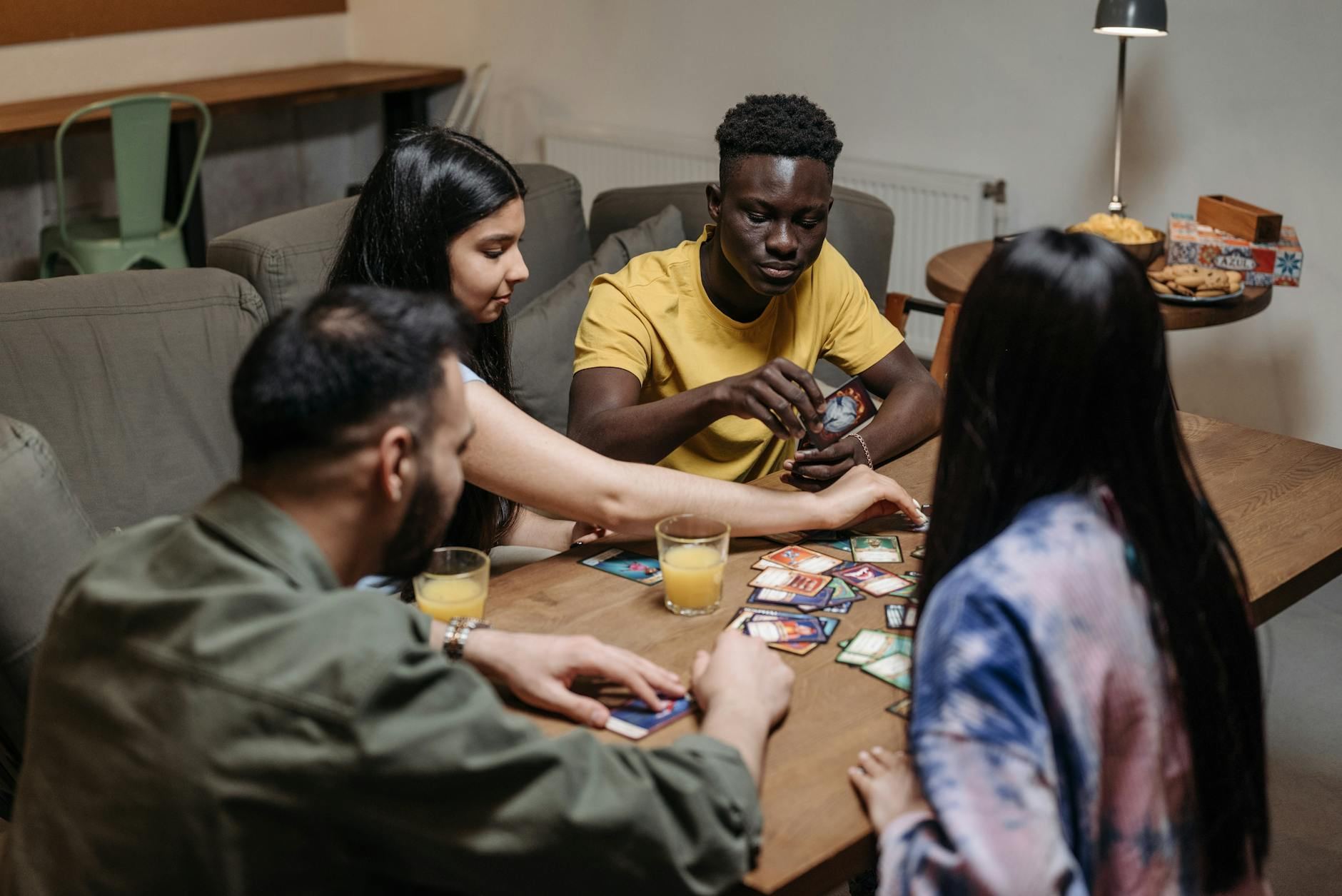
Trading Card Games aren't just about collecting — they're real-world labs for honing decision-making and resource management, all while having fun.
Getting started with trading card games as a beginner involves learning the basics of deck building and strategy to effectively outmaneuver your opponents through strategy, resource management, and timing.
Unlike board games, your deck is yours – constructed before the match, shaped by hundreds of possible card combinations.
The collection and the competition are inseparable – you're always building toward the next game.
In trading card games, adults engage in deck construction by analyzing their card collections, understanding card interactions, and strategizing deck compositions for various opponents. They participate in competitive play, making tactical decisions in real-time matches while managing resources. The gameplay involves continuous strategic decision-making, where players weigh risks and adapt tactic…
Trading card games enhance cognitive engagement through critical thinking and problem-solving, creating a skill feedback loop where performance improves with practice. The strategic depth of the game offers ongoing novelty, preventing repetitive boredom as players explore different deck configurations and adapt to various opponents. This dynamic problem-solving fosters situational awareness and e…
You think Trading Card Games are for kids hoarding Pokémon packs or obsessives spending thousands on cardboard. That assumption is wrong — but wrong in a specific, fixable way.
Collecting is the surface. What TCGs actually train is your ability to reason under constraints — resource management, probability, tempo, and adaptive decision-making, packaged as a card game.
A competitive Magic: The Gathering player once described their deck as "a hypothesis I've been iterating for six months." They weren't being dramatic. They'd cut cards, tracked win rates, and adjusted the mana curve — then rebuilt from scratch twice. Total spend: $40.
Not collecting.
Not obsessing over cardboard.
Problem-solving — with a social feedback loop that keeps making the problem harder in the best possible way.
The next question is what actually gets you started — and the answer is simpler than the hobby's reputation suggests.
Watching someone play a trading card game looks like chess with pretty pictures. Sitting down for your first game feels like chess where nobody told you the pieces move differently every turn — and some of them talk back. The gap between those two experiences is real.
Your first week, you will lose every game and spend more time reading card text than actually playing. Week two, you start recognizing what your opponent is trying to do — even if you still can't stop it. Week three, your first real decision point lands and you make the right call. Week four, you rebuild your deck after losing — and this time you actually know what you're fixing.
That progression isn't guaranteed by time. The only difference between quitting in week two and thriving in week four is whether you've played enough games to stop blaming the cards. Same week, completely different headspace.
There's one mechanic that catches almost every beginner off guard: the stack. Every card game has a window where both players can respond before an action resolves. Missing this in your first sessions means watching your opponent do things you legally could have stopped. Ask someone to walk you through priority before game one — it changes how you read every turn. The next section covers the mistakes that keep people stuck before they ever get to that point.
When to start: Morning
Duration: 1.5 hours
Cost to try: $20
Success criteria: If you finished without a clear victory, do session 2.
Opening Packs Instead of Building a Deck First Cracking packs feels like the point – it's actually the slowest way to build anything playable. Buy a preconstructed starter deck and learn the game with that before you spend a dollar on packs.
Copying a Pro Deck Without Knowing Why Each Card Is There A top-tier decklist looks like a recipe, so beginners follow it exactly – then lose constantly because they don't understand the engine driving it. Pick one deck archetype, read a primer explaining its win condition, and only then build toward it card by card.
Collecting Formats and Rulesets at the Same Time Standard, Modern, Legacy, Draft – they're all the same game until suddenly they're not, and you've bought cards legal in none of them. Pick one format before you buy a single card, and filter every purchase decision through that format's legality list.
Judging a Card by Its Rarity Symbol Shiny rare equals powerful – that's the logic, and it's wrong often enough to hurt your wallet. Check the card's actual tournament play rate on a site like EDHREC or MTGGoldfish before assuming a rare is worth playing.
Netdecking Without Accounting for Your Local Meta The best deck online gets built around what strangers play – your local game store runs a completely different ecosystem. Play five sessions at your local store first, note what decks keep winning, then build or adjust to answer those specifically.
Trading card games are played at game stores, hobby shops, and community centers – but your local game store (LGS) is where almost everything actually happens.
Walk in and say "I'm just getting started – do you run anything for beginners?" and most stores will point you to a league night, lend you a demo deck, or pair you with someone patient.
That one sentence does a lot of work – it usually gets you a free game, a borrowed deck, and someone who actually wants to teach you.
Draft format skips the home-built deck entirely. Everyone opens packs on the spot and constructs from what they pull — so no one's 400-card collection matters.
Expect to spend $15–25 per event on packs, which you keep after. The collection builds itself as you play.
Sealed format gives you six booster packs and nothing else — build the best 40-card deck you can from that pool. Because everyone works with random cards, raw deckbuilding skill and card evaluation matter more than collection size.
Entry fees typically run $20–30 at local game stores, depending on the game.
Commander (also called EDH) is a Magic: The Gathering format. Each deck is 100 cards, all singleton, led by a legendary creature you choose. Games are multiplayer — usually four players — and run long on purpose.
This is a social format built around the deck you crafted, not the tournament you're grinding. If you love theorycrafting and tinkering between sessions, Commander rewards that obsession more than any other format.
Pokémon TCG Live is the official digital version of the Pokémon card game. Same rules, no physical cards required, free to download.
Nothing competitive is paywalled — cosmetic purchases exist, but you can test full decks and learn every mechanic without spending a dollar.
Cube Draft works like regular draft, but instead of buying packs, the group pulls from a curated pool of several hundred cards that someone already built. The cube owner absorbs the cost entirely.
You just show up and play. Local shops that run cube events are worth finding early — it's the highest-quality draft experience at zero entry cost.
A close neighbor worth considering: Non-Sports Card Collecting.
If you want a related angle, Party Board Gaming is the natural next stop.
If the texture of this appeals to you, Hearts is built on similar bones.
Most beginners obsess over building the strongest deck they can afford. That's not why they keep losing.
The one skill is reading the board state – not your hand, not your deck, but the exact moment when the tempo of the game shifts from defensive to offensive, and acting on it one turn earlier than feels safe.
Every experienced player does this instinctively. You need to do it deliberately until it becomes instinct.
When you develop this skill, you stop making individually "correct" plays that collectively lose the game – because each play is now answering the question "who wins if nothing changes?" instead of "what's my best card right now?"
Without it, you'll keep building better decks and losing to worse ones, and you'll have no idea why.
Eight sessions over 30 days — roughly two per week, each one at least an hour. Less than that and you're sampling the surface, not the hobby.
TCGs have a learning curve that doesn't flatten until you've lost a few games, rebuilt a deck, and lost again with the new one.
If you're already thinking about your next deck between sessions, the puzzle clicked. Modeling the system in your head between games is the hobby — not a side effect of it. Find a local game store and enter a Friday Night Magic event or equivalent. Playing against strangers is where it deepens.
If the sessions were fine but you never thought about them afterward, the social layer is probably missing. One group session will tell you more than eight solo ones. If it's still flat after that, it's flat.
If you dreaded sitting down — card text felt like paperwork, losses felt like nothing except relief — that's clean data. TCGs specifically reward people who enjoy rules-lawyering their own decisions. If that framing sounds like a nightmare, the sessions confirmed it.
You're watching gameplay videos at 11pm for no reason. Not learning — just watching. That low-level pull toward other people's games is a stronger signal than whether your early sessions went smoothly.
The ongoing cost is a real barrier. Competitive play in most TCGs requires constant set purchases. If your budget has no flex room month-to-month, the financial pressure kills the fun before the hobby starts.
Beyond cost, there are two other structural mismatches worth knowing before you commit.
Still looking for something to do? Browse things to do when bored for more ideas.
You'll need a starter deck (which most TCGs offer for beginners), basic knowledge of the rules, and cards to build your collection. Many games provide free learning resources online and entry-level products designed specifically for new players, so you don't need to invest heavily upfront.
Competitive play can range from $100–$500+ depending on the game and how meta-heavy the deck is, though casual play is much more affordable. Budget-friendly options like proxy cards or older formats allow players to compete without breaking the bank.
Most TCG matches last between 20–45 minutes for casual play, though competitive tournament rounds are usually timed at 50 minutes. The length depends on the game system and how experienced the players are.
TCGs have a moderate learning curve—the basics are easy to pick up, but mastering strategy and deck building takes practice. Most games have tutorials, beginner-friendly formats, and active communities willing to help new players learn.
Absolutely—casual play with friends is the primary way most players enjoy TCGs and requires no tournament participation. You can play purely for fun, collecting, or storytelling without ever entering competitive play.
Success requires strategic thinking, resource management, adaptability to different opponents, and understanding card synergies. Patience and willingness to learn from losses are equally important as game knowledge.