BoredomBusted — Find Your Next Favorite Thing To Do
Discover hobbies, activities, places, and ideas that spark joy. Whether you're looking for something creative, active, social, or relaxing, BoredomBusted helps you find your next favorite thing to do.
Browse our hobby guides, things-to-do collections, and place ideas to never be bored again.
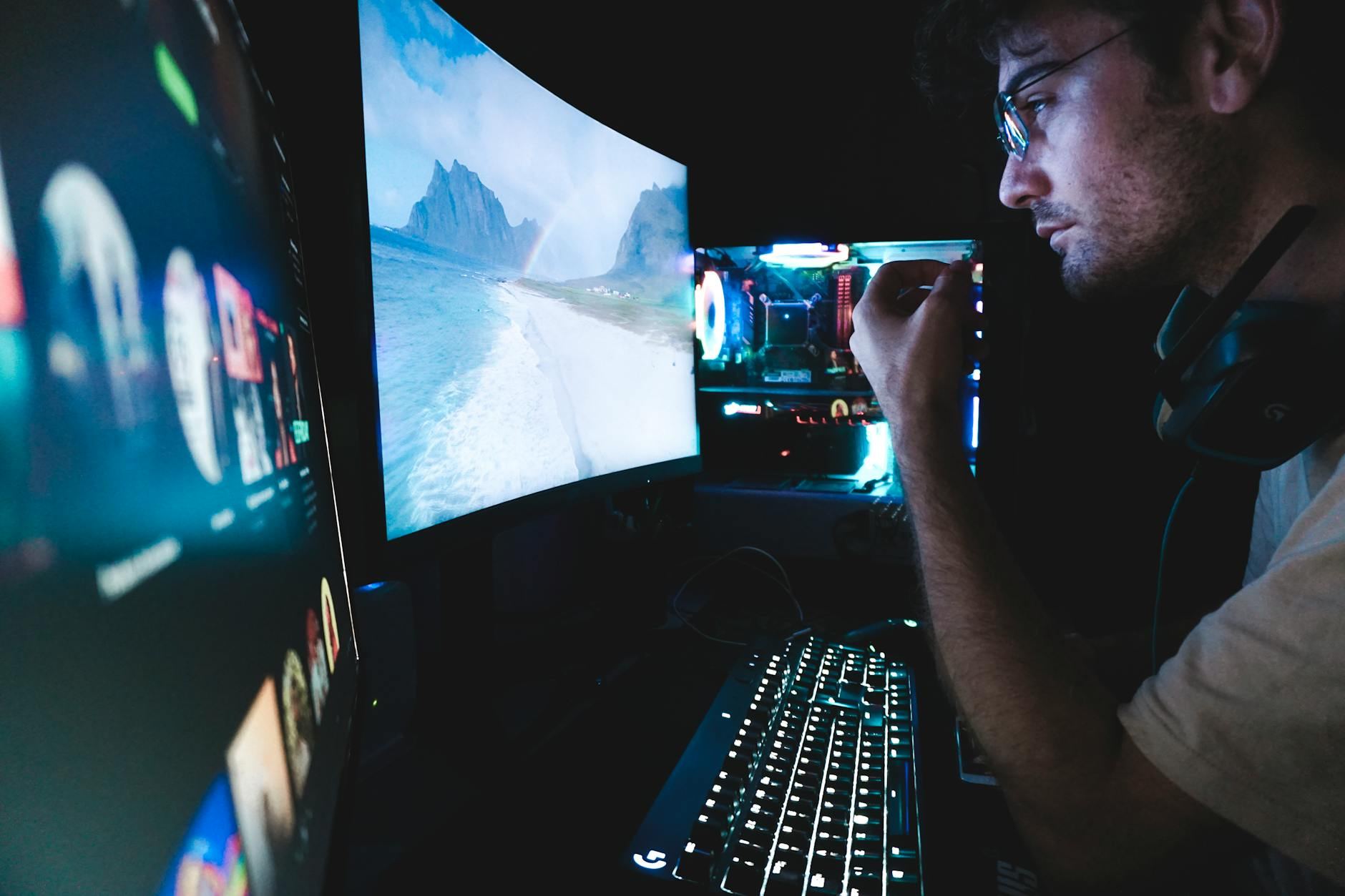
Game development doesn't require coding—using tools like Unity, anyone can create games by focusing on design instincts rather than technical skills.
Learning game development as a beginner opens up a world of creativity where you can craft immersive experiences with your own code, art, sound, and design decisions.
Engines like Unity and Godot simplify complex physics so you can focus on crafting the gameplay experience.
Game development combines coding and art, making every skill work toward one interactive goal.
In game development, you will write code in game engines, create visual assets, design game mechanics, and playtest your games, working through iterative cycles to bring your ideas to life.
Game development fosters a flow state through clear goals and immediate feedback, enabling deep focus and sustained engagement while providing a sense of accomplishment with each completed feature.
You think game development means coding. Maybe your high school math grades were barely passing, so you've already counted yourself out.
That assumption is costing you the hobby before it starts.
The skill gap you fear isn't there at the start. Engines like Godot and Unity have visual scripting tools, letting you build games without writing code. Think of game development as directing – you're deciding on feel and fun, not typing code. Those decisions come from your design instincts, not technical know-how.
Consider *Celeste*. A hobbyist without a coding background created it during a weekend game jam. Using basic tools, they made a platformer that would become one of the decade's most praised games. The original version took 96 hours.
The tools weren't the barrier. The decision to start was. The beginning isn't about coding; it's about envisioning a simple project and taking the first step. What really matters is what your first week could look like – and it's much less intimidating than you've assumed.
When you start building a game, the prospect feels like reading a manual in a language you almost know. Your project is blank, tutorials are everywhere, and you're not sure what to actually create. It feels like you've picked the wrong engine before you've even started.
Week one: Tutorials guide you until a step is skipped, leaving you stuck. A two-hour forum deep-dive ensues before you quietly pivot to another tutorial.
Week two: You deviate from the script, and everything breaks. Surprisingly, this mistake is the first useful part of your journey.
Week three: You abandon your lofty game ideas and create something small, deliberately. When it works, it feels significant.
Week four: Opening another's project, you finally recognize parts and pieces.
The seemingly small projects teach you more than expected. It doesn't matter if it feels simple or if you started late. Everyone's journey has a different pace.
Ignore debates on which engine to start with—Godot, Unity, or GameMaker. For the first session, the engine doesn't matter. It's the learning loop that counts.
When to start: Morning
Duration: 1-2 hours
Cost to try: $0 (using free tools)
Success criteria: if you finished without fully creating a game, do session 2.
Beginners often want to start by making an RPG or open-world game because they love playing them. But those genres are overwhelming for a first project.Build a simple game like Pong or a single-screen platformer first. Complete it and get it into players' hands.
With so many engines like Godot, Unity, and Unreal, it's tempting to test them all instead of creating.Stick with one engine and complete three projects to gain the experience needed to make a smart choice.
Writing code for your movement system at the start can backfire if the game isn't fun to play.Use placeholder shapes to test core mechanics first. If a gray box isn't enjoyable to slide around, more polish won't help.
Artwork shouldn't hold you back from testing gameplay.Download free asset packs from sites like itch.io or Kenney.nl to keep moving forward and focus on the fun factor.
Aiming for a full release with trailers and a Steam page might seem productive but isn't always useful when you haven't shipped a game yet.Aim to have your game playable by someone else within two weeks as your first big milestone.
Game development isn't tied to a location. Whether it's a home workspace, a coworking space, or a makerspace with dev nights, it's about the screen in front of you.
When you arrive, a simple introduction like "I'm just starting out, no projects shipped yet" can work wonders.
It leads you to the beginners' table, helps you find potential collaborators, and keeps you away from discussions that might overwhelm you.
2D games mean sprites and flat physics, which are easier than 3D. You get faster feedback and progress. Perfect for beginners who want a finished game, not just another learning attempt.
3D involves more complex modeling, lighting, and systems. Starting a 3D project is one hurdle. Finishing is where depth and patience come in. You need some 2D experience under your belt first.
No need for code or fancy tech. It's all about designing paper-based systems. Ideal for anyone fascinated by game theory and mechanics who isn't ready to dive into programming yet.
Focus on writing and branching choices with minimal art. Tools like Twine or Ren'Py allow quick creation. Great for writers who want to create games without the engineering detour.
It's a time crunch—48 to 72 hours to build a game around a theme. For anyone who's tired of starting and abandoning projects, this is the best way to push through and finish something real.
A close neighbor worth considering: Game Design.
Another variant that pulls from the same roots is Miniature Wargaming.
Scoping is the secret that separates progress from busywork. It means defining the smallest version of your game that still proves the core mechanic is fun. Ditch the grand plan. Focus on one verb, one action. Is that single loop satisfying? If not, nothing else matters.
Scope right and feedback comes in days, not months. Discover if your idea works before you build an entire world around it. Without this, you'll find yourself quitting on a game that was flawed from the start.
Success isn't about talent; it's about cutting loose bad ideas early.
Commit to 8 sessions over 30 days – roughly two per week.
Two sessions a week give enough repetition to push past the setup frustration.
If you find yourself sneaking in engine time at odd hours, that's real engagement, not just enthusiasm. The next step is clear: start a slightly bigger project and impose a real constraint like a one-week jam deadline.
Feeling indifferent after the sessions usually means the idea appeals more than the work. Switch formats if extending is an option. Move from tutorials to building something distinctively yours, even if it's flawed.
Dreading each session and feeling it's an obligation is honest feedback. Enjoyment of solitary problem-solving is crucial for game dev. If it feels more like a punishment, accept that signal.
You can't ignore noticing the small details in games you play. When you start analyzing UI choices, level designs, or mechanics instinctively, your brain is already in game dev mode.
Still looking for something to do? Browse things to do when bored for more ideas.
No, many aspiring game developers start with zero coding knowledge and learn as they go using beginner-friendly engines like Unity or Unreal Engine. These platforms offer extensive tutorials and communities to help you pick up programming fundamentals while building your first projects.
Simple 2D games can take 3–6 months for solo developers or small teams, while larger 3D games may take 1–3+ years depending on scope and complexity. Start small with game jams or short projects to build skills before tackling ambitious titles.
Popular free engines include Unity, Unreal Engine, and Godot, which handle most of the heavy lifting. Depending on your role, you might also need free tools like Aseprite (pixel art), Audacity (sound), or Blender (3D models), though many are optional when starting out.
You can start for completely free using open-source engines and free software. Most platforms don't charge until your game generates significant revenue, so initial investment is optional—you mainly need a computer and internet for learning resources.
Both are viable; indie developers create successful games solo, while larger projects benefit from teams combining programmers, artists, designers, and sound engineers. Starting solo helps you learn all aspects, and you can collaborate later as your ambitions grow.
Most developers struggle with scope creep (adding too many features) and maintaining motivation through the long development cycle. The key is starting small, shipping projects, and learning from each iteration rather than aiming for perfection on your first attempt.