BoredomBusted — Find Your Next Favorite Thing To Do
Discover hobbies, activities, places, and ideas that spark joy. Whether you're looking for something creative, active, social, or relaxing, BoredomBusted helps you find your next favorite thing to do.
Browse our hobby guides, things-to-do collections, and place ideas to never be bored again.
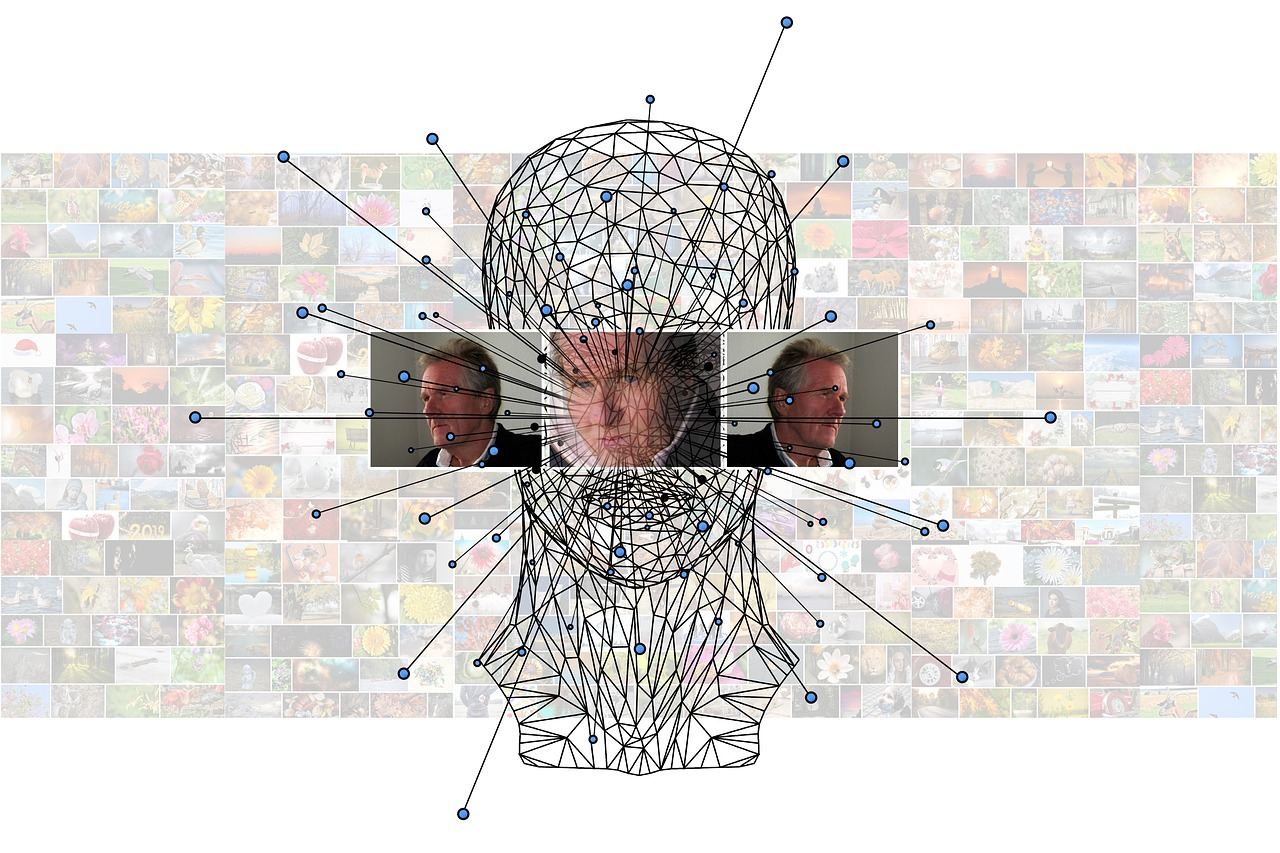
Machine Learning is more about defining the right questions and understanding data than just coding a predictive model—it's 90% design work.
Getting started with machine learning as a beginner requires an understanding of key concepts and data manipulation techniques that can enhance your analytical skills.
Feed it examples, and it consistently finds the signal and refines itself.
Unlike coding or statistics alone, this self-teaching output creates a unique learning loop.
In Machine Learning, you engage in coding by importing datasets, cleaning data, and performing feature engineering to develop predictive models. You'll use programming languages like Python or R in an IDE, selecting algorithms from libraries, training these models, and validating their performance through metrics. Activities often include debugging, visualizing data, and iterating on your project…
Machine Learning creates a flow state through escalating challenges that match your skill development, along with rapid feedback loops where you receive immediate results from model testing. This reinforces a sense of accomplishment as you see tangible outcomes from your work, while the novelty of diverse datasets keeps the process engaging. Additionally, creative expression is fulfilled as you c…
You think Machine Learning means writing code that predicts things. You've already pictured a Python script, a dataset, maybe a neural network diagram from a YouTube thumbnail. That's not wrong – it's just about 10% of what's actually going on.
Most of the work happens before a single model trains – cleaning data, questioning your assumptions, deciding what failure looks like. That's the craft.
Here's what beginners often miss: say you want to predict which customers will cancel a subscription. You could train a model in an afternoon. But if you didn't ask why they cancel – pricing, product, timing –
your model learns to predict the symptom, not the cause. It hits 80% accuracy and still tells you nothing useful.
That gap between a working model and a useful one? That's where Machine Learning actually lives.
The first step to starting might be simpler than you think.
Your first encounter with machine learning can feel deceptive. Video tutorials make it look tidy—an expert runs a model, accuracy improves, and everything clicks. Your reality will be different.
Starting out, you'll face confusing errors and installation issues. The environment resists setup, tutorial code fails, and you'll find yourself staring blankly at a Jupyter cell. This is where everyone starts, wondering what a tensor even is.
Over time, error messages become familiar. Initially each one feels critical, but soon you'll learn most are just noise, with only a few demanding your attention. That familiarity is where progress begins.
Messy outputs.
Clunky code.
Nothing impressive yet, and that's okay. Learning machine learning feels like juggling five subjects at once because you genuinely are.
Before your first session, avoid starting with raw data. Opt for built-in datasets like sklearn's iris or digits. The goal of week one is grasping the model, not drowning in data cleaning—which raw data would make inevitable.
When to start: Early morning
Duration: 1-2 hrs
Cost to try: $0
Success criteria: If you finished without needing to stop due to errors, do session 2.
From the outside, deep learning seems to cover everything. Many dive into TensorFlow without touching linear regression.
Start with a logistic regression model. If you can't explain a gradient, neural networks will remain opaque and frustrating.
Kaggle rewards leaderboard tricks like ensembling and hyperparameter tweaks, which can mislead you about real-world ML skills.
Select one beginner dataset and build a full pipeline. Document every choice you make to understand the process fully.
Tutorials often dump a list of algorithms, leading many to focus on model choice instead of problem understanding.
The real issue is understanding what you're minimizing with loss functions. Nail these down before jumping into more algorithms.
The model runs so you move on, but often you're modeling the data without truly grasping it.
Spend at least 30 minutes with your data. Plot distributions and identify outliers; most model issues stem from data problems.
Poor training accuracy might seem like a hyperparameter issue, prompting you to tweak prematurely.
Start with a simple baseline like a mean predictor. Only adjust parameters after you've surpassed what basic methods achieve.
Machine learning can happen just about anywhere you have a laptop and internet, even at your kitchen table.
Two common setups are home workspaces and coworking spaces.
Search Meetup.com for "machine learning [your city]". These groups meet regularly and welcome beginners.
Kaggle's community forums and local chapter listings at kaggle.com/discussion are ideal for finding study groups that tackle problems collectively.
Facebook Groups might have "[your city] AI/ML" or "[your city] data science" groups. These are often smaller and more informal than Meetup groups.
Universities with computer science programs often host open ML reading groups. Shoot an email to the grad students, rather than the department, for real answers.
There's no single national governing body for machine learning like the USGA for golf. However, organizations like the Association for Computing Machinery (ACM) and its Special Interest Group on Knowledge Discovery, SIGKDD, are the closest equivalents. Practitioners use these, and their local chapters sometimes run events.
When attending a meetup, you can simply say: "I've done some tutorials but I've never worked on a real project with other people."
This signals that you're not starting from zero, often prompting someone to offer you a dataset to explore.
Train your model on labeled data and it learns to make predictions on new data.
Every classic tutorial lives here — spam filters, house price prediction, you name it. Start here if you're new; it's all you need for a few months.
No labels to guide the model; it uncovers patterns from raw data.
Harder to evaluate without clear answers to check. Ideal for those who have mastered supervised learning and want a real challenge.
Models learn by taking actions, earning rewards or penalties.
Conceptually exciting but punishing to debug. Best for experienced programmers ready for model stubbornness.
Uses layered neural networks, the core of what news outlets call "AI."
Requires substantial compute power. Start with free resources, but know that future work pushes you to paid options.
Automates model selection and tuning with tools like Google AutoML.
Trade control for speed. Good for quick validation, but not for learning methods. Beginners, avoid unless solving a work issue.
For something adjacent, see Research Reading.
For something adjacent, see Study Skills.
Some of the same instincts show up in Lock-Picking — worth a look if this clicked.
Real progress comes when you audit your data before diving into models.
Most beginners spend months tuning hyperparameters and swapping models. They're convinced better results come from a better algorithm. But it doesn't. The real issue is usually your data pipeline.
Blind cleaning isn't auditing. It's about understanding your dataset: plotting distributions, spotting label imbalances, catching data leakage, and checking if features truly encode your target.
Develop this skill and you'll stop chasing phantom accuracy improvements. You'll start building models that generalize beyond just your notebook. Your model only learns from data that truly reflects reality.
If the data is misleading, the model just learns to replicate those lies.
Eight sessions over 30 days, roughly two each week. That's enough to push through initial setup and not let gaps stall your learning. It helps mimic how machine learning builds up over time.
If you regularly find yourself revisiting projects between sessions—tweaking models, analyzing results—that's not casual interest. It's a sign of deeper engagement. Focus on a singular project and develop it fully.
If you attend sessions but don't engage outside them, that's telling. Try transitioning from tutorials to something you care about predicting. If indifference remains, machine learning might be more intriguing as a concept than in practice.
If each session felt like a chore—annoyed by debugging, uninterested in the math, frustrated by slow progress—that's clear. It's more about fit, not patience. Some crave swift results.
The unmistakable sign: you're watching or reading something new, and your mind wanders to how it could be modeled. Not from expertise, but from curiosity. That instinct is the real foundation here. Without it, after eight sessions, it likely won't develop.
When you're ready to compare options, the hobbies list lays out every direction we cover.
Not ready to pick a hobby yet? The boredom busters page has smaller things to try first.
Python is the most popular choice for machine learning due to libraries like TensorFlow, scikit-learn, and PyTorch that make it beginner-friendly. While R and JavaScript are used, Python dominates the field and is recommended for starting out.
Most people can grasp fundamental concepts like supervised learning and basic algorithms in 3–6 months with consistent study. Becoming proficient enough for real-world projects typically takes 1–2 years of hands-on practice.
A basic understanding of statistics, linear algebra, and calculus helps, but it's not a hard requirement. Many modern libraries abstract the math away, and you can learn the necessary concepts as you go.
AI is the broader field of creating intelligent machines, while machine learning is a subset that focuses specifically on algorithms that learn from data. All machine learning is AI, but not all AI involves machine learning.
Most essential tools are free—Python, scikit-learn, and TensorFlow are open-source. Online courses range from free (Coursera, YouTube) to $300–$500 for comprehensive paid programs, but you don't need to spend money to begin.
Yes, you can start on a standard laptop or use free cloud platforms like Google Colab that provide computing power. Only specialized deep learning projects typically require GPUs, and even then, cloud access is affordable.