BoredomBusted — Find Your Next Favorite Thing To Do
Discover hobbies, activities, places, and ideas that spark joy. Whether you're looking for something creative, active, social, or relaxing, BoredomBusted helps you find your next favorite thing to do.
Browse our hobby guides, things-to-do collections, and place ideas to never be bored again.
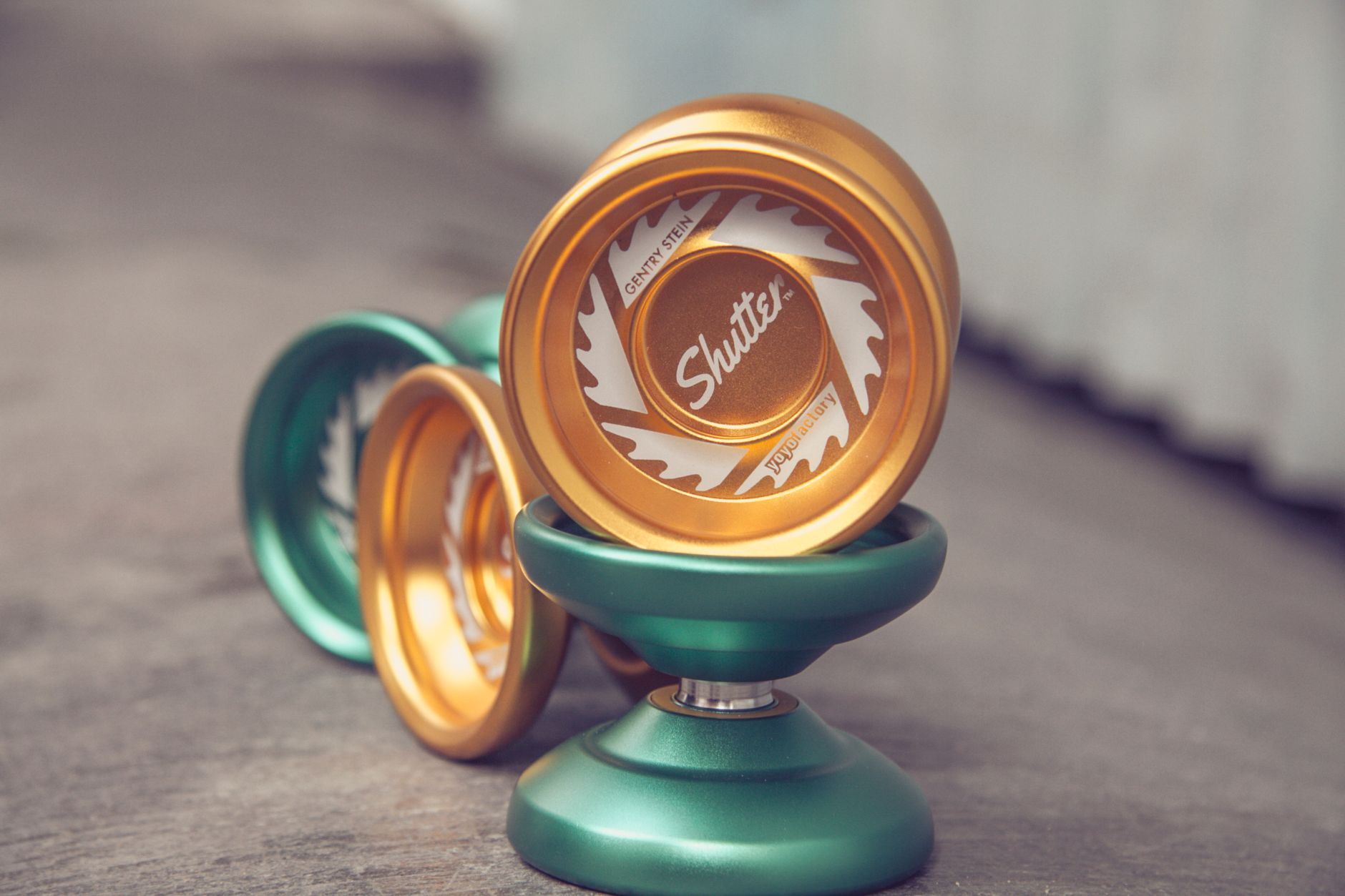
The yo-yo you remember went up and down. Modern yo-yos sleep at the bottom, and learning to bring one home is the real first trick.
A modern yo-yo is two weighted halves spinning on a ball bearing, with a loop of string around the axle. You throw it down and it keeps spinning at the end of the string instead of coming back. That spin is the entire hobby, and everything else is what you do while it lasts.
A session is simple. You throw a sleeper, move the string around the spinning yo-yo with your free hand, then call it home with a bind. Tricks have names like Trapeze and Double or Nothing, and each one is a different path for the string around a body that never stops turning.
Most sessions run 20 to 60 minutes in a hallway, garage, or driveway. You repeat one trick thirty times until it stops snagging, then chain it into the next. It's closer to learning a guitar riff than playing with a toy, and your hands are the instrument.
A modern yo-yo spins on a ball bearing at the end of its string, so it keeps turning until you choose to bind it back. Players move the string around the spinning body to build tricks, then chain those tricks into routines, from a first Trapeze to full contest freestyles.
Yo-yo gives restless hands a task with instant feedback. You can see in seconds whether a throw was clean, and each trick is a small puzzle with a clear finish. It also fits into short breaks, needs no screen, and gives your hands something to do besides scrolling.
Everyone owned a yo-yo at some point. Most people remember it as the thing that went up and down and got tangled by Thursday.
That memory is of a responsive yo-yo. Tug the string and it climbs back to your hand. Modern players use unresponsive yo-yos, which sleep at the bottom until you deliberately bind them back.
A responsive yo-yo does one trick at a time and ends it with a tug. An unresponsive one gives you a spin that lasts for a minute or more. Tricks can now be chained, so a routine becomes a sequence instead of a single move.
Competitions are split into divisions. 1A is a single yo-yo on a string, 2A is two-handed looping, 3A is two yo-yos with string tricks, 4A is offstring, and 5A uses a counterweight. Players enter a freestyle routine set to music and get scored on technical difficulty and performance.
Regional and national contests feed the World Yo-Yo Contest, run by the International Yo-Yo Federation with each year's host country. Nobody warns you that a cheap plastic toy has a skill ceiling that lasts years. You'll find that out around week three.
Session one is humbling in a specific way. Your yo-yo will work for roughly four seconds, then wobble, tilt, and slap into your knuckles.
That's normal. The throw is the first skill, and it feels wrong until your wrist learns it. Expect most throws in the first hour to die early.
You'll get a few clean sleepers by the end of the hour. The yo-yo hangs there spinning, and you'll feel oddly proud of something that does nothing. That feeling is the hook.
You will also have no idea how to get it back. With a responsive yo-yo, you just tug. With an unresponsive one, you stand there watching it spin and then you give it a hard yank that goes nowhere.
This is where people quit. You've got a smooth throw now, but the bind is a separate skill and it fails about half the time for the first week. Every failed bind leaves the yo-yo spinning with no way home.
Safety note: a spinning yo-yo that hits your face, eye, or shin hurts. Metal ones really hurt. Keep a clear space, keep kids and pets out of the throw zone, and never aim a throw at the TV.
By now the bind lands maybe seven out of ten times. You can try a Trapeze or a simple mount and actually finish it. It will look rough, and it will still be the first time the yo-yo does something you meant it to do.
When to start: Any time you have a clear 6-foot circle and ten spare minutes
Duration: 20 to 30 minutes
Cost to try: Free with a borrowed yo-yo; under $20 for your own
Success criteria: If you can throw a sleeper that spins for five seconds without wobble, do session 2.
Metal throws look great in videos, so people jump straight to them. A beginner doesn't need one, and a heavy yo-yo you can't control will hit your hand, your wall, or your teeth.
Start with a plastic bearing yo-yo that costs under $20. Many of them ship with removable response pads, so you can start responsive and switch to unresponsive when you're ready.
The string should reach about your belly button when the yo-yo hangs from your hand. Shorter and you'll bang your knuckles. Longer and you'll tangle on every trick.
Beginners rarely check this. Wrong length is the most common reason a throw feels off even when your technique is fine. Fix it by cutting or retying the string.
The string loop goes on your finger snugly, not like a tourniquet. A tight loop cuts off circulation and turns your finger purple. It can also hurt when a throw is fast.
Pinch the loop so there's a tiny bit of slack, and keep the knot loose enough to slide off. If your fingertip is tingling or changing colour, take the string off right away.
Tricks look cooler than binds, so beginners skip ahead. Then the yo-yo hangs spinning at the bottom with no way back, and the session ends with a frustrated yank.
Learn the bind first. A trick you can't recover from is a trick you can't practice. Thirty binds at the start of every session is the cheapest fix in the hobby.
String wears out fast. Fuzzy, stretched string tangles, tilts, and kills the spin. Players swap strings every few sessions.
Buy a pack of 10 or 100 for a few dollars. Fresh string is the cheapest upgrade you'll ever make. If your yo-yo suddenly feels worse, check the string before you blame yourself.
Yo-yo is a quiet, mostly online hobby with a surprisingly warm offline scene. You can learn alone, but the people who stick tend to find one other person fast.
r/yoyo on Reddit is the quickest place to ask a question and get a straight answer. YoYoExpert, a large retailer, runs forums and a learning section that cover beginner tricks. Discord servers and Facebook groups dedicated to yo-yo fill the gaps.
The International Yo-Yo Federation is the global umbrella for contests, and national contests run in many countries. Even if you never compete, go watch one. You'll meet players who will happily show you how they chain tricks.
Juggling clubs, magic shops, university clubs, comic and game stores, and public libraries sometimes host skill-toy meetups. Search Meetup for "yo-yo" or "skill toys" and you'll find the occasional group. If there's none, post in r/yoyo to see who else lives nearby.
Post in your local subreddit and in r/yoyo, saying your city and your level. Offer a specific time, like Saturday at 2 p.m. in a park. One reply is enough to turn a solo hobby into a social one.
Yo-yo isn't one activity. The contest divisions are really five different hobbies that share a string.
One yo-yo, unresponsive, string tricks. This is the style you'll see in most videos and the one most beginners end up learning. It's the best default if you aren't sure.
Two hands, two responsive yo-yos, big loops through the air. It looks like juggling with string. It rewards timing and is a good fit if you like moving your whole arm.
Two unresponsive yo-yos with string tricks, one in each hand. It's slow to learn and absorbing once it clicks. Your two hands will need to learn separate jobs.
In 4A, the yo-yo leaves the string, flies into the air, and you catch it back on the string. Start only in open space, since a missed catch sends a weighted yo-yo somewhere unpredictable.
Classic tricks like Walk the Dog and Around the World work on a basic responsive yo-yo. It's the cheapest route and still genuinely fun. Plenty of players stay here and never need a bind.
Beginners assume the tricks are the hobby. They aren't. The skill underneath every trick is a level, repeatable throw with a controlled bind.
If the yo-yo wobbles, the string snags on every trick. If the bind fails, the trick ends with the yo-yo dangling and you starting over. Fix those two things and every trick gets easier at once.
Throw it straight down and keep your hand still as it leaves. Don't let the string drift sideways. Count how long it sleeps, and aim for five seconds without wobble.
If it tilts, the throw angle was off. Change one thing at a time, like your wrist position or how hard you release, and see what the yo-yo does.
The bind is a motion, not a paragraph, so learn it from a video and slow it down. Do it thirty times in a row at the start of each session. Count success rate, not time spent.
A good beginner target is eight clean binds out of ten. Once you reach that, learn the Trapeze and a basic mount. Everything after that is a variation on the same throw and bind.
Ten sleepers, ten binds, then your current trick five times. It takes five minutes and it keeps your hands consistent from day to day. Players at every level start sessions this way.
Commit to 12 sessions in 30 days, about 20 minutes each. That's enough time to get the throw and the bind, and enough to find out whether you actually like the repetition.
Yo-yo is a hobby of tiny improvements. Twelve short sessions will show you whether those are fun for you or just irritating.
If you're landing most binds and trying tricks you looked up yourself, you're in. Buy a better yo-yo, join r/yoyo, and look for a contest within driving distance.
If you can do a few tricks but you're not excited to pick it up, that's fine. A cheap yo-yo on your desk still fills a three-minute break. Not every hobby has to become a project.
If you spent most sessions hating the wobble and watching the clock, yo-yo probably isn't your thing. You'll know within two weeks, and you'll have spent very little. Try juggling or a Rubik's Cube next.
If you catch yourself throwing a sleeper during a phone call or while a show loads, that's the hobby choosing you. It means your hands want something to do and the yo-yo has become the answer.
A responsive yo-yo returns to your hand when you tug the string, because the string catches on a narrow gap or pad. An unresponsive yo-yo uses a bearing and a wider gap, so it keeps spinning at the bottom until you bind it back. Most modern tricks need unresponsive.
You use a move called a bind. While the yo-yo is spinning, you make a loop with the string so it wraps around the axle, then tug and it climbs back. It's a motion, so watch a video. Expect it to fail about half the time during your first week.
1A is the contest division for a single yo-yo on one string, played unresponsive. It's the style most people picture when they think of modern tricks. Other divisions include 2A looping, 3A with two yo-yos, 4A offstring, and 5A counterweight.
A plastic yo-yo with a ball bearing, which usually costs under $20, is the best start. Look for one with removable response pads so you can play responsive first and switch later. Skip metal yo-yos until your bind is reliable.
Most people throw a clean sleeper in an hour. The bind usually takes about a week of short sessions, and a first real trick like Trapeze comes within two or three weeks. Contest-level routines take years of regular practice, so treat the first month as learning the basics.
Plastic yo-yos are generally fine for kids with supervision, but a spinning yo-yo can hurt on impact. Keep play away from faces, other children, pets, and windows. Metal yo-yos hit harder, and a string looped too tightly can cut off circulation in a finger.