BoredomBusted — Find Your Next Favorite Thing To Do
Discover hobbies, activities, places, and ideas that spark joy. Whether you're looking for something creative, active, social, or relaxing, BoredomBusted helps you find your next favorite thing to do.
Browse our hobby guides, things-to-do collections, and place ideas to never be bored again.
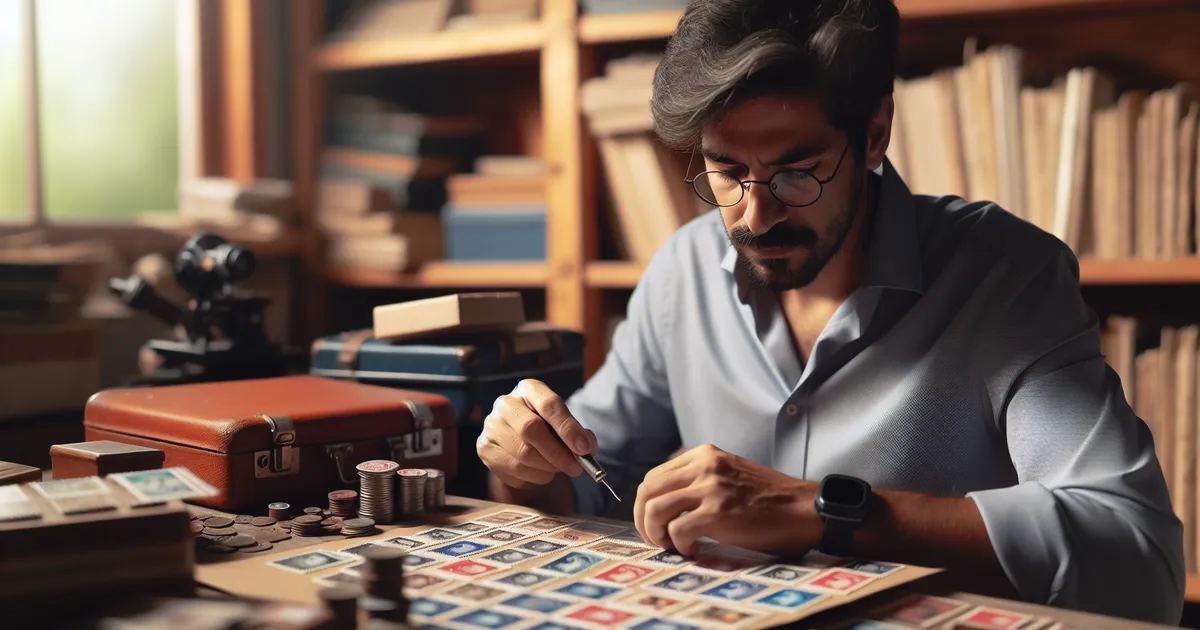
Stamp collecting isn't just a retiree's pastime — it's a hot market where a single misprinted stamp could be worth millions, revealing hidden history.
Getting started with stamp collecting as a beginner opens up a fascinating world of exploring postage stamps, postmarks, and related postal materials.
You acquire stamps through:
Then, organize them by country, era, theme, or rarity.
Unlike coin collecting, condition is everything.
A single crease drops a stamp's value dramatically, which makes the hunt more precise and the wins more satisfying.
Stamp collecting involves the hands-on accumulation of postage-related materials, primarily stamps, which includes soaking them off envelopes, sorting them into thematic categories, and organizing them in albums using tools like tweezers and magnifying glasses. Collectors also research and identify stamps through catalogs, assess their condition and rarity, and may engage in trading with other co…
Stamp collecting fosters a flow state through intricate tasks like measuring perforations and detecting watermarks, requiring focused concentration that provides immediate skill feedback. It creates a sense of accomplishment through skill feedback loops as collectors see tangible progress in their thematic sets, while social belonging develops in clubs where trading fosters community bonds among …
You think stamp collecting is for retirees with magnifying glasses and too much time. Dusty albums. Quiet rooms. A hobby that peaked before the internet.
That assumption is costing you the actual thing.
Here's a concrete example of what this actually looks like:
A collector in Ohio picked up a bulk lot at a garage sale for $8. Inside was a British Guiana 1856 One-Cent Magenta – the only known copy of its kind. It sold at Sotheby's for $9.5 million.
That's not a lucky anomaly. That's what happens when you understand what you're looking at.
The next question is whether you can actually get started without spending like an auction house. Spoiler: you can.
Imagine a quiet room with a pile of soaked stamps and tongs that just won't stay in your hands. It's not clear if the stamp you're holding is worth ten cents or ten dollars. Your first session feels like you're far from that organized collection you once admired.
Relaxing stamps, right? Think again. You're suddenly juggling watermark confusion, three catalogues, and a perforation gauge. Time disappears as you lose track in the details. It's a steep learning curve that nobody talks about.
Weeks pass, and you start sorting stamps by country and color. Simple, yet perfect for a beginner. Soon you notice perforations and discover watermarks. You buy stamps from estate sales like every enthusiast does, unsure yet optimistic. Then a tiny victory arrives when you identify, catalogue, and mount a stamp correctly.
Skip buying an album at first. Instead, get a perforation gauge and a copy of the Scott Standard Postage Stamp Catalogue. These tools help you describe and trade stamps effectively.
Confusion reigns at first. Slow progress leads nowhere seemingly. Then, an identification lands. It's not some big breakthrough — it's real progress. The reference work clicks, fueling your journey. Next, we tackle the mistakes that can drain your patience.
When to start: Early morning
Duration: 1 hour
Cost to try: $15
Success criteria: If you sort 20 stamps into at least 3 country or theme groups and note one detail on 5 stamps, do session 2.
New collectors grab whatever looks cool without any way to know what they actually have.
Pick up a current Scott Standard Postage Stamp Catalogue for your focus region before you spend a dollar on stamps – it tells you condition grades, values, and which varieties actually matter.
Direct contact with your hands leaves oils on the stamps, dulling the gum and creating permanent smudges.
Always use stamp tongs – not tweezers, actual stamp tongs with flat, rounded tips – and make this a reflex from day one.
The entire world's postal history sounds exciting until you have 4,000 loose stamps and no idea what you're building.
A focused collection is worth more, looks better, and actually gets finished.
Self-adhesives came into wide use in the 1990s, and the water trick that works on lick-and-stick stamps destroys them entirely.
Check the stamp's era before you soak anything – self-adhesives need to be left on paper or removed with a specialized solvent, not your kitchen sink.
PVC-based plastics off-gas over time and chemically damage the stamps pressing against them – most dollar-store sleeves are exactly this.
Use only archival-safe stockbooks or mounts labeled acid-free and PVC-free; it's a small cost difference that keeps a collection intact for decades.
Stamp collecting comes alive wherever you settle down with a magnifying glass. Dive in at your kitchen table, a home hobby room, or a local library meetup.
Serious collectors gather at stamp shows and philatelic exhibitions. Dealers, swaps, and expertise all converge here.
Walk in and say: I just started – I don't know what I have yet.
This approach often gets you a free appraisal, a buying recommendation for albums or catalogs, and an hour of guidance from experienced collectors.
Collect stamps by theme, like space or sports. Your interests guide your collection, making it easy to start.
Perfect if stamps from a specific era or nation don't excite you.
Explore every aspect of a country's postal history. This isn't casual—be ready for reference catalogues and a loupe.
Ideal for the collector seeking expertise over variety.
Reference catalogues run $30–$80, depending on the country.
Focus on envelopes—postmarks and routes over the stamp. The envelope tells the story, not just the stamp.
Great for those more interested in context than condition.
Collect envelopes with stamps postmarked on release day. Visually satisfying and often affordable, though not investment pieces.
Suited for those seeking easy-to-display items.
Track down revenue stamps used for taxes, not mail. Or explore Cinderellas—non-postage stamp-like items.
Perfect for those who prefer owning the unconventional over the mainstream.
Thematic Stamp Collecting is a sibling pursuit and often surfaces the same kind of curiosity.
If the texture of this appeals to you, Postal History Collecting is built on similar bones.
Most beginners focus too much on acquiring more stamps. They hunt deals, fill pages, and chase sets.
The collection expands, but the collector doesn't improve because they miss the real skill.
Reading a stamp's story through its physical details is the true skill.
Look beyond "is this used or mint?" Examine a stamp to understand its value, what sets it apart, and how its centering, gum, and cancel mark convey its history.
Mastering this skill stops accidental duplicate purchases and uncovers hidden varieties in a 50-cent bin.
Without it, collecting is just guessing, and supposed upgrades might not add actual value.
Commit to 8 sessions over 30 days – roughly two per week, 30–45 minutes each.
Getting hooked means you're finding excuses to dive in. Maybe a specific era has caught your interest, or you've started spotting printing variations others miss. That's not just habit forming – that's the hobby engaging you. The next step is developing a clear collection theme and exploring your first catalogue.
Feeling indifferent suggests the entry point was too broad. After 8 sessions, if it's not drawing you in, try one more month with a tighter focus – perhaps one country or one decade as a reasonable test area.
Actively clock-watching signals something. Stamp collecting rewards those who find stillness genuinely satisfying. If the quiet feels more like a cost than a pleasure, more sessions won't change that.
Find yourself at a flea market, drawn to a box of old envelopes, without knowing why? That magnetic pull toward paper, old postmarks, or foreign scripts is the true signal. Many collectors felt this long before buying their first album.
Still looking for something to do? Browse things to do when bored for more ideas.
You can start stamp collecting for very little — as little as $10–20 for a basic starter kit with magnifying glass, tweezers, and hinges. Many collectors begin by sorting through family collections or buying affordable mixed lots online, then gradually invest in rarer stamps as their interest grows.
Essential tools include a magnifying glass, stamp tweezers (to avoid damaging stamps with your fingers), and stamp hinges or mounts for your album pages. An album or stockbook to organize your collection is also helpful, though many beginners start with envelopes or binders before upgrading.
You can build an interesting collection of a few hundred stamps in just a few months by visiting flea markets, online auctions, and collector shops. Building a specialized or rare collection takes years, but most hobbyists find collecting rewarding and enjoyable from their first purchase.
Stamp collecting is one of the most accessible hobbies — there's no skill barrier to starting. You simply need patience to learn stamp categories, country codes, and condition grading, which you can pick up gradually through collecting guides and online communities.
Stamp value depends on rarity, age, condition, printing errors, and historical significance. For example, an unused stamp from the 1800s is worth more than a common modern stamp, and misprints or limited editions can command high prices among collectors.
Stamps are available from flea markets, antique shops, online auction sites like eBay, specialized stamp dealers, and estate sales. Many collectors also swap with other hobbyists through collector clubs and online communities to build their collections affordably.