BoredomBusted — Find Your Next Favorite Thing To Do
Discover hobbies, activities, places, and ideas that spark joy. Whether you're looking for something creative, active, social, or relaxing, BoredomBusted helps you find your next favorite thing to do.
Browse our hobby guides, things-to-do collections, and place ideas to never be bored again.
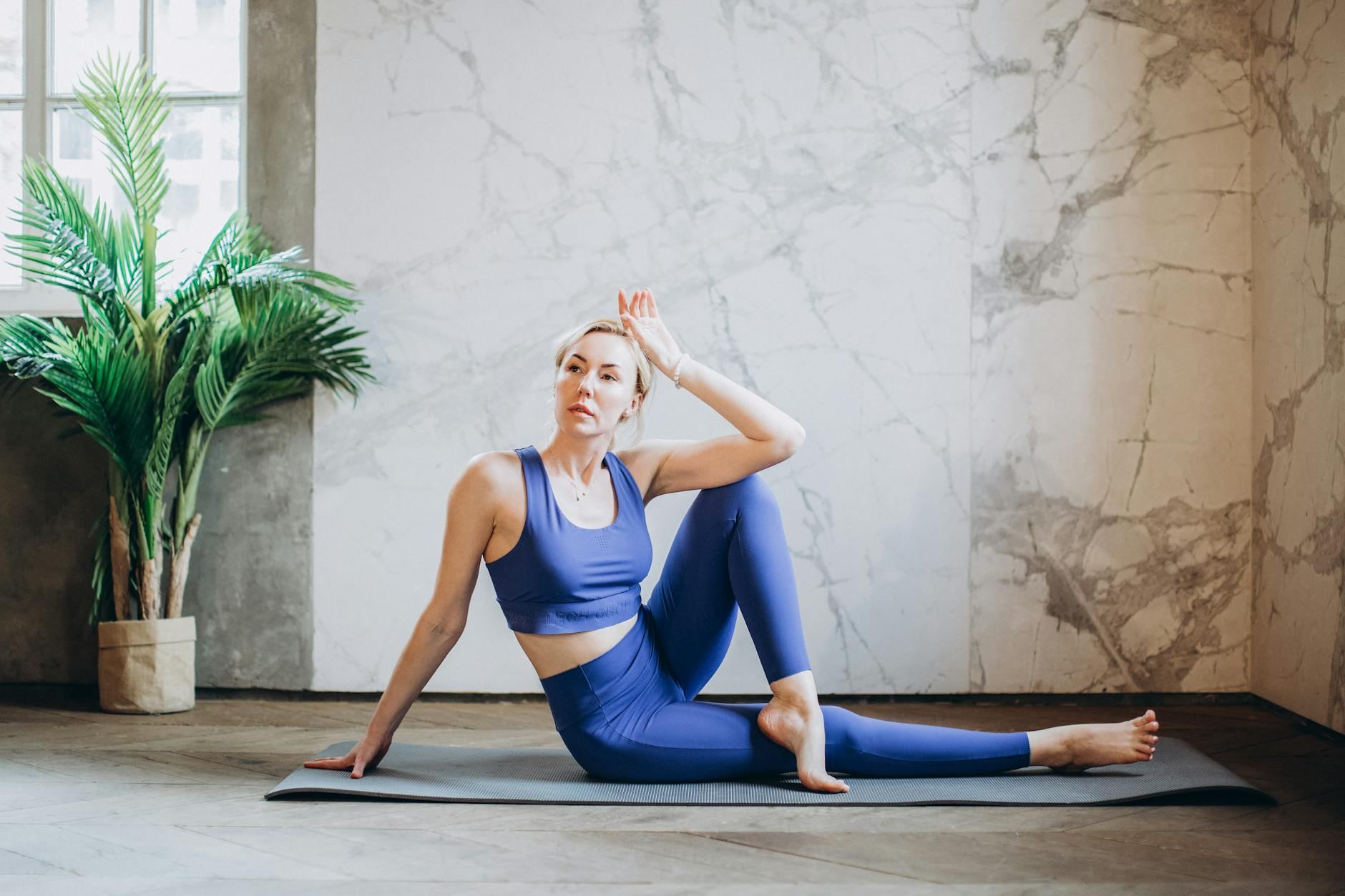
Yin Yoga isn't the easy option; its real challenge lies in holding poses for minutes to release tight connective tissue that standard workouts ignore.
For beginners learning Yin yoga, the focus is on holding poses for longer durations to effectively target connective tissues and enhance flexibility. Yin yoga is a slow, floor-based practice where poses are held for 2–5 minutes to target connective tissue – fascia, ligaments, tendons – rather than muscle.
Unlike vinyasa or hatha, there's no flow, no sweat, and no performance.
The stillness is the whole point.
In Yin Yoga, you practice a series of slow, passive poses held for 3-8 minutes, focusing on deep stretches to target connective tissues around joints, while incorporating steady breathing and mental stillness throughout a 15-60 minute solo session on a mat.
Yin Yoga creates a flow state through prolonged stillness and breath observation, quieting mental chatter and fostering present-moment immersion, while the skill feedback loop from holding poses provides a sense of accomplishment and gradual body awareness, effectively combating boredom.
You think Yin Yoga is the easy version. The one for people who can't handle a real workout. You're picturing a dim room, soft music, and a lot of lying around doing nothing.
Yin targets connective tissue – fascia, ligaments, joint capsules – the layer that dynamic movement barely touches. Most forms of exercise skip this layer entirely.
Holding a pose for three to five minutes isn't rest. It's controlled stress applied to tissue that only responds to sustained, low-load pressure. Your muscles aren't the point.
The stillness is where the difficulty hides. Staying present in mild discomfort for four minutes – without fidgeting or mentally drifting – is a skill most people have never been asked to build.
A runner with chronic hip tightness tried Yin after months of conventional stretching that never held. Three weeks in, her mobility improved – not because she worked harder, but because she finally addressed the layer conventional stretching doesn't reach.
Hard.
Quiet.
Completely unglamorous.
That's exactly why it works – and why the people who stick with it become quietly obsessive about it.
Your first session will feel stranger than you expect. That's your cue that something real is happening.
Watching a Yin Yoga video looks like people lying on the floor doing nothing. Then you try holding a hip opener for four minutes and discover your body has opinions you've never heard before. Three minutes in, your hips are burning, time moves strangely, and your brain won't stop narrating. The gap between watching it and being inside it is larger than almost any other practice.
Your first session is mostly negotiation. You shift, you breathe, you count the seconds. By week two the physical discomfort has leveled off — but the mental restlessness peaks, and that's the week most people quietly stop going. Not because their body gave out. Because the silence had too much room in it.
Something shifts around week three. Holds that felt hostile start to feel merely uncomfortable. By week four you'll notice yourself breathing through sensation instead of bracing against it. That shift — from fighting to directing your attention — is the whole practice. The people who get there are the ones who got curious about the discomfort instead of scared.
Props matter more here than in almost any other style. A strengthen or two firm blankets under your hips in poses like Butterfly changes the experience from gritting your teeth to actually releasing. Go without them and you'll spend the entire hold bracing — which is the opposite of what Yin is trying to do. The next section covers the mistakes that keep beginners stuck in that bracing phase far longer than necessary.
When to start: Morning
Duration: 1 hour
Cost to try: $0
Success criteria: If you hold butterfly and supported child’s pose for 3–5 minutes each, then finish 10 minutes of savasana with steady breath, do session 2.
Beginners assume deeper stretch equals better practice – Yin is about tissue stress, not flexibility performance. Find the edge where you feel "something" but can still breathe slowly, then stop there.
Most people grip the floor, tense their thighs, and brace their way through every minute – which defeats the entire point of letting connective tissue soften. Set a timer and do a body scan every 60 seconds:
Consciously release each one.
The transition out of a long hold is when injury actually happens, not during the hold itself. After any pose held three minutes or more, move to neutral and stay there for 30 seconds before the next shape.
Yin poses need support so your muscles can fully disengage – propping isn't cheating, it's literally the mechanism. Place a strengthen or folded blanket under your hips in forward folds so your lower back isn't the thing doing all the work.
Yin should feel intense and uncomfortable – that's the work. Sharp, joint-specific, or shooting sensations are different. Learn the difference before your first session:
Yin Yoga happens in studios, wellness centers, and gyms with group fitness programs. More than most slow hobbies, it also happens in living rooms — a mat, a wall, and a pillow standing in for a strengthen is genuinely all the setup you need.
Start with Mindbody or ClassPass — both let you filter by yoga style, so you're not wading through vinyasa and hot yoga listings. The Yoga Alliance teacher directory at yogaalliance.org lets you search by zip code and filter for Yin as a listed specialty — it's the certification standard most studios use to vet instructors, so the names you find there are legitimate.
For lower-cost options, search Facebook Groups for your city plus "yoga." Local Yin teachers often post free or donation-based community classes there before filling their paid rosters. Meetup.com is worth checking too — Yin and restorative yoga groups on Meetup tend to be casual, cheap, and genuinely beginner-heavy.
Once you're in the room, say this before class starts: "I'm new to Yin specifically — is there anything I should know?" That one line gets you prop setup help, a heads-up on poses to modify, and usually the teacher checking on you mid-class. That last part matters when you're holding a hip opener for four minutes and can't tell if the discomfort is normal or a problem.
Yin Yoga is already a quieter corner of the yoga world. But it has its own branches – and picking the wrong one early can make the practice feel harder than it needs to be.
This is restorative yoga. Props fully support your body, so there's no muscular effort at all – unlike Yin, which asks you to tolerate mild discomfort, restorative removes it entirely.
Best for people recovering from illness, injury, or burnout who aren't ready for that edge yet. Expect to invest in supports and blankets – or find a studio that provides them.
Yin-Yang Yoga blends a flowing, active Yang sequence with a slower Yin closing – same class, two completely different gears.
It's the most practical on-ramp for people who want to work toward pure Yin but can't yet sit still long enough to start there. No extra gear needed.
Meridian Yin layers Traditional Chinese Medicine theory into standard Yin, linking each pose to specific energy channels and organs. The practice looks identical – the difference is entirely in how it's taught and framed.
Best for people already comfortable with Yin who want more than an anatomy explanation for why they're holding each pose.
Some teachers integrate extended breath techniques – slow exhales, breath retention – to deepen the nervous system response during holds. No gear difference, but the mental demand is higher than it looks.
Best for intermediate practitioners who've already learned to tolerate stillness and want to go further without adding more time.
Trauma-Informed Yin modifies cueing and pacing so students always have explicit permission to exit a pose. Nothing is held by default, and language around "surrender" is avoided.
It's the clearest starting point for anyone who finds standard Yin cues activating rather than calming. Seek out teachers with specific trauma-sensitive training, not just a general Yin certification.
Another variant that pulls from the same roots is Hatha Yoga.
If this resonates, Vinyasa Yoga explores a similar direction.
A close neighbor worth considering: Ashtanga Yoga.
Most beginners spend their first months chasing the deepest stretch they can find. That's the wrong goal — and it's exactly why they stop progressing.
The one skill is finding your edge without overshooting it — specifically, learning to feel the difference between a dull, spreadable sensation deep in the tissue and the sharp, burning signal that means you've gone too far. You're training your nervous system to read subtle sensation, not your muscles to stretch further.
Fascia responds to time under mild, sustained load — not intensity. When you find the edge accurately, you stop gripping through poses, and that's when the connective tissue actually releases.
Without this, you either bail early because the discomfort feels threatening, or you push past it and spend two days sore in ways that don't make sense. The whole practice is built on staying in that specific window for three to five minutes — and you can't do that if you can't find the window.
Talk yourself through the sensation — literally narrate it out loud.
Dull or sharp? Spreading or stabbing?
Do this for one pose per session and your brain starts distinguishing signal types faster than any cue a teacher can give you.
Two habits accelerate this. First, back out 10% from where you naturally land in every pose for your first month — then notice whether the sensation holds or fades. Your edge is usually earlier than you think. Second, set a 90-second check-in timer mid-hold and reassess: if the sensation has sharpened or moved to a joint, you've drifted past the edge and need to ease up, not push through.
Once this becomes instinct, the poses themselves stop being the challenge. The next section covers which specific poses give you the most consistent feedback for building this skill.
Commit to 8 sessions over 30 days – roughly twice a week. That's enough to get past the initial discomfort without turning it into a months-long experiment that quietly stalls.
Yin holds run long and the first few sessions often feel tedious or frustrating. Eight sessions gives the nervous system time to actually adapt – before that, you're not practicing Yin, you're just enduring it.
If you looked forward to the mat – even once or twice – that's the signal. Not bliss, just a pull toward the stillness. Start building a consistent weekly practice and explore different pose sequences for different areas of the body.
If you finished every session fine but felt nothing either way, you're probably expecting the wrong thing – movement, sweat, a clear result. Extend by four sessions and deliberately target one area of physical tension you've been carrying.
If you dreaded it each time, watched the clock, and left more wound up than you arrived – that's data, not a discipline problem. Some nervous systems respond better to movement-based release, and Yang yoga, walking, and swimming are all clean exits, not consolation prizes.
You haven't started yet, but you keep pausing on Yin content – specifically the long hold sequences and the floor-based stillness – and something registers. Not excitement. More like recognition.
That low-grade pull toward quiet, toward slowing the body down, is exactly what Yin is built around – and it's a more reliable indicator of fit than curiosity alone.
Acute joint injuries or inflammatory conditions make long passive holds actively counterproductive. This isn't a modification situation – it's a timing one. Check with a physio before starting, not after.
If your schedule runs entirely in short windows – 20 minutes here, 15 minutes there – Yin is structurally awkward at under 45 minutes and rarely delivers what the practice promises.
And if stillness without structure genuinely dysregulates you – not boredom, but real agitation – Yin's format works against your nervous system rather than with it. That's a real constraint, not a character flaw.
In yin yoga, poses are typically held for 3–5 minutes, though some poses may be held for up to 10 minutes depending on your experience level and flexibility. This extended duration allows your connective tissues and fascia to relax and lengthen gradually, which is the core goal of the practice.
Yes, yin yoga is excellent for beginners because there's no pressure to achieve advanced poses or be athletic. The practice is purely about relaxation and allowing your body to open at its own pace, making it accessible to people of all fitness levels.
Unlike flowing styles like vinyasa or power yoga, yin yoga is slow and stationary, with long-held poses that target deep connective tissues rather than muscles. It emphasizes mindfulness and passive stretching over strength, making it more meditative and introspective.
Most practitioners benefit from yin yoga 1–3 times per week, with each session lasting 60–90 minutes. You can practice more frequently if desired, but consistency matters more than frequency—even once a week will improve flexibility and reduce stress over time.
You only need a yoga mat, comfortable clothing, and props like pillows or blankets to support your body during poses. A quiet space and a willingness to slow down are all you really need—no special equipment or prior yoga experience required.
Yes, yin yoga specifically targets deep flexibility by gently stretching connective tissues and fascia over extended periods, which can improve your range of motion and reduce chronic tension. Many people find it helpful for managing stress-related pain and improving overall joint health.