BoredomBusted — Find Your Next Favorite Thing To Do
Discover hobbies, activities, places, and ideas that spark joy. Whether you're looking for something creative, active, social, or relaxing, BoredomBusted helps you find your next favorite thing to do.
Browse our hobby guides, things-to-do collections, and place ideas to never be bored again.
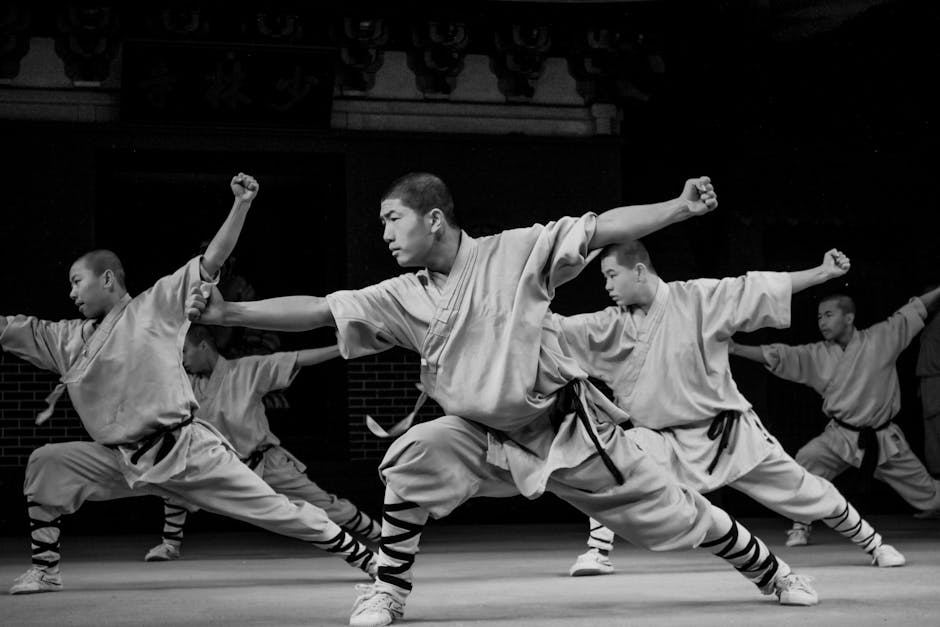
Embark on your journey to mastering Shaolin Kung Fu with this comprehensive beginner's guide. Discover core principles, essential tools, and step-by-step instructions to kickstart your practice, whether at home or in a dojo. Unlock the transformative power of this ancient martial art today!
The movies focus on breaking bricks and jumping over walls. The actual training is slower, more demanding, and far more interesting.
Shaolin Kung Fu is one of the oldest organized martial arts systems on earth. Its depth comes from 1,500 years of refinement across three disciplines that most beginners don’t know exist simultaneously.
Most people picture Shaolin as high kicks and acrobatics. That’s the performance side — the part that gets filmed. The training side has a structure that’s been formalized for over a millennium.
Every Shaolin practitioner trains the same three pillars in parallel. Treating them as separate subjects is the most common beginner mistake.
Taolu (forms) — choreographed sequences that encode the techniques of each animal style. The Five Animals (Tiger, Crane, Leopard, Snake, Dragon) each train different attributes: power, balance, speed, flexibility, and qi control respectively. Forms are the library; they’re not the goal.
Qigong (energy cultivation) — controlled breathing and movement patterns that build internal conditioning. This is the physical foundation that makes the forms executable under pressure. Iron Palm, Iron Body, and stance holding all begin here.
Chan (Zen Buddhist meditation) — the mental dimension that traditionally unified the physical and philosophical aspects of Shaolin training. Modern schools vary widely in how much emphasis they place on this.
These pillars reinforce each other. The qigong builds the body; the taolu expresses it; the meditation sustains the discipline. Your first class shows you how the sequence begins.
The first thing most new Shaolin students discover is that their legs are weaker than they thought.
The horse stance (ma bu) — feet wide, knees bent, back straight — is the foundational position of Shaolin training. Holding it for two minutes is hard. Holding it for ten minutes is a beginner milestone. Understanding why it matters takes a few weeks.
Warm-up and stretching (15–20 min). Dynamic leg swings, deep stretches, calisthenics. Shaolin demands hip mobility, spinal flexibility, and shoulder range. The warm-up is training in itself.
Stance training (10–15 min). Horse stance, bow stance (gong bu), cat stance. Your instructor will correct your position repeatedly. This is not busywork — these are the positions from which all techniques generate power.
Basic strikes and kicks (15–20 min). Straight punch (zheng quan), front kick, inside crescent kick. Taught in combination with footwork, not isolated.
First form introduction. Your first taolu will be Lian Huan Quan (linked fist form) or a basic version set by your school. You won’t learn it in one class. That’s expected.
Most beginners are surprised by how much the physicality of Shaolin training comes from the stance work rather than the forms. The conditioning that makes everything else work has its own logic.
Most beginners focus on learning forms. Most instructors focus on building the body that can execute them.
Qigong and zhan zhuang (standing post meditation) are not supplementary practices — they’re the foundation. Practitioners who skip this phase learn to perform forms. Practitioners who do it learn to generate actual force.
Zhan zhuang (standing post) builds root. Standing in a low, stable posture for extended periods builds the leg strength, hip stability, and skeletal alignment that allow power to transfer from the ground up through strikes. Five minutes in zhan zhuang every day builds more functional strength than most gym leg days.
Qigong teaches conscious breath and tension control. Practices like Yi Jin Jing (Muscle Tendon Changing Classic) and Ba Duan Jin (Eight Pieces of Brocade) are ancient conditioning sequences. They develop the tendon strength and connective tissue resilience that protects practitioners from the high-impact demands of advanced Shaolin forms.
Iron conditioning (Iron Palm, Iron Shirt) comes later. These are specialized conditioning practices for hardening striking surfaces and body armor. They’re advanced and require direct instructor supervision. Most beginners won’t encounter them for years.
Understanding this before you start means you spend your first year building a real foundation instead of just collecting forms. Know what that foundation costs.
Shaolin training varies widely in cost depending on where you train — community class, dedicated kwoon, or authentic Shaolin Temple school.
The gap between a recreation center class and a serious Temple-lineage program can be $150/month — and the curriculum difference is larger.
Good intro for fitness and basic forms. Qigong depth and lineage quality vary significantly. Fine for casual exploration.
Structured curriculum, forms grading, regular instruction on qigong and conditioning. The right tier for anyone serious about depth, not just fitness.
Schools with certified lineage from the Shaolin Temple in Henan Province. Full taolu curriculum, authentic qigong, weapons training. Significantly more demanding physically than standard kung fu schools.
Gear is minimal at first: uniform ($30–80), training shoes ($20–50). Weapons (staff, dao, jian) come later and run $30–120 each. No belt testing fees at many traditional schools — progression is assessed by the instructor, not by scheduled testing.
Your kwoon will tell you what they require. Most will let you train in comfortable athletic wear for the first session. Don’t buy anything until after that class.
Don’t buy weapons until your instructor tells you to. Most schools have training weapons for students to use. Weapons work doesn’t start until you have a foundation in empty-hand forms.
Kung fu uniform (tang zhuang or training suit) — $30–80. Loose-fitting, allows full range of motion. Ask your school for their preferred style and color — many have specific requirements.
Kung fu shoes (feiyue or wushu shoes) — $20–50. Thin, flexible sole with minimal cushioning. Standard gym shoes are too stiff and will affect your stance work.
Training staff (gun) — $30–60. The most common first weapon in Shaolin training. Your school will specify length (usually nose height) and material (wax wood is standard).
Sparring gear (helmet, gloves, shin guards) — $80–150 complete. Only relevant once you’re doing contact sparring, which comes later in the curriculum. Many schools have loaners.
Shaolin is one of the few martial arts where the question of “authentic” lineage is genuinely meaningful. The Shaolin Temple in Dengfeng, Henan Province is a real institution with a real certification program.
Not every school that uses the word “Shaolin” has meaningful lineage.
Temple-lineage schools — instructors trained at or certified by the Shaolin Temple in China. Full traditional curriculum including qigong, Chan meditation, and weapons. Demanding and rare. This is the most complete Shaolin education.
Traditional Wushu / Northern Kung Fu schools — teach authentic Chinese martial arts curriculum derived from Shaolin lineage, with skilled instructors who learned from masters in China. Good quality and far more accessible. The practical choice for most Western students.
Commercial “Shaolin” schools — use Shaolin branding but teach a generic curriculum without meaningful lineage. Not necessarily bad fitness classes, but not traditional Shaolin.
Ask any school directly: where did your sifu train, and under whom? The answer will tell you which category you’re dealing with.
Shaolin schools are less common than commercial martial arts chains, which makes the vetting process more important. A school that only teaches forms without conditioning and qigong is teaching you half the art.
Ask about the instructor’s lineage. Where did they train and under whom? Can they trace their lineage to a recognized master or Temple-certified instructor?
Check whether qigong is part of the curriculum. A school that only teaches forms without conditioning work is not teaching traditional Shaolin. Ask directly: “do you teach qigong alongside the forms?”
Watch a class before signing. Observe stance training in the warm-up. If students aren’t spending meaningful time in horse stance, the school is prioritizing performance over conditioning.
Check the weapons curriculum. Traditional Shaolin includes staff, straight sword, broadsword, and spear. A school that doesn’t teach weapons training at any level isn’t teaching the full art.
Read the contract. Month-to-month vs. annual. Check what’s included in the monthly fee — some schools charge separately for weapons classes.
For comparisons with other Chinese martial arts and kung fu styles, the Complete List of Martial Arts covers every major style.
Shaolin has a tighter global community than most martial arts precisely because authentic lineage is rare. Practitioners who train seriously tend to know each other’s instructors, attend the same seminars, and participate in the same competition circuits.
Wushu and kung fu tournaments are the primary public-facing events. Competition categories include individual forms (taolu), weapons forms, and two-person routines. Watching competition-level Shaolin is genuinely worth doing before you start — it calibrates your expectations.
r/kungfu and r/wushu — active subreddits for technique questions, school recommendations, and video analysis.
USA Wushu (usawushu.com) — national governing body for wushu (which includes Shaolin-derived forms) competition in the US.
Shaolin Temple UK / Europe schools — the most accessible Temple-certified schools outside of China. If you can’t find Temple lineage locally, their instructor directories are worth searching.
Visiting the Shaolin Monastery in Dengfeng, China is a real option for committed practitioners. The Temple runs training programs for international students ranging from week-long workshops to extended residencies.
Shaolin self-selects hard in the first few months. The stance conditioning is demanding, the forms take time, and the qigong requires patience that most modern training cultures don’t cultivate.
Thirty classes gives you a real read on whether Shaolin’s pace and depth are what you’re actually looking for.
Commit to 30 classes before deciding whether to continue. That’s roughly 3–4 months of consistent training.
At 10 classes: horse stance should feel less like punishment and more like work. Your leg soreness after class should decrease noticeably.
At 20 classes: your first form should feel like a sequence you’re improving, not one you’re still memorizing from scratch. Basic qigong breathing should feel natural during stance holds.
At 30 classes: you’ll know whether the holistic pace of Shaolin — conditioning, forms, meditation — suits how you want to train, or whether you want something more combat-focused and faster-moving. Both answers are valid. That one tells you where to go next.
Stop if the slowness frustrates you without interesting you. Shaolin rewards people who find meaning in the conditioning process itself. If the forms feel like homework rather than inquiry, the art won’t hold you.
Keep going if you find yourself doing stance holds on your own between classes — not because you were told to, but because the stillness is starting to make sense. That’s the signal.
Complete List of Martial Arts — Every major style explained, with comparisons and what each is best suited for.
What Is Wing Chun? — A related Southern Chinese style with tighter, more direct techniques. Less acrobatic, more contact-focused.
What Is Tai Chi? — If the qigong and meditative elements of Shaolin appeal more than the combat side, Tai Chi is the natural comparison.
What Is Jeet Kune Do? — If you want Chinese martial arts philosophy without the forms-heavy curriculum, JKD is the contrast worth reading.
What Is Wushu? — The modern competitive sport derived from Shaolin and other Chinese styles. More performance-oriented, less conditioning-focused.
Most beginners can learn fundamental techniques and forms within 3–6 months of consistent practice (3–4 times per week). Reaching intermediate proficiency typically takes 1–2 years, while mastering advanced techniques requires 5+ years of dedicated training. Progress depends on your training frequency, quality of instruction, and natural ability.
You can start learning basics from online videos and guides, but a qualified instructor is essential to correct your form and prevent injury. Poor technique can lead to bad habits that are difficult to break later. For serious progress, especially beyond foundational moves, in-person training is highly recommended.
As a beginner, you only need comfortable, loose-fitting clothing and a clean, open practice space. A basic Shaolin uniform (kung fu gi) is optional but helpful for traditional training. More specialized equipment like staves, swords, or bags comes later as you advance.
Shaolin Kung Fu is moderately challenging but absolutely learnable for beginners at any age or fitness level. The techniques require body awareness and coordination, but instructors adapt training to your starting point. Your first few weeks will focus on basic stances and movements before progressing to complex forms.
Dojo classes typically range from $50–150 per month depending on location and instructor experience. Private lessons cost $30–100 per hour. Online courses and self-study are cheaper ($10–50 upfront) but less effective without professional feedback.
Your first session will focus on basic warm-ups, stance training, and fundamental hand techniques—not advanced forms or sparring. You'll likely feel muscle soreness afterward as your body adapts to new movements. Most instructors spend time assessing your fitness level and explaining Shaolin philosophy alongside physical training.