BoredomBusted — Find Your Next Favorite Thing To Do
Discover hobbies, activities, places, and ideas that spark joy. Whether you're looking for something creative, active, social, or relaxing, BoredomBusted helps you find your next favorite thing to do.
Browse our hobby guides, things-to-do collections, and place ideas to never be bored again.
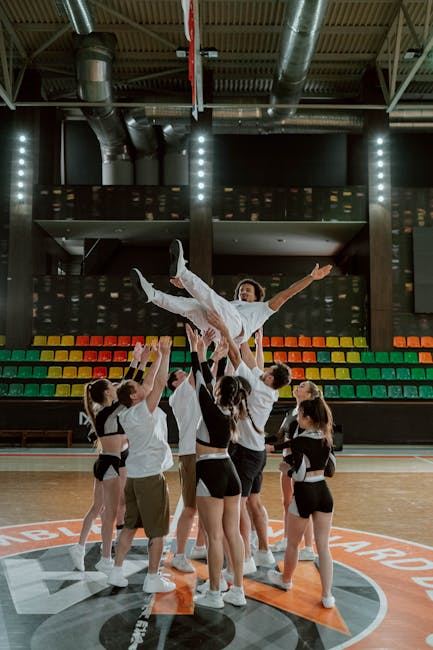
Discover Korfball, the thrilling team sport that blends basketball, netball, and handball! Perfect for all skill levels, this fast-paced game emphasizes teamwork and inclusion. Dive in to learn about its origins, rules, gear, and why Korfball should be your next exciting hobby!
Most people assume korfball is basketball with a gender twist. It's not. Korfball is a Dutch-invented sport built around one rule no other major sport enforces: men and women play together on the same team, and you can only be defended by someone of your own gender. That single rule rewires the entire game.
Invented in Amsterdam in 1902, korfball is enormous in the Netherlands and Belgium, has a World Championship, and is played in over 60 countries. Outside of those places almost nobody has heard of it — which means if you find a club, you're getting in on something genuinely interesting.
From the sideline it looks like a casual throwing game. On the court it's a constant puzzle of positioning, timing, and spatial awareness. Three technical elements define the sport.
You cannot dribble in korfball. Once you catch the ball you have one step and must pass or shoot within a few seconds. The entire game is built on movement without the ball — you have to be in the right place before the ball arrives.
The goal is a wicker basket on a 3.5-metre post with no backboard and nothing to bank off. Shots must arc cleanly through from above. Every shot demands real accuracy — there's no geometry to compensate for a sloppy release.
After every two goals, attackers and defenders swap zones. Every player has to be competent in both attack and defense — there's no hiding in a specialist role.
Your first korfball session will almost certainly start with a passing and movement drill. The coach wants to see if you can catch under mild pressure and find open space — two things most beginners wildly overestimate their ability to do at the same time.
Step one: passing and movement drills. You'll run patterns and pass on the move. The ball moves faster than you expect.
Step two: shooting practice at the post. The basket looks straightforward until you try it. Most beginners overshoot — the arc is trickier than it looks from pitch-side.
Step three: positional defending drills. You'll be shown the "defended" position — goal-side, within arm's reach. It feels passive but it's physically demanding to hold.
Step four: a short scrimmage. You won't score. You'll mistime your runs, hesitate on the ball, and probably get called for taking too many steps. That's expected.
The thing that surprises new players most is how much running happens without ever touching the ball. You'll be exhausted by halftime and realize you barely had possession. That's not a problem — that's the sport working as intended.
The most common first-session mistake: standing still waiting for the ball. In korfball, a stationary player is a defended player. Your defender only needs to stand between you and the goal to shut you out completely.
In korfball you cannot attempt to block or intercept a shot or pass unless you are standing within arm's reach of your opponent and between them and the goal. This is called being "defended." If you're not in that position, touching the ball mid-flight is a foul.
What this means in practice: elite korfball defenders win by shadowing, not by gambling. Every instinct basketball or handball teaches you — lunge for the steal, swat the shot — actively hurts you here. You stay disciplined, stay goal-side, and deny space through positioning alone.
The flip side is equally counterintuitive on attack. The most dangerous shot in korfball — the penalty — is awarded not for physical contact, but for being blocked from shooting while already in the act. Good attackers learn to draw this by setting up in a shooting position and forcing the defender to commit. It's more chess than sprint.
Korfball is one of the more affordable team sports to get into. Most of your cost runs through the club, not your kit bag.
A pair of decent indoor court shoes ($50–$80) and comfortable athletic clothes is genuinely all you need for your first few months. Most clubs provide balls and let you train before committing to membership. Budget around $100–$150 to get started properly.
Once you join a club, annual membership fees typically run $80–$200 depending on your country and club. Add your own korfball ($25–$45), a club kit, and possibly knee pads. You're looking at $250–$400 for a full first year.
Competitive players add korfball-specific shoes with extra ankle support ($80–$150), tournament travel costs, and national federation registration. Realistically $400–$700 per year if you're playing in a league and travelling for fixtures.
Indoor court shoes with non-marking soles — these are usually mandatory in sports halls, and any quality handball or volleyball shoe works fine. Athletic shorts and a t-shirt — nothing korfball-specific needed at this stage.
Your own korfball — clubs have plenty, and ball feel only matters once your passing is consistent. Korfball-specific shoes — the ankle support is real, but standard court shoes cover you for months. Knee pads — useful if you have existing knee issues, unnecessary otherwise. Club kit — your club will tell you exactly what to order; don't buy generic before then.
Korfball is played both indoors and outdoors, and they're meaningfully different games. Outdoor korfball is played on grass with a larger pitch — it's faster over longer distances and more aerobically demanding. Indoor korfball is played in a sports hall and is tighter, more tactical, and shot-heavy.
Most clubs in the UK, Australia, and North America run primarily indoor programmes. In the Netherlands, the outdoor season is a serious competitive league in its own right — different shoes, different stamina demands, different positioning game.
When you're choosing a club, ask specifically which format they focus on. If you want to play competitively, you want a club that takes the format seriously — not one that only runs casual mixed-format sessions year-round.
Korfball clubs are less common than football or tennis clubs, so when you find one, it's worth vetting properly. Use this checklist:
They offer a free taster session — any serious club welcomes newcomers without asking for upfront commitment.
They're affiliated with their national federation — check the International Korfball Federation's club finder or your national body's website.
They run structured training, not just pick-up games — you want actual coaching, not just showing up and scrimmaging indefinitely.
They have players across different experience levels — a club with only veterans will be harder to integrate into as a beginner.
The gender balance is genuinely mixed — korfball requires 4 men and 4 women per team. A club skewed heavily one way will struggle to field full teams and may not play competitive fixtures.
Comparing korfball with other sports? The BoredomBusted sports and martial arts directory covers a wide range of options if you're still deciding.
Because korfball clubs are small and tight-knit almost everywhere outside the Netherlands, joining one tends to feel immediate. There aren't 200 members — there are 30, and they all know each other.
Online, the IKF (International Korfball Federation) runs official channels, and most national federations have active Facebook groups and Discord servers. These are genuinely useful for finding clubs if you're moving cities or travelling.
The mixed-gender structure also changes the social dynamic compared to single-gender sports. Post-training socials, tournaments, and travel tend to include the whole club rather than fragmenting by group. If you've ever wanted a sport where you actually know everyone on both sides of the field, this is it.
Give it 30 sessions before you decide. Here's what the progression actually looks like.
After 10 sessions: You stop standing still waiting for the ball. Your passing timing is improving, you understand the "defended" rule, and you've started reading where the space is before it opens up.
After 20 sessions: You've scored at least once. Your defensive positioning feels less awkward. You're starting to anticipate zone rotations rather than reacting to them late.
After 30 sessions: You have a shooting range you trust. You understand the tactical conversation between attacker and defender and you're starting to contribute to it rather than just reacting.
Stop if: The mixed-gender structure doesn't actually appeal to you in practice, or you find the no-dribbling rule feels like a constraint rather than a puzzle.
Keep going if: You're watching footage of Dutch korfball league games on your phone on a Tuesday night, trying to figure out the penalty shot setup you saw in training.
BoredomBusted Sports and Martial Arts Directory — compare korfball with other team and individual sports to find what fits your lifestyle.
What Is Capoeira? — another sport with a deeply social culture and a steep tactical learning curve under an accessible surface.
What Is Judo? — if the positioning and spatial control of korfball appeals to you, judo's grip-fighting and body awareness scratches a similar itch.
What Is Tai Chi? — for something at the opposite end of the intensity spectrum that still rewards deliberate movement and spatial thinking.
Korfball is a mixed-gender team sport that combines elements of basketball, netball, and handball, originating in the Netherlands. Unlike basketball, it emphasizes equal playing time for all genders, features no dribbling (the ball must be passed), and uses a higher basket without a backboard, making defense and teamwork more central to the game.
No experience is necessary—Korfball is designed for all skill levels and ages. The sport prioritizes teamwork and inclusion over individual athleticism, so beginners learn quickly and can enjoy the game immediately alongside experienced players.
You'll need a Korfball (similar in size to a volleyball), proper court shoes for traction, and comfortable athletic clothing. Most clubs provide balls and have courts available, so beginners typically only need to invest in shoes initially.
A standard Korfball match lasts 60 minutes total (two 30-minute halves), though recreational games are often shorter. Weekly club participation typically requires 1–2 hours including warm-up and play, making it manageable alongside other commitments.
Yes—Korfball is specifically designed as a mixed-gender sport with rules ensuring equal participation and opportunities for both men and women. This makes it uniquely inclusive and appeals to players seeking a truly collaborative team experience.
Membership costs vary by location and club but typically range from $100–300 per year, often including court access and coaching. Many clubs offer beginner trial sessions for free or at a reduced rate, allowing you to try before committing.