BoredomBusted — Find Your Next Favorite Thing To Do
Discover hobbies, activities, places, and ideas that spark joy. Whether you're looking for something creative, active, social, or relaxing, BoredomBusted helps you find your next favorite thing to do.
Browse our hobby guides, things-to-do collections, and place ideas to never be bored again.
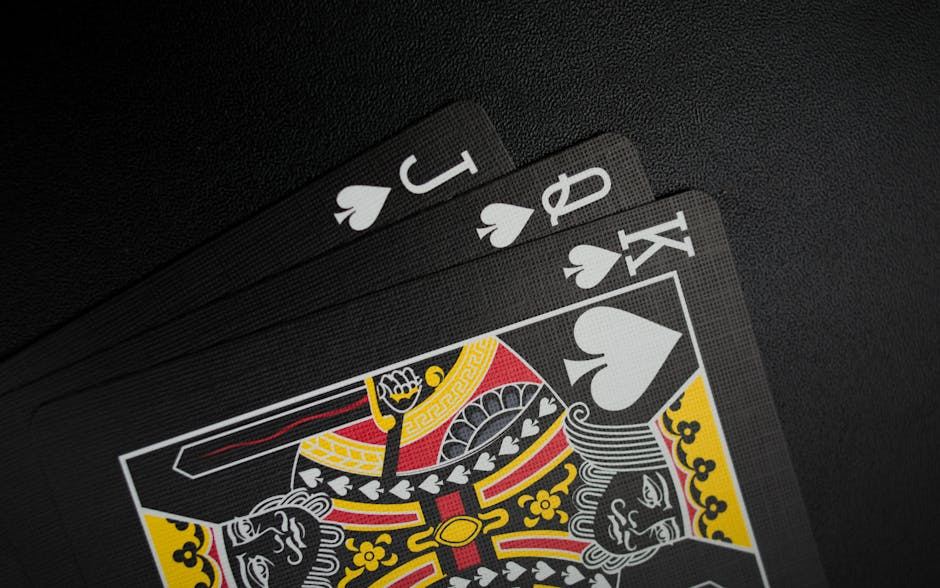
A plain-English guide to Spades, the four-player partnership trick-taking game: how bidding works, how a round plays out, common house rules, and the strategy that separates good players from everyone else.
Most people assume Spades is just a luck-based card game you play to kill time. Shuffle, deal, hope for good cards. That's not Spades — that's War with extra steps.
Spades is a partnership game built on bidding accuracy, card reading, and silent coordination with a teammate. The cards you're dealt matter far less than what you do with them.
Every hand of Spades runs on three pillars: bidding, communication, and trump management. Get any one of them wrong and your team bleeds points, even with a strong hand.
Bidding is your contract. You're predicting — before a card is played — exactly how many tricks your hand can win. Overbid and you get set. Underbid and you rack up bags that eventually cost you points.
Communication is wordless. You can't tell your partner what's in your hand. Instead, you signal through the bids you make and the order in which you play your cards. A well-timed low card tells your partner to take the trick. A high card says you've got it covered.
Trump management is where the game gets sharp. Spades are always trump — they beat every other suit. Knowing when to play them, when to hold them, and when to sacrifice one to void a suit is the difference between a good hand and a wasted one.
A standard game of Spades plays out in rounds until one team hits 500 points. Here's what a single round looks like from start to finish.
Deal. One player shuffles a standard 52-card deck and deals 13 cards to each of the four players. Partners sit across from each other.
Bid. Starting with the player left of the dealer, everyone names a number — how many tricks they believe they'll win. Partners' bids combine into a team contract. Bidding nil (zero) is a high-risk move that scores big if you pull it off.
Play tricks. The player left of the dealer leads the first card. Everyone else must follow suit if they can. If you can't, play any card — including a spade. Highest card of the led suit wins, unless someone trumped it with a spade.
Track who takes what. This is where most beginners zone out and pay for it later. Count the tricks as they're won. You need to know where you stand relative to your contract at all times.
Score the round. Hit your contract and earn 10 points per trick bid. Every trick over your bid is a "bag" — worth 1 point but dangerous. Accumulate 10 bags and you lose 100 points. Miss your contract entirely and you lose 10 points per trick bid.
Repeat. Deal passes left. First team to 500 wins. Some games play to 300 for a faster session.
New players count their aces and kings, bid those, and call it a day. That's fine for the first few games. But the real skill in Spades is bidding your hand's position, not just its raw power.
A Queen of spades in a hand with four other spades is almost a guaranteed trick. That same Queen in a hand with no other spades is vulnerable — someone with a higher spade takes it the moment you're forced to use it as trump. Same card, completely different value depending on context.
The same logic applies to short suits. If you have only one club in your hand, that's actually an asset — after the first club trick, you can trump any club lead for the rest of the round. Voids and singletons are trick-generators that don't show up on a simple card-counting assessment.
Following suit is mandatory. If you can follow the suit that was led, you must; playing a spade instead is called reneging, and most groups penalize it by transferring tricks to the other team. The advanced skill is planning ahead: shed a short suit early so you are legally void in it and free to trump that suit later.
Spades is one of the cheapest hobbies that exists. Here's what you're actually spending.
A standard 52-card deck runs $5–$8 at any drugstore or online. That's all you need. Score on a piece of paper. Free Spades apps like VIP Spades or Spades Plus let you play solo against AI or real opponents without spending anything.
A quality jumbo-index deck ($10–$15) is easier on the eyes for long sessions. A dedicated score pad or a simple app for tracking bags and points saves headaches. If you're playing in local tournaments, entry fees are usually $5–$20.
Regional and national Spades tournaments exist with entry fees from $20 to $100+. Travel and accommodation are your real costs here. Online competitive platforms occasionally run paid leagues, but most serious players grind on free apps first.
The barrier to entry here is almost zero. Don't overcomplicate the setup.
One decent card deck. Plastic-coated cards shuffle better and last longer than the paper ones — worth the extra $3. Download a free Spades app so you can practice solo between sessions with real people.
Premium card shufflers, custom card decks, and paid tournament subscriptions. None of that improves your game early on. Focus on reps before accessories.
Spades isn't one game — it's a family of games with meaningful rule differences that vary by region, household, and community. Sit down at the wrong table without asking and you'll lose tricks you thought you won.
Common house rules include jokers as the two highest trumps, "suicide" games where one partner on each team must bid nil, and blind nil bids made before looking at your cards. Some tables also forbid leading spades until a spade has been played on another suit.
Before any game, ask: jokers in or out, nil rules, bag penalties, and target score. Five seconds of clarification prevents thirty minutes of arguments. The best Spades players adapt to whatever ruleset is on the table — so learn the core game cold before worrying about variants.
Good Spades games are everywhere once you know where to look. Here's what to check for before committing to a regular group.
They agree on rules before dealing. Any group that just assumes everyone knows the house rules is a group that argues constantly.
Partners rotate or stay fixed consistently. Rotating partners is great for learning. Fixed partnerships are better for developing deep team reads. Know which format you're playing.
Experienced players explain, not belittle. A good table welcomes newer players and debriefs hands after they're played. An toxic table makes beginners afraid to ask questions.
Online play is accessible and good for reps. VIP Spades, Spades Plus, and Trickster Cards all have active communities. You'll see more hands in one online evening than in several in-person sessions.
Local tournaments and community centers run regular games. Search Facebook Groups for "Spades" plus your city. Black community centers and barbershops in many American cities host weekly games that have been running for decades — walk in and ask.
If Spades sparks an interest in card games broadly, check out the full hobbies list for other directions to explore.
Spades has a deep cultural roots, particularly in African American communities in the United States where it's been a staple at cookouts, family reunions, and dorms for generations. That history gives the game a social texture that most card games don't have.
Online, Reddit's r/cardgames covers Spades alongside other trick-taking games. Facebook Groups organized around Spades tournaments are active and often announce local events. Discord servers for card game fans frequently have Spades channels where you can find pickup games.
In-person, the game travels with its players. Once you're known as someone who plays, you'll get invited. That's how it's always worked.
Give it 30 games before you decide. Here's what to watch for along the way.
By game 10: You understand the bid-and-contract loop and you're no longer confused by what "getting set" means. You're starting to count trump cards as they're played.
By game 20: You're bidding your voids and short suits intentionally, not just your high cards. You're starting to read your partner's plays for signals rather than just playing your own hand.
By game 30: You have opinions about bag management. You know when to sandbag an opponent intentionally and when to sacrifice a trick to protect your partner's nil bid. You're playing the score, not just the hand.
Stop if the social part feels like a tax — Spades at its core is a people game, and if you'd rather just play solo puzzles, a single-player strategy game will suit you better.
Keep going if you find yourself replaying hands in your head afterward — thinking about what your partner's third-trick discard was actually telling you, and what you should have done differently.
Bridge guide — If Spades' bidding system hooked you, Bridge takes that concept much further. It's the trick-taking game with the deepest competitive scene.
Euchre guide — A faster trick-taking game with trump mechanics that Spades players pick up quickly. Great for when you only have 30 minutes.
Pinochle guide — Another bidding-and-tricks game that rewards card counting and partnership strategy. Shares DNA with Spades but has its own distinct scoring system.
Cribbage guide — A completely different card game structure, but the same blend of math, memory, and reading your opponent. Worth knowing if you want card game range.
2-player card games list — When you can't find four players, here's what to play instead.
Spades is a trick-taking card game for four players in two partnerships, played with a standard 52-card deck. Each player gets 13 cards and bids how many tricks they expect to win, and spades are always trump. Teams score for meeting their combined bid and lose points for missing it.
The standard game is four players in two teams of two, with partners sitting across from each other. Variations exist for two, three, or six players, but the four-player partnership game is the most common.
A game runs over several rounds until one team reaches the target score, usually 500 points. Many groups play to 300 or 250 when they want a shorter session.
The basic rules are short, and most people can play after one practice hand. Bidding accurately, counting cards, and reading your partner take much longer to get good at.
You only need a standard 52-card deck and something to track scores—paper and pencil work perfectly. No special boards, chips, or equipment are required, making it an accessible hobby you can start anywhere.
Bid carefully, especially early, and keep track of which spades and high cards have been played. Use your partner's bid and plays as information, avoid piling up bags, and save nil bids for hands with very few high cards.