BoredomBusted — Find Your Next Favorite Thing To Do
Discover hobbies, activities, places, and ideas that spark joy. Whether you're looking for something creative, active, social, or relaxing, BoredomBusted helps you find your next favorite thing to do.
Browse our hobby guides, things-to-do collections, and place ideas to never be bored again.
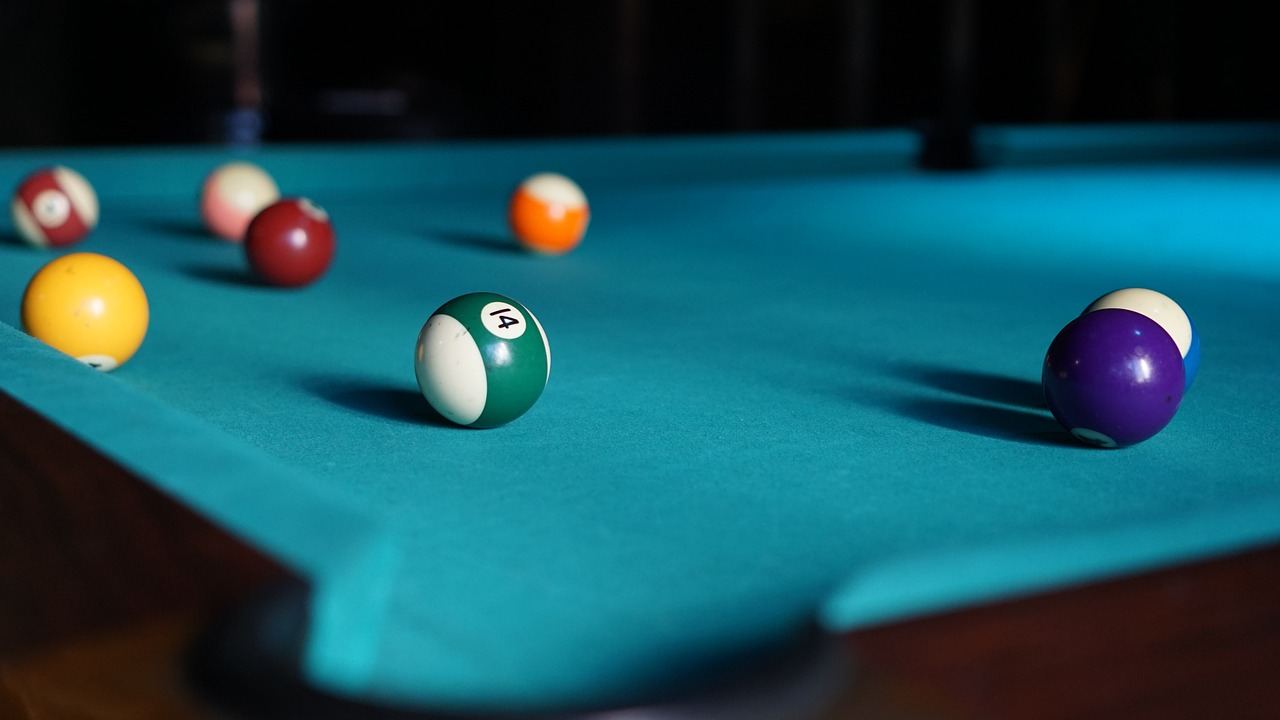
Billiards may seem like a casual bar game, but it demands precision and strategy, rivaling the competitiveness of any serious sport.
Learning billiards as a beginner combines the elements of precision, strategy, and physics into an engaging and classic cue sport.
Players strike balls with cue sticks on a felt-covered table. The aim is simple: sink the balls into the pockets.
Billiards suits both casual fun and fierce competition. Play with friends or in tournaments.
In billiards, you engage in targeted skill drills and structured gameplay, practicing specific shots like stop shots and position play. Each session involves deliberate shot execution with a consistent pre-shot routine, simulating match scenarios to enhance decision-making under pressure. You maintain concentrated visual focus on precise targets, planning strategically for each shot to improve yo…
Billiards fosters a flow state through its emphasis on incremental skill feedback; you receive immediate results based on shot success, which keeps you engaged. The structured nature of practice ensures a progressive challenge, while the social aspect promotes a sense of belonging, making it more than just a game but a fulfilling experience.
You think billiards is just a casual bar game — something simple and relaxed.
That's the image we all have in our heads, but this perception misses the depth of what billiards can truly be. It's not just a game of luck and leisure; it demands strategic thinking and precision.
Take Efren Reyes, known as 'The Magician' in the billiards world. His mastery of the game is legendary, with over 70 international titles under his belt. This isn't just about hitting balls into pockets — it's about anticipating every move, predicting angles, and having absolute control.
Technique. Focus. Strategy. These are the building blocks of billiards at its best, making it as intricate as any other competitive sport.
Ready to see how deep this rabbit hole goes?
Your first time at the table, the cue feels wrong in your hands. It's heavier or lighter than expected, and the bridge — that hand position supporting the cue — feels genuinely awkward. You lean over the shot, misjudge the angle, and the cue ball rolls somewhere embarrassing. Almost nothing about the physical mechanics feels natural at first, and that's completely normal.
The part beginners don't expect: sinking a ball feels like a win, but it's usually an accident. Controlling where the cue ball ends up after contact — called position play — is the actual game. Most new players stare at the pocket and ignore everything else. Then they pot one ball, get a terrible angle on the next, and the run falls apart. It's a cold splash of water realizing how much the game happens between the shots.
Early sessions also expose how much mental load billiards carries. You're reading angles, choosing spin, and rehearsing a pre-shot routine — all before you've struck anything. The first honest breakthrough isn't a perfect shot — it's the moment a deliberate stop shot lands exactly where you planned it. That feedback is immediate and specific enough to pull you back to the table.
Progress in those first few sessions is real, but it's uneven. You'll nail a shot you've been fighting for an hour, then miss the same shot three times the next day. Consistency comes from routine, not raw talent — and building that routine is exactly where most beginners go wrong. That's worth looking at closely before bad habits set in.
When to start: Morning
Duration: 1 hour
Cost to try: $5
Success criteria: If you can break 10 racks and leave the cue ball within one diamond of center on at least 7, do session 2.
Most beginners tense up when they shoot. It feels like control, but it kills your stroke. Tension in the grip ripples through your entire motion and sends the cue off-line.
Hold the cue as if you're holding a bird — firm enough that it won't fly away, loose enough that you won't crush it. Practice your backswing slowly until a relaxed grip feels normal. The accuracy will follow.
Beginners walk up to the table and shoot. No pause, no check — just hit. The problem is that inconsistency gets baked in from day one.
A repeatable pre-shot routine is what separates players who improve from players who plateau. Before every shot: identify your target, choose your cue ball position, set your stance, take two warm-up strokes. Same order, every time. It builds the muscle memory that makes pressure situations manageable.
Pocketing a ball feels like success. But if your cue ball rolls into a terrible position, you've already lost the next shot. Beginners treat each shot as its own event rather than part of a sequence.
Start practicing stop shots and stun shots specifically because they teach cue ball control, not just potting. Ask yourself after every shot: where did the cue ball land? Was that intentional? If you can't answer yes, that's your practice target.
Most beginners rack up and play game after game. That feels productive but it isn't. You keep bumping into the same hard shots with no targeted way to improve them.
Isolate one shot type per session and repeat it until it stops feeling hard. A narrow drill — say, cutting a ball into the corner from the same position twenty times in a row — builds real skill faster than twenty full games ever will.
Anticipation is a reflex. Your brain wants to watch the ball go in before you've even hit it, so your head lifts a fraction of a second early. The cue follows, and the shot misses.
Train yourself to keep your chin on the cue until the cue ball has already traveled at least a foot down the table. It feels unnatural at first. That discomfort is the fix working.
Start with r/billiards on Reddit — it's active, beginner-friendly, and full of players sharing shot breakdowns, gear advice, and local league tips.
For in-person play, pool halls and billiard lounges are your best bet. Most run weekly leagues through the APA (American Poolplayers Association) or BCA Pool League — two of the largest organized amateur pool networks in the country. Walk into any local pool hall and ask if they host league nights.
The APA website has a league locator tool that finds sanctioned leagues by zip code. Joining an APA or BCA league is the single fastest way to meet serious local players and get structured, competitive practice.
Facebook Groups are also worth checking — search "billiards" or "pool league" plus your city name. Many local scenes organize entirely through these groups, posting open table nights and informal tournaments at billiard bars and recreation centers.
Eight-ball is the version most people already know. Two players split the table — solids and stripes — and race to sink their set before pocketing the 8-ball.
It's the easiest entry point into billiards and the most common game you'll find at a bar, rec room, or a friend's house. If you want something social and immediately fun, start here.
Nine-ball is played with only nine balls, but the strategy is tighter and more demanding. You must always hit the lowest-numbered ball first — where you leave the cue ball matters as much as the shot itself.
This is the format that separates players who think from players who just shoot. It rewards position play and punishes careless execution. Most professional tournaments run nine-ball for exactly that reason.
Straight pool, also called 14.1, lets you shoot any ball on the table. You call every shot in advance, and the game runs to a set point total — often 100 or 150.
It's the purist's game — nowhere to hide and no shortcuts. Willie Mosconi ran 526 consecutive balls without a miss in straight pool. That kind of run-building is what this format is really about.
Ten-ball is nine-ball's sharper cousin. All shots must be called, and the open break is gone — everything requires deliberate intent from the first hit.
Players who've outgrown nine-ball often migrate here. The extra ball and called-shot rule close off the lucky pockets and force cleaner, more disciplined play.
Drill-based practice is its own version of the game. You set up repeatable shot patterns — stop shots, stun shots, position routes — and run them until they become automatic.
This is how serious players actually build skill between matches. You don't need an opponent. A table, a cue, and a specific drill will do more for your game than casual play ever will.
Bowling lives in the same world — different mechanics, similar appeal.
Dodgeball is a sibling pursuit and often surfaces the same kind of curiosity.
The skill that separates improving players from those who stall is cue ball control — specifically, the ability to plan where the cue ball stops, not just where the object ball goes.
Most beginners are thinking one shot at a time. They line up, they aim, they shoot. If the ball drops, they count it as a win. But the next shot is usually a scramble — awkward angle, no clear path, back to improvising. That scramble is the plateau. It never goes away until you start thinking about shot two before you take shot one.
This is why drills like stop shots and position play exist. They train you to use pace, spin, and contact point together — so the cue ball lands exactly where your next shot needs it. Once you can consistently control where the cue ball travels after contact, the table starts to feel like a puzzle you can actually solve.
The feedback loop is immediate. You either left yourself a clean shot or you didn't. That clarity is what makes cue ball control so good to practice — you know right away whether it worked. That instant feedback is also what keeps sessions engaging long after the novelty wears off.
The gear and setup you practice on will shape how fast this skill develops. That's worth understanding before you start putting in the reps.
Commit to 4 sessions over two weeks — roughly two per week, 45–60 minutes each. That's enough time to feel the real thing, not just beginner frustration.
That mental replay is the signal. If you found yourself mentally re-running a shot in the car home, billiards has its hooks in you. Start learning a proper pre-shot routine and spend time on stop shots and cue ball control — those are the skills that separate casual players from everyone else.
Indifference after four sessions usually means you haven't hit the feedback loop yet. Try one session focused entirely on a single shot type — straight stop shots, nothing else. Immediate, repeatable feedback from a narrow drill often flips the switch that open-table play doesn't.
That's real information. If the stillness and concentration felt draining rather than absorbing, billiards probably isn't your format. A faster-feedback hobby — darts, table tennis, even disc golf — might give you the same social, competitive hit without demanding that level of quiet focus.
If you catch yourself watching a pro match on YouTube to figure out why a cue ball moved the way it did, that curiosity is involuntary — and it's the clearest sign this hobby has a real hold on you. Nobody googles cue ball physics out of mild interest.
Still looking for something to do? Browse things to do when bored for more ideas.
Starting costs vary widely depending on whether you buy equipment or play at a local pool hall. A basic home setup with a decent pool table runs $300–$1,000, while quality cues cost $50–$200 each. Most beginners start by playing at billiards venues for $5–$15 per hour, making it affordable to learn before investing in home equipment.
You can learn fundamental shots and rules in 2–4 weeks of regular practice. Developing solid technique and positional play typically takes 2–3 months of consistent play. Mastering advanced strategies and trick shots requires months to years of dedicated practice.
You need a pool table, cues, billiard balls, and a chalk block. Most venues provide all equipment, so beginners don't need to buy anything initially. If playing at home, prioritize a quality table first, then gradually invest in premium cues and accessories.
Billiards has an easy-to-learn entry point—basic shots and rules are simple enough for anyone to start playing immediately. However, developing consistency, control, and strategic thinking takes practice and patience. Most people find it rewarding because you see improvement quickly with regular play.
Billiards is extremely flexible—you can play casually with friends, join leagues, enter tournaments, or practice solo for skill development. Many people enjoy it purely for recreation and socializing, while others compete seriously. Most venues support both casual and competitive play.
Pool uses 16 balls (15 colored and 1 white cue ball) on a 4×8 foot table, while billiards typically refers to carom games with just 3 balls. Snooker uses 22 balls on a larger 6×12 foot table with smaller pockets. Each has different rules, strategies, and difficulty levels.