BoredomBusted — Find Your Next Favorite Thing To Do
Discover hobbies, activities, places, and ideas that spark joy. Whether you're looking for something creative, active, social, or relaxing, BoredomBusted helps you find your next favorite thing to do.
Browse our hobby guides, things-to-do collections, and place ideas to never be bored again.
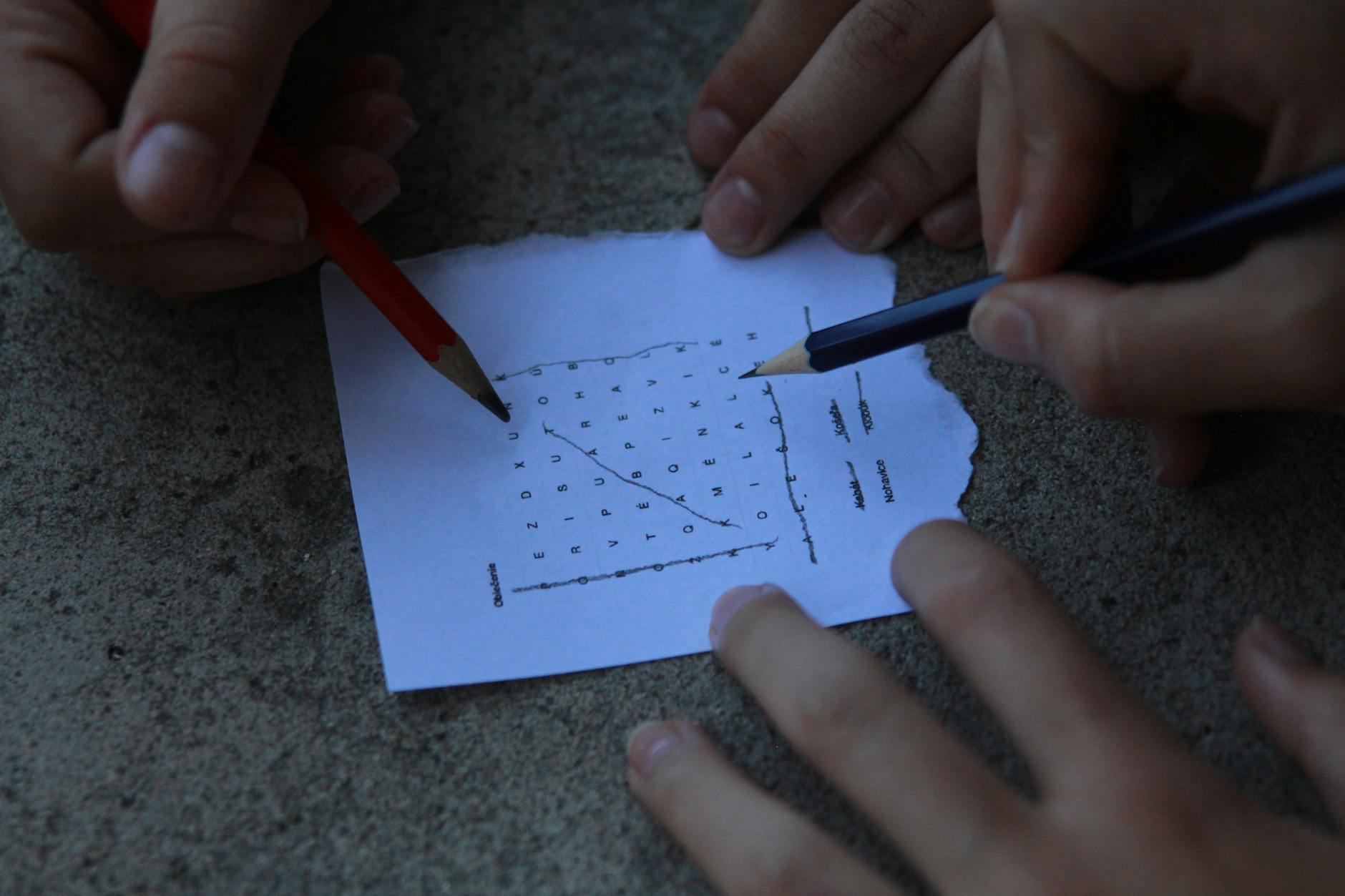
Puzzle hunts are not just brain teasers — they're social experiences that spark creativity and transform problem-solving into a team adventure.
Getting started with puzzle hunts as a beginner can be an exciting way to challenge your problem-solving skills while collaborating with friends. Puzzle hunts are competitive or casual events where teams solve a chain of interconnected puzzles — each answer unlocking the next — to reach a final meta-solution.
Unlike escape rooms, there's no timer ticking on a wall and no single genre of puzzle.
The whole point is that you never quite know what kind of problem you're solving next.
In puzzle hunts, participants work in teams to solve a series of riddles and physical challenges, navigating real-world locations to find clues and complete tasks such as decoding ciphers, crafting objects, or recreating scenes. Each challenge requires a blend of mental problem-solving and physical activity, often involving collaboration to progress through the hunt.
Puzzle hunts induce a flow state through progressively challenging tasks that match skill levels, ensuring continuous engagement. They provide immediate feedback by resolving puzzles, fostering a sense of accomplishment and competence, while social interaction and creative improvisation combat monotony, making each hunt a unique experience.
You think puzzle hunts are basically escape rooms you do at your laptop. Nerdy. Niche. Probably involves a lot of spreadsheets and people who memorize prime numbers for fun.
That assumption is costing you one of the most social, genuinely surprising hobby experiences you can have as an adult.
A team at MIT Mystery Hunt once cracked a major puzzle not because someone knew the answer, but because a teammate recognized an obscure 90s cartoon theme song playing hidden in audio data.
Obscure pop culture references. Fresh perspectives. That's the range we're talking about.
A winning team doesn't rely on just one kind of expertise. The real joy is in finding out what each person can bring to the challenge.
Fascinated by how diverse minds work together? Let's dig into building your dream team next.
Watching a puzzle hunt on YouTube feels clean and effortless. The team clicks, the meta falls, cheers all around. Playing one yourself, though, feels like being at a party where everyone else knows an inside joke you're out of.
The gap between watching and doing is real and lasts longer than you'd expect.
You may start off confident—perhaps logical and quick with crosswords—thinking you're prepared. But soon, you'll likely feel humbled as the process is slower than anticipated. It's common to have multiple tabs open, with none seeming to help, yet feeling grateful someone else caught an extraction step. The urge to try again might surprise you.
Over time, you'll begin to recognize puzzle types like cryptics, logic grids, and feeder structures. This recognition can feel more rewarding than the act of solving itself.
Getting an answer by brute force can feel just as satisfying.
Eventually, the meta may click, even if just partially or with help, and that moment is what holds your interest.
Puzzle hunts often end with an 'extraction' step—solving a puzzle leads to letters that spell something or point elsewhere. Failing to anticipate this step might make you think you failed, even after solving the puzzle.
Mistakes keep people stuck here longer than necessary, but learning these steps can change that.
When to start: Morning
Duration: 1.5 hours
Cost to try: $10
Success criteria: If you finished without getting stuck on any clues, do session 2.
Beginners see the meta-puzzle as a final boss. They think they can only solve it after every feeder is done.
Treat the meta as a living document. Add answers as you find them. This way, partial information might reveal the method early and save hours.
One person handles a crossword, another manages a cipher. They only communicate when they're stuck. But this is when you need collaboration most.
Assign a floater. This person's job is to check all puzzles every 20 minutes, connecting threads solo solvers miss.
Beginners hit Google at the first hint of trivia. But most puzzles contain clues or tools in the text itself.
Give it five minutes. Assume the solution lies within the puzzle before resorting to a search engine.
Teams craft elaborate Google Sheets with colorful tabs. Once chaos hits, these beautifully structured docs get ignored.
Keep it simple. Use one tab per puzzle, answers in column A. Complex layouts fall apart when pressure mounts.
Teams pause, declare a puzzle broken, then let it gather dust. But being stuck without considering a backsolve is just prolonging inertia.
Reverse your thinking. Test your best guess at the meta answer to work backward. Confirm or knock out your partial progress with this method.
You can join puzzle hunts without leaving home. Your living room or a cozy library corner is all you need. If you prefer in-person events,university campuses and escape room venues occasionally host hunt days.
No national body governs puzzle hunts – the community is grassroots, leading to openness and friendliness.
Mention you're new and unfamiliar with meta puzzles. You'll likely be placed on a team that guides you through the process, providing you easier puzzles first and a warm welcome.
The MIT Mystery Hunt is like the Super Bowl of puzzle events. It's a massive, multi-day marathon held each January. Teams often have 50 or more people, and even finishing is rare. Not for beginners, it's perfect for those who've tackled smaller hunts and are ready for a challenge.
DASH combines urban exploration with puzzle-solving. Teams tackle challenges in person at real locations across multiple cities at the same time. Ideal for those who love adventures, it's a beginner-friendly event that turns your city into a playground.
Puzzle Potluck is a great way to start with small teams of 2–6 people. The puzzles are community-made and approachable, providing a friendly environment for newcomers. Join without a big commitment, and enjoy it online for free without needing prior hunt experience.
Escape Room Hunts are brief, narrative-driven experiences. They offer simpler puzzles but at higher production quality, lasting around 60–90 minutes. For $25–$40 per person, it's the most accessible option if you want the thrill without a long-term commitment.
Hunts like the Galactic Puzzle Hunt focus on cryptic crosswords. These are challenging unless you grasp cryptic logic, so it's wise to learn the basics first. Knowing they exist helps you prepare for a unique puzzle experience.
Another variant that pulls from the same roots is Sailing.
Dinghy Sailing lives in the same world — different mechanics, similar appeal.
Most beginners pour energy into producing more answers – guesses, wordplay, brute-force attempts.
The real skill isn't identifying the answer. It's spotting how the puzzle wants to reveal its answer.
Experienced hunters know to scan a puzzle first for telltale signs – enumeration, grid setups, highlighted sections, numbered steps. These hints contain the extraction method, almost like a framework baked into the puzzle itself.
Seeing this pattern constrains your approach immediately.
With this skill, you navigate puzzles purposefully. Your work is focused and efficient.
Without structural awareness, you can solve 80% correctly yet miss the point entirely. It's like cooking with the right ingredients but following the wrong recipe.
Grab five solved puzzles (try MIT Mystery Hunt archives) and jot down only their extraction mechanics. The themes don't matter here.
Kick off new puzzles by listing any unusual markings or numbers right away.
After solving, pinpoint where you could have noticed the extraction clue earlier.
Identifying these moments trains you to catch signals earlier. See how this skill applies to different puzzles next.
Commit to 4 sessions over 30 days. Aim for one session a week, each lasting 2–3 hours
If you're replaying a solve in your head on the commute home, that's what to look for. Not the win, but the desire to keep engaging. Find a team and register for a beginner-friendly hunt. Start practicing with archived puzzles from MIT Mystery Hunt or BAPHL.
Finished a session and felt indifferent? Try switching up the format. Go solo if you were in a team, or the other way around. Test out a casual session instead of a competitive one. If it still feels flat, move on.
Hated it so much you didn't want to stay? Puzzle hunts thrive on embracing confusion. If the wait for an ah-ha moment felt more like a drag, skip this hobby. Sometimes, craving faster results isn't a flaw.
Find yourself randomly decoding wordplay or anagrams? Noticing patterns in things unrelated to puzzles, like street signs or TV trivia clues? That itch shows you're naturally drawn to puzzle hunts. It's an unintentional love for low-level pattern matching that says you're in the right hobby.
Puzzle Hunts is a deeper commitment than most boredom cures — for lighter options, check things to do when bored.
Most puzzle hunts last between 2–4 hours depending on difficulty and team size. Some organized hunts have set time limits, while others allow teams to work at their own pace until all clues are solved.
Puzzle hunts work best with 2–4 people, though they can be done solo or with larger groups. Team members bring different problem-solving strengths, so groups typically perform better than individuals.
No special skills are required—most puzzle hunts welcome beginners and adjust difficulty accordingly. You just need curiosity, logical thinking, and a willingness to collaborate with your team.
Costs vary widely, from free community hunts to $15–50+ for organized events or professional-grade experiences. Some hunts are hosted by friends or local organizations, while others are commercial offerings with more elaborate setups.
Bring pen and paper for notes, a phone or camera to photograph clues, and comfortable walking shoes if it's outdoors. You may also want snacks and water, especially for longer hunts.
No—hunts can be held indoors, outdoors, or a mix of both. Indoor hunts might take place in buildings or rooms, while outdoor hunts involve exploring neighborhoods or parks to find physical clues.