BoredomBusted — Find Your Next Favorite Thing To Do
Discover hobbies, activities, places, and ideas that spark joy. Whether you're looking for something creative, active, social, or relaxing, BoredomBusted helps you find your next favorite thing to do.
Browse our hobby guides, things-to-do collections, and place ideas to never be bored again.
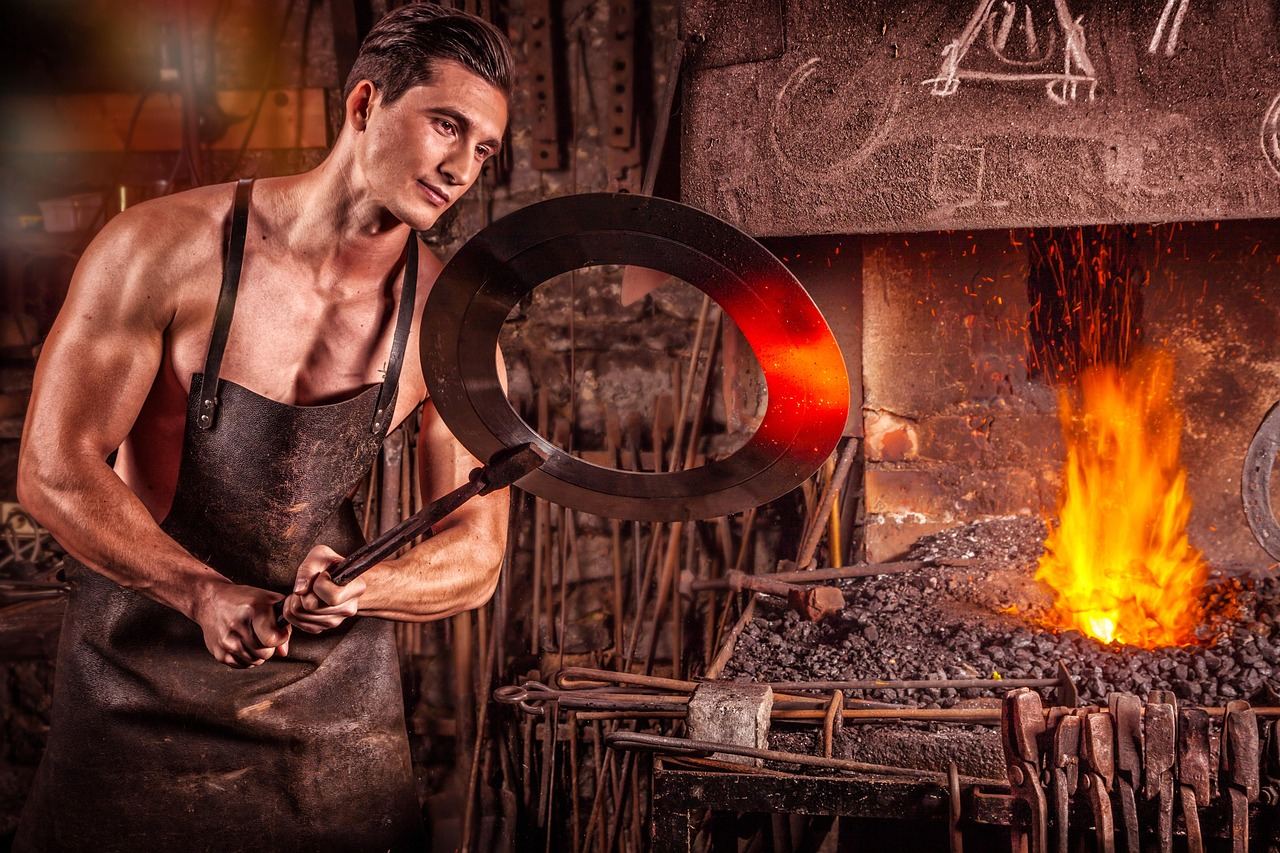
Forget the factory floor image — metalworking at home starts with basic tools like a hacksaw and a bit of creativity, no welding or forge required.
Learning metalworking as a beginner involves understanding how to shape raw metals like steel and aluminum into both functional and decorative objects through techniques such as cutting, bending, welding, or casting.
Unlike woodworking, the material actively resists you, demanding heat, force, or abrasion to move it.
That resistance is exactly what makes finished pieces feel earned.
In metalworking, you manipulate various metal forms—sheets, rods, or wires—using tools to cut, shape, and join materials into functional or decorative items. This involves precise measurements, cutting with snips or saws, bending with heat, and joining pieces through riveting or welding, culminating in a finished product that can be immediately used or displayed.
Metalworking fosters flow states through hands-on manipulation, providing immediate tactile feedback as each action visibly alters the material, creating a sense of accomplishment with each completed project. The challenge of mastering metal's resistance demands focus and skill, breaking monotony through engaging, iterative processes that yield tangible, durable results and opportunities for crea…
You think metalworking requires a factory, a welding mask, and superhuman strength. Sparks flying everywhere. A skill that takes a decade to learn. That's the picture, but it's off.
A hobbyist in a one-car garage created kitchen hooks from flat bar steel in an afternoon. No welder needed. Just a vise, a drill press, and a design sketched on a napkin. Those hooks still hang on the wall.
Curious what you actually need to start metalworking? The next section breaks it all down.
Striking your first welding arc feels less like art and more like chaos. Sparks fly, and you end up with something that looks more like an accident than a weld.
The learning curve in metalworking is steeper than most expect. Heat, electricity, and metal offer real-time feedback, but at first it all seems confusing and unhelpful.
As you start, nothing feels straightforward. The sparks feel close enough to touch – and you'll fear the angle grinder.
Week two brings recognition of flawed welds, which feels like progress, even if they're still ugly. By week three, something clicks, like understanding travel speed or electrode distance, and a brief confidence appears.
Week four, you grind back a weld and see the penetration, finally grasping what you're trying to achieve. Yet, ugly welds and scrap pieces remain part of the journey.
Early frustration isn't about skill – it's calibration. Your eyes and hands aren't aligned with the tools yet, and only hands-on experience will get them there.
Before you start, lower your welder setting from what's recommended for your material thickness. Running cool might be slower, but you'll see your work rather than starting over constantly.
When to start: Early morning
Duration: 2 hours
Cost to try: $30
Success criteria: If you cut a steel strip to length and hammer it into a simple flat hook that hangs level, do session 2.
Many beginners dive straight into power tools for speed and convenience. But skipping hand tools like files means missing out on learning how metal responds and behaves.
Start with hand files. They teach edge feeling and material resistance in a way an angle grinder can't.
Mill scale, oil, and rust seem minor but can ruin welds and damage blades. Many don't know these are issues until it's too late.
Clean the surface first. Use an angle grinder with a flap disc or wipe with acetone before applying heat or cutting.
Heat causes metal to shift, so relying on a single clamp is misleading. That piece is already moving while you're working on it.
Use at least two clamps. Position them at opposite ends and apply tack welds before making full weld passes.
Marking a single cut line assumes your stock is square, which often isn't true. Beginners miss alignment issues this way.
Measure from two points. Confirm with a machinist's square before you scribe your line.
Lowering heat can feel safer but results in weak welds that look fine outwardly but won't hold under stress. Many fear burn-through and overcompensate.
Set the heat for the material. Follow the chart and practice controlling travel speed instead of reducing heat output.
For metalworking, head to places like makerspaces, community workshops, or vocational school open labs. These venues have the right ventilation, tools, and folks who won't mind if you're new to welding.
Jumping straight into a home shop could cost you $3,000 before knowing what you need. Build skills first, and save the big purchases for later.
When you arrive, tell them you're a beginner and ask, "What's the safest thing I can start on here?" This often leads to a guided tour and hands-on help.
Not all metalworking looks the same. Let's make choosing your entry point simple.
Blacksmithing is shaping hot metal with a hammer and anvil, the oldest craft in metalworking. Ideal if you're making functional items like tools, hooks, and knives. Beginners find it forgiving because mistakes can be fixed while the metal's hot. Setting up a basic forge and anvil costs around $300–600.
Welding focuses on joining metal rather than shaping it. Quickly start building furniture or repairing equipment. Perfect for construction-minded people, less for those crafting. Most of the initial cost is a decent MIG welder, running $200–400.
Sheet metal fabrication involves precise cutting, bending, and forming of flat stock. It's geometry-heavy and more engineering-like than artistic. Ideal for those who value clean, repeatable results.
Silversmithing and jewelry making focus on small-scale and detailed work with precious metals. Mistakes can be costly in silver or gold. Best for those drawn to intricate, wearable creations; not ideal for beginners unless jewelry is the clear objective.
Machining with a metal lathe or milling involves removing material to achieve tight tolerances. It's the most technical option with a steep learning curve. Ideal for those with a mechanical background or needing high-precision parts. A used benchtop lathe starts at $500, but tooling costs quickly add up.
If the texture of this appeals to you, Car Restoration is built on similar bones.
Mask Making lives in the same world — different mechanics, similar appeal.
Videography lives in the same world — different mechanics, similar appeal.
Beginners tend to focus on perfecting their welds. Cleaner beads, better passes, more practice. The issue usually isn't the weld itself. It's the quality of the metal prep underneath.
The single skill that makes a difference is reading and controlling heat distribution. You need to predict heat movement before pulling the trigger. Not after the metal warps. Thinner sections absorb heat quicker. Corners collect it. Your angle affects the thermal wave, not just the flame.
When you anticipate heat behavior, everything changes.
No more warped welds or misaligned cuts. Less time grinding. More precision. Skip this skill, and you're forever fixing issues that could've been avoided. Heat awareness starts a ripple effect that influences every part of your work.
Next up is how this skill transforms various metalworking techniques.
Six sessions over 30 days. One every five days is just enough to see if learning, forgetting, and relearning is frustrating or satisfying.
If you're eager for the next project before the current one ends, the hobby has its hooks in you. Consider getting into a beginner welding class or joining a local makerspace. These steps will deepen your skills and commitment.
Feeling indifferent means you're neither excited nor repelled. It could be a sign that the activity type needs adjusting. Try a different entry point, like moving from grinding to assembling, to see if that sparks more interest.
If the noise, safety gear, or pace was a turn-off, you're clear on not enjoying it. That signals a need to explore a different hobby, one more suited to your preferences and comfort.
You're constantly pausing to examine metal structures — like welds on fences or hinges on doors — and analyzing them without realizing. This involuntary curiosity indicates metalworking aligns with your natural interests.
Metalworking needs specific conditions. You require access to a workshop, makerspace, or suitable outdoor area. If you're in an apartment with no shared facilities, it's a definite pause for now.
If metalworking feels like too much to commit to right now, browse what to do when you're bored for lower-stakes ideas.
Initial startup costs range from $200–$500 for basic hand tools and safety equipment if you're working from home, or $0 if you join a community workshop or makerspace with existing equipment. Many beginners start by taking classes at local studios, which typically cost $150–$300 per course and provide access to all necessary tools and materials.
Essential safety gear includes a welding helmet, heat-resistant gloves, steel-toed boots, an apron, and eye protection. You'll also need proper ventilation or a fume extractor, especially when welding or forging, as metal fumes can be harmful without adequate airflow.
Most people can learn fundamental techniques like basic forging, cutting, and bending within 4–8 weeks of consistent practice. However, developing proficiency to create complete projects typically takes 3–6 months of regular hands-on work.
You don't necessarily need a home workshop—many beginners start at community makerspaces, local art centers, or metalworking studios that rent access by the hour or month. If you do want a home setup, a basic 10×12 garage space is sufficient for hand tools and some equipment, though anvils and forges require more room.
Forging involves heating metal until it's malleable, then shaping it with hammers and dies—it's an older, hand-focused technique. Welding joins separate pieces of metal by melting them together, requiring equipment like a welder and is essential for modern metalworking projects.
Metalworking carries real hazards like burns, cuts, and eye damage, but these risks are easily managed with proper training, safety equipment, and adherence to workshop protocols. Reputable classes and studios emphasize safety from day one, making it a safe activity when practiced responsibly.