BoredomBusted — Find Your Next Favorite Thing To Do
Discover hobbies, activities, places, and ideas that spark joy. Whether you're looking for something creative, active, social, or relaxing, BoredomBusted helps you find your next favorite thing to do.
Browse our hobby guides, things-to-do collections, and place ideas to never be bored again.
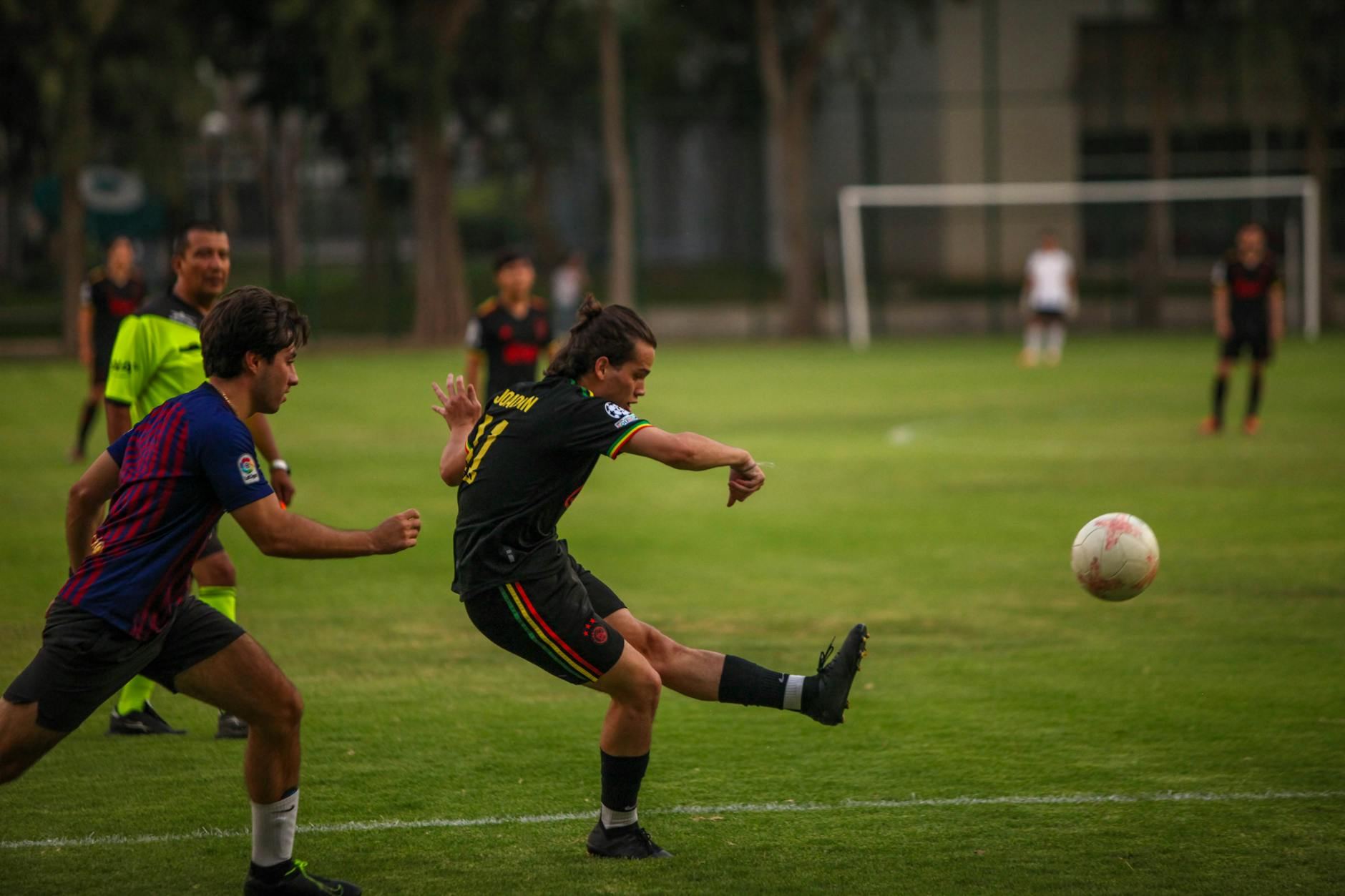
Soccer isn't about running nonstop; it's a strategic dance where every off-the-ball movement can either carve out space or shut it down.
Learning soccer as a beginner involves understanding the basic rules and techniques that can enhance your enjoyment of this dynamic team sport.
What separates it from most sports is that the constraint – no hands – is also the entire skill ceiling.
Every touch, pass, and shot has to be earned through footwork, not instinct.
In soccer, participants engage in structured drills focusing on ball control, dribbling through cones, accurate passing, and simulated game scenarios, typically practicing 2-3 times a week for 60-90 minutes per session, either alone or in small groups.
Soccer fosters a flow state through progressively challenging drills, enhances confidence via skill feedback loops from ball mastery, and promotes social belonging through team play, while offering a creative outlet through personal dribbling styles and a sense of accomplishment from structured progress monitoring.
You think soccer is simple. Kick ball, score goal, run a lot. That's the assumption – and it's exactly why people who try it casually feel like they're missing something they can't name.
Watch a midfielder in a live match, not a highlight reel. They might touch the ball eight times in twenty minutes – and still be the most influential person on the pitch, because every movement in between was deliberate.
You're probably thinking this sounds like over-intellectualizing a sport. It's a common thought. But consider this: A novice can run, but reading the game is an art.
Getting on the field is the next step. Whether you haven't touched a ball in years or ever, it's about starting to see the game in a new way.
Watching soccer looks like controlled chaos that somehow makes sense. Playing it feels like chaos with no controls — at least for the first few sessions. The ball goes nowhere near where you aimed, your lungs quit before your legs do, and passing turns out to be a skill, not a reflex.
The thing most beginners don't expect is the geometry. Standing in a line with your teammates is the default mistake — and it kills every passing option before the ball even arrives. Position yourself at roughly 45 degrees from whoever has the ball. That one adjustment makes you immediately more useful than half the new players on any recreational pitch.
Around week three, something shifts. You'll start noticing where you should have been five seconds ago — which is frustrating, but it means your soccer brain is switching on. That frustration is the skill forming, not evidence that you're behind. Small pockets of flow start appearing: a trap that sticks, a run that connects, a sequence that doesn't fall apart.
Tired. Confused. Kind of embarrassed. That's week one for almost everyone who gets good at this. The players who stick past week two don't feel better — they just stop treating the discomfort as a verdict. The next section covers the specific mistakes that keep people stuck in that uncomfortable half longer than necessary.
When to start: Early morning
Duration: 1 hour
Cost to try: $0
Success criteria: If you can dribble 15 minutes with both feet and complete 10 wall passes in a row without losing control, do session 2.
Hitting with your toe feels instinctive. It seems powerful, but it ruins your accuracy and control. Instead, plant your standing foot beside the ball and aim for contact with your foot's instep. Practice until passing with the instep becomes automatic.
Chasing the ball instinctively leads you to lag and gasp for breath. Hold a specific zone and watch ahead. Focus on where the ball is going next rather than where it is now.
Beginners avoid their weak foot because it's awkward. This makes you predictable. To counter this, dedicate the last five minutes of every session to weak-foot passes against a wall.
You naturally want to stop the ball hard. But a stiff foot means the ball bounces away. Let your foot give slightly. See it as cushioning, not blocking.
Going full speed feels like real effort. But you end up exhausted midway through. Maintain 70% speed between plays so you can actually burst forward when the ball comes.
Soccer is played on a variety of surfaces. Check out sports fields, recreation centers, and indoor sports complexes near you.
U.S. Soccer Federation (USSF) is the main governing body. Their site offers leads on official youth and adult programs.
Showing up and saying "I'm newer to organized play – where do you want me?" can help you find your fit without being overwhelmed.
Played indoors on a hard court with a smaller, low-bounce ball – the tight space forces faster decisions and sharper touch. If you want to actually improve at soccer, futsal is the fastest route there. It's ideal for anyone who struggles to find outdoor field space or wants year-round play. The ball costs slightly more than a standard one, but most gyms and rec centers already have courts.
Same outdoor game, just shrunk down – smaller teams, smaller pitch, usually no offsides. Most adult recreational soccer is actually this, so if you're joining a league, this is probably what you're joining. Good for anyone who wants real match experience without committing to 11-a-side coordination.
Played on sand, which turns every sprint into a workout and makes overhead kicks feel almost necessary. The soft surface is forgiving on joints, but exhausting on legs – it's a serious cardiovascular step up from the grass version. Best for people near a coast or who want a summer-specific physical challenge.
Full soccer rules, just no running allowed. Sounds easy – it's genuinely harder tactically, because pace no longer bails out bad positioning. Designed for older adults or those returning from injury, but honestly underrated for anyone who wants to understand the game better.
Less a team sport, more a personal skill practice – juggling, tricks, and ball manipulation done solo or in informal battles. It won't make you a better match player directly, but it's the best way to build touch if you're training alone with no team around. No cost beyond a ball.
Ultimate Disc lives in the same world — different mechanics, similar appeal.
Readers who enjoy this often gravitate toward Archery Tag next.
Skiing lives in the same world — different mechanics, similar appeal.
The actual gap for beginners isn't in brute force or speed. It's in understanding the field around you.
Scanning the field before receiving the ball is the critical skill. This isn't just a casual glance. It's actively turning your head to check your shoulders.
Why scan? Simple. It eliminates guesswork.
Your first touch becomes a tool, not a reaction. Look around, and that's one less thing to worry about. Instead of scrambling, you're setting the pace.
Start by forcing the habit during passing drills.
In pickup games, create a rule for yourself: Look up once before your first touch. It'll be awkward at first.
Eight sessions over 30 days. That's the number – two per week, which is enough to feel the sport improve under you without burning out before it clicks.
One session a week won't do it. You'll spend each one just remembering what you forgot.
You're watching a random Premier League match at midnight and you're not even sure why. Not the World Cup, not a final – just a Tuesday fixture between teams you don't follow. That low-level pull toward the game itself is the clearest green light there is.
If you're still in, the next section covers exactly what to get, where to play, and how to find people to play with – without overcomplicating the startup.
Looking for something lighter? Our boredom-busters guide is built for exactly that.
Children can begin playing organized soccer as early as 3–4 years old in recreational youth programs, though structured competitive play typically starts around age 6–8. Adults of any age can also start playing through recreational leagues and community programs. The key is finding a program that matches your skill level and fitness.
Basic entry costs typically range from $100–$300 per season for youth recreational leagues, including registration and field fees. You'll need essential gear like a ball ($15–$30), cleats ($50–$150), and shin guards ($15–$40). Competitive or travel team costs are significantly higher, often $500–$2,000+ per season.
Most beginners can master fundamental skills like passing, ball control, and basic positioning within 4–8 weeks of regular practice. However, developing competitive game awareness and tactical understanding typically takes several months of consistent play. Improvement is ongoing, and most players continue refining their skills for years.
Soccer is accessible for beginners of all fitness levels—the sport is highly adaptable and recreational play focuses on fun and participation rather than athleticism. Many recreational leagues welcome absolute beginners and provide coaching fundamentals. Building fitness and skill naturally happens through regular play and practice.
Essential gear includes a soccer ball, cleats or sneakers with good grip, shin guards, and comfortable athletic clothing. A goalkeeper also needs gloves and padded gear. Most leagues provide ball access during training, so you don't need to own one immediately.
Practicing 2–3 times per week (combining structured training and casual play) leads to noticeable improvement within a few months. Even 1–2 sessions weekly can build skills and fitness if supplemented with occasional practice at home. Consistency matters more than intensity when starting out.