BoredomBusted — Find Your Next Favorite Thing To Do
Discover hobbies, activities, places, and ideas that spark joy. Whether you're looking for something creative, active, social, or relaxing, BoredomBusted helps you find your next favorite thing to do.
Browse our hobby guides, things-to-do collections, and place ideas to never be bored again.
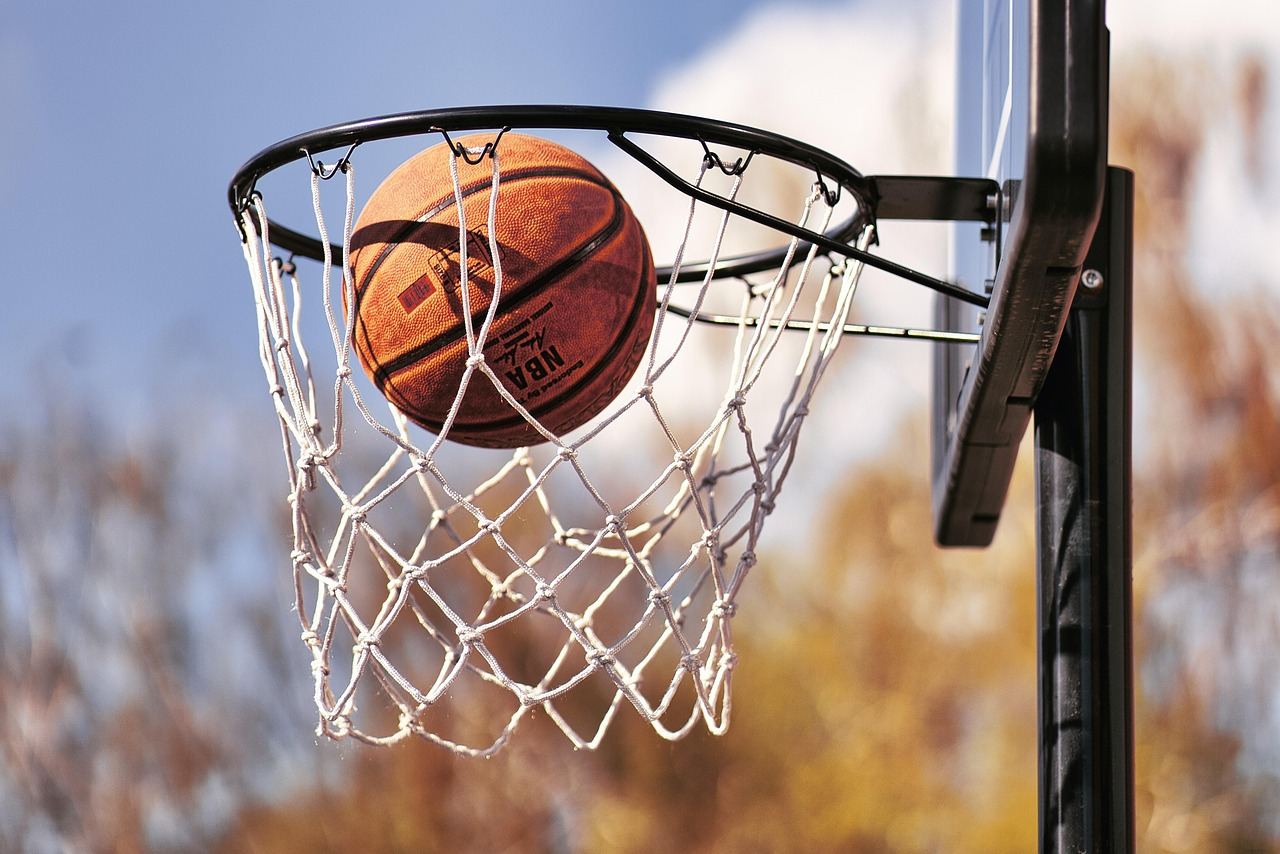
Height isn't the defining trait in basketball; agility and strategy often lead shorter players like Allen Iverson to success instead.
Basketball is five players, one ball, and a game that punishes you the second you stop thinking. Every possession demands dribbling, cutting, reading defenders — often all at once.
You build real coordination fast, because the game corrects you instantly. Miss a rotation on defense and the other team scores. The feedback loop is what makes the skill stick.
Solo players run drills and shoot hundreds of reps at the park. Team players run pickup games or join recreational leagues. Either way, a hoop and a ball is all you need to start building something real.
In basketball, participants engage in skill-building activities such as form shooting, ball handling drills, and game-situation finishing, often practicing solo or with a partner. Sessions typically include repetitive drills focused on technique, agility, and situational play, culminating in a mix of structured practice and informal games.
This hobby creates a flow state through the repetitive skill development that demands concentration and physical engagement, providing immediate feedback on progress and fostering a sense of accomplishment as skills improve.
Height feels like a must for basketball success. Many assume towering players automatically outshine everyone else.
But it's not true. Agility, speed, and strategy matter just as much.
Look at the careers of Allen Iverson and Chris Paul. Both have excelled in the NBA while being shorter than their peers. Iverson's agility and Paul's precision play set them apart.
Shorter players often thrive. Quick decision-making becomes their edge. Precision is their game. These roles often define the effective point guard.
Your unique skills make a difference on the court, no matter your height.
Your first session will probably feel more awkward than athletic. The ball bounces off your foot on a simple dribble. Your shot leaves your hand and immediately feels wrong — too flat, too rushed, hitting the back iron. Your legs are doing one thing while your hands are trying to do another. Basketball asks your brain and body to coordinate in ways they've never had to before, and that gap shows up fast.
The thing most beginners don't expect is how exhausting repetition actually is. Form shooting — standing close to the basket, shooting the same motion over and over — sounds simple. It isn't. Your arm fatigues. Your focus drifts. You start reverting to muscle habits you don't even know you have. The drill that looks boring from the sideline is the one that exposes every flaw in your technique.
Early sessions also mess with your sense of progress. You'll make ten shots in a row and feel like something clicked — then miss the next six and wonder if it was luck. Ball-handling drills feel clumsy at half speed and impossible at full speed. The improvement is real, but it comes in flashes before it becomes consistent — and that inconsistency is the part nobody warns you about.
Stick with it past those first rough sessions and the feedback loop kicks in. A shot drops cleanly. A crossover actually throws someone off. The game starts returning something. Knowing which early mistakes kill that momentum fastest is what the next section covers.
When to start: Early morning
Duration: 1 hour
Cost to try: $0
Success criteria: If you complete 10 controlled zigzag dribbles and make 5 shots from 3 spots, do session 2.
New players watch highlights and jump straight to crossovers and step-back threes. It looks good in the driveway. It falls apart the moment someone's guarding you. Fancy moves only work when your fundamentals are automatic.
Start with stationary dribbling, two-handed chest passes, and layups from both sides. Boring? Yes. But those reps build the muscle memory that actually transfers to a game. Add complexity only after the basics feel effortless.
Most beginners drift to the three-point line because it looks like where the action is. But shooting from distance before your form is locked in just reinforces bad habits at scale. Every rep from bad range builds a bad shot.
Start three to five feet from the basket. Make 20 clean shots before moving back a step. Your arc, follow-through, and footwork get grooved at short range. Then distance becomes a natural extension — not a completely different skill.
Pickup games are fun, so beginners fill all their time with them. The problem is that game situations move too fast to fix anything. You just survive — you don't improve. Skill gaps that feel small in a drill become walls in a real game.
Split your sessions deliberately. Spend the first 20 minutes on one isolated skill — finishing around the rim, ball handling under pressure, defensive footwork. Then play. You'll actually see the drill pay off within the same session, which is the feedback loop that makes basketball addictive.
Running hard and getting sweaty feels productive. But grinding through tired, sloppy reps at the end of a session just cements sloppy movement. Fatigue doesn't build skill — focused repetition does.
Keep skill work at the start of every session when you're fresh. Use the last 15 minutes for conditioning if you want the cardio. That order matters. Quality reps early stick far longer than high-volume reps when you're gassed.
Every beginner defaults to their dominant hand. It feels natural, so the weak hand just never gets reps. Defenders figure this out fast. Once they take away your strong side, you have nowhere to go. A one-handed player is predictable — and predictable players get stopped.
Dedicate five minutes of every single session to weak-hand dribbling and layups. Just five minutes. It compounds quickly. Within a few weeks you'll have enough left-hand confidence to keep defenders honest, and that opens up your whole game.
Reddit is a solid starting point. r/basketball covers the sport broadly, but r/bootlegball and r/streetball get into pickup culture specifically. Post in r/basketball with your city and skill level — someone will point you to a local run within 24 hours.
For in-person games, head to your nearest public recreation center or municipal park with an outdoor court. Most courts run pickup games on weekend mornings without any sign-up required.
The app Pickup is built specifically for finding nearby basketball games. Meetup.com also lists organized recreational basketball groups in most mid-size cities and up.
If you want structured competition, look for a recreational league through your local YMCA or Parks and Recreation department. Rec leagues are the fastest way to go from solo drills to consistent weekly games with the same group of people.
Solo practice is its own version of the sport. You show up, set a drill, and grind reps until the movement feels automatic.
This is the path for people who want to improve fast without relying on anyone else's schedule. Form shooting, ball handling, and finishing drills are the core — and a single hoop at the park is all you need.
Pickup basketball is informal, social, and easy to get into. You show up at a court, wait for a run, and play.
The barrier to entry is basically zero — no sign-ups, no referees, no commitment. Games are self-organized and the vibe is competitive but relaxed. It's also a fast way to find a regular group.
Recreational leagues run scheduled games, keep standings, and often offer playoffs at the end of a season. The structure makes you show up consistently.
This format suits people who want accountability, a regular team, and something on the line when they play. Most cities have adult rec leagues for every skill level, including complete beginners.
3-on-3 basketball is a condensed version of the full game. Fewer players, half the court, and a faster pace. It's physically demanding in a short window.
It's the best option when you can't pull together a full squad but still want real game situations. Decision-making happens faster, and every player touches the ball far more than in a five-on-five game.
Skill-specific training means picking one area — shooting mechanics, crossover dribbles, defensive footwork — and drilling it until it becomes instinct.
This approach creates faster, more measurable improvement than general play. It suits detail-oriented people who want to track progress and feel the satisfaction of a technique finally clicking.
If you want a related angle, Padel is the natural next stop.
Paintball is a sibling pursuit and often surfaces the same kind of curiosity.
If you want a related angle, Motorsports is the natural next stop.
The skill that separates improving players from stalled ones is deliberate repetition with immediate self-correction. Not just shooting more. Not just showing up. Fixing the problem on the next rep.
Most beginners miss a shot and reset. They grab the ball, dribble back out, and shoot again — same mechanics, same result. Players who improve watch where the ball went and ask why. The miss is information. Ignoring it is the plateau.
Basketball gives you this feedback constantly and for free. Ball bounced left? Your release point drifted. Dribble got picked? Your eyes were down. The game tells you exactly what broke. Your only job is to listen to it on the very next rep — not after ten more.
Once you start correcting in real time, every session compounds. The drills in the next section are built around that exact habit.
Give yourself four sessions over two weeks — two solo shooting and dribbling sessions, two pickup games or shooting with someone else.
You replayed a move on the walk home. You watched an NBA breakdown at midnight to understand why your shot felt off. That pull toward fixing and improving is the signal — basketball rewards obsessive repetition. Find a local recreational league or a consistent pickup run, and start building real game reps.
You showed up, you ran the drills, and it was fine — but nothing about it stuck with you. Indifference this early usually means the solo practice side isn't hitting, not that the sport itself is wrong for you. Try shifting to a more social format — a 3-on-3 pickup game changes the energy completely and some people only catch fire when there's actual competition involved.
You had to talk yourself into going, and once you were there, you were just waiting for it to end. That resistance isn't about skill level — it's telling you the fast-paced, reactive nature of basketball isn't what you want from physical activity. Something with a slower rhythm and more individual control — swimming, tennis, weightlifting — will likely be a much better fit.
You found yourself watching game film or YouTube shooting breakdowns without anyone telling you to. That kind of unprompted curiosity is a dead giveaway — basketball has already gotten into your head.
If basketball sounds close but not quite right, our hobby list might surface something better suited.
Sometimes you just need something for the next ten minutes — that's what things to do when bored is for.
You can start playing basketball with minimal investment—just a good pair of basketball shoes ($60–$150) and a ball ($15–$50). Access to a court is often free at local parks, schools, or community centers, making it one of the most affordable hobbies to begin.
You can learn fundamental skills like dribbling, passing, and shooting within 2–4 weeks of regular practice, 3–4 times per week. Being able to play a casual game competently typically takes 2–3 months of consistent training.
Basketball is suitable for ages 5 and up, with organized youth leagues starting around age 6–8. However, you can start playing recreationally at any age—it's never too late to pick up the game for fitness and fun.
Basketball has a low barrier to entry for beginners; the basic rules and movements are easy to grasp. While mastering advanced techniques takes time, most people can enjoy casual pickup games within their first few weeks.
Playing 3–4 times per week for 30–60 minutes shows noticeable improvement in skills and fitness. Even casual play once or twice weekly can maintain your level and provide social enjoyment.
The essentials are a basketball, proper footwear, and access to a court with a hoop. Optional additions include moisture-wicking clothing, protective gear like knee pads, and a water bottle, but you can play effectively with just the basics.