BoredomBusted — Find Your Next Favorite Thing To Do
Discover hobbies, activities, places, and ideas that spark joy. Whether you're looking for something creative, active, social, or relaxing, BoredomBusted helps you find your next favorite thing to do.
Browse our hobby guides, things-to-do collections, and place ideas to never be bored again.
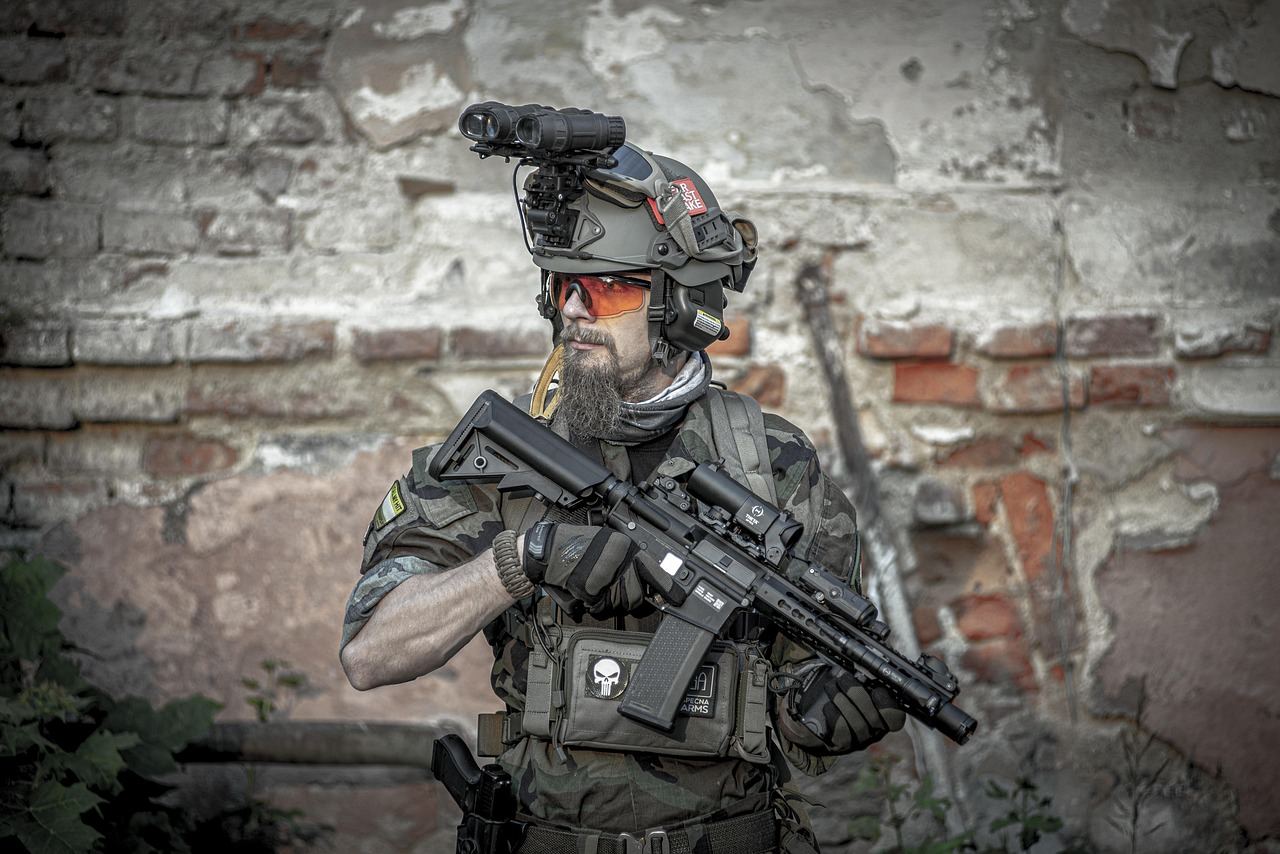
Airsoft isn't about military precision; it's often won by teams that communicate well, regardless of their gear's price tag.
Getting started with airsoft as a beginner allows you to engage in a thrilling competitive team sport that simulates military combat. Players simulate military combat using replica guns that shoot plastic BBs.
Unlike paintball, hits aren't automatically visible — the whole game runs on the honor system, which changes how seriously players take the rules.
In Airsoft, players engage in organized skirmishes and tactical games, moving through varied terrains while employing strategies to achieve objectives, coordinating with teammates, executing tactical maneuvers, and practicing skills like snap shooting and reloading under pressure.
Airsoft induces a flow state by providing clear goals and immediate feedback through skill drills and competitive scenarios, while also offering social belonging through team dynamics and a sense of accomplishment as players see measurable progress in their skills and teamwork.
You assume airsoft is a military cosplay hobby — camo-clad enthusiasts running drills and comparing rifle loadouts. That assumption is understandable. It's also what keeps a lot of people from trying it.
Take someone like Ryan Hetrick, a competitive airsoft player who came up through speedsoft — a format closer to paintball than military simulation. He ran budget gear for his first two years. No expensive optics, no mil-spec loadout. He kept winning local matches anyway, because his team communicated and the others didn't.
Outgunned.
Outspent.
Still winning.
The format you play in shapes the experience more than your equipment does. Milsim events attract the tactical crowd; speedsoft skews younger and faster; woodland scenarios pull in people who just want to run around in the woods on a Saturday. Success across all of them depends on reading the field and working with your team — not what you paid for your rifle.
That's exactly why gear selection — and what you actually need to start — is worth getting right from the beginning.
Your first skirmish will feel louder, faster, and more disorienting than you expected. BBs crack off hard surfaces. People shout callouts you don't understand yet. You sprint to a position, peek around a barrier, and someone tags you from a direction you never even looked. The first few sessions are mostly about learning how much you don't know about moving through a space. That's not failure — that's the curriculum.
The part beginners don't expect is the honor system catching up with them. You'll take a hit you're not sure about — felt something, might have been a ricochet, might have been a clean tag. Nobody's watching. How you handle that moment tells you a lot about why experienced players earn trust on their team so quickly. Call it, raise your hand, walk off. The game only works because people choose to do that.
Your shooting will also be worse than you expect. Snap shooting from cover — where you expose yourself for a half-second, fire, and get back — sounds simple until your hands are shaking and you're out of breath. Reloading under pressure takes muscle memory you haven't built yet. Most early frustration comes from the gap between what your brain wants to do and what your body actually does under stress. That gap closes faster than people expect — but it's real at the start.
None of this means the first few sessions aren't fun. There's a specific kind of focus that kicks in once rounds start flying — everything else drops away. But going in with honest expectations means you won't quit after one rough game. The players who stick around are usually the ones who expected a learning curve, not an instant adrenaline highlight reel. The mistakes that hold beginners back the longest, though, are almost always avoidable — and they're worth knowing before you show up.
When to start: 10am
Duration: 1.5 hours
Cost to try: $0
Success criteria: If you can hit a stationary target with 10 BBs from your chosen distance and run a simple obstacle course without misfiring, do session 2.
Most beginners spend their first hundred decisions on gear. It feels productive. It isn't. The problem is that a milsim loadout is useless at a speedsoft field, and vice versa. Buy nothing beyond a basic AEG and eye protection until you've played at least two or three events. You'll know exactly what you need after that — and it won't be what you would have bought blind.
Airsoft has no paintball-style splatter to prove a hit landed. The whole game runs on self-reporting. New players sometimes convince themselves a BB "didn't count" when it clearly did. Regulars notice immediately, and your reputation at a field is very hard to undo.
Call your hits every time, even when you're not certain. It costs you nothing. It earns you trust with experienced players who can teach you more in one afternoon than weeks of solo practice.
Airsoft beginners often show up alone and then play alone — holding a corner, trying to rack up eliminations, wondering why they keep getting flanked. The sport's objectives are almost always team-based. A lone player optimizing for personal kills is solving the wrong problem.
Find one person to coordinate with before the round starts. Even basic communication — "I'll push left, you hold the doorway" — makes you dramatically harder to beat. That's the actual skill the game is testing.
There's a version of budget gear that's completely fine — and a version that'll fog up within ten minutes of play and leave you half-blind on a live field. Cheap goggles fall into the second category almost every time. This is the one area where beginners consistently under-invest and then complain about the hobby.
Spend on rated, anti-fog eyewear before anything else. ANSI Z87.1 is the minimum standard worth trusting. Everything else in your kit can start cheap. This one can't.
New players spend a lot of time tinkering with their rifle's accuracy. In real games, most eliminations happen because someone was standing still too long — not because the shooter had a tuned hop-up. Accuracy matters less than people think at typical engagement distances.
Practice moving between cover, not just shooting from it. Learn to reload while repositioning. Get comfortable being in motion. That's what separates players who survive contact from players who don't.
Start with r/airsoft on Reddit. It's the most active English-language airsoft community online. Gear questions, field recommendations, loadout checks — it's all there, and veterans answer beginner posts regularly.
For finding games near you, Airsoft GI and Evike both maintain field locators on their websites. Facebook Groups are surprisingly active for this hobby — search your city or state name plus "airsoft" and you'll find local player groups that post pickup game schedules, field days, and gear swaps. Many fields run their own Facebook pages as the primary way they announce walk-on days.
Indoor CQB venues and dedicated outdoor airsoft parks both run public walk-on sessions — usually on weekends. These are open games where you show up, pay a field fee, and get sorted into teams. No invitation needed. Most fields rent gear on-site, so you don't need to own anything to play your first game.
For larger organized events, the National Airsoft Association (NAA) and regional milsim operators like Milsim West and AMS (Airsoft Masterpiece Series) run structured weekend events across the US. These are where the team-based, objective-driven format really comes alive. Showing up to a walk-on day first is a smarter entry point than dropping into a milsim event cold.
If the Ryan Hetrick style of play sounds more appealing than full milsim, look up local speedsoft leagues specifically. YouTube channels like Jet DesertFox and Boku No Airsoft also function as community hubs — their comment sections and linked Discord servers connect players by region. Discord is genuinely where a lot of the active crew coordination happens now.
The fastest path to your first game: find your nearest field on Evike's field locator, confirm they have walk-on days, and show up on a Saturday. Everything else — teams, gear, community — follows from there.
Milsim — military simulation — runs on strict rules, realistic loadouts, and multi-hour or multi-day operations. Objectives are complex. Respawns are limited or nonexistent.
This format attracts players who want structure, immersion, and high stakes. If you're the type who enjoys planning as much as playing, milsim is built for you.
Speedsoft strips away the military aesthetic entirely. Games are short, movement is aggressive, and the priority is winning fast. Think paintball tournament play, but with airsoft guns.
Gear matters less here than reflexes and communication. Budget players can compete with expensive setups if they move and coordinate well. It's the most accessible competitive format for newcomers.
Woodland skirmishes are the most casual entry point. Teams play objective-based games — capture the flag, defend a position, eliminate the other side — across outdoor terrain.
There's no pressure to own military-grade gear or memorize complex rules. This format works well for groups of friends who want physical activity with some competitive edge and no long-term commitment.
CQB — close-quarters battle — takes place indoors. Warehouses, purpose-built arenas, and converted buildings. Sightlines are short and encounters happen in seconds.
CQB rewards players who stay calm under pressure and make fast decisions — not those with the longest-range rifle. If outdoor terrain or weather puts you off, this is the format to start with.
Organized league and tournament play exists across all formats, but it's most developed in speedsoft and CQB. Teams practice set plays, review performance, and compete across events.
The appeal here isn't just the sport — it's the measurable improvement over time. If you need a goal to stay engaged, structured competition gives airsoft a clear progression that casual skirmishes don't.
If you want a related angle, Sporting Clays is the natural next stop.
If the texture of this appeals to you, Slingshot Shooting is built on similar bones.
If you want a related angle, Trap Shooting is the natural next stop.
The skill that separates improving players from stuck ones is trigger discipline under pressure — knowing when not to shoot.
New players squeeze the trigger the moment they see movement. It feels right — you're there to shoot, so you shoot. But that reflex burns your position, wastes ammo, and gives the opposing team a bead on your location before you've confirmed a clean target. Experienced players hold. They wait for the angle, the moment, the shot that actually counts.
This isn't patience for its own sake. Every shot you fire in airsoft is a piece of information you hand the enemy. Sound, muzzle flash, BB arc — all of it tells them where you are. Players who learn to treat each trigger pull as a decision, not a reaction, stop leaking that information for free.
That shift — from reactive to deliberate — is what makes communication and teamwork actually work. You can't coordinate a push if half your squad already gave up their flanks. Once you start applying it in live skirmishes, you'll want to know exactly which gear setups support that kind of controlled, mobile play.
Do three to five sessions over six weeks — one or two per month is enough. That's sufficient time to get past the awkward first game and actually feel what airsoft is like when you know the basics.
That mental replay is the tell. If you're dissecting what your squad did wrong and how you'd fix it next time, you've already bought in. Start looking at local fields with regular game days and figure out whether you want to own your own rifle or keep renting.
That reaction is worth investigating before you write the hobby off. The format matters more than almost anything else — and most people only try one. If you played a chaotic open skirmish, try a structured objective-based game instead. If you played milsim, try speedsoft.
The sport feels completely different depending on the environment. A different format with a different group can flip the experience entirely.
That's useful information. If the physical intensity felt like a chore and the team coordination felt stressful rather than satisfying, airsoft is probably solving the wrong problem. The people who genuinely love this sport find the pressure energizing — not draining.
Something more self-paced — target shooting, hiking, or solo skill-based hobbies — is likely a better fit than anything that depends on team dynamics under pressure.
After your first game, if you find yourself opening YouTube to watch field footage at midnight — not gear reviews, just gameplay — that's the signal. Nobody does that for a hobby they're lukewarm about.
Not ready to pick a hobby yet? The boredom busters page has smaller things to try first.
Most fields require players to be at least 12 years old, with parental consent.
They can cause minor pain or bruises, so protective gear is essential.
Yes, when played with proper safety gear and adherence to field rules.
Check local field websites or community forums for team recruitment.
Airsoft uses plastic BBs and focuses on realism, while paintball uses paint-filled pellets.