BoredomBusted — Find Your Next Favorite Thing To Do
Discover hobbies, activities, places, and ideas that spark joy. Whether you're looking for something creative, active, social, or relaxing, BoredomBusted helps you find your next favorite thing to do.
Browse our hobby guides, things-to-do collections, and place ideas to never be bored again.
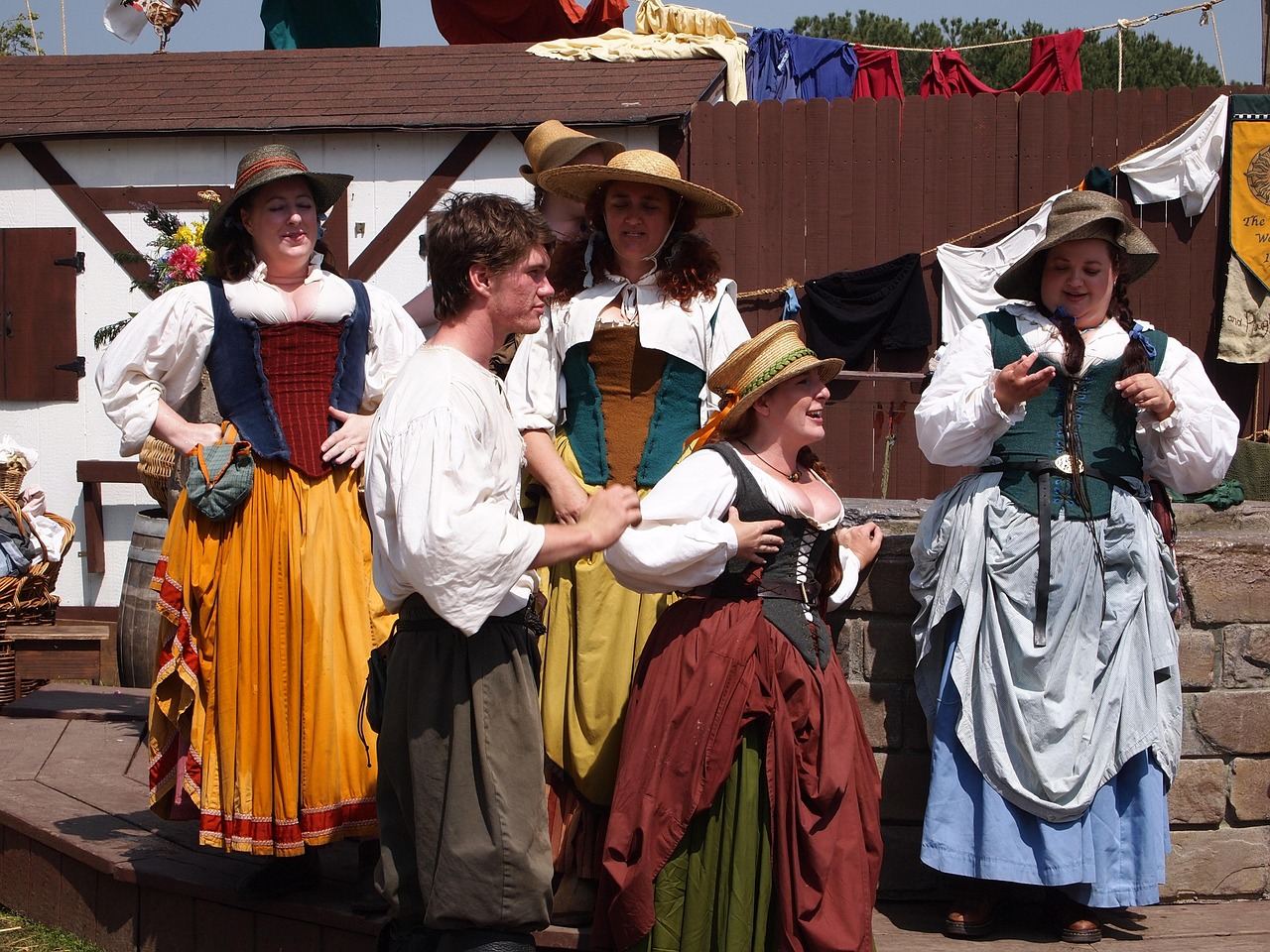
Renaissance Faires are not just for history buffs — they're a sensory escape featuring live performances, unique crafts, and a vibrant community.
Getting started with attending Renaissance Faires as a beginner allows you to step into a world filled with knights, jesters, and nobles. Dress in period costumes and immerse yourself in the vibrant history of the Renaissance era.
The faires burst with energy through a mix of performances, artisan crafts, and food. It's an engaging way to experience the arts and culture of the past.
At a Renaissance Faire, participants engage in various activities such as learning hands-on crafts like embroidery and chainmaille, participating in interactive performances and group dances, competing in skill-based games like archery and axe throwing, and wearing elaborate costumes while engaging in role-play. They browse artisan booths, interact with costumed performers, and immerse themselves…
This hobby fosters social belonging through group interactions and collaborative performances, while also providing incremental skill feedback through hands-on craft classes and competitive games, which can lead to a sense of accomplishment and creativity. The immersive environment encourages participants to escape daily routines and engage their imagination, countering feelings of boredom.
You assume Renaissance Faires are just for the history crowd.
Yes, they love these events, but Renaissance Faires are brimming with activities for everyone.
Imagine Mika, who's all about art, not history. She attended a fair for fun and found herself captivated by the creativity on display. Her favorite part was watching artisans craft one-of-a-kind pieces. She left inspired to explore her own artistic projects.
Costumed performers, hands-on workshops, quirky wares. These elements offer unique adventures even if you know nothing about the Renaissance.
Get ready to see how you can become part of this vibrant experience in the next section.
Your first faire hits all the senses at once. Woodsmoke and roasting meat in the air, the clang of a blacksmith's hammer somewhere nearby, a crowd of strangers in velvet and chainmaille laughing at a jester's joke. Most first-timers spend the opening hour just standing still, overwhelmed by how much is happening in every direction. That's not a bad sign — it means the immersion is working.
The part nobody warns you about is the social layer. Performers don't stay on a stage — they roam the grounds and pull you in. A roving knight might challenge you to a duel. A noble might demand you bow. If you arrive expecting to watch from the sidelines, the faire will politely refuse to let you. That catches a lot of first-timers off guard, and it's the thing that either hooks them immediately or sends them back to the turkey legs.
Workshops like embroidery or chainmaille don't click instantly. Your first braid looks nothing like the instructor's. Your first archery shot misses by a wide margin. The feedback is fast and honest — you can feel exactly where your hands went wrong, and that's what makes the second attempt so satisfying. The learning curve is real, but it's short enough to feel winnable inside a single afternoon.
You'll leave your first faire with sore feet, a questionable impulse purchase from an artisan booth, and a loose plan to come back in costume next time. That impulse to "do it properly" on the next visit is the clearest sign you've actually been bitten by it. Before you start planning your outfit, though, there are a few rookie mistakes worth knowing — because they're easy to avoid once someone points them out.
When to start: Morning
Duration: 2 hours
Cost to try: $0
Success criteria: If you arrive in simple garb, find your seat, and watch one scheduled performance plus one craft demo, do session 2.
Almost every first-timer makes this call. They figure they'll see if they like it before spending money on a costume. The problem is that costume culture is the connective tissue of a Renaissance Faire — it's how strangers start conversations, how performers engage you, and how the immersion actually works. Showing up in jeans puts an invisible wall between you and the experience.
You don't need to spend hundreds on custom garb for your first visit. A simple peasant blouse and lace-up vest from a thrift store is enough to get you in the door — and into the community. Plenty of vendors also sell affordable accessories on-site if you want to add to your look as you walk around.
The performances are great, but if you spend every hour planted in front of a stage, you miss what makes a Renaissance Faire different from any other festival. The real payoff is in the doing — archery, axe throwing, chainmaille workshops, group dances. That's where the sense of accomplishment and the social connection actually happen.
Before you arrive, scan the faire's schedule for hands-on activities and block time for at least two. Treat the workshops like the main event, not the backup plan when the shows are between sets.
Renaissance Faires are built around group energy. The interactive performances pull in the crowd, the group dances need willing participants, and the role-play moments land better when you have someone to share them with. Solo visitors who don't talk to anyone tend to walk out thinking it wasn't for them — when the real issue was isolation, not the hobby.
If you can't bring a friend, look up the faire's online community beforehand. Most have Facebook groups or Discord servers where attendees organize meetups. Showing up with even one other person transforms the experience from spectator to participant.
Artisan booths are genuinely tempting — custom leatherwork, hand-forged jewelry, embroidered accessories. It's easy to spend everything in the first hour. The booths near the entrance are usually the priciest; vendors deeper into the grounds often offer more variety and better deals.
Do a full loop before buying anything. Set a hard spending cap before you walk in, and split it between shopping and activities. Spending money on a craft class often gives you more than a purchased souvenir — you leave with a skill, not just a thing.
A lot of beginners go once, enjoy it casually, and never return — usually because they didn't realize there was a progression to it. The deeper you get into costume-building, craft skills, or the regular community, the richer every subsequent faire becomes. The first visit is the lowest-reward one.
Before you leave your first event, identify one thing you want to build toward — a better costume element, learning a specific craft, or joining a performance troupe. Having a concrete next step is what separates people who become regulars from people who have a nice afternoon and forget about it.
Start with r/renfaire on Reddit — it's the most active online gathering spot for faire-goers. People post costume progress, event recaps, and regional meetups there constantly.
Facebook Groups are surprisingly useful here. Search your state or city name plus "Renaissance Faire" and you'll find local groups with event calendars and costume swaps. The Texas Renaissance Festival and Southern California Renaissance Faire both have active community groups with thousands of members.
RenList.com catalogs hundreds of faires across the U.S. by state and date. It's the go-to directory for finding your nearest event. Most major faires run on weekends over several weeks, so there's usually more than one shot to attend.
Once you've attended a faire, talk to the artisan vendors and guild performers on-site. Many guilds — living history groups that run interactive demos — actively recruit new members at the faire itself. That conversation is often the fastest path into the community.
Some people come to a Renaissance Faire purely as visitors. They wander the grounds, watch the jousting, eat a turkey leg, and let the atmosphere do the work. No costume required, no prior knowledge needed.
This is the easiest entry point. It suits anyone who wants a fun day out without any commitment to a character or craft.
Costuming is its own deep hobby within the faire world. Participants research historical garments, source fabrics, and build outfits that can take months to complete. Some aim for historical accuracy; others lean into fantasy.
If you already enjoy sewing, cosplay, or costume design, this version of the hobby will feel like a natural home.
Most faires run hands-on workshops throughout the day. Embroidery, chainmaille jewelry, candle dipping, leather tooling — you pick a craft and leave with something you actually made. These sessions are usually beginner-friendly and run by working artisans.
This path is ideal if you want a creative takeaway, not just a memory.
Archery lanes, axe throwing, and sword-fighting demonstrations give the competitive crowd something to chase. Many faires let you step in and try these yourself, not just watch. The feedback is immediate — you hit the target or you don't.
People who need a physical challenge or a measurable goal tend to get hooked on this side of the faire quickly.
A step beyond costuming is full role-play. Participants develop a persona, give themselves a name and a backstory, and stay in character throughout the day. Group dances like the Virginia Reel pull crowds in, and interactive performances blur the line between audience and cast.
If you have a theatrical streak or just love improv, this version of the faire turns a day trip into a performance.
For the history-minded, faires offer a surprisingly rich entry point into Renaissance culture, trade, music, and social structure. Artisan booths sell period-accurate goods, and many performers double as educators. Conversations with vendors can go surprisingly deep.
This path suits anyone who wants the fun of the faire paired with something genuinely educational to take home.
If this resonates, Fan Clubs explores a similar direction.
The skill that separates people who have fun at a Renaissance Faire from people who feel like outsiders is the willingness to stay in character, even badly. Not costume quality. Not historical knowledge. Just committing to the bit.
Most first-timers watch from the edges. They applaud the performers, browse the booths, and leave feeling like spectators. The people who get hooked do something different — they respond to a performer's accent with one of their own, they accept a quest from a costumed character, they bow when greeted by a "lord." The Faire is designed as a two-way experience, and the moment you push back on it even a little, everything changes.
It feels awkward at first. That's the whole point. The awkwardness is the entry fee. Veteran attendees aren't impressive because they have the best doublet or the most accurate accent. They're impressive because they stopped caring whether it looked silly.
Once that clicks, every other part of the Faire opens up — the group dances, the interactive shows, the craft classes where the instructor calls you "good apprentice." The next section covers exactly where to start building that comfort, even before you set foot on the grounds.
Attend three sessions over a single faire season — or across two different faires if one is nearby. That's enough exposure to separate novelty from genuine pull.
You're already in. The pull of Renaissance Faires hits hardest when you start thinking about who you want to be next time — not just what you want to watch. If you caught yourself pricing fabric, scoping out chainmaille tutorials, or mentally drafting a character, follow that thread. Find a local guild or a faire community forum and start building your kit before the next season opens.
Indifference here usually means you stayed in spectator mode the whole time. Renaissance Faires reward participation far more than observation. Before writing it off, sign up for an actual workshop — archery, axe throwing, or an embroidery class. Doing changes the experience completely. If you stay neutral after getting your hands into it, this one probably isn't your thing.
That's a clear signal, and it's worth paying attention to. If the crowd, the noise, and the immersive role-play felt draining rather than energizing, the faire format itself is working against you — not just this particular event. The social performance element is central to the experience. You might get more satisfaction from a solo craft hobby like leatherworking or historical reenactment in a smaller, quieter setting.
If you find yourself browsing costume patterns or faire dates at midnight without meaning to, that's the hobby choosing you. That kind of unprompted pull is rare — and worth following.
Still looking for something to do? Browse things to do when bored for more ideas.
Most visitors wear period costumes ranging from simple peasant outfits to elaborate noble attire, though regular clothes are acceptable. Many first-timers rent or purchase affordable costumes from vendors at the faire or online before attending. The key is comfort—you'll be walking and standing for hours—so prioritize breathable fabrics and sturdy footwear.
Gate admission typically ranges from $25–$35 per person, though prices vary by location and season. You can save money by purchasing advance tickets online or attending discount days (often mid-week). Food, drinks, and merchandise are additional costs, so budget $20–$50+ if you plan to shop or eat.
Most visitors spend 4–6 hours to catch performances, browse vendors, and eat. If you want to see multiple stages, explore all areas, and interact with entertainers, plan for a full day (6–8 hours). Faires are open several hours daily, so you can customize your visit length.
No prior knowledge is necessary—Renaissance Faires blend history with entertainment and fantasy, so it's more about having fun than being historically accurate. Performers and staff are welcoming to newcomers and often explain what's happening as you explore. Just come with an open mind and willingness to enjoy the theatrical atmosphere.
You'll find sword swallowers, live music, comedy acts, jousting tournaments, artisan demonstrations, and interactive games throughout the grounds. Many faires offer archery, ax throwing, or other hands-on activities for an additional fee. The schedule varies daily, so check ahead for main events you don't want to miss.
Most faires prohibit outside food and beverages to support on-site vendors, though policies vary by location. Some allow sealed water bottles or baby food. Check your specific faire's rules before arriving—violating them can result in confiscation or entry refusal.