BoredomBusted — Find Your Next Favorite Thing To Do
Discover hobbies, activities, places, and ideas that spark joy. Whether you're looking for something creative, active, social, or relaxing, BoredomBusted helps you find your next favorite thing to do.
Browse our hobby guides, things-to-do collections, and place ideas to never be bored again.
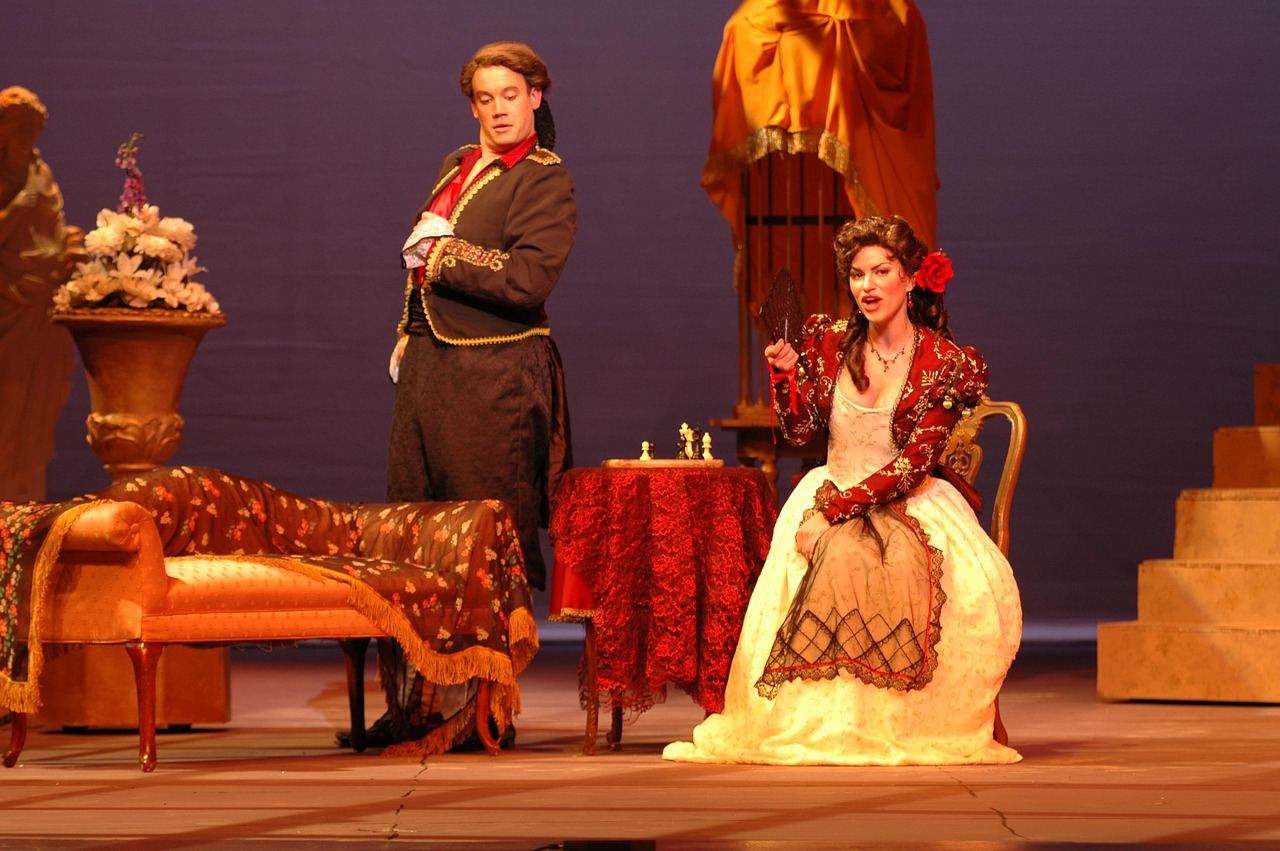
Community theater doesn’t just fight boredom — it creates flow states through improvisational games that boost social belonging and validation.
Community theater puts you in a room with strangers, hands you an imaginary object, and asks you to make it real. That pressure — immediate, low-stakes, and weirdly fun — is exactly what makes it addictive.
Rehearsals mix physical character work, vocal play, and group coordination into something that feels less like practice and more like a game. Your brain stays fully occupied because the group keeps escalating the challenge. There's no room to zone out.
Most people show up expecting to feel awkward. They leave having made five new friends and nailed a scene they didn't think they could pull off. The accomplishment is real, and it comes fast — usually within the first session.
This isn't about becoming an actor. It's about having somewhere to be every week where creativity and collaboration are the whole point. Community theater fills a gap most people didn't know they had.
In community theater, participants engage in rehearsals and improvisation games that involve physically embodying characters, vocal expression, and group coordination. Activities include passing imaginary objects, engaging in tempo-building word games, and embodying emotions through physicality, all in a casual group setting that fosters spontaneity and creativity.
Community theater combats boredom through rapid feedback loops in improvisational games, which induce flow states by matching escalating challenges with immediate group responses. This fosters social belonging and creative expression while providing a sense of accomplishment as participants master physical coordination and receive validation from their peers.
Most people assume community theater is for people who already love the spotlight. You picture someone loud, expressive, fearless — and then you picture yourself, and the gap feels too wide. That assumption mistakes the destination for the starting point.
Consider someone like Marcus — an accountant, quiet by nature, who joined a local troupe in Austin on a friend's dare. His first exercise was passing an imaginary object around a circle. No lines. No audience. Just a group of strangers taking turns pretending to hold a bowling ball. Nobody performed. They just played.
Within twenty minutes, the group was deep into a word-tempo game, responding faster and faster to each other. Marcus wasn't thinking about being good. He was too busy keeping up — and that's exactly the point.
Presence. Responsiveness. Letting go. Community theater trains you to read a room and react honestly — and that's something you build, not something you're born with. The improvisation games aren't warm-up fluff. They're the whole mechanism. Escalating challenges matched by immediate group feedback pull you into a flow state before you've had time to feel self-conscious.
Once that clicks, the question of whether you're a "natural" stops mattering entirely. The next thing to understand is how that group dynamic is actually structured — and how fast it starts working on you.
Your first rehearsal smells like a school gymnasium and sounds like twelve people talking at once. Someone hands you an invisible ball and expects you to throw it across the room like it has weight. You catch it wrong — or rather, there's no wrong, which is somehow worse. The discomfort isn't about performance — it's about not knowing the rules of a game where the rules are fluid. Your body feels stiff. Your laugh feels forced. That's exactly where everyone starts.
The part no one warns you about is the group coordination. You'll be mid-exercise — a word-association circle, a tempo clap, a mirroring warm-up — and you'll break the chain. The whole thing collapses. Beginners expect to struggle with acting; they don't expect to struggle with listening. The exercises are designed to train your attention as much as your expression. That realization usually lands around session two or three, and it changes how you show up.
Around the third or fourth session, something small clicks. You stop anticipating your turn and start reacting to the person in front of you. An improvisation game that felt random starts to have internal logic you can feel in real time. That moment — when the group rhythm stops being noise and starts being a signal you can follow — is when community theater stops feeling like an exercise and starts feeling like a reason to come back.
Getting there, though, requires surviving some genuinely awkward early sessions. Knowing what trips up most newcomers — and why — makes that stretch much shorter.
When to start: Morning
Duration: 2 hours
Cost to try: $10
Success criteria: If you introduce yourself to one theater contact and write down one audition date and one event date, do session 2.
Most beginners hold off on joining until they feel confident enough. That moment never comes. Confidence in theater isn't something you build in private — it's something the group builds for you, in the room.
Show up before you're ready. The improvisation games and warm-ups are designed for people who don't know what they're doing yet. That's the entire point of them.
New participants often perform for the group's approval. They reach for a joke or a big reaction instead of just responding to what's happening in the scene. This kills the flow immediately.
The groups that generate real energy are the ones where everyone is reacting genuinely, not performing at each other. When you pass an imaginary object, treat it like it's real and heavy. Your commitment does more than any punchline.
A lot of beginners observe themselves while doing physicality work — watching how they look, second-guessing their choices. You end up half-committed and it reads that way to everyone else.
Pick a specific physical detail and commit to it fully — a slouch, a tightness in the chest, the weight of a tired body. Specificity shuts the self-conscious part of your brain up. You can't analyze and embody at the same time.
When something goes wrong in an improv game or rehearsal exercise, the instinct is to stop, apologize, or reset. That instinct is the problem. Mistakes in group exercises aren't interruptions — they're the material the group works with.
Keep going when something breaks. The tempo-building games in particular reward recovery over perfection. Groups that stay in motion outpace groups that pause to self-correct every time.
Casual warm-up games and improv nights can feel like filler before the "real" work of a production. People skip them or coast through them. This is where most of the actual skill-building happens.
The flow state that makes community theater addictive comes almost entirely from these low-pressure, high-repetition group exercises. Treat the casual sessions like they matter, because the coordination and spontaneity you build there is exactly what carries a scene when it counts.
Start with r/communitytheater and r/acting on Reddit — both have active threads where people share audition advice, rehearsal experiences, and local group recommendations. The Theater Communications Group (TCG) also maintains a searchable database of member theaters across the US, which is one of the fastest ways to find a legit local company.
For in-person options, look specifically at black box theaters, community arts centers, church-based performance groups, and municipal parks and recreation departments — all of them regularly run open auditions or drop-in improv workshops. Meetup.com has dedicated improv and theater groups in most mid-to-large cities, listed under categories like "Acting" and "Improv Comedy."
Improv comedy clubs and Second City-style training centers often run beginner ensemble classes that meet weekly. You get the group coordination and peer validation without needing a formal audition. Facebook Groups — searched by your city name plus "community theater" or "local theater" — surface smaller independent troupes that don't always advertise anywhere else.
The single most useful move: email two or three local community theaters directly and ask if they have open rehearsals or a volunteer crew list. Most companies welcome newcomers who show up willing to help, even outside of audition season.
This is the classic path — audition for a show, rehearse for weeks, then perform for a live crowd. You'll take on a scripted role and work with a director to bring it to life.
This suits people who want a clear goal to work toward and thrive with structure, deadlines, and opening night energy.
Improv-focused groups skip the script entirely. You build scenes in the moment using prompts, audience suggestions, and instinct. There's no memorization — just reaction.
Improv is the fastest route into flow states because every scene escalates in real time and the group has to keep up together.
Musical theater blends acting with singing and often dancing. Community productions of musicals are everywhere — and they tend to draw larger casts, which means more ways to get involved even as a beginner.
You don't need to be a trained vocalist to join — ensemble roles are designed for people still finding their voice.
Stage crew, lighting, sound, set building, costuming — most community theaters are desperately short on technical volunteers. You can be deeply involved without ever stepping onstage.
Backstage work gives you the same social belonging and sense of accomplishment with none of the performance anxiety.
Many community theater groups run standalone workshops — evenings built around rehearsal games, physicality exercises, and group coordination activities. No audition, no performance, no pressure.
Workshops are the lowest-friction way to find out if this world clicks for you before you sign up for a six-week production.
Readers who enjoy this often gravitate toward Baton Twirling next.
If this resonates, Improv Acting explores a similar direction.
Another variant that pulls from the same roots is Puppetry.
The skill that separates people who grow in community theater from people who stall is physical commitment to the character — not memorizing lines, not projecting your voice, not even "being confident."
Most beginners stay inside their heads. They think about what to say next, worry about looking silly, and keep their bodies small and safe. The people who improve fast do the opposite — they make a physical choice first and let the emotional truth follow. When your body commits, your voice, timing, and believability all fall into place behind it.
You see this play out in something as simple as passing an imaginary object. A hesitant actor hands it off vaguely, and the scene goes flat. An actor who decides the object is heavy, fragile, and precious — before they even touch it — suddenly makes the whole group believe it exists. The physicality creates the reality. That's the feedback loop that makes rehearsals addictive: commit physically, get an immediate response from the group, and feel it work.
Once you start training that instinct in low-stakes improv games, it carries into every scene you'll ever do. The next section covers exactly what your first rehearsals will look like — and where this skill gets its first real workout.
Run three rehearsal sessions over three weeks — one per week, each around two hours. That's enough time to feel the rhythm of a real production cycle without committing your whole calendar.
You'll notice it as a specific kind of restlessness — you're already thinking about the next scene before the current one ends. That's the signal. Start auditioning for a full production and ask the director about understudy or ensemble roles to maximize your stage hours.
Indifference after three sessions usually means the format isn't the problem — the role is. Ask to sit in on tech rehearsals or help with set construction. Some people find their place in community theater behind the curtain, not in front of it.
Physical vulnerability in front of strangers isn't for everyone, and dreading group improv exercises is a clear signal this format drains you rather than energizes you. Redirect toward solo creative outlets — screenwriting, fiction, or even stand-up comedy — where the creative process is yours alone until you choose to share it.
If you catch yourself running lines in the shower or mentally replaying an improv scene on the drive home, your brain has already decided this matters to you. That involuntary rehearsal is the hobby taking root — follow it.
If nothing here clicks, our guide to what to do when bored covers shorter, lower-commitment options.
No, most community theaters welcome performers of all skill levels, from complete beginners to experienced actors. Many groups offer training, rehearsals, and mentorship to help new members build confidence and skills. The focus is on creativity and collaboration rather than professional experience.
Time commitment varies by production, but typically expect 6–12 hours weekly during rehearsal periods (usually 4–8 weeks before a show) and less outside of active productions. Opening and closing nights may require longer hours. You can choose roles with different levels of commitment, from lead parts to ensemble or crew positions.
Many community theaters are free or low-cost to join, with some charging small membership fees ($10–$50 annually). You may need to buy or provide your own costume or makeup for shows, which usually costs $20–$100 depending on the role. Some groups are entirely volunteer-run, making them completely free.
Community theaters need directors, stage managers, sound and lighting technicians, set designers and builders, costume and makeup artists, and box office staff. These behind-the-scenes roles are just as important and rewarding as performing, and many require no prior experience.
Most community theaters produce 2–4 shows per year, ranging from musicals and comedies to dramas and classics. Production schedules vary by group, so you can plan your involvement around seasons. Many theaters also host smaller productions, workshops, or readings between major shows.
Your first rehearsal typically involves introductions, reading through the script, and learning basic blocking (movement on stage). You'll meet the cast and crew, understand the rehearsal schedule, and get a feel for the group's culture and energy. There's no pressure to perform—it's mainly about getting comfortable and having fun.