BoredomBusted — Find Your Next Favorite Thing To Do
Discover hobbies, activities, places, and ideas that spark joy. Whether you're looking for something creative, active, social, or relaxing, BoredomBusted helps you find your next favorite thing to do.
Browse our hobby guides, things-to-do collections, and place ideas to never be bored again.
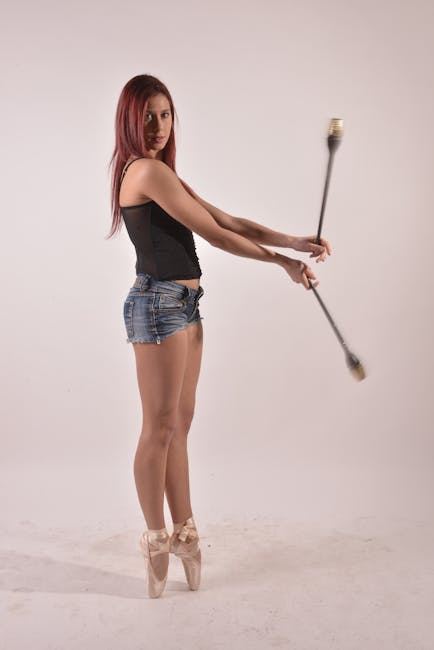
Baton twirling isn't just about flair; it demands elite athleticism, with six months needed to reduce basic errors before mastering its complex techniques.
Getting started with baton twirling as a beginner involves mastering the fundamental spins and tosses that bring this elegant performance sport to life. Baton twirling is a performance sport where you spin, toss, and catch a metal rod using precise hand and finger movements — often choreographed to music.
Unlike juggling, it's built around rhythmic flow and body movement together.
Unlike color guard, the baton itself is the entire focus — no flags, no props, just you and a stick moving in sync.
Baton twirling involves learning and practicing various techniques such as finger twirls, elbow rolls, and tosses, while coordinating movements to music. Participants also perform routines that may include intricate patterns, spins, and synchronization, often in a group setting.
Baton twirling fosters a flow state through rhythmic movement, allowing practitioners to immerse themselves in the activity while receiving immediate feedback on their skill progression. This sense of accomplishment, combined with the need for coordination and creative expression, engages both the mind and body, breaking the cycle of boredom.
You think baton twirling is a shiny stick and a parade smile. Maybe a flashy outfit from a '90s homecoming. The sport hidden underneath that image is what most people never see.
Competitive twirling has rankings, judged routines, and technical difficulty scores. It takes most beginners several months just to stop dropping the baton consistently — not because they lack talent, but because the baton is a weighted, balanced tool that responds to grip pressure, wrist angle, and rotational speed all at once.
Every catch has a margin of error under an inch. Every release demands postural control that dancers train years to build.
Nationals competitor Tara Rice spent three weeks on a single four-beat sequence — not drilling speed, but drilling exactness. The hardest part wasn't her hands. It was keeping her core stable enough that her hands could be precise. That's the physical demand most people don't anticipate: twirling asks your torso to do gymnastics-level stabilization work while your arms do something that looks effortless.
You don't learn this sport.
You build it, layer by layer.
Slowly, until suddenly nothing is slow anymore.
That progression is where the learning curve stops feeling like a wall and starts feeling like a climb worth finishing — and the next section maps out exactly what those early stages look like.
Baton twirling looks weightless from the outside — a smooth arc, a clean catch, no visible effort. Up close, it's a different story. Every catch is a split-second calculation your hands haven't learned yet. The baton is always falling. Your job is to be in exactly the right place when it does.
The first week is mostly drops. Constant, maddening drops. The flat spin feels unpredictable, and your wrist will ache from the awkward angle. The frustrating part isn't the dropping — it's that the dropping feels completely random. It isn't, but your hands don't know the pattern yet.
By week three, you'll string three clean catches together and feel like something has clicked. Then you'll miss the next ten. That's not regression — your body is building the correction reflex, and that process is genuinely inconsistent before it becomes reliable. Week four is when you first notice your hands adjusting without you consciously telling them to.
The thing nobody mentions before you start: grip position. Holding the baton by the handle instead of its balance point will send every spin off-axis — and no amount of technique fixes a bad grip. Most early frustration traces back to this one positioning error, not coordination. The next section covers the mistakes that keep beginners stuck longest.
When to start: Morning
Duration: 1 hour
Cost to try: $15
Success criteria: If you can complete 10 clean single twirls and 5 double twirls without dropping the baton, do session 2.
White-knuckling the baton feels necessary, or else it'll fly across the room. That's actually what kills your spin axis.
Loosen your grip to a two-finger pinch at the balance point before release. Let the baton's natural spin take over.
Impressive fingerwork videos lure beginners away from solid basics. Your figure-eight isn't ready, yet you're diving into finger rolls.
Drill a flat horizontal figure-eight until you hit 20 clean reps in a row. Only then should you attempt fingerwork.
Height charts are where everyone starts, yet they don't consider arm length. This can lead to poor baton control.
Hold the baton at your side: it should reach between your wrist crease and the base of your pinky.
Whole routines feel productively enticing—they're why you're practicing after all.
Pinpoint the exact moment of error, then practice just that segment for 10 reps. Return to full runs after isolating the problem.
That lagging hand is ignored as a quirk, not a training oversight. Until competition looms, that is.
Spend the first five minutes of each practice on last session's drills using only your non-dominant hand. Your dominant hand will keep its edge without extra focus.
If you're looking to practice baton twirling, head to gymnasiums, dance studios, or any school multipurpose room with high ceilings and forgiving floors.
Wind is not your friend outside until you get the hang of things, so indoor spots are best for beginners.
When you visit, confidently say, "I'm a complete beginner – do you have open practice or beginner lessons?"
That question gets you real answers quickly. Instructors will guide you to classes, pair you with someone for open gym, or tell you when to return.
Solo competitive twirling — one person, one baton, judged on both technical skill and choreography — is the classic form. Nearly every training resource, coach, and competition structure is built around this path.
If you're aiming for competition and want the clearest progression, this is where to start.
Two- and three-baton twirling takes everything from solo and multiplies the coordination demands. Solid single-baton fundamentals aren't optional here — they're the entry fee.
For twirlers who've plateaued on single baton and want a genuine technical challenge, this is the natural next step.
Pair and team twirling adds timing, spacing, and group synchronization to the mix. Competition costs climb faster than solo — coordinating costumes, travel, and coaching across a group adds up quickly.
Best for twirlers who genuinely enjoy rehearsing with others and don't mind the extra coordination — on and off the floor.
Dance twirling scores musicality and expression as heavily as trick difficulty. A dancer who picks up baton technique has a real edge over a technician still learning to move.
If you're coming from ballet, jazz, or contemporary dance, this style lets you build on what you already do well.
Baton tips are set alight, and the whole point is spectacle. This sits almost entirely outside standard competitive twirling — it's performance art, not a judged sport.
Plan for fire-resistant equipment and hands-on guidance from an experienced mentor before you light anything up.
For something adjacent, see Community Theater.
Puppetry lives in the same world — different mechanics, similar appeal.
Some of the same instincts show up in Improv Acting — worth a look if this clicked.
Controlled release timing is what actually separates fluid routines from choppy ones. Chasing faster spins and flashier tosses won't help if the baton isn't moving as intended.
There's a half-second window — the transition from guiding to releasing. Miss it, and the baton resists. Hit it, and it rolls through your hand like it's on rails.
The trick is hitting that half-second window, transitioning from guiding to releasing without hesitation. Those who nail this create fluid routines, while everyone else remains choppy.
With precise release timing, tosses follow true arcs, spins appear effortless, and catches happen predictably. Without it, you're muscling the baton through every move — and that force breeds inconsistency.
Eight sessions over 30 days — roughly twice a week. That spacing gives you enough repetition to build basic control, with enough rest between to notice what's actually improving.
If you're arriving early and running combinations in your head during the day, that's not discipline — that's the hobby choosing you back. The move here is to find a club or a coach before you hit the ceiling of self-teaching.
If the sessions feel neutral — fine while you're there, forgettable once you leave — that's worth one more experiment. Pick a single skill that looks fun and spend four sessions on nothing else. Baton twirling has a specific momentum that sometimes clicks late. If it still doesn't land, that's a clean answer.
If you're relieved when each session ends, don't reframe that. The physical repetition this hobby demands is genuinely not for everyone — and enjoying the idea of twirling is a completely different thing from enjoying the hours of drilling it takes to get there.
The sign that it's working: you're up late watching competition footage and scrubbing the video back to analyze a wrist release you didn't understand the first time.
If nothing here clicks, our guide to what to do when bored covers shorter, lower-commitment options.
Baton twirling is a performance activity combining dance, gymnastics, and object manipulation with a weighted stick called a baton. It's recognized as a sport in many regions, with competitive leagues, championships, and structured judging criteria similar to gymnastics or figure skating.
Initial costs are relatively low—a basic baton costs $15–$40, and you can practice in your backyard or local park. If you want to join a club or take lessons, expect $50–$150 per month depending on your location and coach experience.
Most beginners can master simple tricks like figure-eights and basic spins within 2–4 weeks of regular practice. More complex tricks involving tosses and multiple batons typically require 2–6 months of consistent training.
While flexibility and athleticism help, they aren't required to begin. Baton twirling develops coordination, balance, and body control over time, making it accessible to beginners of any fitness level.
Adults can absolutely learn baton twirling at any age. Many adult twirlers compete in separate divisions, and the activity offers great cardiovascular benefits and mental focus regardless of age.
You'll need comfortable clothing that allows full range of motion, supportive shoes, and an open practice space. As you progress, you may invest in a leotard or performance costume, but these aren't necessary to start learning fundamentals.