BoredomBusted — Find Your Next Favorite Thing To Do
Discover hobbies, activities, places, and ideas that spark joy. Whether you're looking for something creative, active, social, or relaxing, BoredomBusted helps you find your next favorite thing to do.
Browse our hobby guides, things-to-do collections, and place ideas to never be bored again.
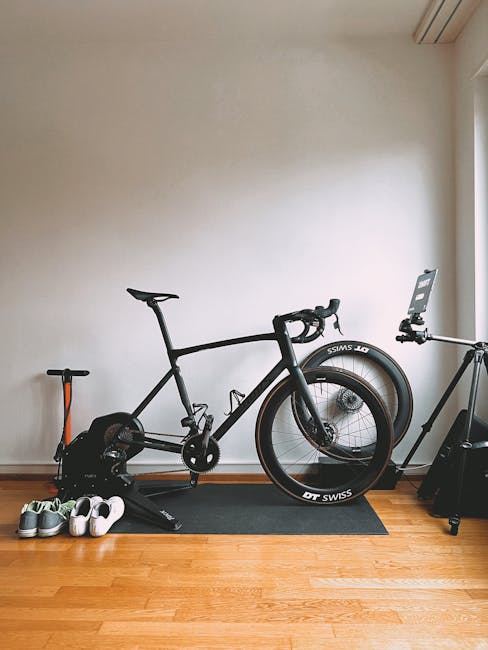
Indoor cycling isn't just about leg strength; it's training your nervous system and mental resilience for real-life challenges like work deadlines.
Getting started with indoor cycling as a beginner involves engaging in structured workouts that can be done from the comfort of your home.
You control resistance and cadence while an instructor (live or recorded) pushes the pace.
Unlike casual gym cycling, it's interval-driven and music-synced, which makes it closer to a cardio class than a solo treadmill session.
Indoor cycling involves mounting a stationary bike or smart trainer and engaging in structured pedaling sessions that last 40-75 minutes. Participants perform targeted drills focusing on power zones and cadence, executing actions like warming up, practicing one-legged pedaling, and completing speed intervals while monitoring metrics such as heart rate and power output.
Indoor cycling provides immediate skill feedback through short, targeted intervals that validate progress, fostering a flow state where focused effort on pedaling efficiency and drills allows practitioners to immerse themselves in the activity and escape from distractions, making time pass more quickly.
You think indoor cycling is just a stationary bike in a gym corner. Pedaling endlessly, sweating with a timer glaring at you.
That's exactly why you're missing the true benefits
A rider who's been at this for three months doesn't just have stronger quads.
They've learned which limits to push and which to respect. This skill helps them stay on course, long after comfort temptingly whispers to stop.
That's the focus of your first real session — understanding when to keep going.
Watching someone go through a structured ride looks almost meditative—legs moving, music thumping, and an instructor giving cues.
Then you clip in for the first time and realize your lungs and legs have completely different ideas about this."
The gap between watching and doing lies in adjustments and resistance. Set your saddle height wrong, turn that resistance knob too little, and you're in for a surprise.
At first, your legs claim they're strong, breathing feels easy, and the seat looks fine. Until it doesn't. You find your seat bones protesting loudly while cadence cues make no sense. Forty minutes turns into an eternity as your legs might cope, but your lungs are furious.
The first week is survival mode. You're one beat behind cadence cues and wondering why your seat hurts so much. (It's normal at first.) Week two is sneakily brutal; you push harder despite having less fitness, which makes everything feel tougher.
Week two is the quitting zone for many. Your legs adapt while your lungs lag behind. This isn't regression—it's adaptation happening.
In week three, resistance cues start making sense and you stop guessing what a 'climb' feels like. By week four, you might notice you weren't watching the clock for the last ten minutes. But before you clip in, check that saddle height.
Having a very slight bend in your knee at the pedal's lowest point prevents injury. Begin with this setup to keep soreness from derailing your progress and avoid knee pain that stops sessions altogether.
When to start: Early morning
Duration: 1 hour
Cost to try: $10
Success criteria: If you can keep the instructor’s cadence for 30 minutes, finish with no saddle bouncing, and hit a 5-minute cool down, do session 2.
Eyeball the saddle height, ride, and wonder why knees ache in two weeks. Sound familiar? Instead, use a simple method: sit on the saddle, place your heel on the pedal at its lowest point, and ensure your leg is fully straight. This means you'll have a slight bend with proper foot positioning.
Feeling the burn at a low cadence might seem like progress, but it's a recipe for joint pain. Keep your cadence between 80–100 RPM and only increase resistance when you can maintain that speed for 20 minutes.
Adjust the saddle, ignore the handlebars, and end up with a stiff neck. Relatable? Position the bars high enough that your elbows have a soft bend and your shoulders stay relaxed.
Going full throttle burns out more cycling routines than boredom. Include at least one Zone 2 ride weekly, where you can keep up a conversation.
Soft-soled sneakers flex under stress, sapping power and stressing ankles. Does your bike have SPD cleats? Try renting clip shoes for the first month, since foot positioning can change with experience, and shoe fit matters more than brand.
Indoor cycling happens at spin studios, gyms with fitness rooms, or your home on a trainer.
USA Cycling (usacycling.org) lists sanctioned clubs. They run structured indoor training, perfect for serious cyclists.
Let the instructor or front desk know you're new. You'll get help with setup, resistance cues, and a bit of leeway to skip the leaderboard initially.
Think instructor-led, bass-pumping, group-centric rides.This is indoor cycling for those who thrive on motivation. Prices are $20–35 per class, or significantly less with a membership.
Apps like Zwift and TrainerRoad focus on targeted improvement.Perfect for goal-driven athletes looking for measurable gains. You'll need a smart trainer ($500–1,200) and a subscription ($15–20/month).
Virtual rides let you explore worlds freely without a fixed plan.Ideal if you want a change of scenery without the pressure.
Peloton offers an immersive experience with live and on-demand classes.Great for those who want a social workout without commuting. The bike costs at least $1,400.
ERG mode keeps your power output steady, locking out manual adjustments.Perfect for beginners who want simplicity in their structured training.
Readers who enjoy this often gravitate toward Gravel Cycling next.
If you want a related angle, Cyclocross is the natural next stop.
For something adjacent, see Track Cycling.
Most beginners focus too much on resistance and speed. They treat each ride like a test rather than training.
The key isn't effort level. It's cadence control.
Cadence control means maintaining a specific RPM like 80 or 90 consistently. Not just reaching it quickly. Holding it steadily.
When cadence is stable, power output metrics become reliable. You can see real progress over time.
Without stable cadence, you're guessing based on feelings. And those are deceiving.
Instructors, intervals, recovery sessions all become more effective once you have control over your cadence.
Eight sessions over 30 days. That's the number – roughly twice a week, with real rest between rides.
More than that in week one and you're just managing soreness.
If you keep looking for the next ride on your calendar, that's not motivation – that's the hobby working. Start looking at a proper training block and consider whether a structured app like Zwift or a coached plan makes sense.
If you finished all eight and feel nothing either way, that's usually a signal the solo format isn't doing it for you – not that cycling is wrong. Try one group class in-person before you write it off entirely.
If you were watching the clock from minute three, take that seriously. Endurance cardio done indoors rewards people who can tolerate repetition. If it felt like a punishment, consider that a clear answer.
Can't stop calculating watts or tweaking your saddle height three days later? That low-grade obsession signals indoor cycling has caught you. It's not just exercise for this crowd. It's a two-wheel optimization problem.
Knee or lower-back injuries without medical clearance can be a real barrier. The fixed position and repetitive motion can worsen these conditions.
If your schedule is genuinely unpredictable, indoor cycling's benefits might not stick. One long ride every two weeks won't build the necessary aerobic base.
If silent, solitary effort drains you, outdoor cycling might be better. It offers scenery, variation, and social rides.
You'll need a stationary bike or access to one at a gym or studio. At home, you'll also want comfortable workout clothes, cycling shoes (or sneakers work fine initially), a water bottle, and optionally a mat to protect your floor. Most studios provide bikes and shoes, so you can start without major upfront investment.
Home bikes range from $300–$2,000+ depending on quality and features. Studio classes typically cost $15–$35 per session, with monthly memberships around $99–$200. Budget-friendly options like YouTube classes or basic stationary bikes make it accessible at any price point.
Yes, indoor cycling is beginner-friendly because resistance is fully customizable—you control the difficulty to match your fitness level. Most studios offer beginner classes, and you can start with low resistance and build up gradually. It's also low-impact on joints, making it safe for most fitness levels.
Classes usually run 30–60 minutes, with 45 minutes being the most common length. You can also do shorter 20–30 minute home workouts or longer 75+ minute sessions depending on your preference and schedule.
Indoor cycling is low-impact and often recommended for people with knee or joint issues since there's no pounding like running. However, check with your doctor if you have specific injuries, and let your instructor know so they can suggest modifications or alternatives.
With consistent effort 3–4 times weekly, you'll typically see improved cardiovascular endurance within 2–3 weeks, increased leg strength within 4–6 weeks, and noticeable stamina gains over 8–12 weeks. Combined with nutrition changes, you may also see fat loss and improved overall fitness.