BoredomBusted — Find Your Next Favorite Thing To Do
Discover hobbies, activities, places, and ideas that spark joy. Whether you're looking for something creative, active, social, or relaxing, BoredomBusted helps you find your next favorite thing to do.
Browse our hobby guides, things-to-do collections, and place ideas to never be bored again.
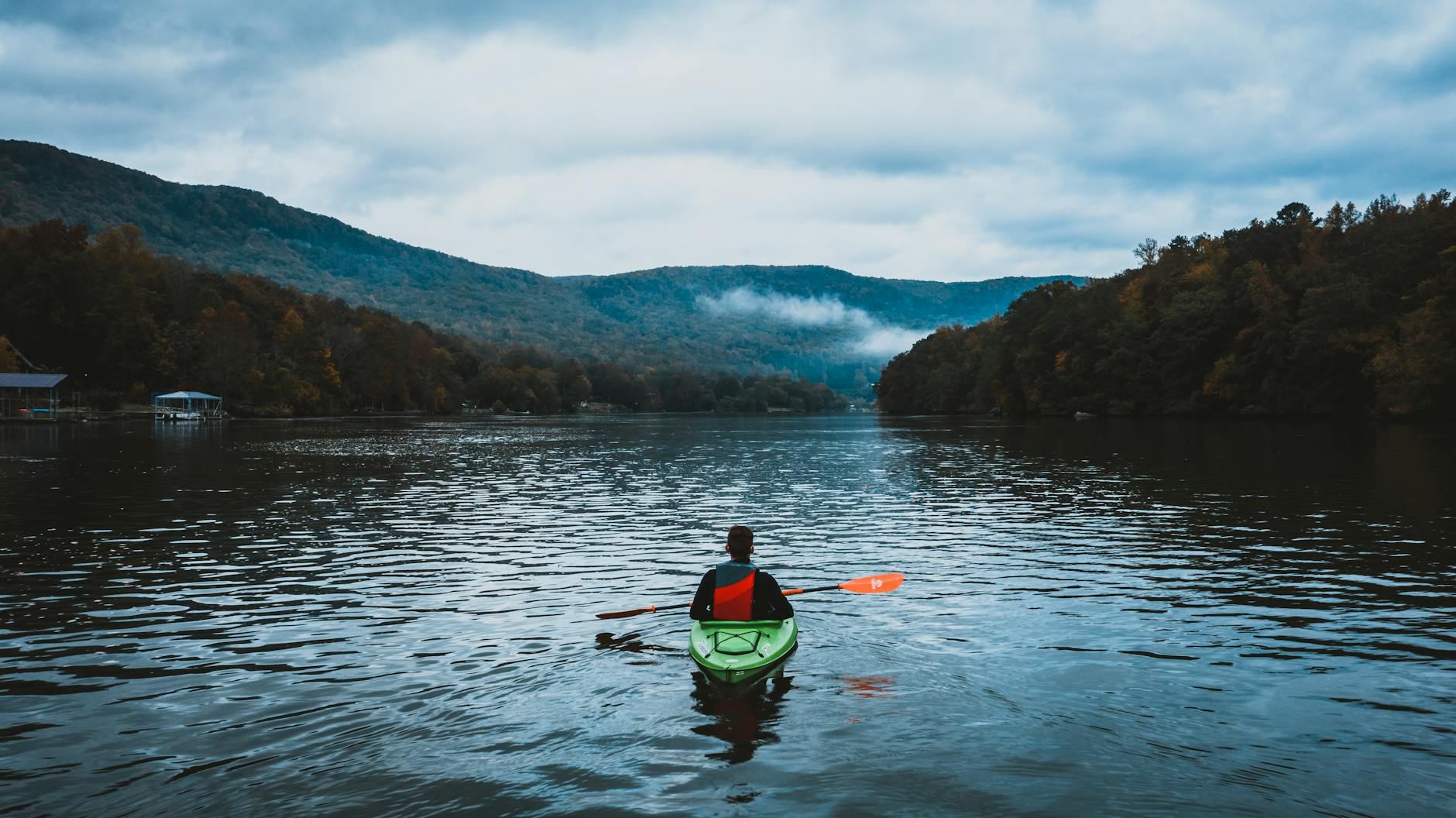
Kayaking is a workout in disguise—it's all about mastering technique and utilizing your core while reading the water, not just drifting.
Getting started with kayaking as a beginner opens up exciting opportunities for adventure on lakes, rivers, and coastal areas. It's accessible on lakes, rivers, and coastal areas.
Kayaking involves paddling a kayak using a double-bladed paddle, engaging in repetitive forward strokes while seated, rotating the torso, and bracing the legs for stability, navigating through various water conditions with constant adjustments.
Kayaking induces a flow state by balancing skill challenges against changing water conditions, providing immediate skill feedback through tactile responses and a sense of accomplishment from mastering distances and maneuvers, coupled with the novelty of diverse environments.
Kayaking isn't a passive float. Efficient paddling requires technique, core strength, and reading water conditions. You're working, not just sitting.
Your shoulders will burn after 20 minutes. The paddle is heavier than it looks. You'll get splashed. And you'll experience a deep quiet on the water that justifies the soreness.
When to start: Early morning
Duration: 1.5 hours
Cost to try: $20
Success criteria: If you finished without capsizing, do session 2.
Most beginners don't quit kayaking because it's hard. They quit because their first trip was miserable and they don't know why. These five mistakes are the reason — and each one has a fix you can apply before you ever hit the water.
Beginners often show up at the most scenic spot they can find — which is usually a busy river or open coastal water. Boat wake, current, and wind all compound on each other, and you spend the whole session just trying not to flip instead of actually learning anything.
Your first few sessions should be on a calm, flat pond or sheltered lake with minimal traffic. Boring water is where you actually build the muscle memory that makes everything else possible.
A life jacket sitting in the hull does nothing. People leave it off because it feels bulky or they think they'll only be near shore — right up until they're not. Cold water shock can incapacitate a strong swimmer in seconds.
A PFD only works if it's on your body, fitted snugly, every single time you're on the water. Throw in a whistle clipped to the shoulder strap — it's the fastest way to signal for help if your hands are occupied or you're in distress.
This one catches almost everyone on day one. Kayak paddle blades are asymmetrical — one face is curved or scooped to catch water efficiently, the other is flat. Flip it the wrong way and every stroke works against you. You feel like you're fighting the water and can't figure out why.
Before you launch, hold the paddle up and look at the blade face. The concave (scooped) side should face you on the pull stroke — that's the side doing the work. Takes ten seconds to check. Saves an hour of exhausted frustration.
Arm-only paddling is the default for beginners. It feels natural, and it works — until about 20 minutes in, when your shoulders are cooked and you still have to get back to shore. The power in a good kayak stroke comes from torso rotation, not bicep effort.
One beginner class or a single good instructional video from a certified coach like Ken Whiting can reset your form completely. Learning to rotate from the hips and torso means you can paddle twice as far with half the arm fatigue — and it's the single highest-return skill fix available to a new paddler.
Flat water on a calm day feels effortless at first. Beginners paddle out confidently for 90 minutes, then realize they still have 90 minutes back — into a headwind, with arms they've never used this way. This is how recreational paddles become exhausting slogs or, worse, rescue situations.
Cap your first few trips at 60 to 90 minutes total, and turn around at the halfway point — not when you feel tired. Build duration gradually over several outings. Your body adapts faster than your confidence does.
r/kayaking is your go-to spot on Reddit for advice and trip sharing. Honest feedback from fellow paddlers is just a post away.
For in-person meetups, your best bet is joining regional clubs. The Pacific Northwest, Northeast, Midwest, Florida, and California boast thriving kayaking communities.
Flatwater Kayak Club in the PNW offers local trips, while Island Expeditions has international tours for adventure seekers.
Check Facebook for local kayaking groups and meet-ups. Many regions have groups that organize outings and gear swaps.
Don't overlook online platforms that lack subreddit-type communities—instead search for kayaking Discord servers or forums.
Recreational kayaking is perfect for calm waters like lakes and gentle rivers. These kayaks are wide and stable, with open cockpits for comfort. Perfect for beginners and those who enjoy a leisurely pace.
Whitewater kayaking takes you through turbulent rivers and cascades. With shorter, highly maneuverable kayaks, it's for those seeking adrenaline in rapids and waves. Specialized sub-disciplines like playboating add more variety for thrill-seekers.
Sea kayaking is for open ocean and coastal waters with waves and currents. These kayaks have sealed compartments and skegs or rudders for control. Designed for paddlers ready to handle waves and practice capsize recovery.
Touring or day touring involves longer journeys on various waters. Longer, narrow kayaks offer efficient tracking and storage for gear. Best for those who enjoy multi-day trips across lakes or rivers.
Fishing kayaking offers stable platforms and extra storage for angling. These are usually sit-on-top designs, making them perfect for recreational fishers seeking accessibility and safety.
Diving is a sibling pursuit and often surfaces the same kind of curiosity.
Rafting lives in the same world — different mechanics, similar appeal.
If the texture of this appeals to you, Hiking is built on similar bones.
Arms tired. Shoulders burning. Only an hour in.
That's not a fitness problem — paddling with your arms instead of your core is what drains you in the first hour. Drive each stroke with torso rotation, and your biggest muscle groups do the work your arms were never built to handle alone.
Get this one thing right and multi-hour paddles stop feeling like a grind. The next section covers where to put that endurance to use.
This hobby is for you if you: - Prefer being alone or with one other person rather than in groups or team settings - Like the idea of being tired in your body but alert in your mind - Don't mind spending money on gear maintenance and occasional replacement - Get restless sitting still for more than a few hours at a time It's probably not for you if: - You have shoulder or lower back pain that flares up with repetitive arm movements - You need immediate results or measurable progress to stay motivated—improvement is measured in months, not weeks - You live somewhere landlocked without access to lakes, rivers, or coastal water within an hour's drive
If nothing here clicks, our guide to what to do when bored covers shorter, lower-commitment options.
Most beginners can learn basic paddling techniques and feel comfortable on calm water within 2–4 weeks of regular practice. Developing more advanced skills like rolling and navigating rougher waters typically takes several months of consistent training.
You'll need a kayak, paddle, life jacket (PFD), and appropriate clothing. Additional gear includes a spray skirt, helmet (for river kayaking), and dry bags for storage. Many beginners rent equipment from outfitters before investing in their own.
Kayaking is considered medium difficulty and very beginner-friendly on calm, flat water. The basic strokes are easy to pick up, though building efficiency and confidence takes practice. Your fitness level and comfort in water matter more than prior experience.
Renting a kayak runs $25–$75 per day, making it affordable to try first. Buying a beginner kayak ranges from $300–$1,000, while a quality paddle costs $100–$300. Factor in a life jacket ($75–$200) and you can start for $400–$1,500 total.
Kayaking works beautifully as both a solo activity and a social experience. Solo paddling offers peaceful solitude and personal challenge, while group outings add fun and safety. Always follow local safety guidelines, and consider a buddy system if you're new to the sport.
Kayaks are small, enclosed boats where you sit low with legs stretched out and use a double-bladed paddle. Canoes are larger, open boats where you kneel or sit higher and use a single-bladed paddle. Kayaks are generally more stable and maneuverable, while canoes offer more cargo space.