BoredomBusted — Find Your Next Favorite Thing To Do
Discover hobbies, activities, places, and ideas that spark joy. Whether you're looking for something creative, active, social, or relaxing, BoredomBusted helps you find your next favorite thing to do.
Browse our hobby guides, things-to-do collections, and place ideas to never be bored again.
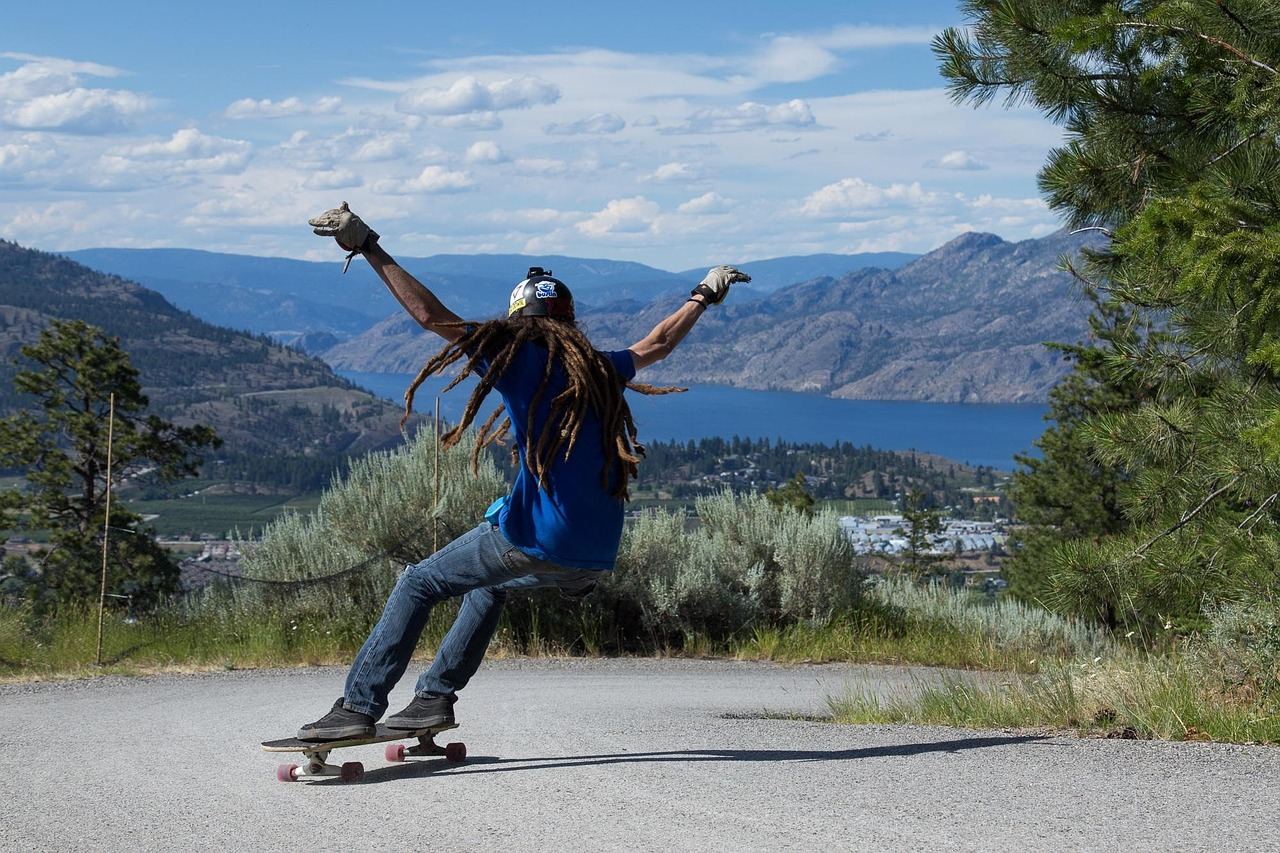
Longboarding isn’t just for teens — it's a meditative practice that rebuilds lost spatial awareness and community, regardless of age.
Getting started with longboarding as a beginner involves understanding the basics of riding a longer, wider skateboard designed for stability and smooth travel rather than tricks.
You push, carve, and shift your weight to steer.
Unlike street skateboarding, the goal isn't to flip the board – it's to move with it, whether that's:
Longboarding involves cruising on flat pavement or gentle slopes, where you practice balance, propulsion, and control by executing repeated movements like pushing, gliding, and carving turns. You'll start with your front foot at a 45-degree angle, learn to push off with smooth strokes, and gradually advance to sharper turns and speed management while maintaining a low center of gravity.
Longboarding induces a flow state as you focus on balancing and speed control, creating an immersive experience that aligns your skill level with the challenges presented by the terrain. Immediate feedback from the board enhances your proficiency through practice, fostering a sense of accomplishment as you navigate hurdles like relearning balance, while social connections through local groups sus…
You think longboarding is a teenager's hobby. A skatepark thing. Something you age out of or never quite into.
That assumption is costing you one of the most genuinely meditative ways to spend an hour outside.
Picture this: a woman in her late 40s, sidelined from running by a knee injury, grabs a 42-inch drop-through commuter board. She didn't aim to get athletic. Just wanted to move.
Six months later, she's carving a 3-mile coastal path three times a week. Not because she got good fast, but because "good enough to enjoy it" happened faster than expected.
Choosing the right board is crucial. That's where most beginners quietly make a $200 mistake before they even push off. Let's make sure you're not one of them.
Cruising along the boardwalk looks so easy when someone else does it. Easy stance, smooth turns, calm from start to finish.
Then you step on a board and it's a different story. You can barely keep your balance, and every muscle tenses as if in rebellion.
Feet fumble for stability. You stretch your arms out, trying to regain control, but every small incline feels like a mountain. Meanwhile, braking is a riddle that fills you with dread.
Eventually, something shifts. Weight adjustments become instinctive, reading the incline is second nature, and even foot braking becomes too mundane to fret over.
Week one feels like survival. You're managing the chaos more than riding. By week two, you've connected pushing with stopping, yet a gentle slope still gives you pause.
Carving starts making sense by week three. Now it feels as if the board is responding rather than resisting. By week four, you're forming preferences – a favored stance, a favorite path, even opinions on the right wheels. Progress is real.
Most beginners misplace their back foot. Too far forward, too centered, too cautious. The board wobbles, and they get frustrated, blaming the equipment instead of fixing their stance.
Slide your back foot over the rear trucks. That simple shift often stabilizes the board, transforming the experience. It's the tweak that keeps people coming back instead of dropping out early.
When to start: Morning
Duration: 1 hour
Cost to try: $0
Success criteria: if you finished without falling off multiple times, do session 2.
Skateboard culture is loud. Most beginners pick a stiff, tiny deck that feels terrifying.
Grab a drop-through deck, 38–42 inches with 78A wheels. This setup eases 80% of new-rider frustration.
New riders wait until they're speeding.
Practice foot braking at low speeds. Your foot should come down early and smooth for controlled stopping.
Rookies plant their feet directly over the hardware for symmetry.
Shift your back foot to the tail and widen the front. This stance gives you steering control and bump absorption.
First falls are unplanned and often end badly.
Dedicate 10 minutes on grass to practice falls. Learn how to land by rolling through your shoulder.
Beginners crank trucks tight because loose feels wobbly.
Loosen the kingpin until it flexes when you lean. Balance fixes discomfort with loose trucks, not tightening.
Smooth pavement is your starting ground. Hit skate parks, empty parking lots, bike paths, and quiet residential streets first.
Once you master stopping, embrace more challenging spots like hills and boardwalks.
Find an IDF-affiliated club for racing and downhill. The IDF (idf.world) lists clubs by region.
The IDF offers structure for racers, but most casual riders connect peer-to-peer.
Admit you're new and working on stopping. That honesty gains you support, helps match speeds, and nets a quick brake tutorial.
Cruising longboards are stable and easygoing. They're 38–46 inches long, designed for straightforward commuting without any fuss. Beginners often find this the ideal starting point.
Affordably priced at $80–$150, making it similar in cost to regular longboards.
Downhill boards are built for speed. They're stiffer and lower, meant to grip the pavement during high-speed slides.
Ideal for skilled riders who can carve and stop with confidence. Safety gear like helmets and slide gloves is crucial and adds $80–$120 to your budget.
Freestyle boards are about the art of movement. They're long and symmetrical, perfect for spins and footwork.
For those who enjoy dynamic skating. Dancer decks are 42–48 inches and range from $180–$250.
Carving boards emphasize deep, surf-like turns. They use looser trucks and sometimes special pivot systems to enhance the ride.
Great for enthusiasts focused on the ride's sensation. Upgrades like the Carver CX truck system add $60–$80 but greatly change the board's feel.
Electric longboards feature motors in the deck or wheels. A handheld remote controls them, making hills irrelevant.
Perfect for those wanting minimal physical effort. Entry-level models start around $300 and prices increase rapidly.
For something adjacent, see Wakeboarding.
If the texture of this appeals to you, Cross Country Running is built on similar bones.
If the texture of this appeals to you, Biathlon is built on similar bones.
Most beginners focus on foot placement and braking. Helpful, but not the breakthrough.
Weight-shift timing is what changes everything. The key is moving your hips before the turn, not during it.
Reactively leaning through turns? That's just controlling wobble. Carving comes when you load the board intentionally, allowing the wheels to guide you, rather than battling the deck.
Initiating the movement a fraction earlier lets the board compress into the turn and rebound out. That's true carving.
Without this skill, every slope seems treacherous and speed terrifying. Master it, and you shape speed rather than fear it.
Commit to 8 sessions over 30 days. That's about twice a week, letting you move past wobbly ankles and feel what it's like when your body really starts to catch on.
You find yourself looking for reasons to ride – checking the weather, noting empty parking lots, getting annoyed with rain. That's more than enthusiasm; that's the hobby taking hold.
Start considering your first serious board purchase. Pick a specialty and dive deeper.
You're neutral – not fired up, but not turning away either. Give it another month to see if it sticks. Often, session 12 is when the flow of carving turns from forced to fluid.
Every session felt like a chore, with no satisfaction even when things clicked. This is useful to notice. Not every movement-based activity resonates with everyone, and longboarding's mix of solitude, patience, and repetition might just not be your jam.
Watching skate videos late at night – just people cruising down empty roads – stirs something in you. If this image keeps resurfacing, take note. It's what many longboarders remember before their first ride.
Knee or ankle instability is a genuine barrier. Micro-balancing impacts both joints. It often worsens existing issues.
If you live where smooth surfaces are scarce – gravel paths, steep roads with poor exits, harsh long winters – these obstacles can derail your consistency early on.
Longboarding mostly thrives as a solo activity. If social structure is your driver, this might be frustrating.
When you don't want to commit, things to do when bored is a better starting point.
Longboards are longer and wider than skateboards, designed for cruising, carving, and downhill riding with greater stability. Skateboards are shorter and more maneuverable, built primarily for tricks and technical skills. If you want smooth, flowing rides with less effort, a longboard is the better choice.
Most beginners can stand and push comfortably on a longboard within a few sessions. Carving smoothly and building confidence on hills typically takes 2–4 weeks of regular practice. Advanced techniques like sliding and freeriding require months of dedicated training.
A quality beginner longboard setup runs $80–$200, including the deck, trucks, wheels, and bearings. Budget brands are cheaper but wear out faster, while premium setups last longer and perform better. Protective gear (helmet, pads) will add another $50–$100 to your initial investment.
Longboarding is easier to start than skateboarding because the longer wheelbase provides natural stability and forgiving turns. However, it still requires balance and body awareness, so expect some wobbles at first. Most people find it enjoyable from day one, even if they're not immediately confident.
A certified helmet is essential for protecting your head during falls. Wrist guards, elbow pads, and knee pads are highly recommended, especially when learning or riding downhill at higher speeds. Many riders prioritize helmet first, then add padding as they progress to steeper terrain.
Smooth, flat pavement works best for longboarding—asphalt paths and roads are ideal. Rough concrete, gravel, and dirt are harder to ride and can damage your board. Most riders stick to paved areas for cruising, while downhill spots require well-maintained roads.